Z. Stachniak – författare
Visar alla böcker från författaren Z. Stachniak. Handla med fri frakt och snabb leverans.
9 produkter
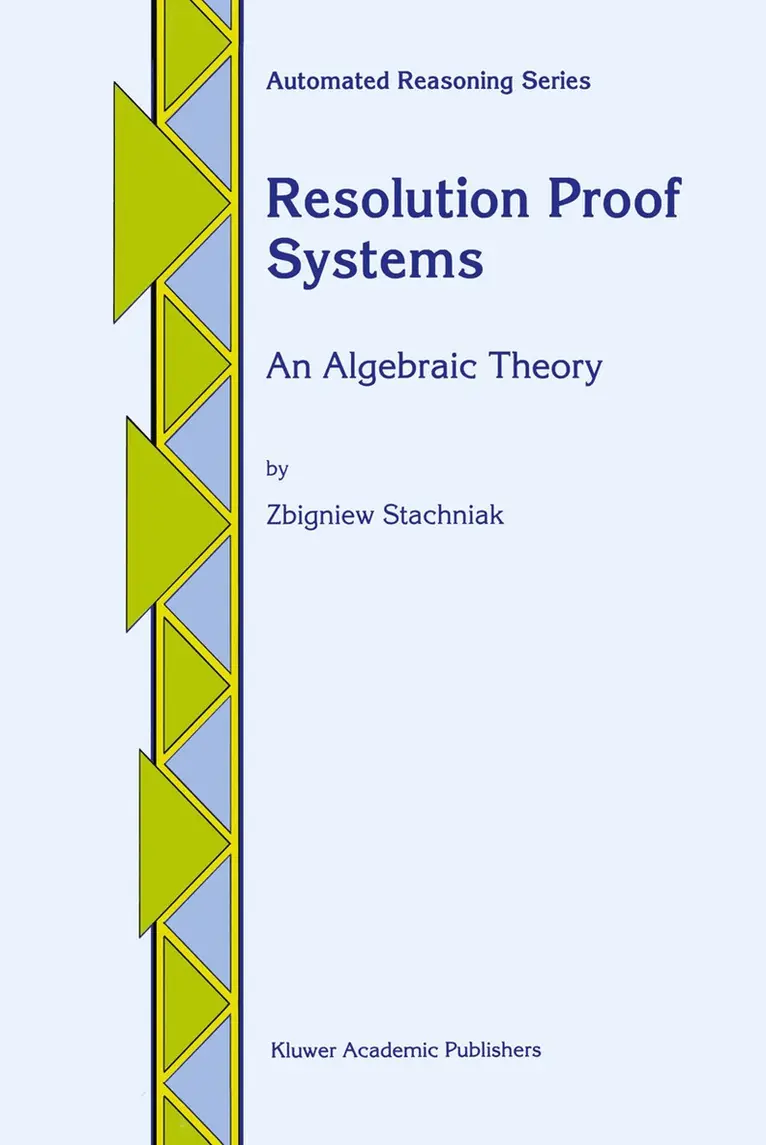
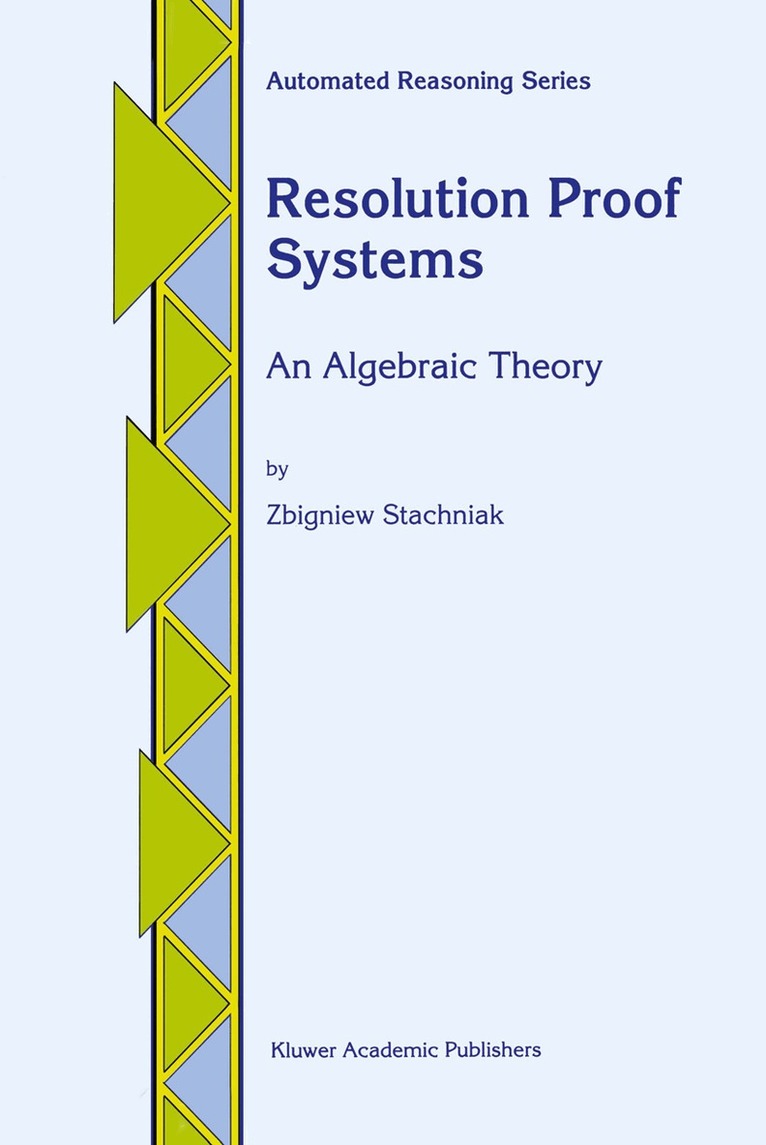
Resolution Proof Systems
An Algebraic Theory
Av Z. Stachniak
Inbunden, 1996
1126 kr
Lägg i varukorg
Resolution Proof Systems: An Algebraic Theory presents a new algebraic framework for the design and analysis of resolution- based automated reasoning systems for a range of non-classical logics. It develops an algebraic theory of resolution proof systems focusing on the problems of proof theory, …
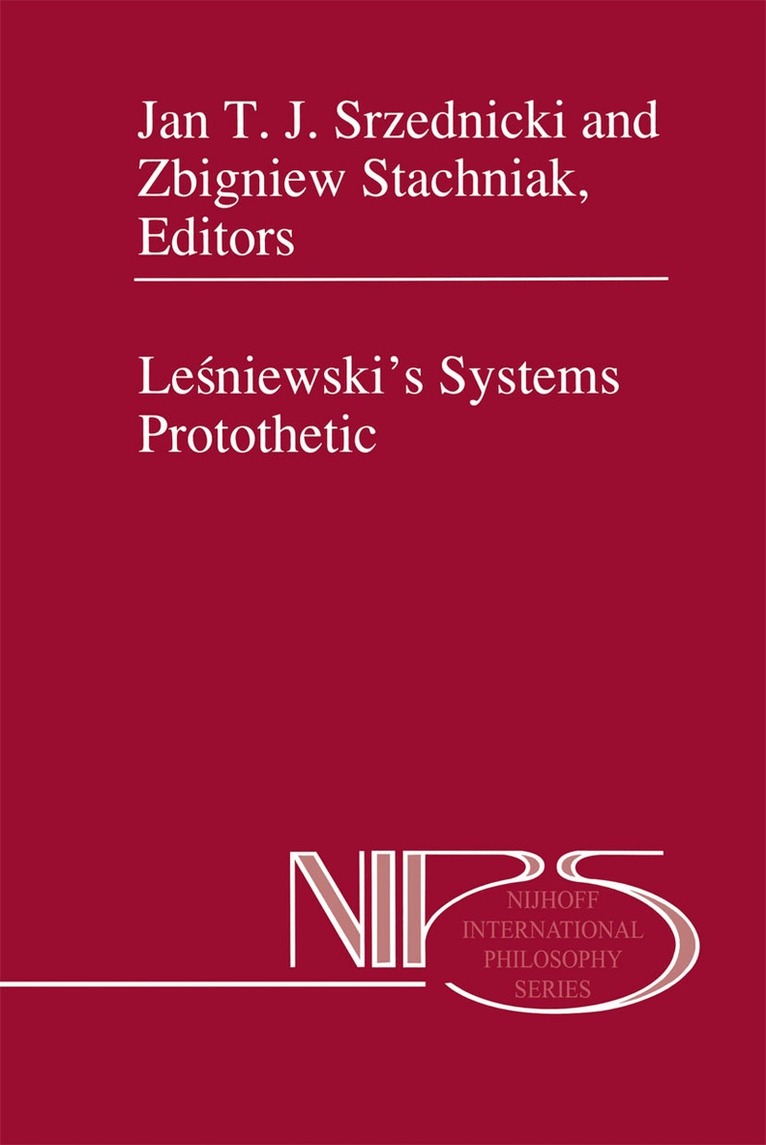
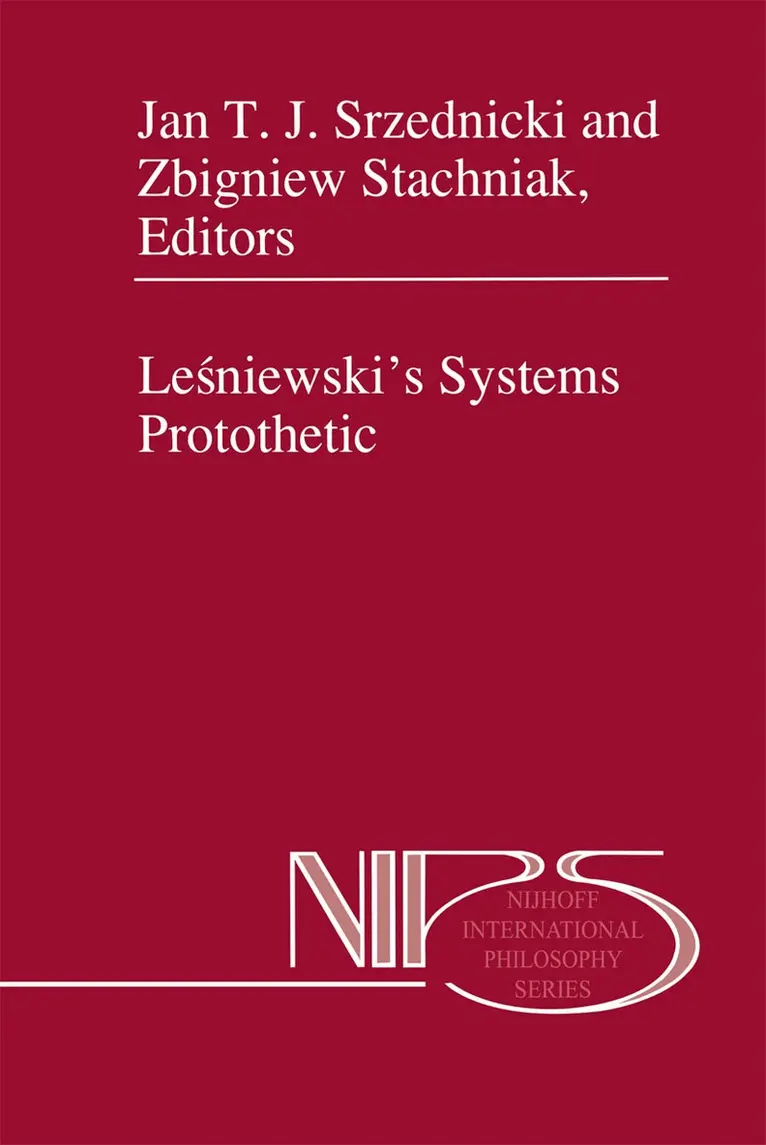
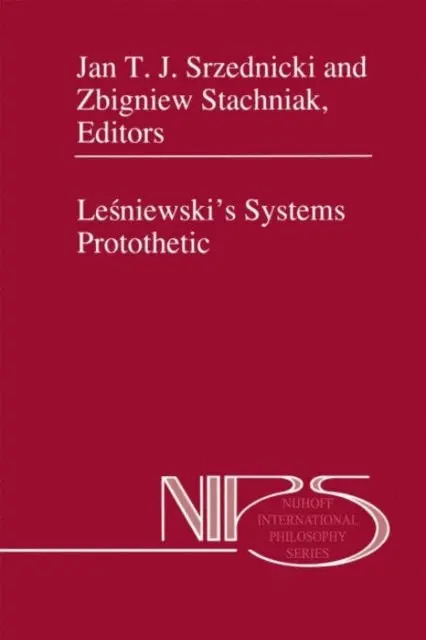
Leśniewski’s Systems Protothetic
Av Jan J.T. Srzednicki, Z. Stachniak
Inbunden, 1998
2179 kr
Lägg i varukorg
In the period between the two World Wars, Stanislaw Lesniewski, a prominent Polish logician, created his system of the foundations of mathematics, a system comprising three deductive theories: protothetic, ontology, and mereology. Lesniewski initiated his research programme in the foundations of …
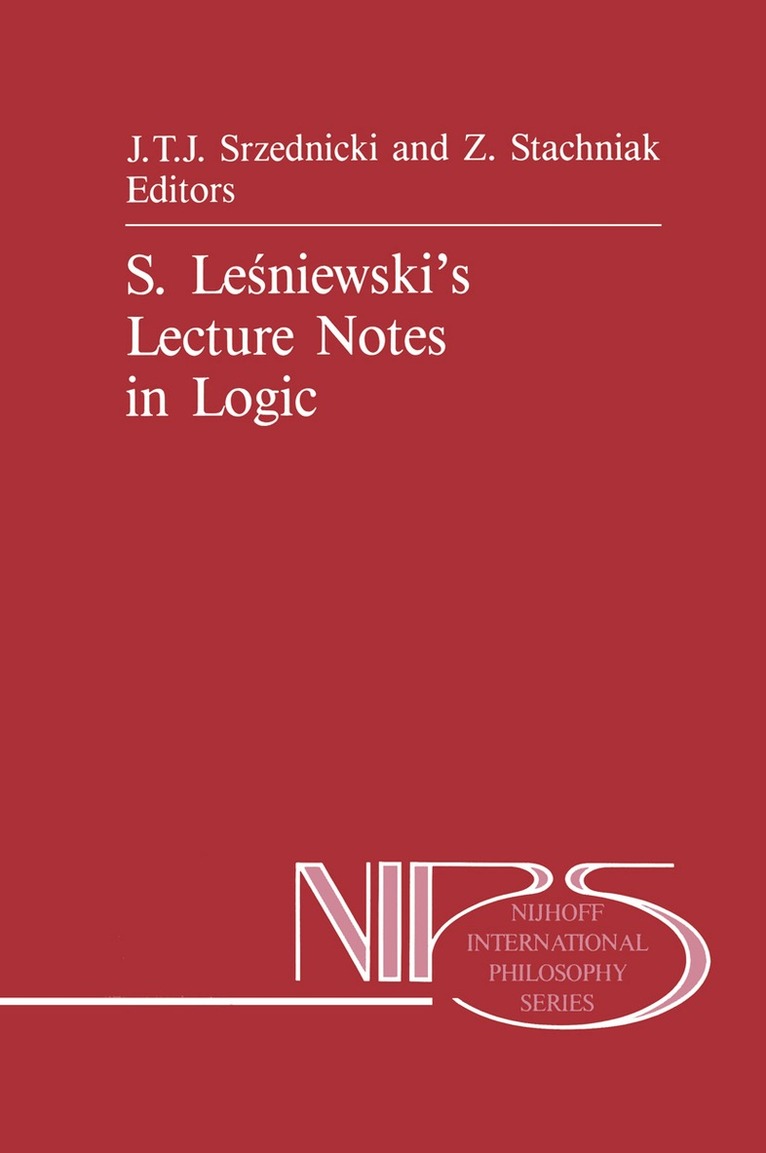
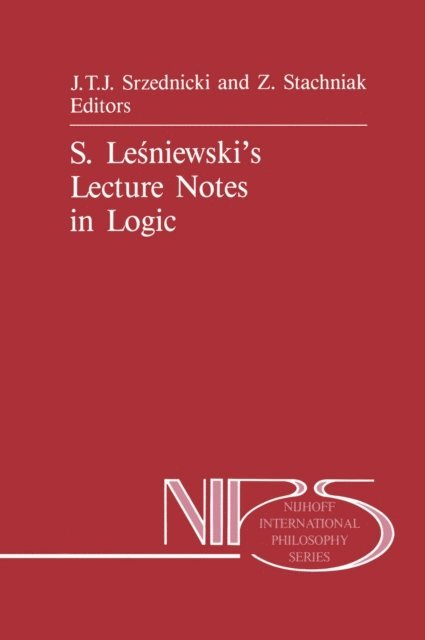
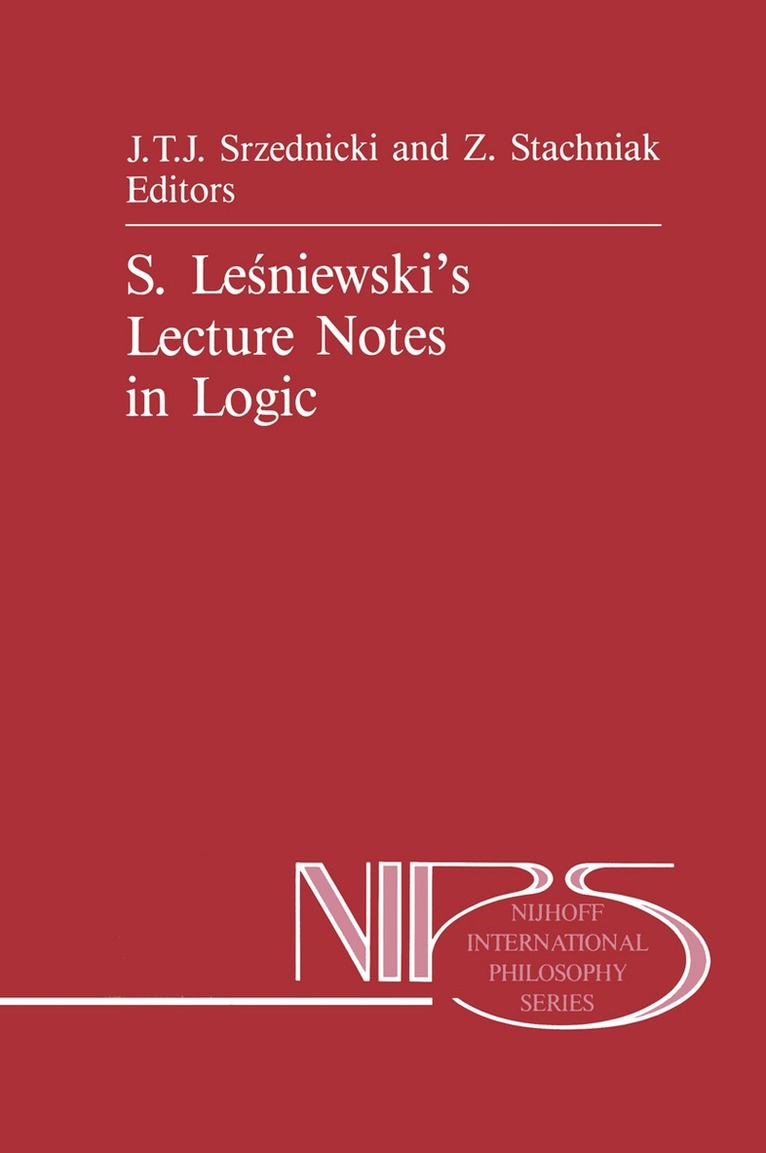
S. Leśniewski’s Lecture Notes in Logic
Av Jan J.T. Srzednicki, Z. Stachniak
Inbunden, 1988
2179 kr
Lägg i varukorg
Stanislaw Lesniewski (1886-1939) was one of the leading Polish logicians and founders of the Warsaw School of Logic whose membership included, beside himself, Jan Lukasiewicz, Tadeusz Kotarbinski, Alfred Tarski, and many others. In his lifetime LeSniewski published only a few hundred pages. He …
Resolution Proof Systems
An Algebraic Theory
Av Z. Stachniak
E-bok, 2012
1459 kr
Lägg i varukorg
Resolution Proof Systems: An Algebraic Theory presents a new algebraic framework for the design and analysis of resolution- based automated reasoning systems for a range of non-classical logics. It develops an algebraic theory of resolution proof systems focusing on the problems of proof theory, …
S. Lesniewski's Lecture Notes in Logic
Av Z. Stachniak, Jan J.T. Srzednicki
E-bok, 2012
2925 kr
Lägg i varukorg
Stanislaw Lesniewski (1886-1939) was one of the leading Polish logicians and founders of the Warsaw School of Logic whose membership included, beside himself, Jan Lukasiewicz, Tadeusz Kotarbinski, Alfred Tarski, and many others. In his lifetime LeSniewski published only a few hundred pages. He …
Leśniewski’s Systems Protothetic
Av Jan J.T. Srzednicki, Z. Stachniak
Häftad, 2012
2179 kr
Lägg i varukorg
Between the two world wars, Stanislaw Lesniewski (1886-1939), created the famous and important system of foundations of mathematics that comprises three deductive theories: Protothetic, Ontology, and Mereology. His research started in 1914 with studies on the general theory of sets (later named …
Resolution Proof Systems
An Algebraic Theory
Av Z. Stachniak
Häftad, 2011
1093 kr
Lägg i varukorg
Resolution Proof Systems: An Algebraic Theory presents a new algebraic framework for the design and analysis of resolution- based automated reasoning systems for a range of non-classical logics. It develops an algebraic theory of resolution proof systems focusing on the problems of proof theory, …
S. Leśniewski’s Lecture Notes in Logic
Av Jan J.T. Srzednicki, Z. Stachniak
Häftad, 2011
2179 kr
Lägg i varukorg
Stanislaw Lesniewski (1886-1939) was one of the leading Polish logicians and founders of the Warsaw School of Logic whose membership included, beside himself, Jan Lukasiewicz, Tadeusz Kotarbinski, Alfred Tarski, and many others. In his lifetime LeSniewski published only a few hundred pages. He …
Lesniewski's Systems Protothetic
Av Z. Stachniak, Jan J.T. Srzednicki
E-bok, 2012
2925 kr
Lägg i varukorg
Between the two world wars, Stanislaw Lesniewski (1886-1939), created the famous and important system of foundations of mathematics that comprises three deductive theories: Protothetic, Ontology, and Mereology. His research started in 1914 with studies on the general theory of sets (later named …