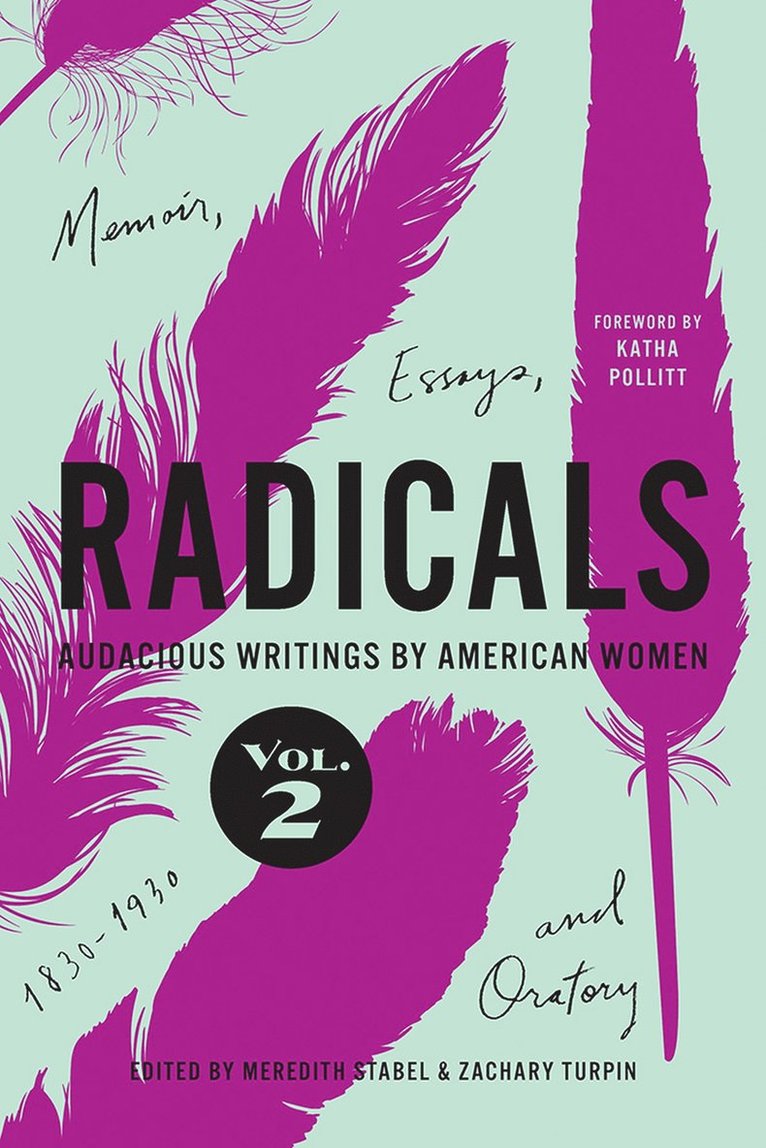
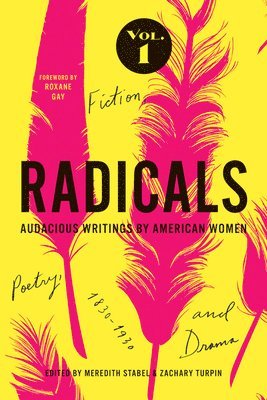
Emily Dickinson on sex, desire, and 'the chapter . . . in the night.' Emma Goldman against the tyranny of marriage. Ida B. Wells against lynching. Anna Julia Cooper on Black American womanhood. Frances Willard on riding a bicycle. Perhaps the first of its kind, Radicals is a two-volume collection of writings by American women of the nineteenth and early twentieth centuries, with special attention paid to the voices of Black, Indigenous, and Asian American women.In Volume 2: Memoir, Essays, and Oratory, selections span from early works like Sarah Mapps Douglass's anti-slavery appeal 'A Mother's Love' (1832) and Maria W. Stewart's 'Address Delivered at the African Masonic Hall' (1833), to Zitkala-Sa's memories in 'The Land of Red Apples' (1921) and Charlotte Perkins Gilman's moving final essay 'The Right to Die' (1935). In between, readers will discover a whole host of vibrant and challenging lesser-known texts that are rarely collected today. Some, indeed, have been out of print for more than a century.Unique among anthologies of American literature, Radicals undoes such silences by collecting the underrepresented, the uncategorizable, the unbowed-powerful writings by American women of genius and audacity who looked toward, and wrote toward, what Charlotte Perkins Gilman called 'a lifted world.'
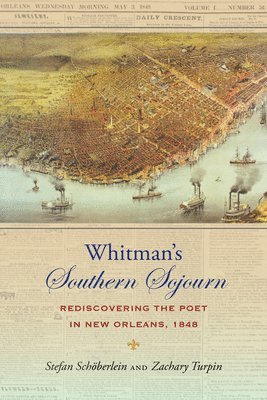
Walt Whitman’s 1848 stint in New Orleans was a crucial moment of development for the poet. Working for The Daily Crescent, a new local newspaper, Whitman spent his days strolling through the multiracial city and turning his impressions into prose sketches, news items, and fiery editorials. While in the southern metropolis, the young journalist brushed shoulders with American soldiers returning from Mexico, cheered on European revolutions in the French Quarter, and explored raunchy performances at the St. Charles Theatre. Yet 1848 was also the year Whitman began lobbying for “Free Soil,” after encountering in New Orleans, Creole citizens, enslaved Black people, and the slaveholder who would become America’s next president.Far from some brief escape, New Orleans was a significant milestone in Whitman’s development as a political firebrand, as well as a major step for a professional journalist on the rise. Through a wealth of new texts, contexts, and personalities, Stefan Schöberlein and Zachary Turpin paint a vivid picture of a writer on the verge of Leaves of Grass, embracing the contradictions and the multitudes of New Orleans.
Emily Dickinson on sex, desire, and 'the chapter . . . in the night.' Emma Goldman against the tyranny of marriage. Ida B. Wells against lynching. Anna Julia Cooper on Black American womanhood. Frances Willard on riding a bicycle. Perhaps the first of its kind, Radicals is a two-volume collection of writings by American women of the nineteenth and early twentieth centuries, with special attention paid to the voices of Black, Indigenous, and Asian American women.In Volume 2: Memoir, Essays, and Oratory, selections span from early works like Sarah Mapps Douglass's anti-slavery appeal 'A Mother's Love' (1832) and Maria W. Stewart's 'Address Delivered at the African Masonic Hall' (1833), to Zitkala-Sa's memories in 'The Land of Red Apples' (1921) and Charlotte Perkins Gilman's moving final essay 'The Right to Die' (1935). In between, readers will discover a whole host of vibrant and challenging lesser-known texts that are rarely collected today. Some, indeed, have been out of print for more than a century.Unique among anthologies of American literature, Radicals undoes such silences by collecting the underrepresented, the uncategorizable, the unbowed-powerful writings by American women of genius and audacity who looked toward, and wrote toward, what Charlotte Perkins Gilman called 'a lifted world.'
Walt Whitman’s 1848 stint in New Orleans was a crucial moment of development for the poet. Working for The Daily Crescent, a new local newspaper, Whitman spent his days strolling through the multiracial city and turning his impressions into prose sketches, news items, and fiery editorials. While in the southern metropolis, the young journalist brushed shoulders with American soldiers returning from Mexico, cheered on European revolutions in the French Quarter, and explored raunchy performances at the St. Charles Theatre. Yet 1848 was also the year Whitman began lobbying for “Free Soil,” after encountering in New Orleans, Creole citizens, enslaved Black people, and the slaveholder who would become America’s next president.Far from some brief escape, New Orleans was a significant milestone in Whitman’s development as a political firebrand, as well as a major step for a professional journalist on the rise. Through a wealth of new texts, contexts, and personalities, Stefan Schöberlein and Zachary Turpin paint a vivid picture of a writer on the verge of Leaves of Grass, embracing the contradictions and the multitudes of New Orleans.