Zahra Ghane – författare
Visar alla böcker från författaren Zahra Ghane. Handla med fri frakt och snabb leverans.
5 produkter
5 produkter
Inbunden, Engelska, 2025
1 481 kr
Skickas inom 10-15 vardagar
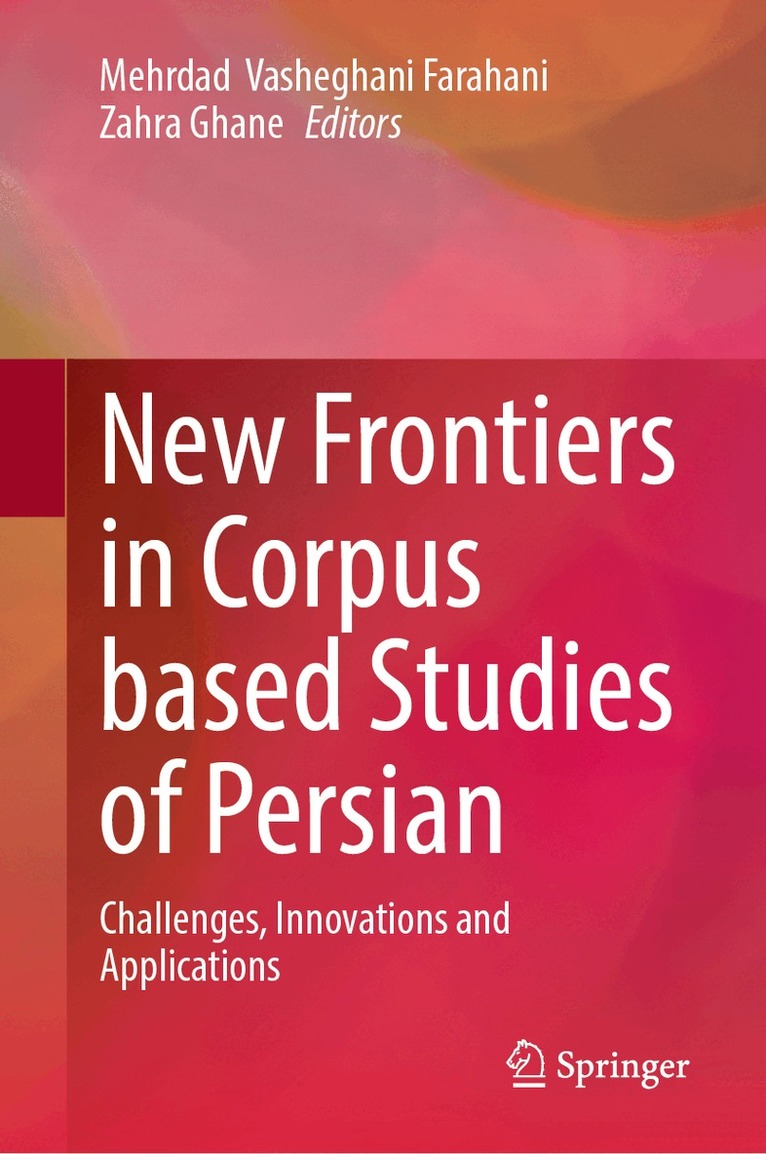
In the rapidly evolving field of language studies, this book offers a groundbreaking application of Corpus Linguistics to Persian—a language that has long been underrepresented in corpus-based research. Through a systematic analysis of linguistic data, the work explores the structural and functional dimensions of Persian, uncovering key trends in grammar, lexical usage, and sociolinguistic variation. By employing corpus-driven methodologies, it sheds light on the dynamic evolution of the language, providing deep insights into both contemporary usage and historical change. This book serves as a valuable resource for researchers and linguists with a designated interest in the application of Corpus Linguistics to Persian. It runs the gamut from syntax and semantics to digital humanities and translation studies, offering both depth and breadth in linguistic inquiry. By addressing a significant gap in the Persian language research, the edited volume comes to offer a fresh perspective on how corpus-based approaches can illuminate the dynamic nature of language and broaden our understanding of its use across contexts.
E-bok
Engelska, 20251 838 kr
Läs direkt efter köp
In the rapidly evolving field of language studies, this book offers a groundbreaking application of Corpus Linguistics to Persian—a language that has long been underrepresented in corpus-based research. Through a systematic analysis of linguistic data, the work explores the structural and functional dimensions of Persian, uncovering key trends in grammar, lexical usage, and sociolinguistic variation. By employing corpus-driven methodologies, it sheds light on the dynamic evolution of the language, providing deep insights into both contemporary usage and historical change. This book serves as a valuable resource for researchers and linguists with a designated interest in the application of Corpus Linguistics to Persian. It runs the gamut from syntax and semantics to digital humanities and translation studies, offering both depth and breadth in linguistic inquiry. By addressing a significant gap in the Persian language research, the edited volume comes to offer a fresh perspective on how corpus-based approaches can illuminate the dynamic nature of language and broaden our understanding of its use across contexts.
Inbunden, Engelska, 2026
3 355 kr
Skickas inom 10-15 vardagar
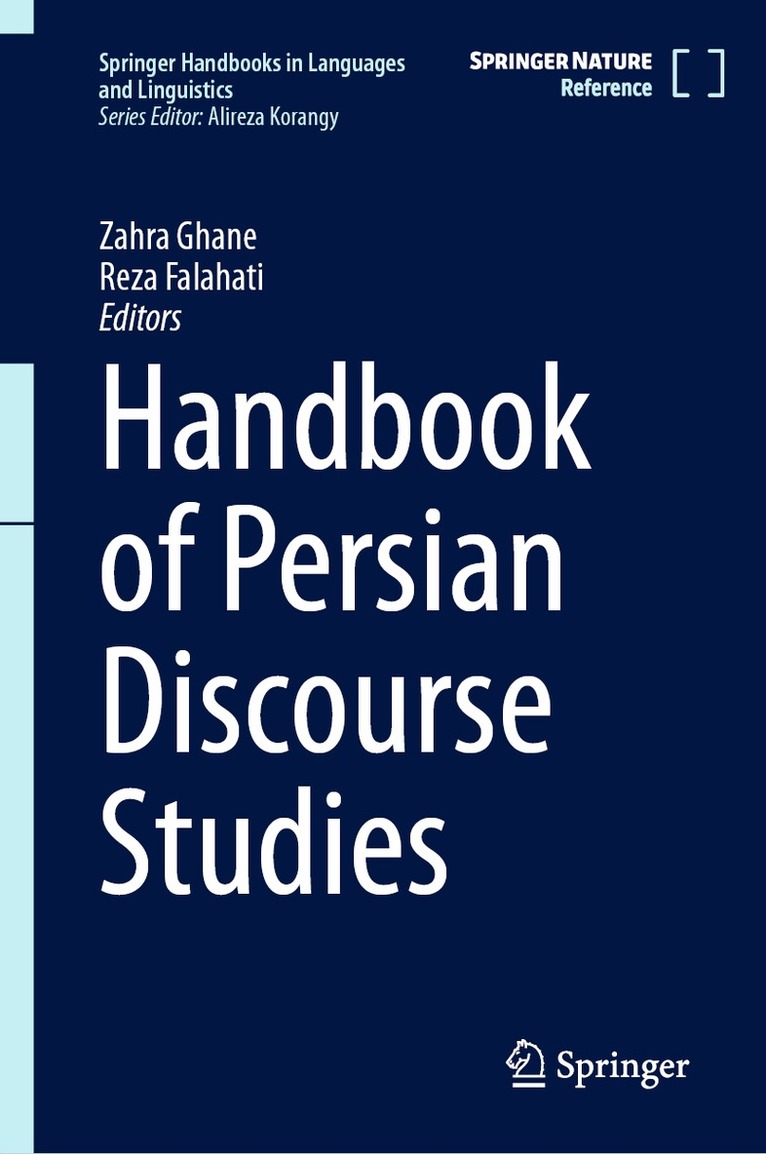
This book is the first of its kind to provide a comprehensive engagement with Persian discourse analysis in the Western hemisphere, addressing the shadowy borders that exist between culture, language, linguistics, and historicity, which are often overlooked in cultural linguistics and pragmatics more broadly. The theoretical foundations of this book are deeply rooted in culture, mannerism, language (both official and idiomatic), and pragmatics of language use. The first section sets the theoretical foundation with a thorough overview of critical discourse analysis and the application of this theory in analyzing speech, text and emotions. The subsequent four sections conduct investigations into a wide array of genres, namely academic contexts, politics, media, literature and music, respectively and describe the relevant corpora with their specific components from the viewpoints of terminology and lexicography. The sixth section looks at discourse and translation, offering an in-depth excavation of discourse-analytical frameworks applicable to translation studies. The seventh demarcates discourse and educational settings unpacking what discourse analysis can do to inform teachers and students. The section on identity and globalization explores these concepts as defined by linguistic approaches. The second last section on discourse markers tackles language, meaning, and context, and employs ‘discourse marker’ as an umbrella term for linguistic devices that signal communicative intention, categorizing them and their functions in Persian conversational and language learning contexts. The final part of the work looks at discourse and its interface with pragmatics, grammar and/or intonation, defining grammatical and intonational constructions as a form-meaning pair so as to illustrate how they can be utilized to signal different functions. Relevant to cultural and theoretical linguistics, and specialists in Persian language studies, specifically, this one-stop text is a sweeping compendium to Persian discourse studies.
E-bok
Engelska, 20263 966 kr
Läs direkt efter köp
This book is the first of its kind to provide a comprehensive engagement with Persian discourse analysis in the Western hemisphere, addressing the shadowy borders that exist between culture, language, linguistics, and historicity, which are often overlooked in cultural linguistics and pragmatics more broadly. The theoretical foundations of this book are deeply rooted in culture, mannerism, language (both official and idiomatic), and pragmatics of language use. The first section sets the theoretical foundation with a thorough overview of critical discourse analysis and the application of this theory in analyzing speech, text and emotions. The subsequent four sections conduct investigations into a wide array of genres, namely academic contexts, politics, media, literature and music, respectively and describe the relevant corpora with their specific components from the viewpoints of terminology and lexicography. The sixth section looks at discourse and translation, offering an in-depth excavation of discourse-analytical frameworks applicable to translation studies. The seventh demarcates discourse and educational settings unpacking what discourse analysis can do to inform teachers and students. The section on identity and globalization explores these concepts as defined by linguistic approaches. The second last section on discourse markers tackles language, meaning, and context, and employs 'discourse marker' as an umbrella term for linguistic devices that signal communicative intention, categorizing them and their functions in Persian conversational and language learning contexts. The final part of the work looks at discourse and its interface with pragmatics, grammar and/or intonation, defining grammatical and intonational constructions as a form-meaning pair so as to illustrate how they can be utilized to signal different functions. Relevant to cultural and theoretical linguistics, and specialists in Persian language studies, specifically, this one-stop text is a sweeping compendium to Persian discourse studies.
Inbunden, Engelska, 2026
3 355 kr
Skickas inom 10-15 vardagar
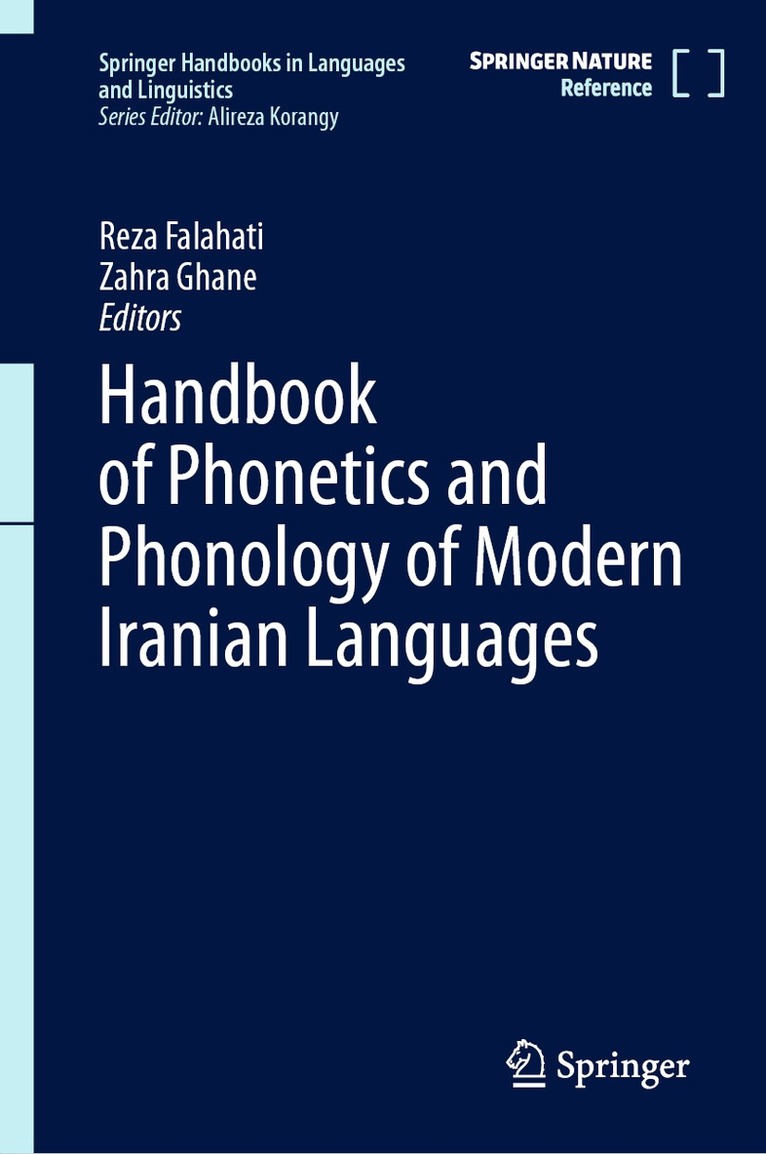
This handbook presents a comprehensive and up-to-date survey of phonetic and phonological research on Iranian languages and dialects. Iranian languages — spoken by tens of millions across a wide geographical area extending from the Middle East to Central and South Asia, and diaspora communities — exhibit considerable variation in phonetic detail and phonological structure. Bringing together leading scholars from around the world, this handbook provides original empirical findings, theoretical insights, and experimental results that explore various aspects of sound systems of Iranian languages and dialects. Until now, much of the scholarly work on Iranian languages has focused on historical and comparative linguistics of Persian, or the pedagogical aspects of mainly Persian. This handbook takes as its central focus the systematic study of phonological processes and sound systems across a wide range of Iranian languages in order to highlight the unexplored phonetic and phonological details of contemporary Iranian languages. The book fills that critical gap, offering a thematic and typologically informed approach. The handbook also responds to a growing demand for interdisciplinary work. Contributions bridge traditional phonological theory with applied domains such as first / second language acquisition, speech therapy, and poetic meter. It serves multiple audiences that include theoretical linguists, speech clinicians, language educators, and typologists interested in the sound systems of Iranian languages and dialects. In doing so, this book stimulates future research, promotes cross-linguistic comparison, and fosters greater attention to the sound systems of Iranian languages in academic, clinical, and educational settings.