Zebo Peng - Böcker
Visar alla böcker från författaren Zebo Peng. Handla med fri frakt och snabb leverans.
8 produkter
8 produkter
1 625 kr
Skickas inom 10-15 vardagar
Embedded systems are usually composed of several interacting components such as custom or application specific processors, ASICs, memory blocks, and the associated communication infrastructure. The development of tools to support the design of such systems requires a further step from high-level synthesis towards a higher abstraction level. The lack of design tools accepting a system-level specification of a complete system, which may include both hardware and software components, is one of the major obstructions in the design of embedded systems. Thus, more and more research efforts have been spent on issues related to system-level synthesis. This book addresses two active research areas of design automation: high-level synthesis and system-level synthesis. In particular, a transformational approach to synthesis from VHDL specifications is described. The book provides a coherent view of system synthesis which includes the high-level and the system-level synthesis tasks. VHDL is used as a specification language and several issues concerning the use of VHDL for high-level and system-level synthesis are discussed.These include aspects from the compilation of VHDL into an internal design representation to the synthesis of systems specified as interacting VHDL processes. The book emphasizes the use of a transformational approach to system synthesis. A Petri net-based design representation is rigorously defined and used throughout the book as a basic vehicle for illustration of transformations and other design concepts. Iterative improvement heuristics, such as tabu search, simulated annealing and genetic algorithms, are discussed and illustrated as strategies which are used to guide the optimization process in a transformation-based design environment. Advanced topics, including hardware/software partitioning, test synthesis and low power synthesis are discussed from the perspective of a transformational approach to system synthesis. The text can be used for advanced undergraduate or graduate courses in the area of design automation and, more specifically, of high-level and system-level synthesis.At the same time the book is intended for CAD developers and researchers as well as industrial designers of digital systems who are interested in new algorithms and techniques supporting modern design tools and methodologies.
1 096 kr
Skickas inom 10-15 vardagar
Embedded computer systems are now everywhere: from alarm clocks to PDAs, from mobile phones to cars, almost all the devices we use are controlled by embedded computers. An important class of embedded computer systems is that of hard real-time systems, which have to fulfill strict timing requirements. As real-time systems become more complex, they are often implemented using distributed heterogeneous architectures.Analysis and Synthesis of Distributed Real-Time Embedded Systems addresses the design of real-time applications implemented using distributed heterogeneous architectures. The systems are heterogeneous not only in terms of hardware components, but also in terms of communication protocols and scheduling policies. Regarding this last aspect, time-driven and event-driven systems, as well as a combination of the two, are considered. Such systems are used in many application areas like automotive electronics, real-time multimedia, avionics, medical equipment, and factory systems. The proposed analysis and synthesis techniques derive optimized implementations that fulfill the imposed design constraints. An important part of the implementation process is the synthesis of the communication infrastructure, which has a significant impact on the overall system performance and cost.Analysis and Synthesis of Distributed Real-Time Embedded Systems considers the mapping and scheduling tasks within an incremental design process. To reduce the time-to-market of products, the design of real-time systems seldom starts from scratch. Typically, designers start from an already existing system, running certain applications, and the design problem is to implement new functionality on top of this system. Supporting such an incremental design process provides a high degree of flexibility, and can result in important reductions of design costs.Analysis and Synthesis of Distributed Real-Time Embedded Systems will be of interest to advanced undergraduates, graduate students, researchers and designers involved in the field of embedded systems.
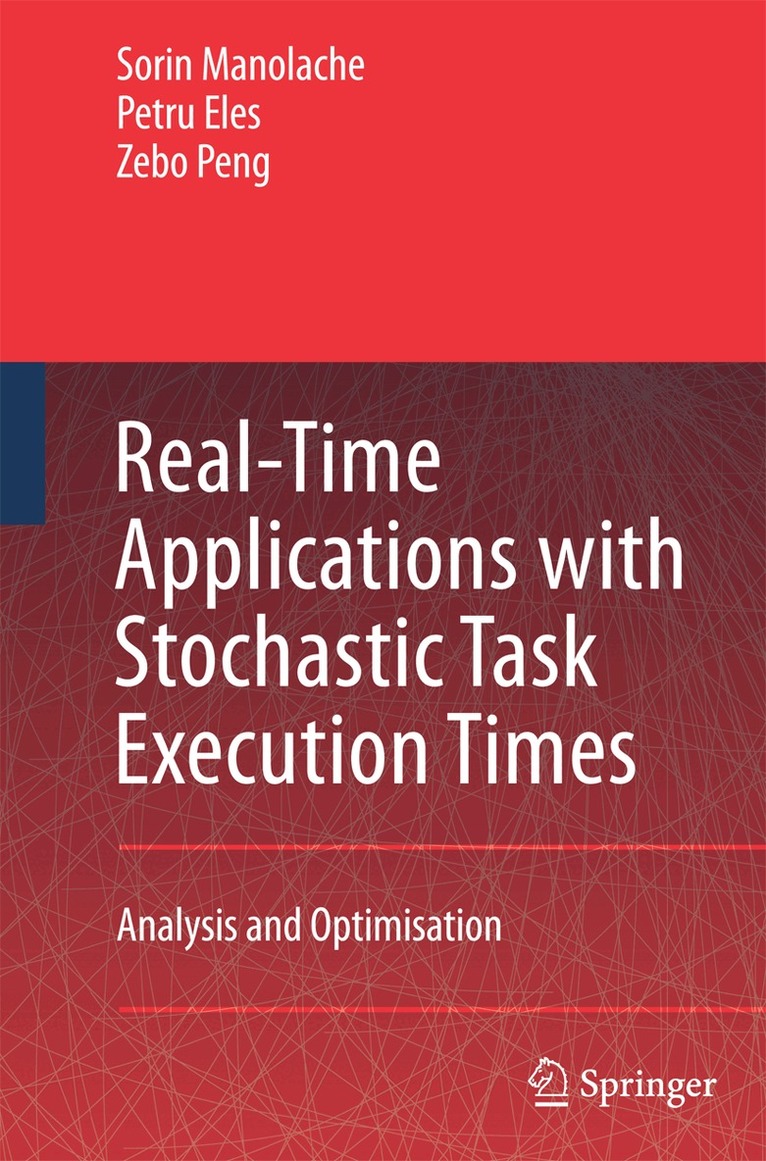
Real-Time Applications with Stochastic Task Execution Times
Analysis and Optimisation
Inbunden, Engelska, 2007
1 064 kr
Skickas inom 10-15 vardagar
Real-Time Applications with Stochastic Task Execution Times presents three approaches to the analysis of the deadline miss ratio of applications with stochastic task execution times. Each of the three approaches fits best to a different context. The first approach is an exact one and is efficiently applicable to monoprocessor systems. The second approach is an approximate one, which allows for designer-controlled trade-off between analysis accuracy and analysis speed. It is efficiently applicable to multiprocessor systems. The third approach is less accurate but sufficiently fast in order to be placed inside optimisation loops. Based on the last approach, we propose a heuristic for task mapping and priority assignment for deadline miss ratio minimisation.
1 578 kr
Skickas inom 10-15 vardagar
Embedded systems are usually composed of several interacting components such as custom or application specific processors, ASICs, memory blocks, and the associated communication infrastructure. The development of tools to support the design of such systems requires a further step from high-level synthesis towards a higher abstraction level. The lack of design tools accepting a system-level specification of a complete system, which may include both hardware and software components, is one of the major bottlenecks in the design of embedded systems. Thus, more and more research efforts have been spent on issues related to system-level synthesis. This book addresses the two most active research areas of design automation today: high-level synthesis and system-level synthesis. In particular, a transformational approach to synthesis from VHDL specifications is described. System Synthesis with VHDL provides a coherent view of system synthesis which includes the high-level and the system-level synthesis tasks. VHDL is used as a specification language and several issues concerning the use of VHDL for high-level and system-level synthesis are discussed. These include aspects from the compilation of VHDL into an internal design representation to the synthesis of systems specified as interacting VHDL processes. The book emphasizes the use of a transformational approach to system synthesis. A Petri net based design representation is rigorously defined and used throughout the book as a basic vehicle for illustration of transformations and other design concepts. Iterative improvement heuristics, such as tabu search, simulated annealing and genetic algorithms, are discussed and illustrated as strategies which are used to guide the optimization process in a transformation-based design environment. Advanced topics, including hardware/software partitioning, test synthesis and low power synthesis are discussed from the perspective of a transformational approach to system synthesis. System Synthesis with VHDL can be used for advanced undergraduate or graduate courses in the area of design automation and, more specifically, of high-level and system-level synthesis. At the same time the book is intended for CAD developers and researchers as well as industrial designers of digital systems who are interested in new algorithms and techniques supporting modern design tools and methodologies.
1 316 kr
Skickas inom 5-8 vardagar
Embedded computer systems are now everywhere: from alarm clocks to PDAs, from mobile phones to cars, almost all the devices we use are controlled by embedded computers. An important class of embedded computer systems is that of hard real-time systems, which have to fulfill strict timing requirements. As real-time systems become more complex, they are often implemented using distributed heterogeneous architectures.Analysis and Synthesis of Distributed Real-Time Embedded Systems addresses the design of real-time applications implemented using distributed heterogeneous architectures. The systems are heterogeneous not only in terms of hardware components, but also in terms of communication protocols and scheduling policies. Regarding this last aspect, time-driven and event-driven systems, as well as a combination of the two, are considered. Such systems are used in many application areas like automotive electronics, real-time multimedia, avionics, medical equipment, and factory systems. The proposed analysis and synthesis techniques derive optimized implementations that fulfill the imposed design constraints. An important part of the implementation process is the synthesis of the communication infrastructure, which has a significant impact on the overall system performance and cost.Analysis and Synthesis of Distributed Real-Time Embedded Systems considers the mapping and scheduling tasks within an incremental design process. To reduce the time-to-market of products, the design of real-time systems seldom starts from scratch. Typically, designers start from an already existing system, running certain applications, and the design problem is to implement new functionality on top of this system. Supporting such an incremental design process provides a high degree of flexibility, and can result in important reductions of design costs.Analysis and Synthesis of Distributed Real-Time Embedded Systems will be of interest to advanced undergraduates, graduate students, researchers and designers involved in the field of embedded systems.
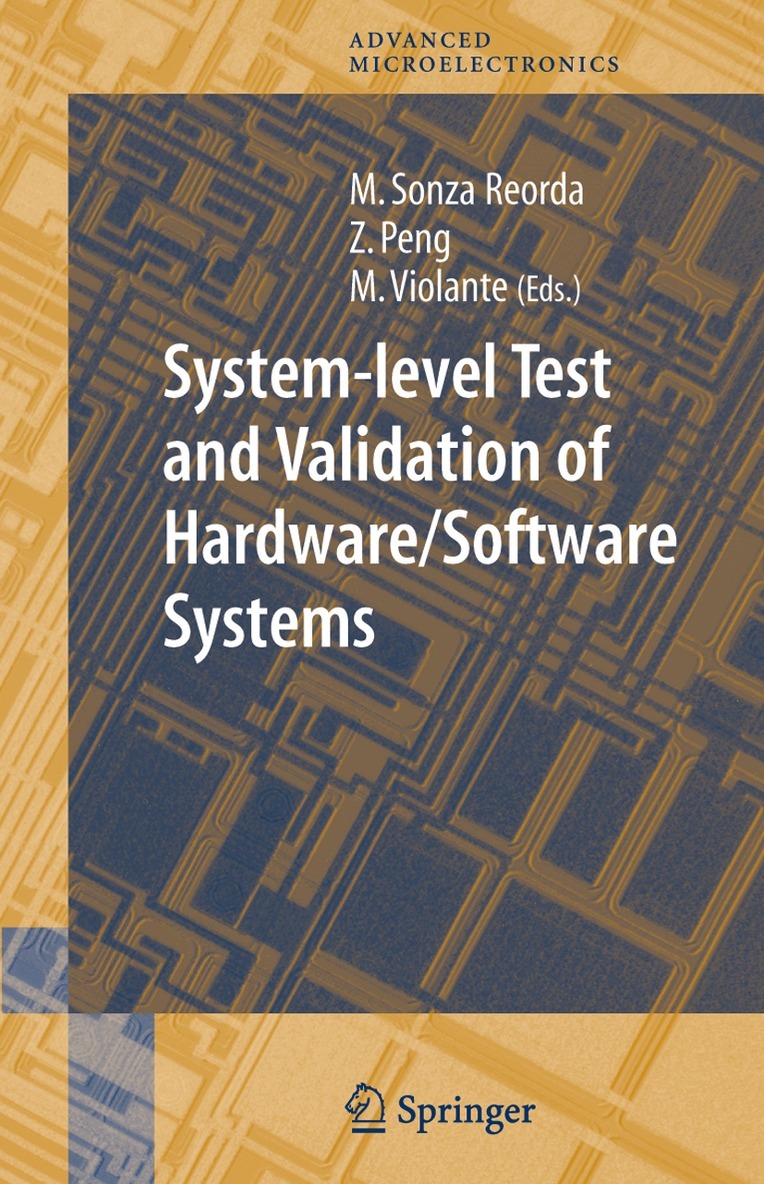
Del 17 - Springer Series in Advanced Microelectronics
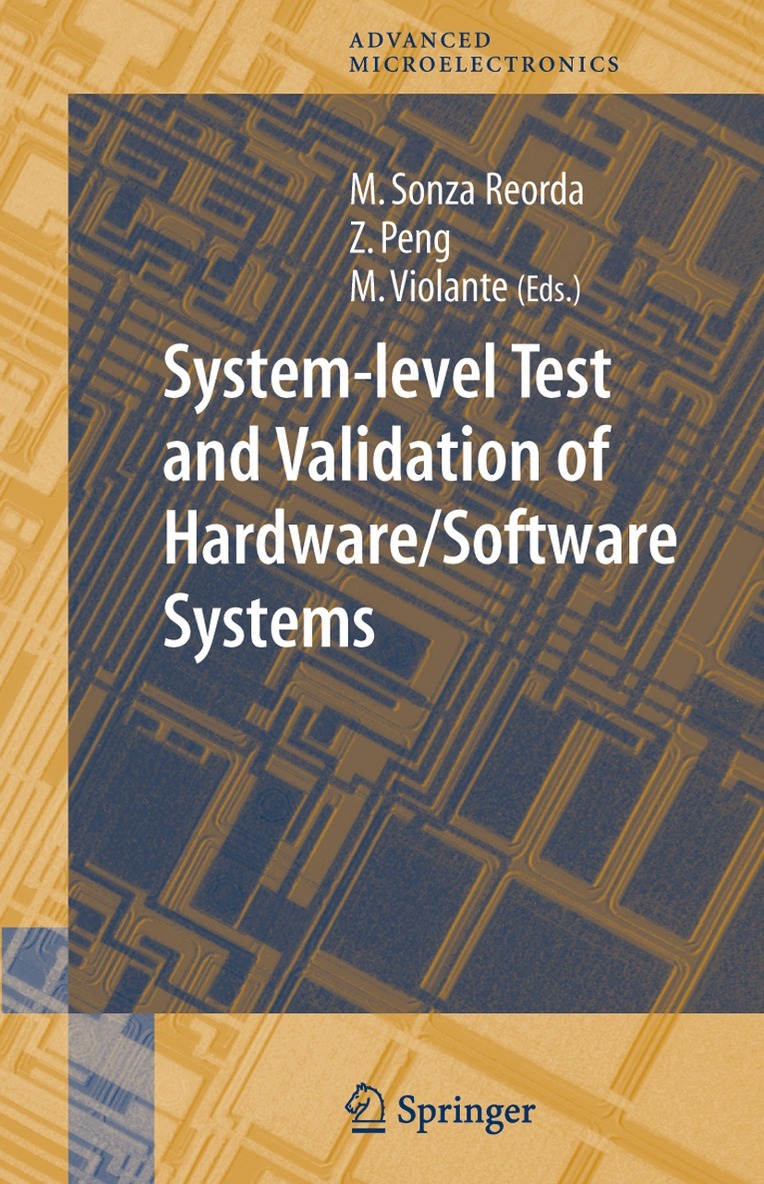
System-level Test and Validation of Hardware/Software Systems
Häftad, Engelska, 2010
1 064 kr
Skickas inom 10-15 vardagar
New manufacturing technologies have made possible the integration of entire systems on a single chip. This new design paradigm, termed system-on-chip (SOC), together with its associated manufacturing problems, represents a real challenge for designers. SOC is also reshaping approaches to test and validation activities. These are beginning to migrate from the traditional register-transfer or gate levels of abstraction to the system level. Until now, test and validation have not been supported by system-level design tools so designers have lacked the infrastructure to exploit all the benefits stemming from the adoption of the system level of abstraction. Research efforts are already addressing this issue. This monograph provides a state-of-the-art overview of the current validation and test techniques by covering all aspects of the subject including: modeling of bugs and defects; stimulus generation for validation and test purposes (including timing errors; design for testability.
1 096 kr
Skickas inom 10-15 vardagar
New manufacturing technologies have made possible the integration of entire systems on a single chip. This new design paradigm, termed system-on-chip (SOC), together with its associated manufacturing problems, represents a real challenge for designers.SOC is also reshaping approaches to test and validation activities. These are beginning to migrate from the traditional register-transfer or gate levels of abstraction to the system level. Until now, test and validation have not been supported by system-level design tools so designers have lacked the infrastructure to exploit all the benefits stemming from the adoption of the system level of abstraction. Research efforts are already addressing this issue.This monograph provides a state-of-the-art overview of the current validation and test techniques by covering all aspects of the subject including:modeling of bugs and defects;stimulus generation for validation and test purposes (including timing errors;design for testability.
Real-Time Applications with Stochastic Task Execution Times
Analysis and Optimisation
Häftad, Engelska, 2014
1 064 kr
Skickas inom 10-15 vardagar
Real-Time Applications with Stochastic Task Execution Times presents three approaches to the analysis of the deadline miss ratio of applications with stochastic task execution times. Each of the three approaches fits best to a different context. The first approach is an exact one and is efficiently applicable to monoprocessor systems. The second approach is an approximate one, which allows for designer-controlled trade-off between analysis accuracy and analysis speed. It is efficiently applicable to multiprocessor systems. The third approach is less accurate but sufficiently fast in order to be placed inside optimisation loops. Based on the last approach, we propose a heuristic for task mapping and priority assignment for deadline miss ratio minimisation.