Zenel Garcia – författare
2 244 kr
Skickas inom 10-15 vardagar
656 kr
Skickas inom 10-15 vardagar
726 kr
Läs direkt efter köp
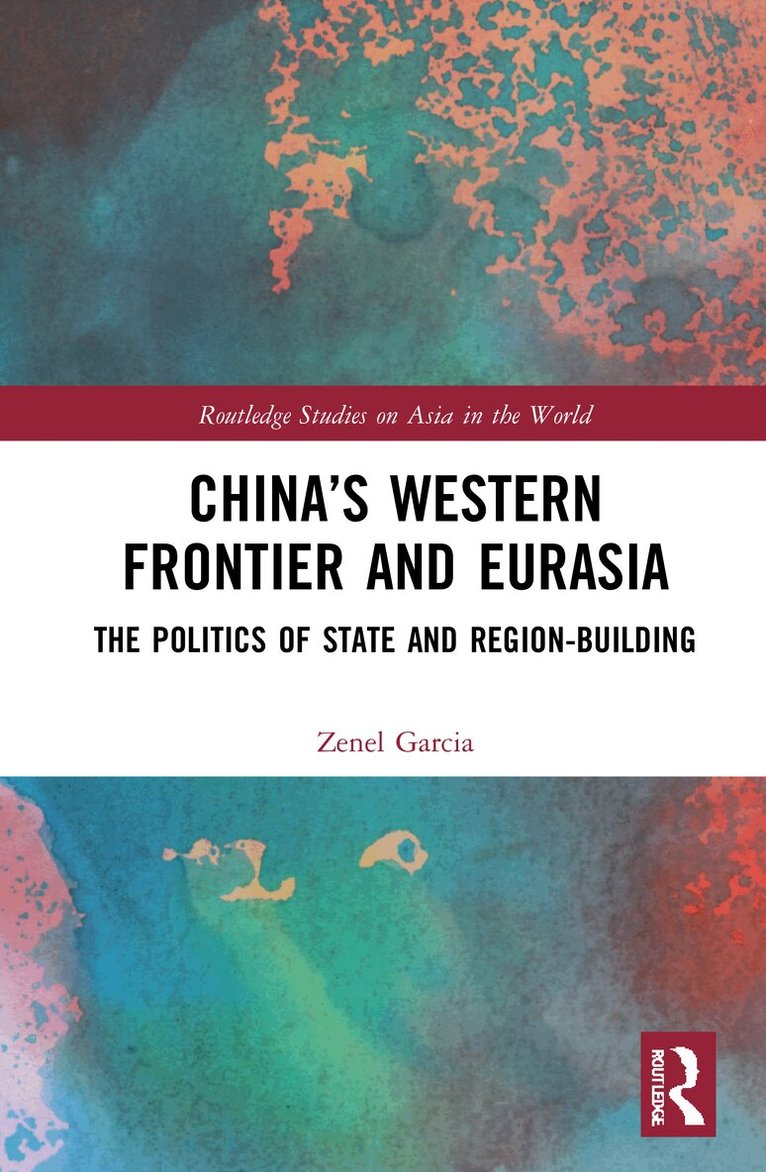
China has emerged as a dominant power in Eurasian affairs that not only exercises significant political and economic power, but increasingly, ideational power too.
Since the founding of the People’s Republic, Chinese Communist Party leaders have sought to increase state capacity and exercise more effective control over their western frontier through a series of state-building initiatives. Although these initiatives have always incorporated an international component, the collapse of the USSR, increasing globalization, and the party’s professed concerns about terrorism, separatism, and extremism have led to a region-building project in Eurasia. Garcia traces how domestic elite-led narratives about security and development generate state-building initiatives, and then region-building projects. He also assesses how region-building projects are promoted through narratives of the historicity of China’s engagement in Eurasia, the promotion of norms of non-interference, and appeals to mutual development. Finally, he traces the construction of regions through formal and informal institutions as well as integrative infrastructure. By presenting three phases of Chinese domestic state-building and region-building from 1988-present, Garcia shows how region-building projects have enabled China to increase state capacity, control, and development in its western frontier.
Recommended for scholars of China’s international relations and development policy.
720 kr
Läs direkt efter köp
China has emerged as a dominant power in Eurasian affairs that not only exercises significant political and economic power, but increasingly, ideational power too.
Since the founding of the People’s Republic, Chinese Communist Party leaders have sought to increase state capacity and exercise more effective control over their western frontier through a series of state-building initiatives. Although these initiatives have always incorporated an international component, the collapse of the USSR, increasing globalization, and the party’s professed concerns about terrorism, separatism, and extremism have led to a region-building project in Eurasia. Garcia traces how domestic elite-led narratives about security and development generate state-building initiatives, and then region-building projects. He also assesses how region-building projects are promoted through narratives of the historicity of China’s engagement in Eurasia, the promotion of norms of non-interference, and appeals to mutual development. Finally, he traces the construction of regions through formal and informal institutions as well as integrative infrastructure. By presenting three phases of Chinese domestic state-building and region-building from 1988-present, Garcia shows how region-building projects have enabled China to increase state capacity, control, and development in its western frontier.
Recommended for scholars of China’s international relations and development policy.
711 kr
Skickas inom 10-15 vardagar
840 kr
Läs direkt efter köp
This book assesses the Sino-Japanese strategic competition in the context of the South China Sea (SCS) territorial disputes. The South China Sea territorial disputes are quickly becoming the most significant security problem in East and Southeast Asia. Two major powers, China and Japan, have interests in the region and are pursuing different strategies that can significantly impact the outcome of the disputes. Utilizing Securitization Theory, this study evaluates the Sino-Japanese strategic competition through political narratives that galvanize the military and economic policies that are transforming the region. It highlights how these narratives, so closely bounded to the political legitimacy of current governments and supported by provocative policies, have resulted in a co-constitutive pattern of enmity and securitization, thus making it increasingly difficult to resolve the disputes.