Zerihun Mohammed – författare
Visar alla böcker från författaren Zerihun Mohammed. Handla med fri frakt och snabb leverans.
4 produkter
4 produkter
E-bok
PDF, Engelska, 2016505 kr
Läs direkt efter köp
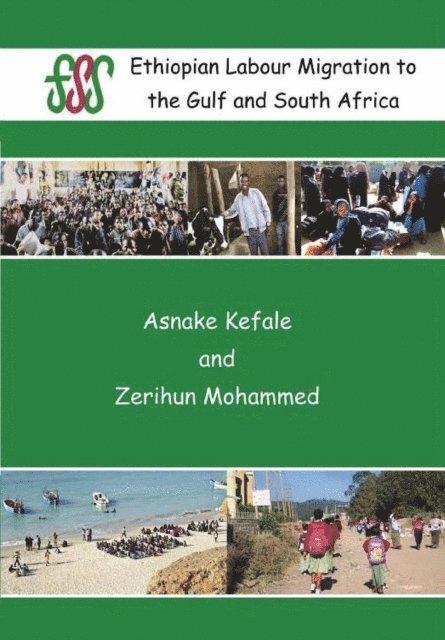
The major objective of the research is to produce evidence-based knowledge on the social and economic impacts of labour migration by looking at the challenges and opportunities of Ethiopian labour migration to the Gulf and South Africa. On the one hand, international migration from Ethiopia could be considered as an aspect of development problem. The major push factors that forces Ethiopian migrants to the Gulf and South Africa are economic/developmental problems ranging from lack of employment opportunities to wage differentials. On the other hand, international migration could be considered as an important resource that could be tapped for accelerating socio-economic development. At the general level, this research aims to examine the successes and failures of policies and institutions in realising the potentials of international migration for socio-economic development of the country and minimizing its adverse impacts. At the same time, the growing problem of illegal migration will be examined.
Häftad, Engelska, 2017
519 kr
Skickas inom 5-8 vardagar
Del 14 - Forum for Social Studies
Migration, Remittances and Household Socio-Economic Wellbeing
The Case of Ethiopian Labour Migrants to the Republic of South Africa and the Middle East
Häftad, Engelska, 2018
407 kr
Skickas inom 5-8 vardagar
E-bok
PDF, Engelska, 2018475 kr
Läs direkt efter köp
In recent years, a large number of Ethiopians are travelling to various countries as labour migrants. The Republic of South Africa and the oil-rich Gulf countries have emerged as major destinations for many documented as well as undocumented Ethiopian labour migrants. The majority of the migrants send a substantial amounts of money back to the country for different purposes. Out of this, the largest share comes through �informal� channels, bypassing banks and other money transfer institutions. The use of informal means of money transfer is problematic as it does often violate government financial regulations, both in the sending and receiving countries. In addition, the use of informal channels denies the country valuable foreign exchange income. This monograph examines the various channels that Ethiopian labour migrants in the Republic of South Africa and the Middle East use to send remittance money to their families; and the respective advantages and drawbacks thereof. It also looks at how remittance money is utilised by receiving families and its socio-economic impacts.