Zhao Chen – författare
2 151 kr
Skickas inom 10-15 vardagar
629 kr
Skickas inom 10-15 vardagar
2 429 kr
Skickas inom 10-15 vardagar
1 810 kr
Skickas inom 5-8 vardagar
443 kr
Läs direkt efter köp
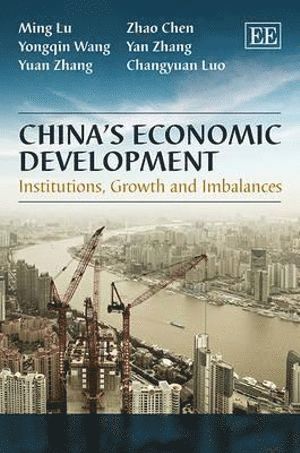
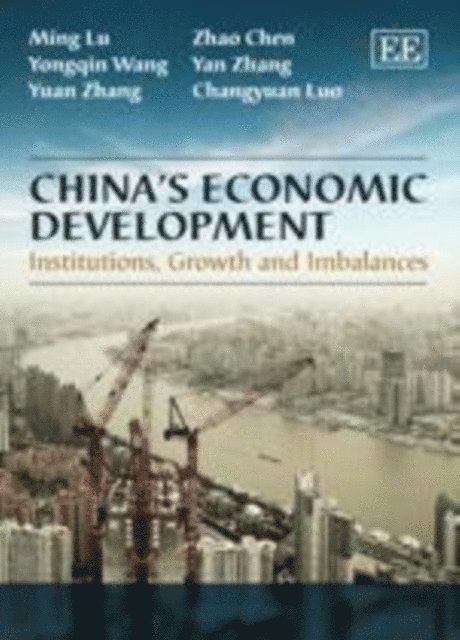
The authors identify three major factors in the growth of the Chinese economy: economic decentralization and political centralization; the urban-rural divide; and relational society. These are explored in depth via analyses of factors including urban and rural economic development and their political and social foundations, industrial agglomeration, transitions of public services and governmental responsibilities towards them and developmental imbalances and mechanisms. It is illustrated that whilst contemporary China has obviously made great economic strides, a wide variety of problems are accumulating over time. The book concludes that following three decades of high economic growth, China now faces great challenges for sustainable growth, and the institutions of China''s economy have reached a critical point. Strategies for dealing with these challenges and requirements for the successful future development of China are thus prescribed.
This fascinating book will provide a stimulating read for scholars, students and researchers in the fields of Asian studies, economics and development.
Contents: 1. Introduction: The Reform and Opening-up of a Large, Developing Country 2. Political and Social Foundations of Economic Development 3. Urban and Rural Economic Development During the Process of Urbanization and Industrialization 4. Industrial Agglomeration in the Process of Globalization and Regional Economic Development 5. Transitions of Public Services and Government Responsibilities During the Marketization Process 6. Developmental Imbalances and Mechanisms for Improving the Market System 7. Appropriate Institutions and Sustainable Growth: China''s Development and its Worldwide Significance References Index
730 kr
Läs direkt efter köp
Known as the “beating heart” of the Arab World, Syria has held high geographic and political importance in the Middle East and has been the battlefield of superpowers for centuries. Since the outbreak of the “Arab Spring,” its central role has been reinforced by its civil war, one of the longest and bloodiest conflicts since World War II, causing significant humanitarian disaster.
With American power diminishing and European power in the region emerging, Europe has begun to exert its impact on Syria, and this book analyzes the diplomatic policies of European countries on Syria from the perspective of Chinese scholars. Starting with a review of the European Union’s policies in the Middle East and North Africa as a whole, the authors analyze the Syrian policies of France, the United Kingdom and Germany, the three most influential and representative countries on the European continent. The authors argue that the favoured “humanitarian intervention” concept failed to achieve the expected results, increased the bloodiness of the Syrian civil war and undermined the European Union’s advantage in the region.
Researchers and students of international relations as well as Middle East Studies will benefit from this volume.
730 kr
Läs direkt efter köp
Known as the “beating heart” of the Arab World, Syria has held high geographic and political importance in the Middle East and has been the battlefield of superpowers for centuries. Since the outbreak of the “Arab Spring,” its central role has been reinforced by its civil war, one of the longest and bloodiest conflicts since World War II, causing significant humanitarian disaster.
With American power diminishing and European power in the region emerging, Europe has begun to exert its impact on Syria, and this book analyzes the diplomatic policies of European countries on Syria from the perspective of Chinese scholars. Starting with a review of the European Union’s policies in the Middle East and North Africa as a whole, the authors analyze the Syrian policies of France, the United Kingdom and Germany, the three most influential and representative countries on the European continent. The authors argue that the favoured “humanitarian intervention” concept failed to achieve the expected results, increased the bloodiness of the Syrian civil war and undermined the European Union’s advantage in the region.
Researchers and students of international relations as well as Middle East Studies will benefit from this volume.
746 kr
Läs direkt efter köp
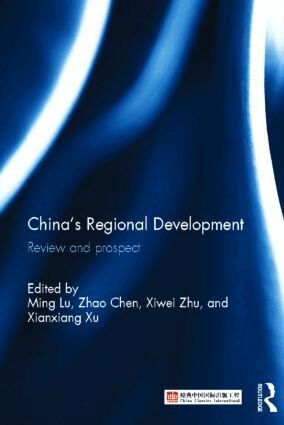
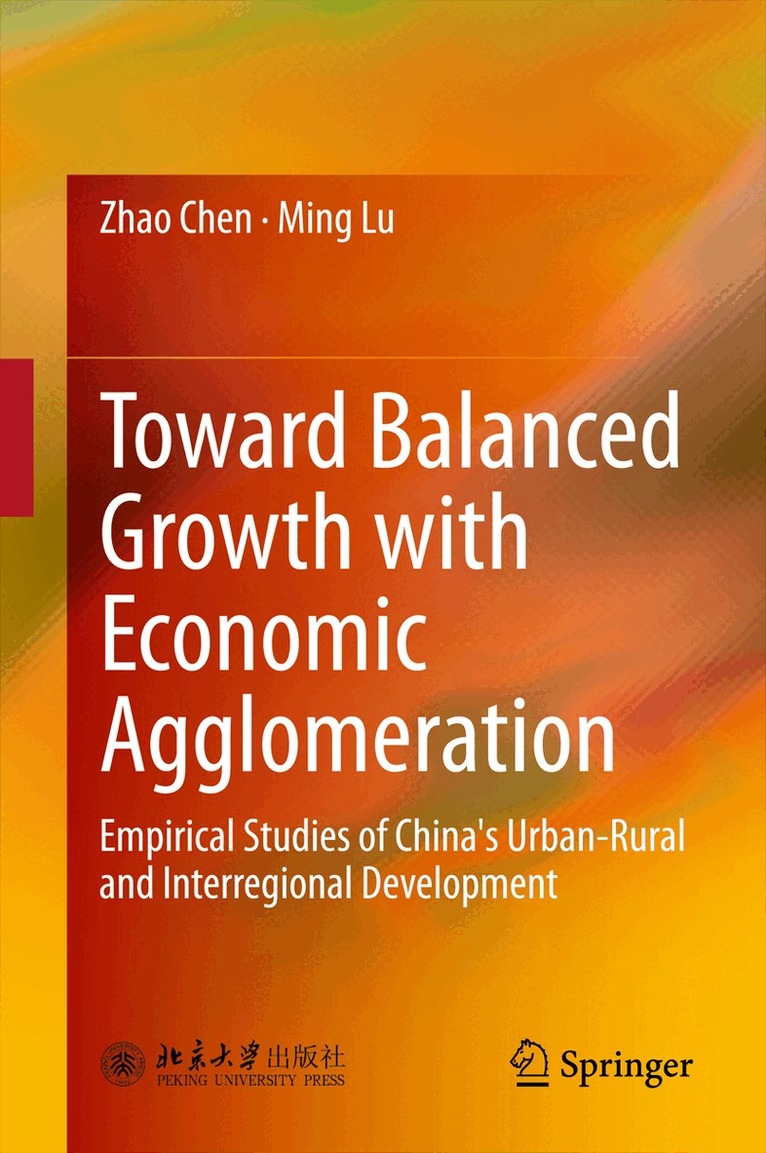
China is a large developing economy and it has been deeply involved in globalization since its economic reform and opening-up. Simultaneously, China has seen a significant change in the spatial distribution of economic resources, especially capital and labor. In the recent 10 years, economists have made significant progress in both theoretical and empirical studies on related topics.
The book provides an overview on the existing literature and current policy debates on what we have known and what we have misunderstood. This book includes an analytical framework of the New Economic Geography (NEG) with political economy to help us understand China’s regional development issues. The book of 10 chapters is organized into four thematic sections. The first section is a theoretical discussion on the relationship between economic agglomeration and interregional balanced development. The second section is a political economy analysis on regional and urban-rural development. The third section provides a summary on empirical literatures concerning from market segmentation and institutional barriers to production factor mobility. The final section consists of four empirical chapters on the relationship between agglomeration and balance, which is the core of relevant policy debates.
The book argues that for China to achieve both efficiency and balance for regional development, China may need to reform its systems which constrain production factors mobility. This book is a valuable reference for readers who are interested in spatial economics and the Chinese economy, especially its regional and urban development.
753 kr
Läs direkt efter köp
China is a large developing economy and it has been deeply involved in globalization since its economic reform and opening-up. Simultaneously, China has seen a significant change in the spatial distribution of economic resources, especially capital and labor. In the recent 10 years, economists have made significant progress in both theoretical and empirical studies on related topics.
The book provides an overview on the existing literature and current policy debates on what we have known and what we have misunderstood. This book includes an analytical framework of the New Economic Geography (NEG) with political economy to help us understand China’s regional development issues. The book of 10 chapters is organized into four thematic sections. The first section is a theoretical discussion on the relationship between economic agglomeration and interregional balanced development. The second section is a political economy analysis on regional and urban-rural development. The third section provides a summary on empirical literatures concerning from market segmentation and institutional barriers to production factor mobility. The final section consists of four empirical chapters on the relationship between agglomeration and balance, which is the core of relevant policy debates.
The book argues that for China to achieve both efficiency and balance for regional development, China may need to reform its systems which constrain production factors mobility. This book is a valuable reference for readers who are interested in spatial economics and the Chinese economy, especially its regional and urban development.
705 kr
Skickas inom 10-15 vardagar
492 kr
Skickas inom 3-6 vardagar
561 kr
Skickas inom 10-15 vardagar
708 kr
Läs direkt efter köp
561 kr
Skickas inom 10-15 vardagar
1 545 kr
Skickas inom 3-6 vardagar
534 kr
Skickas inom 5-8 vardagar
2 691 kr
Skickas inom 3-6 vardagar