Zhenyu Huang – författare
Visar alla böcker från författaren Zhenyu Huang. Handla med fri frakt och snabb leverans.
3 produkter
3 produkter
Häftad, Engelska, 2021
720 kr
Skickas inom 10-15 vardagar
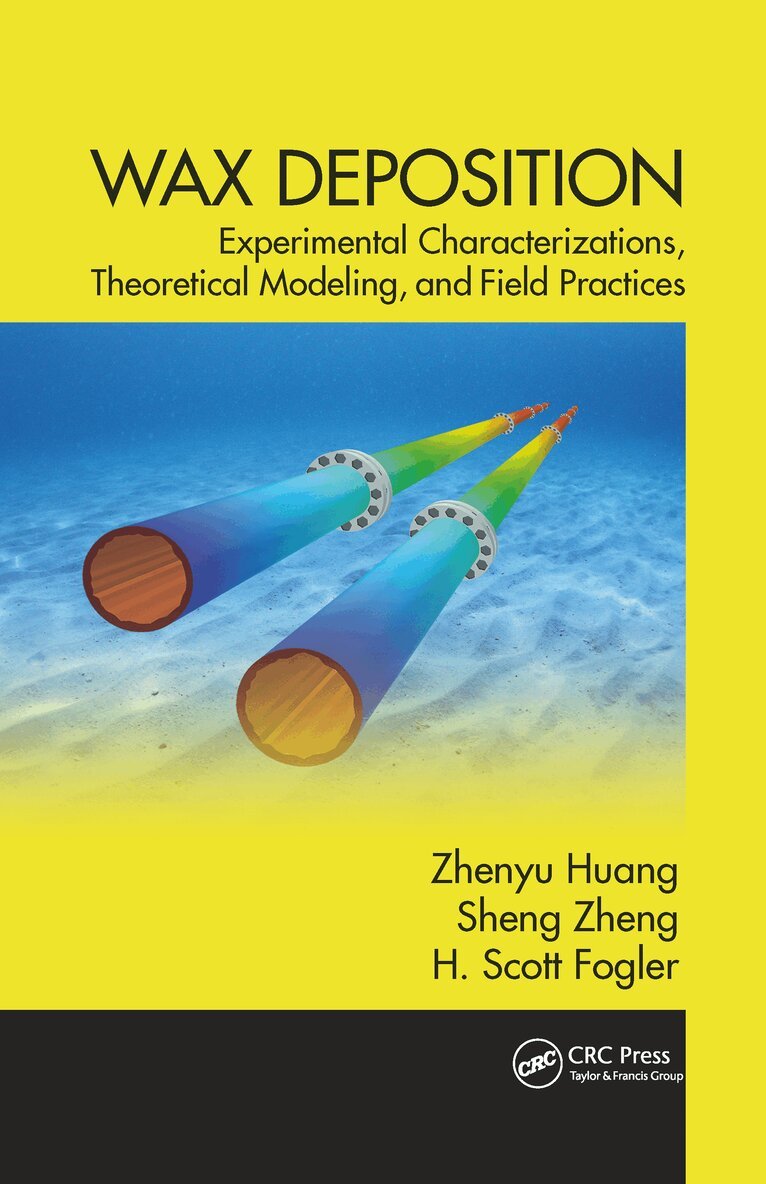
Wax Deposition: Experimental Characterizations, Theoretical Modeling, and Field Practices covers the entire spectrum of knowledge on wax deposition. The book delivers a detailed description of the thermodynamic and transport theories for wax deposition modeling as well as a comprehensive review of laboratory testing for the establishment of appropriate field control strategies. Offering valuable insight from academic research and the flow assurance industry, this balanced text:Discusses the background of wax deposition, including the cause of the phenomenon, the magnitude of the problem, and its impact on petroleum productionIntroduces laboratory techniques and theoretical models to measure and predict key parameters of wax precipitation, such as the wax appearance temperature and the wax precipitation curveExplains how to conduct and interpret laboratory experiments to benchmark different wax deposition models, to better understand wax deposition behaviors, and to predict wax deposit growth for the fieldPresents various models for wax deposition, analyzing the advantages and disadvantages of each and evaluating the differences between the assumptions usedProvides numerous examples of how field management strategies for wax deposition can be established based on laboratory testing and modeling workWax Deposition: Experimental Characterizations, Theoretical Modeling, and Field aids flow assurance engineers in identifying the severity and controlling the problem of wax deposition. The book also shows students and researchers how fundamental principles of thermodynamics, heat, and mass transfer can be applied to solve a problem common to the petroleum industry.
Inbunden, Engelska, 2015
2 751 kr
Skickas inom 10-15 vardagar
Wax Deposition: Experimental Characterizations, Theoretical Modeling, and Field Practices covers the entire spectrum of knowledge on wax deposition. The book delivers a detailed description of the thermodynamic and transport theories for wax deposition modeling as well as a comprehensive review of laboratory testing for the establishment of appropriate field control strategies. Offering valuable insight from academic research and the flow assurance industry, this balanced text:Discusses the background of wax deposition, including the cause of the phenomenon, the magnitude of the problem, and its impact on petroleum productionIntroduces laboratory techniques and theoretical models to measure and predict key parameters of wax precipitation, such as the wax appearance temperature and the wax precipitation curveExplains how to conduct and interpret laboratory experiments to benchmark different wax deposition models, to better understand wax deposition behaviors, and to predict wax deposit growth for the fieldPresents various models for wax deposition, analyzing the advantages and disadvantages of each and evaluating the differences between the assumptions usedProvides numerous examples of how field management strategies for wax deposition can be established based on laboratory testing and modeling workWax Deposition: Experimental Characterizations, Theoretical Modeling, and Field aids flow assurance engineers in identifying the severity and controlling the problem of wax deposition. The book also shows students and researchers how fundamental principles of thermodynamics, heat, and mass transfer can be applied to solve a problem common to the petroleum industry.
Inbunden, Engelska, 2026
1 815 kr
Skickas inom 10-15 vardagar
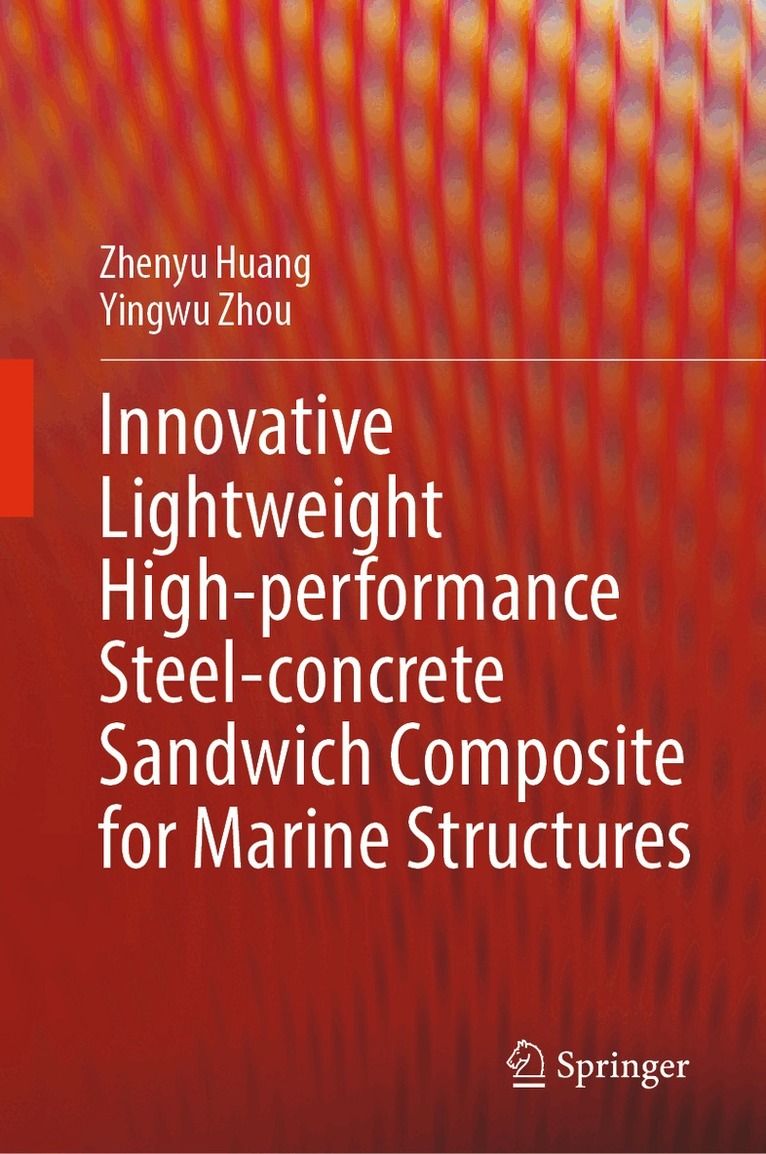
This book delves into the cutting-edge field of lightweight high-performance steel–concrete composites, tailored for research and applications in marine structures. Such marine structures may be subjected to static sustained heavy loads, dynamic ice-contact pressure, ship impact, and other demanding conditions, which require lightweight design, high resilience, and superior durability. Through an intricate fusion of experimental, numerical, and analytical methods, it provides a comprehensive understanding of the material and structural behavior of these composites under various loading scenarios, including flexural and shear response under dynamic impact and punching loads. The content covers the development of lightweight high-ductility cement composites, lightweight rubberized cement composites, and sustainable LC³-based ultra-lightweight cement composites, as well as mild steel/stainless steel single-/double-layered steel–concrete sandwich composites filled with lightweight high-ductility cementitious materials. Furthermore, the dynamic behavior of fiber-reinforced ultra-lightweight high-ductility cement composites under high-strain-rate compression and tension is examined to reveal the material’s failure mechanisms, alongside providing numerical modeling and data-driven predictions of the dynamic increase factor. The structural performance of sandwich wall, beam, and shell elements under marine-relevant loading conditions—including flexural, punching shear, beam shear, compression, combined compression-bending, impact, multi-impact, and residual resistance—is comprehensively investigated. Additionally, the load-transfer mechanism of novel double-layer steel–concrete sandwich composites under various loading conditions (static, impact, repeated impact, etc.) is revealed. Analytical methodologies, numerical studies, and design approaches are provided for practical application. A new type of slotted perforated plate connector for steel–concrete sandwich composites is also introduced, with its flexural and shear behavior thoroughly explored. Tailored for researchers, academics, postgraduate students, and professionals in materials and structural engineering specializing in high-performance steel–concrete composite structures, this book offers invaluable insights into innovative lightweight, high-performance steel–concrete sandwich composites for marine applications.