Zia Qureshi - Böcker
Visar alla böcker från författaren Zia Qureshi. Handla med fri frakt och snabb leverans.
6 produkter
6 produkter
447 kr
Skickas inom 10-15 vardagar
Growth in a Time of Change: Global and Country Perspectives on a New Agenda is the first of a two-book research project that addresses new issues and challenges for economic growth arising from ongoing significant change in the world economy, focusing especially on technological transformation. The project is a collaboration between the Brookings Institution and the Korea Development Institute.Part I of the book looks at key elements of change from a global perspective. It analyzes how technological change, shifts in investment, and demographic transition are affecting potential economic growth globally and across major groups of economies. The contributors explore possible scenarios for the global economy as the digital revolution drives rapid technological change, including impacts on growth, jobs, income distribution, trade balances, and capital flows. Technology is changing the global configuration of comparative advantage and globalization increasingly has a digital dimension. The implications of these developments for the future of sectors such as manufacturing and for international trade are assessed.Part II of the book addresses new issues in the growth agenda from the perspective of an individual major economy: South Korea. The chapters in this section analyze how macroeconomic developments and technological change are influencing the behavior of households and firms in terms of their decisions to consume, save, and invest. Rising income and wealth inequalities are a major concern globally. Against this backdrop, trends in the labor income share and wage inequalities in South Korea are analyzed in terms of the role played by technology, industrial concentration, shifts in labor demand and supply, and other factors.Throughout the book, the contributors, in their analysis of both global and Korea-specific trends and prospects, place emphasis on drawing implications for policy.
Shifting Paradigms
Growth, Finance, Jobs, and Inequality in the Digital Economy
Häftad, Engelska, 2022
434 kr
Skickas inom 10-15 vardagar
Addressing the big questions about how technological change is transforming economies and societiesRapid technological change—likely to accelerate as a consequence of the COVID-19 pandemic—is reshaping economies and how they grow. But change also causes disruption, creates winners and losers, and produces social stress. This book examines the challenges of digital transformation and suggests how creative policies can make it more productive and inclusive.Shifting Paradigms is the second book on technological change produced by a joint research project of the Brookings Institution and the Korea Development Institute. Contributors are experts from the United States, Europe, and Korea. The first volume, Growth in a Time of Change, was published by Brookings in February 2020.The book’s underlying thesis is that the future is arriving faster than expected. Long-accepted paradigms about economic growth are changing as digital technologies transform markets and nearly every aspect of business and work. Change will only intensify with advances in artificial intelligence and other innovations.Investors, business leaders, workers, and public officials face many questions. Is rising market concentration inevitable with the new technologies or can their benefits be more widely shared? How can the promise of FinTech be captured while managing risks? Should workers fear the new automation? Are technology-driven shifts in business and work causing income inequality to rise? How should public policy respond?Shifting Paradigms addresses these questions in an engaging manner for anyone interested in understanding how the economic and social agenda is being transformed by today’s winds of change.
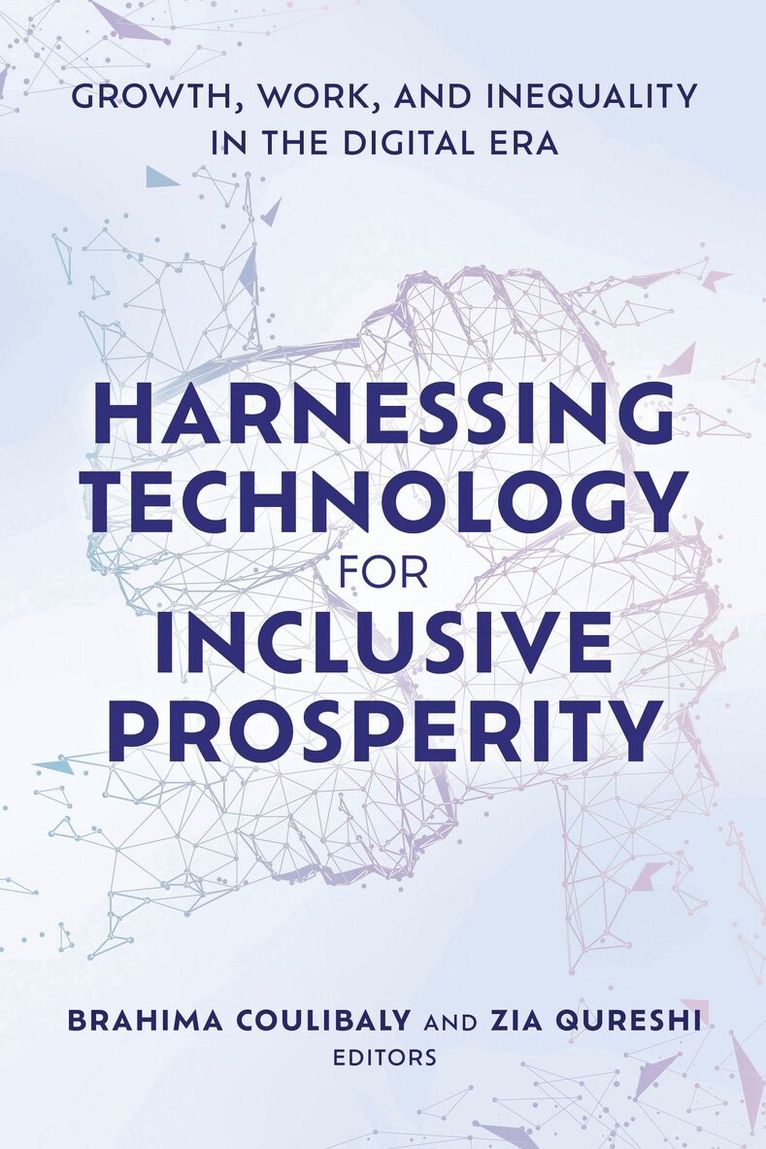
Harnessing Technology for Inclusive Prosperity
Growth, Work, and Inequality in the Digital Era
Inbunden, Engelska, 2024
942 kr
Skickas inom 10-15 vardagar
Transformative new technologies are reshaping economies and societies. But as they create new opportunities, they also pose new challenges, not least of which is rising inequality. Increased disparities and related anxieties are stoking societal discontent and political ferment. Harnessing technological transformation in ways that foster its benefits, contain risks, and build inclusive prosperity is a major public policy challenge of our time and one that motivates this book.In what ways are the new technologies altering markets, business models, work, and, in turn, economic growth and income distribution? How are they affecting inequality within advanced and emerging economies and the prospects for economic convergence between them? What are the implications for public policy? What new thinking and adaptations are needed to realign institutions and policies, at national and global levels, with the new dynamics of the digital era?This book addresses these questions. It seeks to promote ideas and actions to manage digital transformation and the latest advances in artificial intelligence with foresight and purpose to shape a more prosperous and inclusive future.
Harnessing Technology for Inclusive Prosperity
Growth, Work, and Inequality in the Digital Era
Häftad, Engelska, 2024
434 kr
Skickas inom 10-15 vardagar
Transformative new technologies are reshaping economies and societies. But as they create new opportunities, they also pose new challenges, not least of which is rising inequality. Increased disparities and related anxieties are stoking societal discontent and political ferment. Harnessing technological transformation in ways that foster its benefits, contain risks, and build inclusive prosperity is a major public policy challenge of our time and one that motivates this book.In what ways are the new technologies altering markets, business models, work, and, in turn, economic growth and income distribution? How are they affecting inequality within advanced and emerging economies and the prospects for economic convergence between them? What are the implications for public policy? What new thinking and adaptations are needed to realign institutions and policies, at national and global levels, with the new dynamics of the digital era?This book addresses these questions. It seeks to promote ideas and actions to manage digital transformation and the latest advances in artificial intelligence with foresight and purpose to shape a more prosperous and inclusive future.
982 kr
Skickas inom 10-15 vardagar
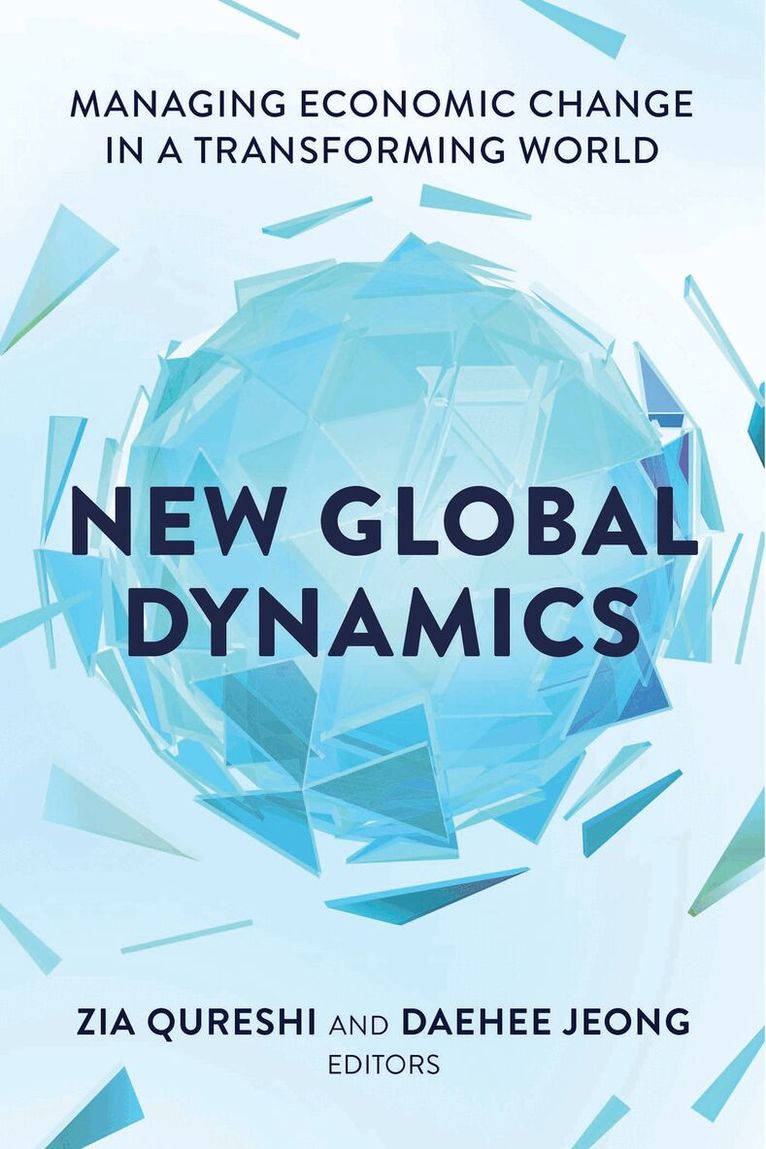
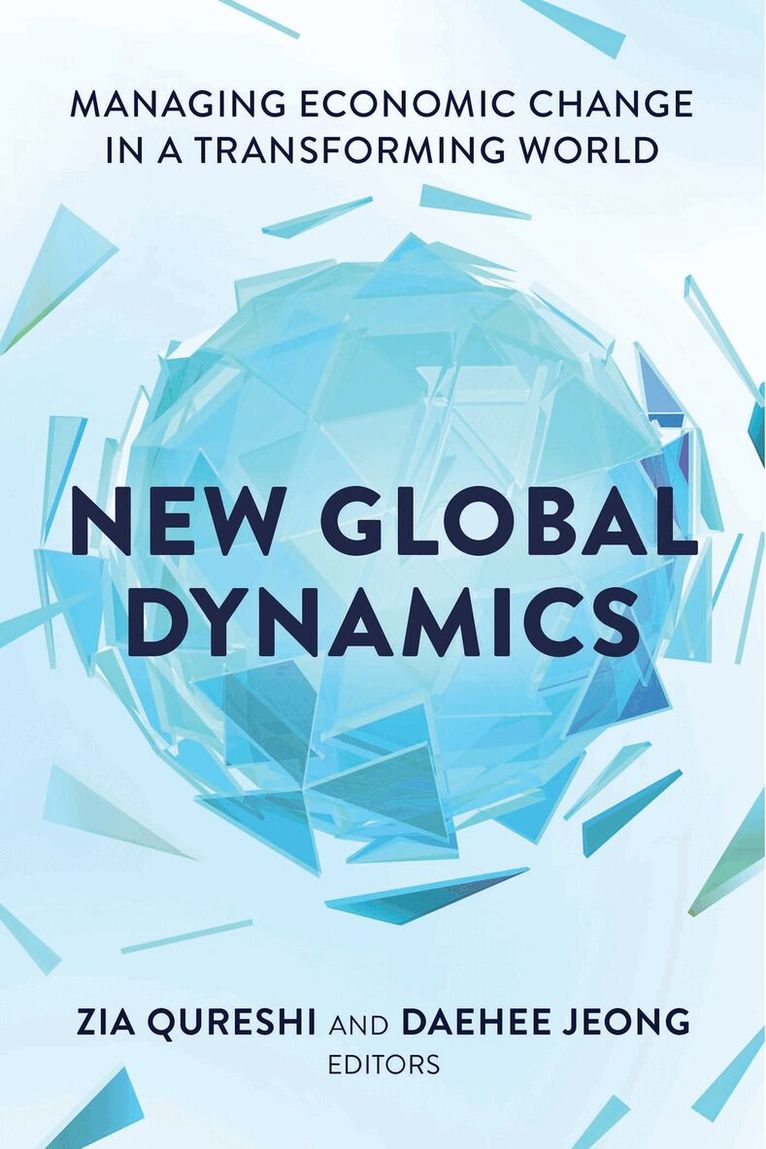
The world faces a conflux of powerful forces of change. Digital technologies and advances in artificial intelligence are transforming markets, economies, and societies. Global geopolitics is shifting, and the rise of China is challenging the postwar international order led by the United States. Geopolitical tensions are elevated, and so are political polarization and societal anxieties within countries as change creates winners and losers. Nationalist industrial policies and protectionism are surging. Added to this mosaic of change is climate change, which will have profound effects on global patterns of production, investment, and trade.New Global Dynamics analyzes the implications of these transformations and addresses the new challenges institutions and policymakers face at national and global levels. It examines how these changes are affecting the global economy, the future of globalization, international power structures, and competition in markets, delving into the shifting dynamics in industry, trade, and finance.International cooperation has become more daunting, but it is essential in matters ranging from the regulation of new technologies to trade policies to global finance to climate transition. In a more contested world, a rules-based international order has become even more critical
408 kr
Skickas inom 10-15 vardagar
The world faces a conflux of powerful forces of change. Digital technologies and advances in artificial intelligence are transforming markets, economies, and societies. Global geopolitics is shifting, and the rise of China is challenging the postwar international order led by the United States. Geopolitical tensions are elevated, and so are political polarization and societal anxieties within countries as change creates winners and losers. Nationalist industrial policies and protectionism are surging. Added to this mosaic of change is climate change, which will have profound effects on global patterns of production, investment, and trade.New Global Dynamics analyzes the implications of these transformations and addresses the new challenges institutions and policymakers face at national and global levels. It examines how these changes are affecting the global economy, the future of globalization, international power structures, and competition in markets, delving into the shifting dynamics in industry, trade, and finance.International cooperation has become more daunting, but it is essential in matters ranging from the regulation of new technologies to trade policies to global finance to climate transition. In a more contested world, a rules-based international order has become even more critical