258 kr
Skickas
258 kr
Skickas
790 kr
Läs direkt efter köp
813 kr
Läs direkt efter köp
831 kr
Läs direkt efter köp
831 kr
Läs direkt efter köp
956 kr
Läs direkt efter köp
956 kr
Läs direkt efter köp
831 kr
Läs direkt efter köp
This collection of various texts on Karl Marx and Mathematics is the revised and extended second edition of the Special Supplement to Karl Marx, Mathematical Manuscripts (1994; Calcutta: Viswakos) titled Marx and Mathematics. The sources of the texts included in the three parts of this collection and, some biographical information about their respective authors have been indicated at the end of each text.
The emergence and development of the Ethnomathematics movement continue to change our understanding of the history of evolution of plural mathematics on planet earth since the Neolithic age. Rediscovery and study of some of the neglected source texts have further energized investigations on the subsequent history of mathematical cultures, including those on the histories of algebra and analysis in some of the ancient and medieval languages of Asia, like Sanskrit, Arabic and Malayalam. Consequently, it is now possible to indicate some of the larger gaps in the dominant understanding of history of mathematics not only in Marx’s time, but also at the time of editing Marx’s mathematical manuscripts in the twentieth century, and even today. Finally, the emergence and development of mathematical and statistical software packages are vigorously reshaping our ways of conceptualizing and doing mathematics towards an unknown future. It is time now for taking yet another look at all mathematical text from the past and that includes the mathematical manuscripts of Marx.
These texts have been divided into three parts. Part one contains some topical texts related to the history of emergence, development, editing, publication and reception of the mathematical manuscripts of Karl Marx. Part two contains a selection of five articles reflecting some of the investigations inspired by these manuscripts in Russia, India and France. Part three contains five articles on plural mathematics before and after Karl Marx (1818-1883). The texts in this collection are followed by two appendices containing two bibliographies: one on Hegel and mathematics and, the other on mathematics and semiotics.
Please note: This title is co-published with Aakar Books, Bew Delhi. Taylor & Francis does not sell or distribute the print edition in South Asia (India, Sri Lanka, Nepal, Bangladesh, Pakistan, Maldives or Bhutan).
856 kr
Läs direkt efter köp
The October Revolution undoubtedly produced a radicalising effect on the Indian situation from the very beginning. At the end of World War I, India was astir with workers’ strikes and massive demonstrations against British repression. Peasant unrest was also growing. It was this awakened India, entering the mass phase of its fight for independence, which looked to the Russian Revolution and to its leader Lenin for inspiration and help.They further saw that Lenin and other leaders of Soviet Russia stood for a new social order in which exploitation of man by man is ended, an order based on brotherhood, equality and cooperation of men, and had established a society in which the working class and the toiling people had come into their own and taken over the reins of administration to build socialism.
This volume contains several articles and essays concerning the Indian national movement and the support extended by Russia. In particular,the essays related to the lives of the expatriate Indian revolutionaries in Europe and the meeting of Indian revolutionaries with Lenin are of interest in this volume. The views of Indian national leaders like M.K. Gandhi, Jawaharlal Nehru, B.G. Tilak among others on Russian Revolution are also included. In short, this volume will be useful to understand the support extended by Russia to the Indian national movement during the first half of the twentieth century.
Please note: This title is co-published with Aakar Books, New Delhi. Taylor & Francis does not sell or distribute the print edition in South Asia (India, Sri Lanka, Nepal, Bangladesh, Pakistan, Maldives or Bhutan)
838 kr
Läs direkt efter köp
The October Revolution undoubtedly produced a radicalising effect on the Indian situation from the very beginning. At the end of World War I, India was astir with workers’ strikes and massive demonstrations against British repression. Peasant unrest was also growing. It was this awakened India, entering the mass phase of its fight for independence, which looked to the Russian Revolution and to its leader Lenin for inspiration and help.They further saw that Lenin and other leaders of Soviet Russia stood for a new social order in which exploitation of man by man is ended, an order based on brotherhood, equality and cooperation of men, and had established a society in which the working class and the toiling people had come into their own and taken over the reins of administration to build socialism.
This volume contains several articles and essays concerning the Indian national movement and the support extended by Russia. In particular,the essays related to the lives of the expatriate Indian revolutionaries in Europe and the meeting of Indian revolutionaries with Lenin are of interest in this volume. The views of Indian national leaders like M.K. Gandhi, Jawaharlal Nehru, B.G. Tilak among others on Russian Revolution are also included. In short, this volume will be useful to understand the support extended by Russia to the Indian national movement during the first half of the twentieth century.
Please note: This title is co-published with Aakar Books, New Delhi. Taylor & Francis does not sell or distribute the print edition in South Asia (India, Sri Lanka, Nepal, Bangladesh, Pakistan, Maldives or Bhutan)
831 kr
Läs direkt efter köp
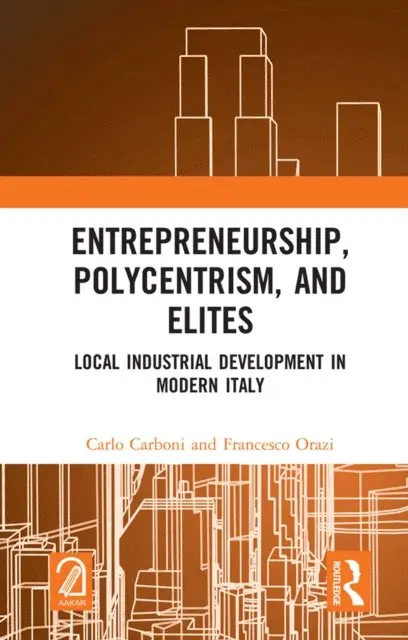
The book is a cross-section of the over all Italian development. Italy can be considered a microcosm that contains all the imbalances and territorial differences that can be observed in the European macro-areas. Its north can now be considred integrated with the more developed European continental shelf. The Centre represents a local development in transition to a more visible technological change. The late south risks accumulating more socio-economic backwardness. For these reasons, we believe this volume is useful, with just a few pages presenting one of the most interesting cases of local industrial development, outside the mainstream of the industrial economy which saw in Fordism and Taylorism the best way for industrializaion. Here, on the contrary, it is argued that big fish cannot always consume the smallest one that flickers faster and its flexibility, that has social roots, can be an advantage in global markets. Technology appears to be the key to the future.
Please note: This title is co-published with Aakar Books, New Delhi. Print edition not for sale in South Asia (India, Sri Lanka, Nepal, Bangladesh, Pakistan, Maldives or Bhutan)
831 kr
Läs direkt efter köp
Critical of the economic and political power relations in contemporary India, this book is written from the vantagepoint of the working masses whose basic economic and democratic rights remain unmet. Written for a broader audience beyond the academic community, the essays that make up the book provide short critical commentaries on different aspects of Indian society undergoing significant changes in recent times. The essays are conceptually driven and include empirical details, but they generally avoid the usual perils of academicism, by expressing complicated ideas in a relatively simple language and by drawing out their practical implications.
This book is co-published with Aakar Books, New Delhi. Taylor & Francis does not sell or distribute the print versions of this book in India, Pakistan, Nepal, Bhutan, Bangladesh and Sri Lanka.
813 kr
Läs direkt efter köp
The philosophical essays of this collection argue, each time from a singular perspective, that the task of thinking is to release the element of the unconditional from various closures, and thus to make it manifest as the true and the essential task of our individual and social existence. Naming this unconditional element as the "messianic", the book displays the profound ethico-political significance of messianic thought for our contemporary world.
This book is co-published with Aakar Books, New Delhi. Taylor & Francis does not sell or distribute the print versions of this book in India, Pakistan, Nepal, Bhutan, Bangladesh and Sri Lanka.
831 kr
Läs direkt efter köp
The philosophical essays of this collection argue, each time from a singular perspective, that the task of thinking is to release the element of the unconditional from various closures, and thus to make it manifest as the true and the essential task of our individual and social existence. Naming this unconditional element as the "messianic", the book displays the profound ethico-political significance of messianic thought for our contemporary world.
This book is co-published with Aakar Books, New Delhi. Taylor & Francis does not sell or distribute the print versions of this book in India, Pakistan, Nepal, Bhutan, Bangladesh and Sri Lanka.
745 kr
Läs direkt efter köp
This book is a novel study on the way revolutions in science, technology and communication impact philosophy/world outlook including Marxism, society''s future, mode of production, capitalism/socialism dichotomy, world economy, and trends like postmodernism and post-industrialism.
It also deals with motion of and crisis created by the new concept of ''the particle'' on human thought, philosophy and worldview. We ride the unprecedented scientific and technological revolution (STR) into the ''unlighted'' extra-ordinary world of quantum motions. Human thought and being are shifting to and gathering speed along the time paradigm, rendering dialectics increasingly crucial, the book opines. Electronic technology, quantum discoveries and wave/particle duality as a wonder of nature have changed forever the way we look at ''the world'', which stands redefined. Grounds of philosophy move away, creating epistemological crisis as we transit to a post-classical world. We now look at whole humanity from out in the space, and our dialectics and contradictions acquire new meaning. This self-transcendence can potentially free us of existing acute contradictions.
Scientific literature and sources have then been creatively used in the book to take up the concepts of matter, idea, motion, time, space and dialectics. It is therefore a bold attempt to negate the existing philosophy by creatively developing a new scientific world outlook.
762 kr
Läs direkt efter köp
762 kr
Läs direkt efter köp
624 kr
Läs direkt efter köp
This book deals with the main doctrines of Marxist politics. Clearly and simply written, the book explores the views of classical Marxists along with the findings of Western and Analytical Marxists. It also shows a distinction between Marxist and non-Marxist views on politics. Their points of difference as well as their common roots are thus clearly accounted for.
Marxist politics is a coherent system of ideas and theories of class, class struggle, party, revolution and the state developed in response to a series of major and interrelated changes – the emergence of a capitalist economy, the rise of the modern nation-state and the development of modern science, which transformed both the society and politics. This book is intended to explore these ideas and theories. Particular emphasis has been put on the ideas and views of critical Marxists in a separate chapter.
The book includes brief bibliographical details of major individual thinkers as well as an annotated bibliography for further reading.
Print edition not for sale in South Asia (India, Sri Lanka, Nepal, Bangladesh, Pakistan and Bhutan)
610 kr
Läs direkt efter köp
This book deals with the main doctrines of Marxist politics. Clearly and simply written, the book explores the views of classical Marxists along with the findings of Western and Analytical Marxists. It also shows a distinction between Marxist and non-Marxist views on politics. Their points of difference as well as their common roots are thus clearly accounted for.
Marxist politics is a coherent system of ideas and theories of class, class struggle, party, revolution and the state developed in response to a series of major and interrelated changes – the emergence of a capitalist economy, the rise of the modern nation-state and the development of modern science, which transformed both the society and politics. This book is intended to explore these ideas and theories. Particular emphasis has been put on the ideas and views of critical Marxists in a separate chapter.
The book includes brief bibliographical details of major individual thinkers as well as an annotated bibliography for further reading.
Print edition not for sale in South Asia (India, Sri Lanka, Nepal, Bangladesh, Pakistan and Bhutan)
746 kr
Läs direkt efter köp
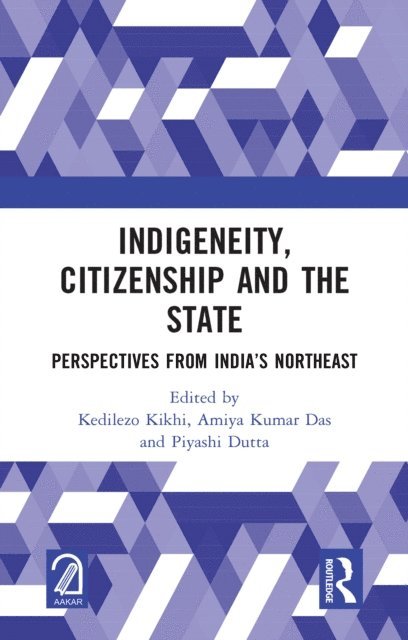
Whatever be the definition of ''indigenous'' vis-a-vis ''indigeneity'', and however concensual it might be, both these terms have been inferred, applied and questioned in multifarious ways. The concept indigeneity in Asia has transformed considerably, over a period of time. With the rise in the indigeneity movement and large-scale migration, citizenship within national borders is challenged, and the borders in question are also contested.
This book chronicles the discernible strains on the questions of indegeneity, citizenship, identity, and border making in the Northeast India. The issues pertaining to indigeneity, citizenship, and state, are also a reminder of the residues of colonial doings that have had a colossal impact till this day. Through empirical evidence backed by theoretical underpinnings, each essay in the book demonstrates the diversity of approaches that can be used to interrogate the debate on indegeneity, citizenship, the state, and opens the conversation on Northeast India.
This book is co-published with Aakar Books. Print edition not for sale in South Asia (India, Sri Lanka, Nepal, Bangladesh, Pakistan and Bhutan)
738 kr
Läs direkt efter köp
Whatever be the definition of ''indigenous'' vis-a-vis ''indigeneity'', and however concensual it might be, both these terms have been inferred, applied and questioned in multifarious ways. The concept indigeneity in Asia has transformed considerably, over a period of time. With the rise in the indigeneity movement and large-scale migration, citizenship within national borders is challenged, and the borders in question are also contested.
This book chronicles the discernible strains on the questions of indegeneity, citizenship, identity, and border making in the Northeast India. The issues pertaining to indigeneity, citizenship, and state, are also a reminder of the residues of colonial doings that have had a colossal impact till this day. Through empirical evidence backed by theoretical underpinnings, each essay in the book demonstrates the diversity of approaches that can be used to interrogate the debate on indegeneity, citizenship, the state, and opens the conversation on Northeast India.
This book is co-published with Aakar Books. Print edition not for sale in South Asia (India, Sri Lanka, Nepal, Bangladesh, Pakistan and Bhutan)
813 kr
Läs direkt efter köp
This book seeks to encourage dialectical methods through the interaction of economic, political and social factors to approach social analysis. It examines various emerging issues in society in the era of globalization. The issues raised in the critique will benefit scholars in comprehending social reality with a new perspective and approach.
This book will help policymakers look at more realistic conclusions for policy making.
This title is co-published with Aakar Books. Print editions not for sale in South Asia (India, Sri Lanka, Nepal, Bangladesh, Pakistan and Bhutan).
813 kr
Läs direkt efter köp
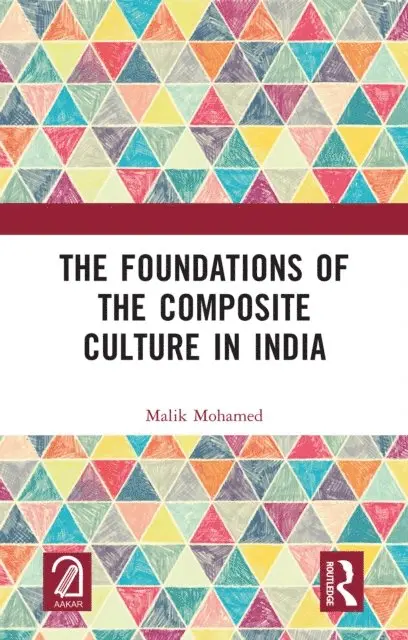
In The Foundations of the Composite Culture in India, the focus of the author is the process of establishment of Hindu-Muslim unity as a result of historical, social and cultural factors over a period of ten centuries. Traversing this era, he reveals how the Muslim rulers contributed to such harmony and how the two cultures exchanged and accepted each other''s tenets to enrich and formulate a composite Indian culture. To explore the foundations on which the complex culture of India rests, the author examines the contribution of Sufism which inherently connotes syncretism and tolerance, as well as the simultaneous rise of the Bhakti movement in medieval India.
This title is co-published with Aakar Books. Print editions not for sale in South Asia (India, Sri Lanka, Nepal, Bangladesh, Pakistan and Bhutan)
831 kr
Läs direkt efter köp
This book seeks to encourage dialectical methods through the interaction of economic, political and social factors to approach social analysis. It examines various emerging issues in society in the era of globalization. The issues raised in the critique will benefit scholars in comprehending social reality with a new perspective and approach.
This book will help policymakers look at more realistic conclusions for policy making.
This title is co-published with Aakar Books. Print editions not for sale in South Asia (India, Sri Lanka, Nepal, Bangladesh, Pakistan and Bhutan).
831 kr
Läs direkt efter köp
In The Foundations of the Composite Culture in India, the focus of the author is the process of establishment of Hindu-Muslim unity as a result of historical, social and cultural factors over a period of ten centuries. Traversing this era, he reveals how the Muslim rulers contributed to such harmony and how the two cultures exchanged and accepted each other''s tenets to enrich and formulate a composite Indian culture. To explore the foundations on which the complex culture of India rests, the author examines the contribution of Sufism which inherently connotes syncretism and tolerance, as well as the simultaneous rise of the Bhakti movement in medieval India.
This title is co-published with Aakar Books. Print editions not for sale in South Asia (India, Sri Lanka, Nepal, Bangladesh, Pakistan and Bhutan)
808 kr
Läs direkt efter köp
With the onset of Austerity Capitalism and Immiseration Capitalism, and with the increasing commodification, marketisation and privatisation of society and of education, Marxist Theory and Marxist Education Theory have taken on a new urgency.
In this collection of essays, written from a classic Marxist perspective, Dave Hill lays bare how the capitalist class in the knowledge industry/academia, use ideological (and repressive) state apparatuses, such as education, to divide, disarm and demoralise critical, Marxist analysis and activism.
This title is co-published with Aakar Books. Print edition not for sale in South Asia (India, Sri Lanka, Nepal, Bangladesh, Pakistan and Bhutan)