

Häftad, Engelska, 1987
164 kr
Skickas inom 5-8 vardagar
164 kr
Skickas inom 5-8 vardagar

302 kr
Skickas inom 3-6 vardagar

179 kr
Skickas inom 5-8 vardagar
121 kr
Skickas inom 5-8 vardagar
240 kr
Skickas inom 3-6 vardagar

214 kr
Läs direkt efter köp
Shenandoah—most often translated as "Daughter of the Stars"—is one of the loveliest names in the language. Backroads travelers will find that it fits the Valley perfectly. Most people know the Shenandoah Valley for its Civil War–era history, from Robert E. Lee''s capture of John Brown at Harpers Ferry in 1859 to Stonewall Jackson''s Valley Campaign of 1862 to the Battle of New Market in 1864. Fewer know that the Winchester area was home to George Washington, explorer Richard Byrd, novelist Willa Cather, and singer Patsy Cline. Or that Thomas Jefferson owned the geologic wonder known as Natural Bridge. Or that the McCormick Farm near Steeles Tavern was the site of a revolutionary breakthrough in agriculture in the early 1800s. The word Shenandoah may have had as many spellings as there are stars in the sky, but the area’s scenic vistas are practically endless. Travelers will know they''ve reached the Valley when every turn in the road reveals another photoworthy image of stunning mountain views, scenic rolling fields, or quaint country towns and villages. From the picturesque Goshen Pass, to the winding country roads between Lexington and Staunton, to the Mennonite farms around Harrisonburg, to the dramatic river confluence at Harpers Ferry, the Shenandoah Valley has been attracting visitors and inspiring artists, photographers, and writers for more than 200 years. The thirteen tours in this book explore areas of unspoiled countryside and Appalachian landscapes within easy range of metropolitan centers like Washington, D.C., Baltimore, Philadelphia, Richmond, and Norfolk.
Originally from San Antonio, Andrea Sutcliffe has a journalism degree from the University of Texas at Austin. She was a writer, editor, and publications manager in the Washington, DC, area for twenty years. Her writing and editing career began in 1990 as director of the EEI Press in Alexandria, Virginia. In 1996, Andrea Sutcliffe moved to Virginia’s Shenandoah Valley to devote herself full-time to writing. Andrea’s love of her new home in the mountains of western Virginia, and a desire to learn more about the region’s fascinating history, led to her book, Touring the Shenandoah Valley Backroads.

139 kr
Läs direkt efter köp
Thanks to well-known fishing expert Mike Marsh, North Carolinians finally have a definitive guide for the entire state in one handy volume. Fishing North Carolina is the only book that covers the multitude of fishing opportunities in all of the state’s regions: mountains, Piedmont, and coastal plain. Whatever type of fishing you prefer, Fishing North Carolina has something for beginning and advanced fishermen, longtime North Carolinians, newcomers, and tourists alike. This book will tell you where to go, how to get there, what fishing regulations are in effect, the best time to fish, the best way to fish (from boat, dock, or shore), key species at each locale, and the best lures to use. Detailed maps, descriptions of the fishing, and general information about the locations will help you know whether or not to expect snagged lures or an enjoyable fishing experience for the whole family.
Mike Marsh is a full-time, award-winning freelance hunting-and-fishing writer and photographer whose hundreds of features and columns have been published in dozens of major newspapers and magazines, including the Raleigh News & Observer, the Charlotte Observer, North Carolina Sportsman, Wildlife in North Carolina, and North American Fisherman. Marsh currently lives in Wilmington, North Carolina.
205 kr
Läs direkt efter köp
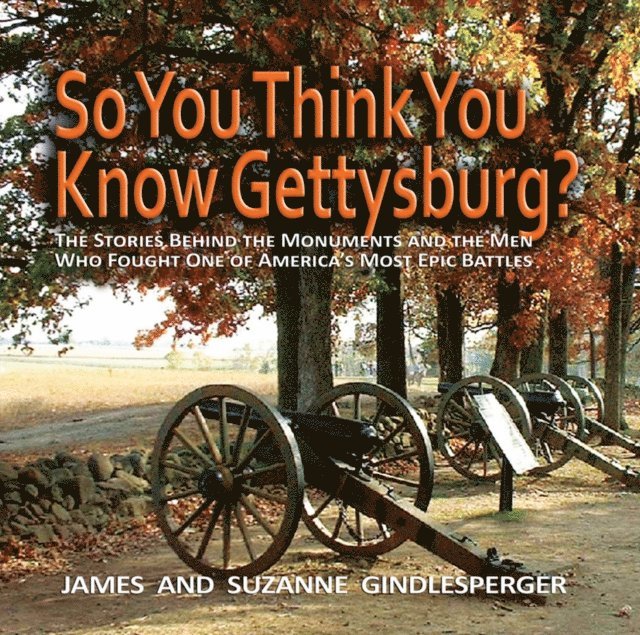
If you didn’t sleep through U.S. history class, you’ve heard of Pickett’s Charge. If you’ve seen the movie Gettysburg, you’re familiar with Little Round Top. If you’ve been to the battlefield, you’ve seen the Wheatfield. But do you know about the ten or so Confederates buried by accident in Gettysburg National Cemetery? Or about the Union general whose embezzling ways kept his bust from being displayed on his brigade’s memorial? Or how that same embezzling general, when asked why he had no monument at Gettysburg, could rightly reply, “Why, hell, the whole battlefield is my monument”? Authors James and Suzanne Gindlesperger have visited Gettysburg an average of five times annually over the past twenty years. So You Think You Know Gettysburg? shows why they find it a place not only of horrible carnage and remarkable bravery but endless fascination. Who, or what, was Penelope? Whose dog is depicted on the Eleventh Pennsylvania Monument, and why? What are the Curious Rocks? Why does Gettysburg have two markers for the battle’s first shot, and why are they in different locations? The plentiful maps, the nearly 200 site descriptions, and the 270-plus color photos in So You Think You Know Gettysburg? will answer questions you didn’t even know you had about America’s greatest battlefield.
James and Suzanne Gindlesperger are the authors of So You Think You Know Gettysburg?, which was the bronze winner in the travel guide category for ForeWord Reviews’ Book of the Year Award in 2010. James is a “Friend of the Field” at Gettysburg and the author of three books about the Civil War: Escape from Libby Prison, Seed Corn of the Confederacy, and Fire on the Water. Suzanne is the cofounder of Pennwriters, a professional organization of published and aspiring authors. The couple lives in Johnstown, Pennsylvania.
"This is not a book that fits into one slot easily. This is a book wearing many hats . . . defying a quick or easy description. Part guidebook, part trivia quiz, and part history with a series of fine color photos . . . a well-organized, very attractive, fun book . . . " — James Durney, TOCWOC, A Civil War Blog
137 kr
Läs direkt efter köp
143 kr
Läs direkt efter köp
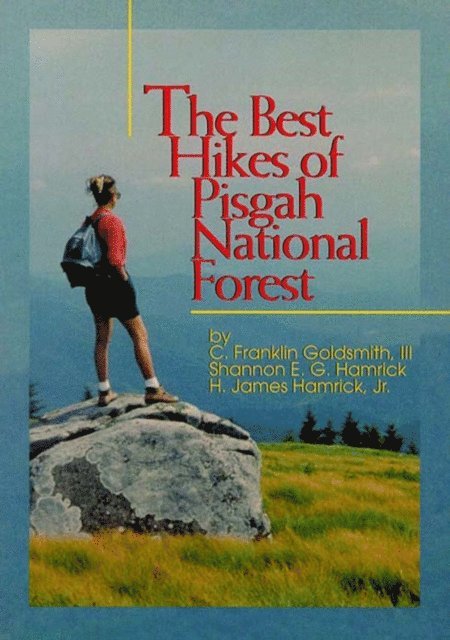
From Linville Gorge to the Davidson River Valley, the land comprising Pisgah National Forest has been a source of pleasure to hikers for generations. This guide details almost 100 of the forest''s finest trails, selected for their views, the waterfalls they visit, and the diversity of plant and animal life present. The authors hiked all the trails using a hand-held GPS unit. Each trail entry includes distance, elevation gained, GPS coordinates at various points, and a detailed description of the terrain and landscape. The guide also includes maps, as well as sidebars on first aid and items of historic and botanical interest. Black-and-white photos are scattered throughout. Appendixes provide lists of loop trails, hikes for children and the elderly, half-day and full-day hikes, and trails accessible from the Blue Ridge Parkway.
Franklin Goldsmith has a degree in philosophy from the University of North Carolina at Chapel Hill and received a degree in engineering from North Carolina State University. His sister, Shannon Hamrick, and her husband, James Hamrick, both held undergraduate and medical degrees from the University of North Carolina at Chapel Hill. Franklin and Shannon grew up in McDowell County, North Carolina, at the edge of the Grandfather District of Pisgah National Forest. All three are experienced hikers.
204 kr
Läs direkt efter köp
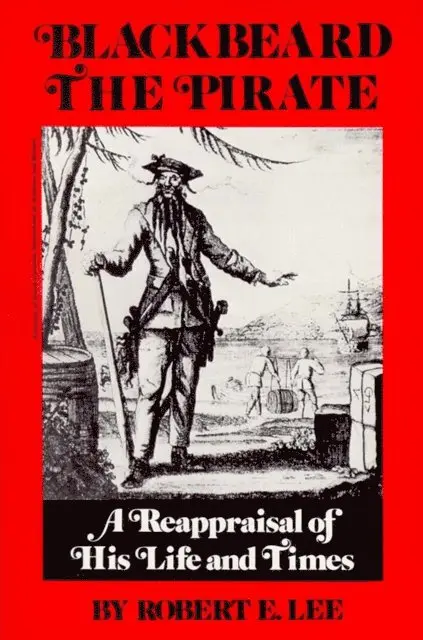
Edward Teach, better known as Blackbeard, was one of the most notorious pirates ever to plague the Atlantic coast. He was also one of the most colorful pirates of all time, becoming the model for countless blood-and-thunder tales of sea rovers. His daring exploits, personal courage, terrifying appearance, and fourteen wives made him a legend in his own lifetime. The legends and myths about Blackbeard have become wilder rather than tamer in the 250 years since his gory but valiant death at Ocracoke Inlet. It is difficult for historians, and all but impossible for the general reader, to separate fact from fiction. Author Robert E. Lee has studied virtually every scrap of information available about the pirate and his contemporaries in an attempt to find the real Blackbeard. The result is a fascinating and authoritative study that reads like an exciting swashbuckler. Lee goes beyond the myths and the image Teach so carefully cultivated to reveal a new Blackbeard—infinitely more interesting as a man than as a legend. In the process, he has captured the spirit and character of a vanished age, "the golden age of piracy."
Robert E. Lee was a former law professor who traced his own ancestry to a possible link with Blackbeard. A native of Kinston, North Carolina, he earned degrees from Wake Forest, Columbia, and Duke universities. The author of sixteen law books, Lee wrote the newspaper column "This is the Law".
136 kr
Läs direkt efter köp
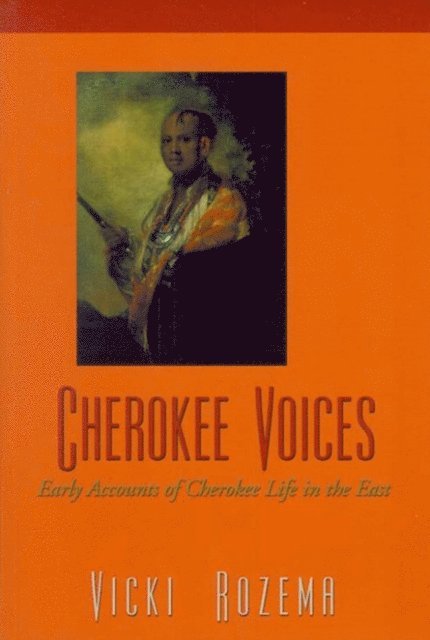
From the time they established formal ties with Great Britain in 1730, the Cherokees had a rocky relationship with white settlers. They found grounds for dispute over trade practices, territorial control, and the complicated loyalties among the various Indian tribes and European powers. Over the years, the Cherokees struggled to maintain their ancient traditions as the tribe was assimilated into the white man’s culture. Cherokee Voices uses the participants’ own words to tell the story of early Cherokee life. The selections were gathered from journals, treaty records, and correspondence written by Cherokees or by Europeans or Americans who knew them. The excerpts begin with the 1730 visit of Alexander Cuming, who appointed an “emperor” for the Cherokees. Touching on matters as varied as the Cherokees’ oral tradition, their village life, their ball games, their treaties with white settlers, their famous Cherokee Phoenix newspaper, and their education in Christian mission schools, the chapters take readers from when the Cherokees were dependent on European trade to when they became self-sufficient farmers and tradesmen. Unlike most books about the Cherokees, written in the third person by authors who lived years after the events, this one recognizes that no one can speak more eloquently of their lives, trials, and customs than the people themselves.
Vicki Rozema is the author of Footsteps of the Cherokees: A Guide to the Eastern Homelands of the Cherokee Nation and Voices from the Trail of Tears. The first edition of Footsteps of the Cherokees received an Award of Merit from the Tennessee Historical Commission in 1996. Also an acclaimed photographer, she is a history professor at the University of Tennessee.
137 kr
Läs direkt efter köp
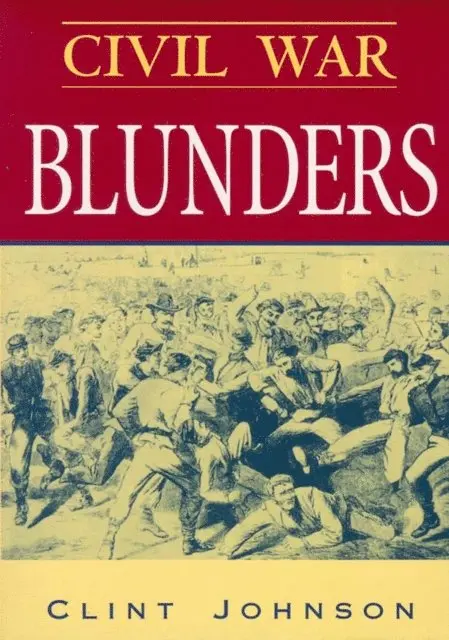
There was little funny about a war in which 620,000 humans died. But it was finding humor amid devastation that kept Civil War soldiers marching toward the enemy. Union or Confederate, those in command proved adept at making mistakes. Many leaders were drunkards, couldn''t speak English, didn''t know a cannon''s breech from its muzzle. Among the galleries of heroes were: Colonel Edward Baker, who told his Federals to follow the plume of his hat if they wanted to find war—and sent them over a cliff in a panicked retreat; General Felix Zollicoffer, who wore a white raincoat so opposing Federals could see him—but not his eyeglasses so he could see them; Thomas Selfridge of the Union navy, who "found two torpedoes and removed them by placing his vessel over them"; Colonel Alfred Rhett, a captured Southern blue blood whose fancy boots proved too small for every Union officer who coveted them; rum-drinking James Ledlie and dance-instructing Edward Ferrero, generals who kept each other company in a Union bombproof while their men faced slaughter. From Fort Sumter to Appomattox, Civil War Blunders traces the war according to its amusing, often deadly miscues. Lurking behind every significant action, as readers will discover, was someone with a red face.
Clint Johnson is a native of Fish Branch, Florida, who has written eight books about the Civil War, as well as biographies and newspaper and magazine articles. He received his journalism degree from the University of Florida, and now lives in North Carolina.
136 kr
Läs direkt efter köp
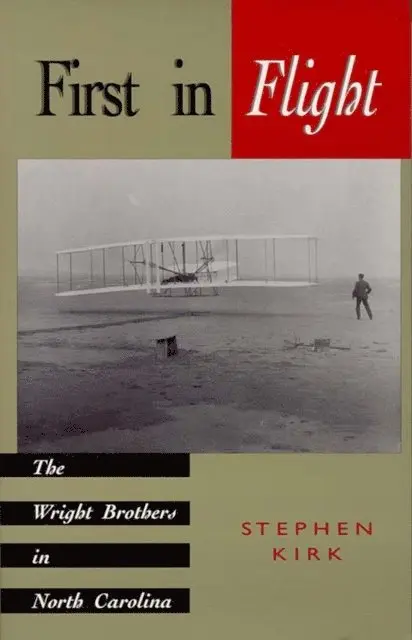
When Wilbur and Orville Wright arrived on North Carolina’s Outer Banks in the year 1900, they were unknown bicycle mechanics who dreamed of powered flight. Even after they achieved the first heavier-than-air, powered flight in the dunes of Kill Devil Hills on December 17, 1903, they remained obscure. But by the time of Orville’s last flights on the Outer Banks in 1911, they were two of the most famous men of the twentieth century. In First in Flight, author Stephen Kirk describes in marvelous detail the undeniable influence that the landscape and people of the Outer Banks had on the Wright Brothers’ quest for flight and, in turn, the lasting effect that the Wright brothers’ success had on this once-desolate region. With its lively and often humorous narrative, First in Flight presents a broader context for the Wrights’ activities on the Outer Banks than any other book about the famous brothers. It details every aspect of the Wrights’ life on the North Carolina coast—the lifesavers they associated with, the local citizens they befriended, the other outsiders who came to the Outer Banks to participate in and report on their experiments, the Wrights’ perspective on local lifestyles, and the locals’ perspective on them.
219 kr
Läs direkt efter köp
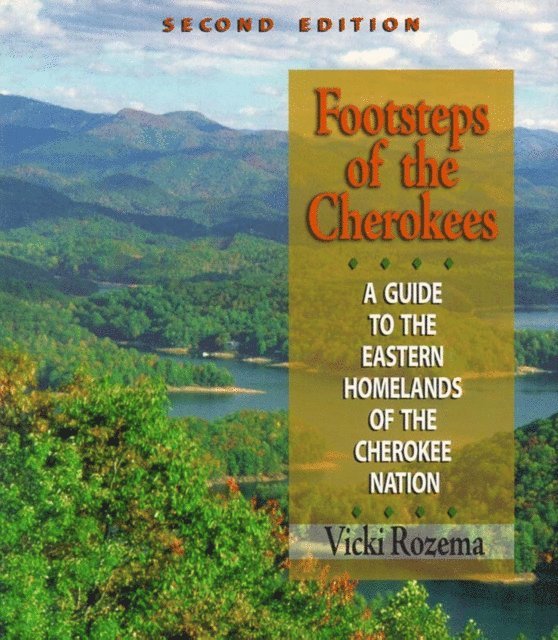
The presence of the once-powerful Cherokees is still evident throughout the southeastern United States in names like Chickamauga, Hiwassee, Chattahoochee, Unicoi, Oconee, and Tuscaloosa. For those interested in learning more about the rich heritage of the Cherokees by visiting their historic sites, the second edition of Vicki Rozema’s Footsteps of the Cherokees: A Guide to the Eastern Homelands of the Cherokee Nation is an excellent guide.
In the early 1800s, the Cherokee Nation reached from western North Carolina to middle Tennessee, and south to northern Alabama, Georgia, and South Carolina. Then, in 1838, thousands of Cherokees were forced to leave their farmlands, homes, and sacred sites during that infamous trek to Oklahoma, the “Trail of Tears.” Rozema traveled over 4,000 miles and spent four years and close to 2,500 hours visiting, researching, and photographing the sites of the Cherokee Nation. Footsteps of the Cherokees is a guide to these scenic, cultural, and historic locations. The book is divided into two sections. In the overview, Rozema traces the history of the Cherokees from their prehistoric ancestors to their interaction and conflict with white explorers and settlers to stories of the few who remained behind after the forced march west. This information puts the 190 sites listed in the book into historical perspective. The second section focuses on the sites themselves. The sites are divided into nineteen areas named after central locations. The starting locations include Chattanooga, Knoxville and Maryville, Atlanta, the Blue Ridge Parkway, Great Smoky Mountains National Park, Northeast Georgia, Northwest Alabama, and South Carolina. The coverage of each site includes a discussion of the area’s history, background information, detailed directions, hours of operation, entrance fees, and important phone numbers. The book includes over 200 black-and-white photographs.
Take an afternoon or weekend and travel back in time to the glory days of the Cherokee Nation. Whether in your car or favorite armchair, Footsteps of the Cherokees will take you to the great tribe’s hunting grounds, battlegrounds, sacred lands, homelands, birthplaces, and burial sites.
Vicki Rozema is the author of Cherokee Voices: Early Accounts of Cherokee Life in the East and Voices from the Trail of Tears and Voices from the Trail of Tears. The first edition of Footsteps of the Cherokees received an Award of Merit from the Tennessee Historical Commission in 1996. Also an acclaimed photographer, she is a history professor at the University of Tennessee.
153 kr
Läs direkt efter köp
Award-winning "ghostlorist" Randy Russell admits to being flummoxed by cats. Some cats will give you whisker kisses or sit with you when you''re sick. Others will invite you to rub them, then take a swipe at you, claws out. Some might do any of the above, depending on which way the wind is blowing. Visits from departed pets are easily the most common ghost experiences. And cats refuse to be left out of most anything. Ghost Cats of the South reveals that felines'' beloved complexity continues well beyond the grave. In this haunting and entertaining volume, readers will meet the following: A cat smelling of chicken soup that saves a pair of street musicians in Kentucky; a face-hungry Mississippi cat that inhabits the seats of a vintage 1956 Chevy Bel Air; a porcelain cat that inspires girls at a North Carolina summer camp to reveal cherished secrets; a South Carolina feline that becomes part of a batch of moonshine; a piano-playing cat that fulfills the Thanksgiving wish of a Georgia grocery-store magnate; a soot-covered Louisiana cat whose fiery mission is to enforce a no-smoking ban; a Virginia cat that must get its owner his glasses before his coffin is sealed. Good ghost kitties, bad ghost kitties, ghost kitties in their many manifestations and moods—you''ll meet them all in these twenty-two stories that the cats dragged in.
Randy Russell is the Edgar-nominated author of several books and collections of short stories, and co-authored, with his wife Janet Barnett, two volumes of southern Appalachian folklore and the highly popular Ghost Dogs of the South. Russell presents ghost-lore programs to groups large and small across the South. He and his wife live outside Asheville, North Carolina.

153 kr
Läs direkt efter köp
Award-winning husband-and-wife folklorists Randy Russell and Janet Barnett have gone to the dogs. Digging deeply through the rich field of Southern folklore, the authors have discovered that a dog''s devotion to its human does not always end at the grave. Dogs can be as peculiar as people. Their relationship with humans is complex. In story after story from Southern homes, there is strong evidence that this relationship can extend beyond death. Do dogs return from the other side to comfort and aid their human companions? You bet your buried bones they do. In Ghost Dogs of the South, you''ll meet the following: A stray dog that warns Kentucky coal miners of impending disaster; a literary critic of a dog with the gift of speech; a dog-snatching mermaid on the Mississippi River; a Tennessee dog that returns year after year to go trick-or-treating; a pair of Georgia hounds that stumble upon an enchanted woods; a girl whose pain is eased by the ghost of a butterfly dog. Dog ghosts (dogs that have become ghosts), ghost dogs (humans who return as ghosts in the shape of dogs), dogs that see ghosts, dogs that are afraid of ghosts—all make an appearance in these twenty stories that illuminate the shadow side of man''s best friend.
For several years, folklorists Randy Russell and Janet Barnett have taught a course about Southern folklore at the North Carolina Center for Advancement of Teaching in Cullowhee, North Carolina. Russell is also the author of several mysteries, including Edgar Award nominee Hot Wire.They live in Asheville, North Carolina.
"Alternately eerie, funny, tragic and sentimental . . . These tales will undoubtedly delight dog lovers and will not fail to charm even the most dour skeptics of supernatural phenomena." —Publishers Weekly

134 kr
Läs direkt efter köp
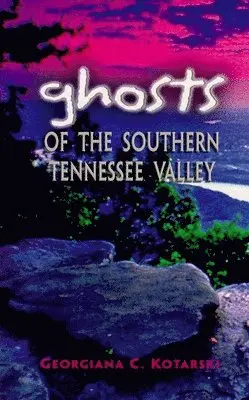
It is hardly surprising that the southern Tennessee River Valley is thick with ghosts. Beneath its green hills lies the headless skeleton of John A. Murrell, “the Great Western Land Pirate,” whose name is still feared more than a century and a half after his death. The battles at Chickamauga and Chattanooga were among the bloodiest of the Civil War. Even now, troubled spirits wander the former killing fields and hospital sites. The southern Tennessee Valley encompasses southeast Tennessee, northwest Georgia, and north Alabama. The thirty true ghost stories in this collection will introduce you to: Captain Mary Greene of the Delta Queen, whose shade still oversees her grand riverboat as it paddles the broad Tennessee; the buried leg and the ghostly rocker of General John Bell Hood at Tunnel Hill, Georgia; the rock band driven from its Lookout Mountain, Tennessee, house by Civil War drums; the Moody Brick in Kyles, Alabama, risen twice from the ashes and as haunted as ever; little Nina Craigmiles of Cleveland, Tennessee, a delicate child whose tears stain the white marble red in the churchyard where she rests. Readers of Ghosts of the Southern Tennessee Valley will agree that this rich, well-documented collection is long overdue.
Georgiana C. Kotarski holds degrees from the University of the South, Kennesaw State University, and the University of Tennessee at Chattanooga. She lives in Dunlap, Tennessee, where she is a sustainable cattle farmer.

149 kr
Läs direkt efter köp
Witches who fly down chimneys. A chair that won’t release its occupant until a drop of blood stains the floor. A mountain that grew—and continues to grow—from the grave of a woman who was larger than life. The ghost of a woman who jumps on the bumpers of cars driving past the graveyard where she is buried. An apple tree that growls at people who pick its fruit. A woman who rose from her grave each night to get food for a baby born to her after she was buried. A peach tree that grows on the head of a deer. These and other legends and ghost stories handed down for generations are contained in this collection of 25 tales from East Tennessee.
For several years, folklorists Randy Russell and Janet Barnett have taught a course about Southern folklore at the North Carolina Center for Advancement of Teaching in Cullowhee, North Carolina. Russell is also the author of several mysteries, including Edgar Award nominee Hot Wire.They live in Asheville, North Carolina.

70 kr
Läs direkt efter köp
Set off the treacherous Outer Banks of North Carolina during the final days of the First World War, Hatteras Light is the compelling story of the dedicated keepers of the Hatteras lighthouse and their tightly knit community. For generations these men have drawn their livelihood from the sea, served in the rescue of shipwreck victims, and guarded seagoers from the hazardous shoals. Their wives and daughters endure a difficult, solitary life, their fortitude constantly tested. Loyal to one another and to a traditional way of life, the islanders are suspicious of outsiders and censorious of those who leave. The insular world of these Hatterasmen disrupts when a German U-boat reveals itself offshore, indiscriminately sinking civilian and military vessels, challenging the courage of the lifesavers, and signaling the dawning of a darker, less honorable age. Over a few crucial days, we become intimate with these men and women, and with the German officers aboard U-55 who have made the islanders'' lives hell. What emerges is an adventure story full of wisdom and compassion, a novel unfailingly accurate in portraying the struggle of man and sea, man against man, and of men and women. Based on historical fact, Philip Gerard''s novel is a powerful book whose storytelling represents the most human tendencies in life and art.
Philip Gerard is the author of five novels and eight books of nonfiction, including Down the Wild Cape Fear: A River Journey Through the Heart of North Carolina and The Patron Saint of Dreams, winner of the 2012 North American Gold Medal in Essay/Creative Nonfiction from The Independent Publisher.
179 kr
Läs direkt efter köp
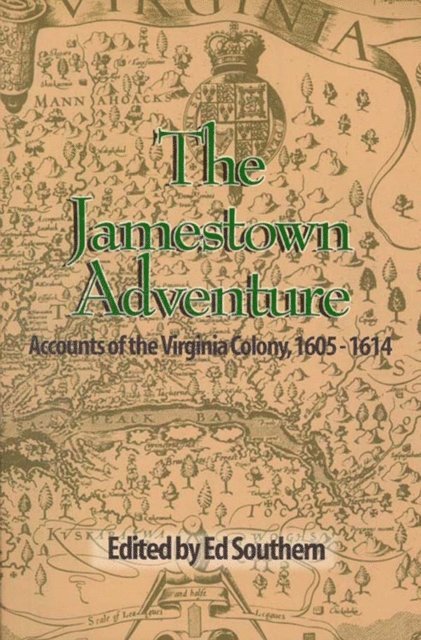
In December 1606, three ships carrying 144 passengers and crew sailed from London bound for a land that had already claimed more than its share of English lives. In May of the following year, little more than 100 men would disembark to settle on a small peninsula in the James River. Eight months later, only 38 men were still alive in the fort they had named Jamestown. Jamestown is well known as the first permanent English settlement in the New World; largely unknown is how fragile that permanence was. Most Americans have a general awareness of the dangers faced on any frontier, but not the particular hardships that confronted the Jamestown colonists—starvation, disease, conspiracy, incompetent leaders, and, of course, intermittent war with the neighboring Native Americans. This volume collects contemporary accounts of the first successful colony the first thirteen United States. The earliest text dates from 1605, two years before the first landing; the last describes events up to 1614, when the marriage of Pocahontas and John Rolfe secured a brief measure of peace for the beleaguered colony. Most of the accounts were written by the colonists themselves; others reflect the perceptions and expectations of investors and observers back in England, while two reveal the keen and hostile interest taken in the colony by England’s chief rival, Spain. Several of them were written for widespread publication; others were either private letters or reports meant only for certain audiences. These narratives take the reader from the London stage to Powhatan’s lodge, from the halls of royal power to the derelict hovels of the Starving Time.They show the modern reader what an adventure the founding of English America was—the desperate battles and fraught negotiations with Powhatan, the political intrigues in Europe and Virginia, the shipwreck that inspired Shakespeare’s The Tempest, the discoveries that thrilled the colonists, the discoveries that broke their hearts. Ed Southern, a graduate of Wake Forest University, is a descendant of John Southern, who arrived in Jamestown in 1619.
Ed Southern was a Wake Forest senior studying in London when he walked into the 200-year-old bookshop Hatchard’s and realized how excited the possibilities presented by shelves full of books made him. After graduation, he worked at Reynolda House Museum of American Art. Hanging around after he finished setting up for lectures, concerts, performances, and classes gave him an excellent postgraduate education in the liberal arts, which came in handy later when he dropped out of graduate school. He went to work for one of the major bookselling chains and was a member of the training team sent to open the company’s first store in London, a massive four-story media emporium on Oxford Street. It was a bit like coming full circle, but not quite. A year later, he left the bookstore and went to work for John F. Blair, Publisher, as the sales director. He presently serves as the executive director of the North Carolina Writers Network.
180 kr
Läs direkt efter köp
136 kr
Läs direkt efter köp
In 1929, the Social Sciences Department at Fisk University in Nashville, Tennessee, began recording the oral histories of former slaves. During the mid-1930s, the Federal Writers’ Project undertook a similar effort, ultimately compiling more than two thousand interviews and ten thousand pages of material in seventeen states. In this volume, thirty-six former slaves living in Tennessee recount what it was like to live under the yoke. Tennessee was not a large slaveholding state compared with others in the South. On the other hand, it was a leader in the abolition movement prior to 1830 and a powder keg of mixed Union and Confederate sympathies at the time of the Civil War. The voices in this volume thus recall the extreme conditions of slavery in the border country.
Originally from San Antonio, Andrea Sutcliffe has a journalism degree from the University of Texas at Austin. She was a writer, editor, and publications manager in the Washington, DC, area for twenty years. Her writing and editing career began in 1990 as director of the EEI Press in Alexandria, Virginia. In 1996, Andrea Sutcliffe moved to Virginia’s Shenandoah Valley to devote herself full-time to writing. Andrea’s love of her new home in the mountains of western Virginia, and a desire to learn more about the region’s fascinating history, led to her book, Touring the Shenandoah Valley Backroads.

180 kr
Läs direkt efter köp
For centuries, the mountains of western North Carolina have inspired wonder and awe. It was only natural that man, after gazing at such scenic wonders, would turn some of the mystery he felt into legend. Sometimes these legends attempted to explain natural phenomena, sometimes they attempted to explain an occurrence that appeared to be supernatural, and sometimes they grew up around the eccentric characters that were drawn to the isolation of these mysterious hills. This collection of eighteen stories presents some of the mystery and awe that the mountains convey, and it may alter your perception of the Blue Ridge and Smoky Mountains forever. You may never stand atop Roan Mountain during a storm without thinking you hear a ghostly choir. You may gaze at the top of Chimney Rock during a hazy summer afternoon and wonder if it really is a ghostly cavalry fight you see. If you spend the night near High Hampton, you may find yourself listening for the call of the lonesome white owl. If you stand at Wiseman''s View, you will probably think that you, too, can see the Brown Mountain Lights. Standing atop Clingman''s Dome, you may wonder if there really is an enchanted lake where animals flock to heal their wounds somewhere in the valley below. And you will always wonder if the fly you hear on your mountain walk means that Spearfinger is lurking nearby.
For several years, folklorists Randy Russell and Janet Barnett have taught a course about Southern folklore at the North Carolina Center for Advancement of Teaching in Cullowhee, North Carolina. Russell is also the author of several mysteries, including Edgar Award nominee Hot Wire. They live in Asheville, North Carolina.
139 kr
Läs direkt efter köp
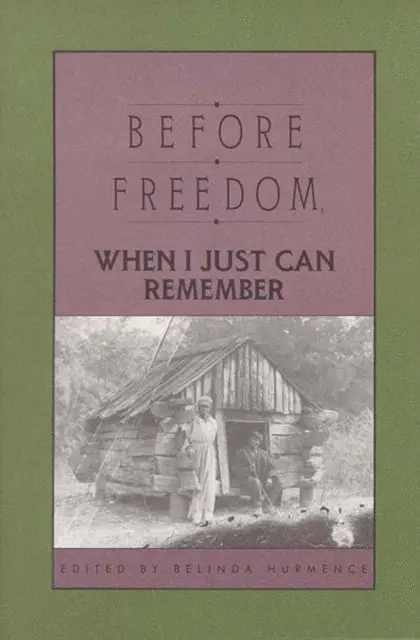
Former slaves themselves—an important but long-neglected source of information about the institution of slavery in the United States. Who could better describe what slavery was like than the people who experienced it? And describe it they did, in thousands of remarkable interviews sponsored by the Federal Writers’ Project during the 1930s. More than 170 interviews were conducted in North Carolina. Belinda Hurmence pored over each of the North Carolina narratives, compiling and editing 21 of the first-person accounts for this collection.
Belinda Hurmence was born in Oklahoma, raised in Texas, and educated at the University of Texas and Columbia University. She has written several novels for young people, including Tough Tiffany (an ALA Notable Book), A Girl Called Boy (winner of the Parents'' Choice Award), Tancy (winner of a Golden Kite Award), and The Nightwalker.
She has also edited We Lived in a Little Cabin in the Yard and Before Freedom, When I Just Can Remember, companion volumes to this book. She now lives in Raleigh, North Carolina.

137 kr
Läs direkt efter köp
Dare Wright (1914–2001) was born in Canada on December 3, 1914. Her parents'' marriage dissolved before Dare turned three, and Dare''s father left with her older brother, Blaine. The children were not to reunite until they were in their twenties. Dare grew up in Cleveland, Ohio, and showed an early creative aptitude. Encouraged by her mother, the artist Edith Stevenson Wright, Dare learned to sketch, paint, write, and sew. It took the catalyst of photography for Dare to later combine these talents into her Lonely Doll book series. Moving to New York in her twenties, Dare modeled for major magazines and had small parts in theatrical productions. A stunning beauty, Dare seemed a natural for show business, but she was never comfortable performing in a public venue. Competition, whether with other actresses for roles, or with her mother as a painter, was too distressing. Instead, Dare found her niche as a photographer, first in the fashion field, and then as a children''s book author. In 1941, Dare and her brother Blaine met for the first time since they had been separated as children. Blaine was handsome, witty, and everything Dare could have wished for in a sibling. Blaine introduced Dare to his RAF friend, Philip Sandeman. The two became engaged, but the wedding never transpired. The 1957 success of Dare''s first book, The Lonely Doll, brought her recognition as both an author and photographer. Illustrated with Dare''s haunting black-and-white photographs, the seemingly simple text touched both children and their parents. Almost fifty years later, Dare''s nineteen published books continue to delight a new generation of readers.
139 kr
Läs direkt efter köp
Mile for mile, St. Simons Island—one of Georgia’s Golden Isles—boasts as much history as any community on the East Coast. Originally an Indian hunting ground, it has been occupied or invaded by Spanish missionaries, British settlers, planters and their slaves, the Union army, the United States Navy, and developers and tourists. The seventeen narratives in Voices from St. Simons represent an “oral archaeological dig,” writes editor Stephen Doster. Many of those interviewed are descendants of masters and slaves. Surprisingly, they speak of racial issues with greater compassion than bitterness. But the volume encompasses much more than that. Here, the people of the Golden Isles recall waving farewell to Paul Redfern when his airplane took off from a sandy beach on his ill-fated attempt to outdo Charles Lindbergh. They describe jumping into a fast boat and riding to the rescue of merchant sailors torpedoed by a German U-boat. They tell of playing childhood sports—and dominating the competition—alongside future NFL legend Jim Brown, who was raised on St. Simons. They remember piloting the ship that, due to a helmsman’s error, hit the Sidney Lanier Bridge, causing one of the worst such disasters in American history. “In some respects, the narratives reveal a plot of ground that time forgot,” Doster writes. “They present the reflections of a cross-section of ordinary people who lived during extraordinary times.”
Stephen Doster was born in 1959 in Kingston-Upon-Thames, England, and moved with his parents and four siblings to St. Simons Island, Georgia, in the early 1960s. His ties to the island date to the early 1900s, when his father’s family vacationed there before the construction of a mainland causeway. His grandparents permanently moved to St. Simons in the 1940s, building on the grounds where a Spanish mission once stood. Growing up on the island, Doster remembers the place as a “Mayberry with tides,” where he and neighborhood kids played baseball on the beach, sneaked into a resort hotel pool after football practices, and explored the island’s woods and tidal creeks. His early recollections include seeing navy hurricane hunters fly over the Atlantic in search of storms before the days of satellites, viewing open Indian graves during an archaeological dig, evacuating the island at Hurricane Dora’s approach, and returning to the destruction left in its wake. After graduating from the University of Georgia with a Bachelor of Business Administration degree in 1983, Doster headed to Nashville, Tennessee where he has lived and worked since. Though he has been a resident of Nashville for over 20 years, St. Simons has always been close to his heart. In 2002, John F. Blair published his debut novel, Lord Baltimore, about a young man’s journey on the Georgia coast between Savannah and St. Simons. Voices from St. Simons is essentially Doster’s effort to preserve the legacy of the area. For decades, he heard “local residents utter the famous sentiment that someone should have recorded so-and-so’s recollections before she died.” Reading the obituary of a former elementary school teacher inspired him to set up face-to-face and telephone interviews that began his oral archaeological dig. Doster works at Vanderbilt University and lives in Nashville with his wife, Anne.
183 kr
Läs direkt efter köp
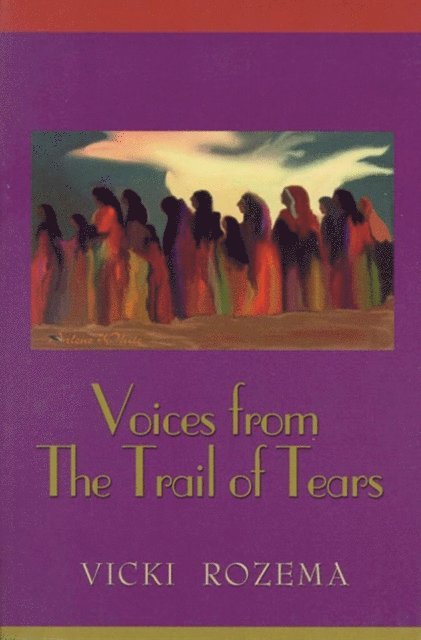
During the first half of the 19th century, as many as 100,000 Native Americans were relocated west of the Mississippi River from their homelands in the East. The best known of these forced emigrations was the Cherokee Removal of 1838. Christened Nu-No-Du-Na-Tlo-Hi-Lu—literally “the Trail Where They Cried”—by the Cherokees, it is remembered today as the Trail of Tears. In Voices from the Trail of Tears, editor Vicki Rozema re-creates this tragic period in American history by letting eyewitnesses speak for themselves. Using newspaper articles and editorials, journal excerpts, correspondence, and official documents, she presents a comprehensive overview of the Trail of Tears—the events leading to the Indian Removal Act, the Cherokees’ conflicting attitudes toward removal, life in the emigrant camps, the routes westward by land and water, the rampant deaths in camp and along the trail, the experiences of the United States military and of the missionaries and physicians attending the Cherokees, and the difficulties faced by the tribe in the West. “O what a year it has been!” wrote one witness accompanying a detachment westward in December 1838. “O what a sweeping wind has gone over, and carried its thousands into the grave.” This book will lead readers to both rethink American history and celebrate the spirit of those who survived.
Vicki Rozema is the author of Cherokee Voices: Early Accounts of Cherokee Life in the East and Voices from the Trail of Tears. Also an acclaimed photographer, she is a history professor at the University of Tennessee. The first edition of Footsteps of the Cherokees received an Award of Merit from the Tennessee Historical Commission in 1996. Her honors include the 2014 McClung Award for an article that appeared in the 2013 Journal of East Tennessee History and the Native American Eagle Award for her writings on the Cherokee.
"This work, like Cherokee Voices, is a compilation of letters, newspaper editorials, journal excerpts, church records, and military documents, written by a diverse group of Cherokees and Euroamericans. As the title suggests, Voices from the Trail of Tears is a moving account of the forced removal of thousands of Cherokees in the 1830s; Rozema does a remarkable job of ''re-creating this tragic period in American history by letting eyewitnesses speak for themselves.''" - Ginny Carney Studies in American Indian Literature
136 kr
Läs direkt efter köp
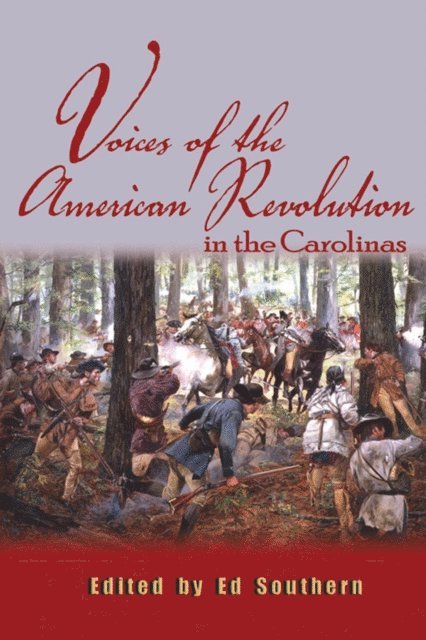
On February 11, 1780, a British army led by General Sir Henry Clinton came ashore on Johns Island, South Carolina. By the end of March, the British had laid siege to Charleston, the most important city south of Philadelphia. By the middle of May, they had taken the city and the American army defending it. On March 15, 1781, that same British army left the field at Guilford Courthouse exhausted, decimated, stripped of supplies and rations, and victorious in name only. Its march away from Guilford Courthouse would end only a few months later at Yorktown, Virginia, where it would surrender. How did this happen? Although historians have debated the causes for centuries, they have often ignored how it felt to live, fight, and survive. What was it like to be British or American, Tory or Whig, regular soldier or militia, partisan, outlaw, or would-be bystander as the two sides (and those who drifted from side to side) went at each other with a fury across the Carolina countryside?
Through the eyewitness accounts of those who fought the battles and skirmishesVoices of the American Revolution in the Carolinas provides the reader with firsthand looks at how it felt. The entries in this volume are taken from first-person narratives by those on the scene, from officers such as Henry Lee and Banastre Tarleton to teenaged scouts such as Thomas Young and James Collins. Some narratives, like Daniel Morgan''s report of the Battle of Cowpens, were written immediately or soon after the action; others, like Young''s, were written when the boy soldiers had become old men. Some were written (and sometimes embellished) specifically for publication, while others were written as private correspondence or official reports. Some express a great deal of emotion and describe the authors'' immediate experiences of war, while others concentrate on logistics, strategy, tactics, and the practical realities of an army battle; some, like Lee''s, manage to do both.
The American Revolution in the Carolinas was nasty, brutish, and relatively short, though it must not have felt short to those who lived through it. It moved with a furious swiftness, the center of action shifting from Charleston to Camden, from Charlotte to King''s Mountain, and from Cowpens to Guilford Courthouse in a matter of months, weeks, or sometimes days. Accounts that describe what it was actually like at all of these hot spots as well as the events that lead up to the actual fighting are included in this book. Voices of the American Revolution in the Carolinas gives the reader some idea of what it was like to be part of a war when two states were ripped apart but a nation was made.
Ed Southern was a Wake Forest senior studying in London when he walked into the 200-year-old bookshop Hatchard’s and realized how excited the possibilities presented by shelves full of books made him. After graduation, he worked at Reynolda House Museum of American Art. Hanging around after he finished setting up for lectures, concerts, performances, and classes gave him an excellent postgraduate education in the liberal arts, which came in handy later when he dropped out of graduate school. He went to work for one of the major bookselling chains and was a member of the training team sent to open the company’s first store in London, a massive four-story media emporium on Oxford Street. It was a bit like coming full circle, but not quite. A year later, he left the bookstore and went to work for John F. Blair, Publisher, as the sales director. He presently serves as the executive director of the North Carolina Writers Network.
139 kr
Läs direkt efter köp
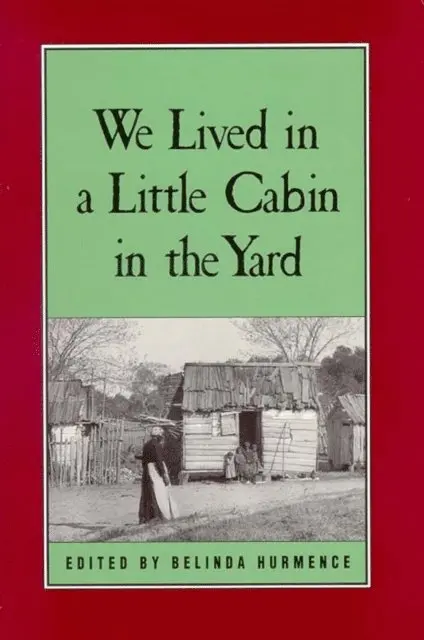
In the 1930s, the Federal Writers’ Project undertook a massive effort at gathering the oral testimony of former slaves. Those ex-slaves were in their declining years by the time of the Great Depression, but Elizabeth Sparks, Elige Davison, and others like them nonetheless provided a priceless record of life under the yoke: where slaves lived, how they were treated, what they ate, how they worked, how they adjusted to freedom. Here, Belinda Hurmence presents the interviews of 21 former Virginia slaves. This is a companion volume to Hurmence’s popular collections of North Carolina and South Carolina slave narratives, My Folks Don’t Want Me to Talk About Slavery and Before Freedom, When I Just Can Remember.
Belinda Hurmence was born in Oklahoma, raised in Texas, and educated at the University of Texas and Columbia University. She has written several novels for young people, including Tough Tiffany (an ALA Notable Book), A Girl Called Boy (winner of the Parents'' Choice Award), Tancy (winner of a Golden Kite Award), and The Nightwalker. She now lives in Raleigh, North Carolina.