
Häftad, Engelska, 2026
219 kr
Skickas inom 3-6 vardagar
219 kr
Skickas inom 3-6 vardagar
166 kr
Skickas
129 kr
Skickas
149 kr
Skickas inom 5-8 vardagar
145 kr
Skickas inom 5-8 vardagar
341 kr
Läs direkt efter köp
149 kr
Skickas inom 5-8 vardagar
139 kr
Läs direkt efter köp
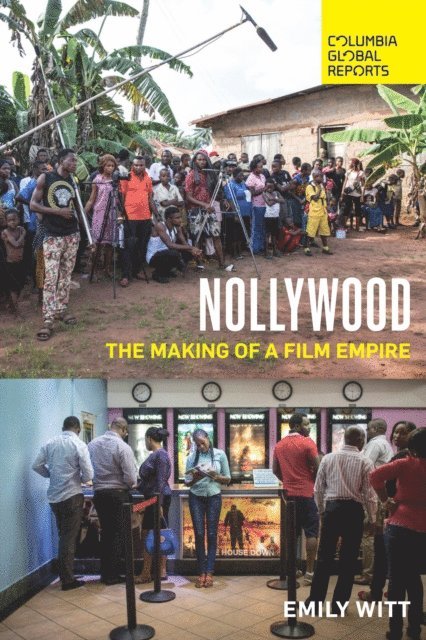
How did Nigeria create the second largest movie industry in the world?
Nollywood began in Nigeria in the 1990s and has grown into one of the most recognized cultural centers of the world, producing more movies every year than Hollywood and almost as many as Bollywood. Emily Witt travels to Nigeria to offer a vivid, rollicking tour of the industry today, from the back alleys of the marketplaces of Lagos to the glamour of a red-carpet premiere, from startups trying to digitalize what has been largely an economy based on piracy to the shooting of a historic epic in the northern city of Jos.
Amid electricity cuts, fuel scarcity, and countless other obstacles, Nigerians are pursuing the very real possibility that Nollywood dramas could become a global brand, as recognizable as the Bollywood musical, the Hong Kong kung fu flick, or the Hollywood blockbuster.
“Emily Witt blends monograph with vivid reportage in her latest offering: a short but sweet study of Nigerian cinema.” —Financial Times
180 kr
Skickas inom 3-6 vardagar
106 kr
Läs direkt efter köp
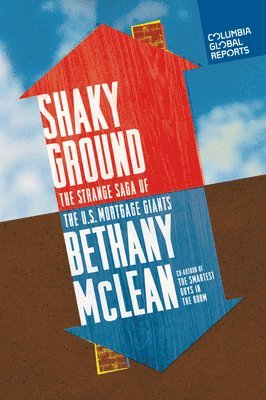
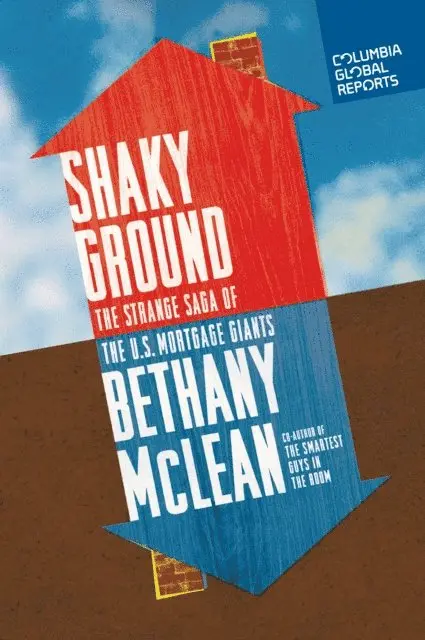
Fannie Mae and Freddie Mac were created by Congress to serve the American Dream of homeownership. By the end of the century, they had become extremely profitable and powerful companies, instrumental in putting millions of Americans in their homes.
So why does the government now want them dead?
In 2008, the U.S. Treasury put Fannie and Freddie into a life-support state known as “conservatorship” to prevent their failure—and worldwide economic chaos. The two companies, which were always controversial, have become a battleground. Today, Fannie and Freddie are profitable again but still in conservatorship. Their profits are being redirected toward reducing the federal deficit, which leaves them with no buffer should they suffer losses again. China and Japan are big owners of Fannie and Freddie securities, and they want to ensure the safety of their investments—which helps explain why the government is at an impasse about what to do. But the current state of limbo is unsustainable.
Based on comprehensive reporting and dozens of interviews, Shaky Ground chronicles the story of Fannie and Freddie seven years after the meltdown, and tells us why homeownership finance is now one of the biggest unsolved issues in today’s global economy—and why it must be placed on firmer ground.
124 kr
Skickas inom 5-8 vardagar
106 kr
Läs direkt efter köp
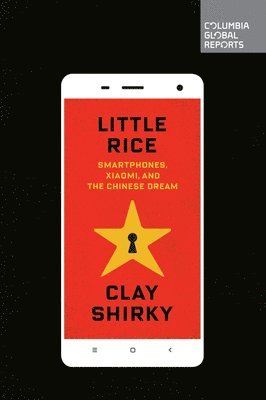
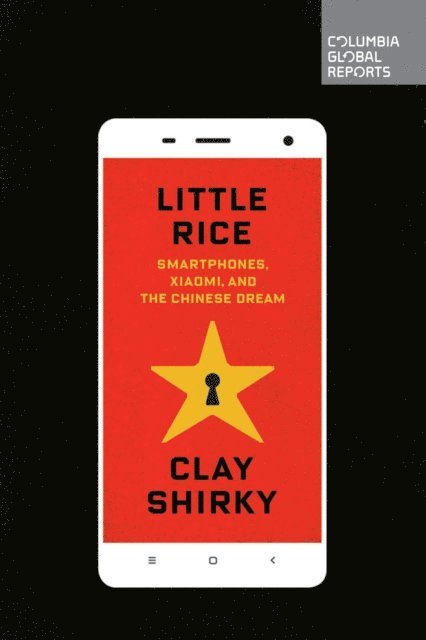
Can the world’s biggest economy actually innovate? Clay Shirky explores China at a crossroads.
Smartphones have to be made someplace, and that place is China. In just five years, a company named Xiaomi (which means “little rice” in Mandarin) has grown into the most valuable startup ever, becoming the third largest vendor of smartphones, behind only Samsung and Apple. China is now both the world’s largest producer and consumer of a little device that brings the entire globe to its user’s fingertips. How has this changed the Chinese people? How did Xiaomi conquer the world’s biggest market? Can the rise of Xiaomi help realize the Chinese Dream, China’s bid to link personal success with national greatness?
Clay Shirky, one of the most influential and original thinkers on the internet’s effects on society, spends a year in Shanghai chronicling China’s attempt to become a tech originator—and what it means for the future course of globalization.
146 kr
Läs direkt efter köp
117 kr
Läs direkt efter köp
The surprising and sometimes scandalous story of twenty-first-century citizenship
The buying and selling of citizenship has become a thriving business in just a few years. Entrepreneurs and libertarians are renouncing America and Europe in favor of tax havens like Singapore and the Caribbean. But as journalist Atossa Araxia Abrahamian discovered, the story of twenty-first-century citizenship is bigger than millionaires seeking their next passport.
When Abrahamian learned that a group of mysterious middlemen were persuading island nations like the Comoros, St. Kitts, and Antigua to turn to selling citizenship as a new source of revenue after the 2008 financial crisis, she decided to follow the money trail to the Middle East. There, she found that the customers of passports-in-bulk programs were the United Arab Emirates and Kuwait, oil-rich countries that don’t want to confer their own citizenship on their bidoon eople, or stateless minorities who have no documentation.
In her timely and eye-opening first book, Abrahamian travels the globe to meet these willing and unwitting “cosmopolites,” or citizens of the world, who inhabit a new, borderless realm where things can go very well, or very badly.
160 kr
Skickas inom 5-8 vardagar
178 kr
Läs direkt efter köp
Need surgery? You better travel.
Globalization produces a lot of odd results around the world. One of them is that Hungary has become the dentistry capital of Europe: thanks to aggressive marketing campaigns and heavy government support, more people go there for dental care than to any other country in Europe. The towns of Mosonmagyaróvár and Sopron boast the highest concentrations of dental clinics in the world.
The story of how Hungary became Europe''s dental chair is a case study in the booming practice of medical tourism. It is a rapidly growing business, as patients go in search of lower prices, and some countries have found economic opportunity in turning health care into a global trade. An American with insurance can expect to pay $90,000 for a heart bypass in the U.S., but only $12,000 if he or she travels to Thailand.
The question is whether medical tourism represents the future of health care, which traditionally has been a core responsibility of national governments. Sasha Issenberg''s acclaimed books, The Sushi Economy and The Victory Lab, were early in identifying changes in the way the world works. A brilliant journalist with a keen eye for significant trends, he now turns his talents to medical tourism, and gives us a funny, vivid, wise narrative that will change the way you think about health care.
117 kr
Skickas inom 5-8 vardagar
98 kr
Läs direkt efter köp
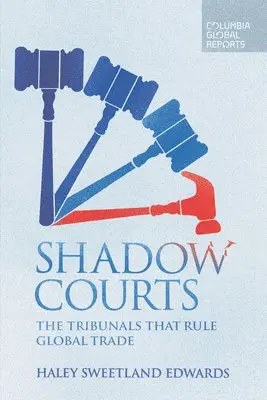
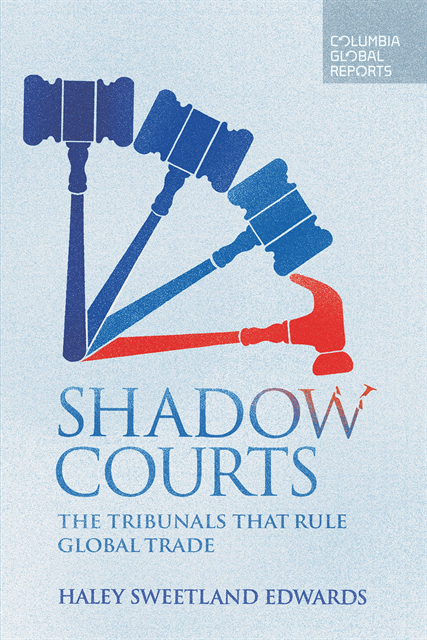
A detailed look at one little-known but powerful provision in most modern trade agreements.
International trade deals have become vastly complex documents, seeking to govern everything from labor rights to environmental protections. This evolution has drawn alarm from American voters, but their suspicions are often vague.
In this book, investigative journalist Haley Sweetland Edwards focuses on one crucial aspect of these massive agreements: a powerful provision called Investor-State Dispute Settlement, which allows foreign corporations to sue sovereign nations before little-known supranational arbitration tribunals.
Edwards makes a devastating case that these tribunals (the “shadow courts” of the book’s title), which were designed 50 years ago to protect foreign investors'' property rights abroad, are now being exploited by multinational corporations at the expense of sovereign nations and their citizens. From the 1960s to 2000, corporations brought fewer than 40 cases through these tribunals. In the last 15 years, they’ve brought nearly 650.
In the course of her reporting, Edwards interviewed dozens of policymakers, activists, and government officials in Argentina, Canada, Bolivia, Ecuador, the European Union, and the United States. The result is a major story, untold before now, about a significant shift in the global balance of power.
120 kr
Läs direkt efter köp
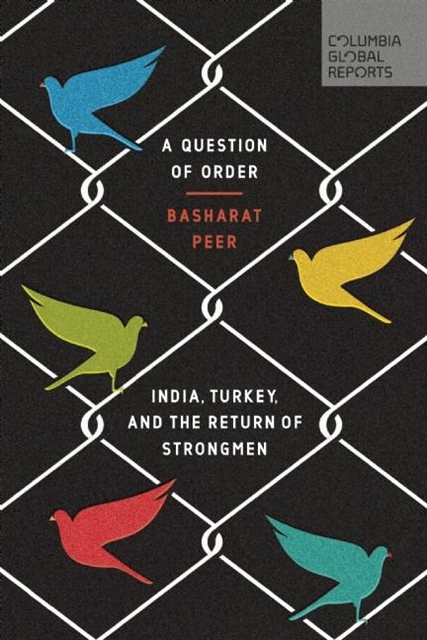
What happens when a democratically elected leader evolves into an authoritarian ruler, limiting press freedom, civil liberties, and religious and ethnic tolerance?
India and Turkey are two of the world’s biggest democracies—multi-ethnic nations that rose from their imperial past to be founded on the values of modernity. They have fair elections, open markets, and freedom of religion.
Yet this is an account of how the charismatic strongmen Narendra Modi, in India, and Recep Tyyip Erodgan, in Turkey, used the power they had won as elected heads of state to push their countries toward authoritarian ways.
Journalist Basharat Peer knows only too well how the tyranny of the majority can exact a terrible human toll; it’s a story he told in Curfewed Night, his memoir of growing up in war-torn Kashmir. For this book, Peer spent a year and a half traveling across India and Turkey to chronicle the rise of Modi and Erodgan, and to tell the stories of the men and women they have victimized, who have showed courage and endured great suffering because of their love of true democratic traditions. It is more important than ever to understand the failings of democracies like India and Turkey if liberal traditions are to be protected and nourished.
167 kr
Skickas inom 5-8 vardagar
119 kr
Läs direkt efter köp
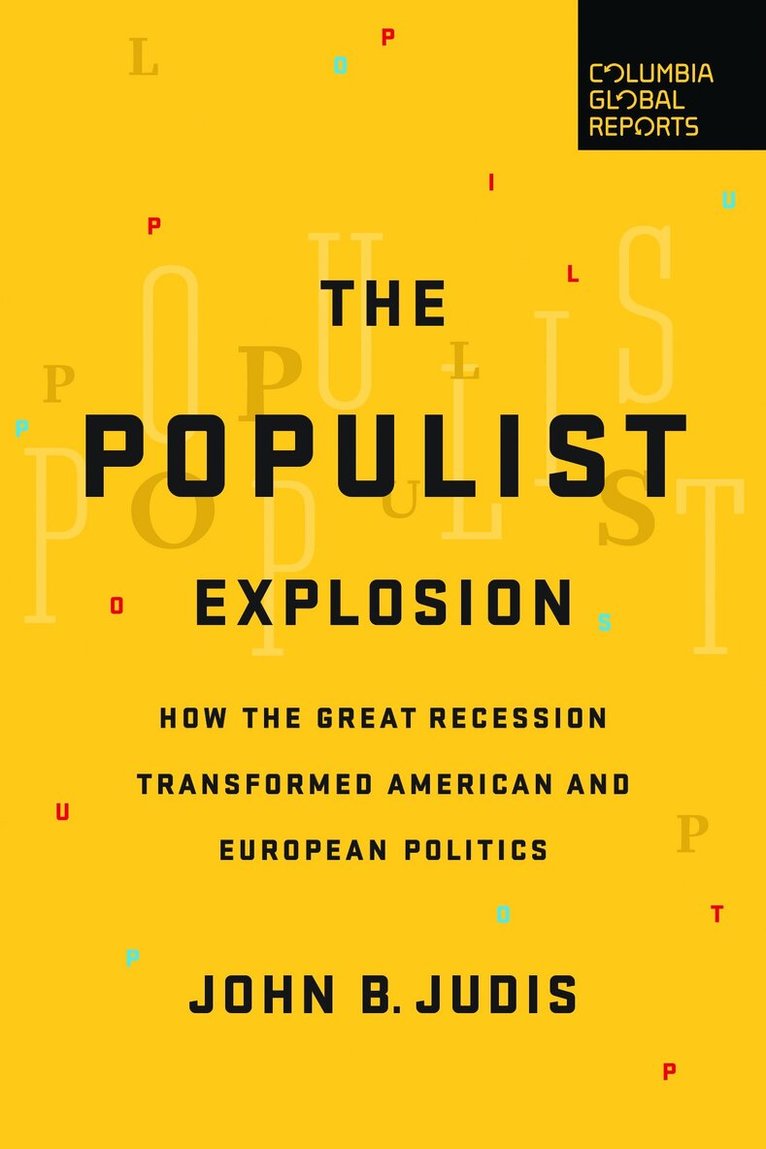
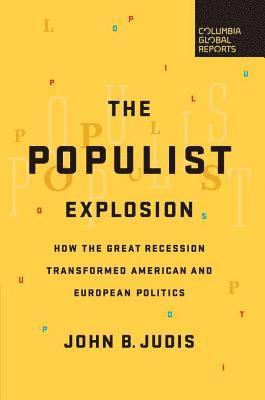
What’s happening in global politics, and is there a thread that ties it all together?
There is, and it’s called populism.
What is populism? And why have populist parties and candidates suddenly sprung up and even gained power in the United States and Western Europe? The emergence of Bernie Sanders and Donald Trump, France''s Marine LePen, Podemos in Spain, Syriza in Greece, and the Alternative for Germany are signs that an older consensus about politics and government is breaking down.
John B. Judis, one of America''s most respected political analysts, tells us why we need to understand the populist movement that began in the United States in the 1890s and whose politics have recurred on both sides of the Atlantic ever since. The Populist Explosion is essential reading for anyone hoping to grasp a global political system that is only just beginning what will be a long-running and highly consequential readjustment.
150 kr
Läs direkt efter köp
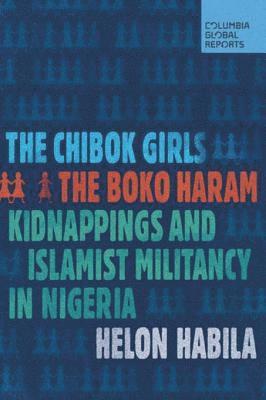
On the night of April 14, 2014, 276 girls from the Chibok Secondary School in northern Nigeria were kidnapped by the deadly terrorist group Boko Haram.
Fifty-seven of them escaped over the next few months, but most were never heard from again.
On April 14, 2014, 276 girls from the Chibok Secondary School in northern Nigeria were kidnapped by Boko Haram, the world''s deadliest terrorist group. Most were never heard from again. Acclaimed Nigerian novelist Helon Habila, who grew up in northern Nigeria, returned to Chibok and gained intimate access to the families of the kidnapped to offer a devastating account of this tragedy that stunned the world. With compassion and deep understanding of historical context, Habila tells the stories of the girls and the anguish of their parents; chronicles the rise of Boko Haram and the Nigerian government’s inept response; and captures the indifference of the media and the international community whose attention has moved on.
Employing a fiction writer’s sensibility and a journalist’s curiosity, The Chibok Girls provides poignant portraits of everyday Nigerians whose lives have been transformed by extremist forces. Habila illuminates the long history of colonialism—and unmasks cultural and religious dynamics—that gave rise to the conflicts that have ravaged the region to this day.
“In rescuing the Chibok tragedy from ‘mythic status,’ Habila’s unusual primer quietly yet powerfully revives the call to take notice.” —The Atlantic
137 kr
Läs direkt efter köp
146 kr
Läs direkt efter köp
146 kr
Läs direkt efter köp
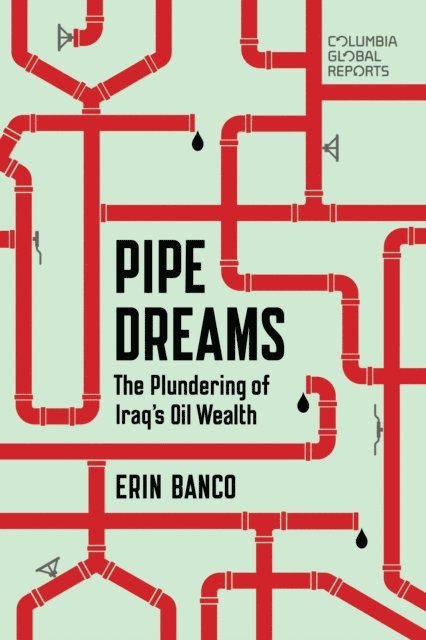
What happened to Iraq’s oil wealth?
Iraq sits on top of more than 140 billion barrels of oil, making it the owner of the world’s fifth largest reserves. When the United States invaded in 2003, the Bush Administration promised that oil revenue—according to one report, totaling some $700 billion since the invasion, accounting for at least 80 percent of the Iraqi government budget—would be used to win the war and to rebuild and democratize the country. But fifteen years later, those dreams have been shattered. The economy has flat-lined, millions of people are internally displaced, and institutions like the International Monetary Fund and the World Bank have had to provide billions of dollars to the country every year. Where did all the oil revenue go?
Based on court documents and on exclusive interviews with sources who have investigated energy companies, American, British and Iraqi government officials, and the middlemen between them, reporter Erin Banco traveled to oil-rich Iraqi Kurdistan—an autonomous region that holds, according to the regional government, some 45 billion barrels of crude—to uncover how widespread corruption, tribal cronyism, kickbacks to political parties, and the war with ISIS have contributed to the plundering of Iraq’s oil wealth. The region’s economy and political stability have been on the brink of collapse, and local people are suffering. Pipe Dreams is a cautionary tale that reveals how the dream of an oil-financed, American-style democracy in Iraqi Kurdistan now looks like a completely unrealistic fantasy.
147 kr
Läs direkt efter köp
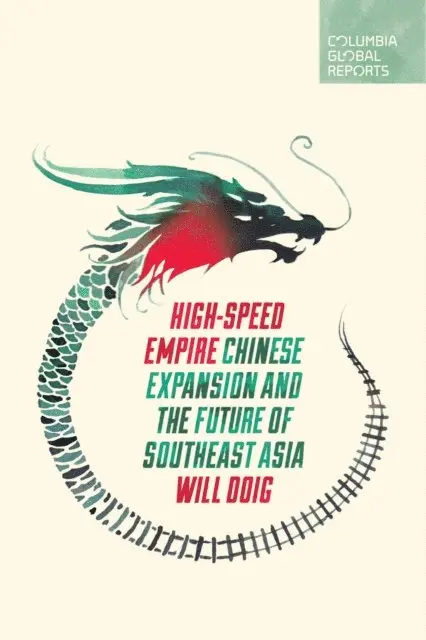
The story of the world’s most audacious infrastructure projects
Less than a decade ago, China did not have a single high-speed train in service. Today, it owns a network of 14,000 miles of high-speed rail, far more than the rest of the world combined. Now, China is pushing its tracks into Southeast Asia, reviving a century-old colonial fantasy of an imperial railroad stretching to Singapore; and kicking off a key piece of the One Belt One Road initiative, which has a price tag of $1 trillion and, reaches inside the borders of more than 60 countries.
The Pan-Asia Railway portion of One Belt One Road could transform Southeast Asia, bringing shiny Chinese cities, entire economies, and waves of migrants where none existed before. But if it doesn’t succeed, that would be a cautionary tale about whether a new superpower, with levels of global authority unimaginable just a decade ago, can pull entire regions into its orbit simply with tracks, sweat, and lots of money. Journalist Will Doig traveled to Laos, Thailand, Malaysia, and Singapore to chronicle the dramatic transformations taking place—and to find out whether ordinary people have a voice in this moment of economic, political, and cultural collision.
169 kr
Läs direkt efter köp
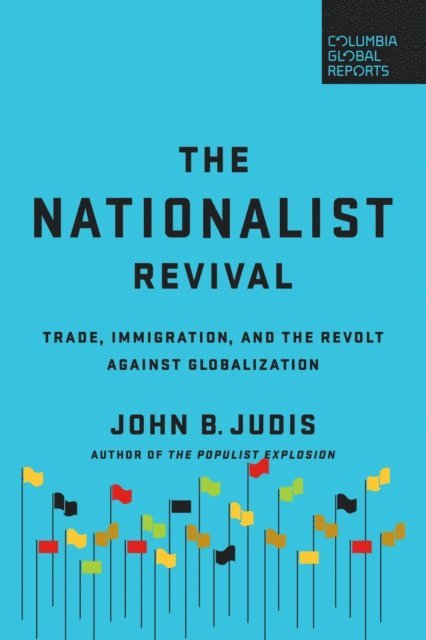
Why has nationalism come roaring back?
Trump in America, Johnson in the U.K., anti-EU parties in Italy, Germany, France, the Netherlands, Austria, Poland, and Hungary, and nativist or authoritarian leaders in Turkey, Russia, India, and China—Why has nationalism suddenly returned with a vengeance? Is the world headed back to the fractious conflicts between nations that led to world wars and depression in the early 20th Century?Based on travels in America, Europe, and Asia, veteran political analyst John B. Judis found that almost all people share nationalist sentiments that can be the basis of vibrant democracies as well as repressive dictatorships. Today’s outbreak of toxic “us vs. them” nationalism is an extreme reaction to utopian cosmopolitanism, which advocates open borders, free trade, rampant outsourcing, and has branded nationalist sentiments as bigotry. Can a new international order be created that doesn’t dismiss what is constructive about nationalism? As he does for populism in The Populist Explosion and for socialism in The Socialist Awakening, Judis looks at nationalism from its modern origins in the 1800s to today to find answers.
“Essential reading.” —E.J. Dionne Jr., Washington Post
149 kr
Skickas inom 5-8 vardagar
183 kr
Läs direkt efter köp
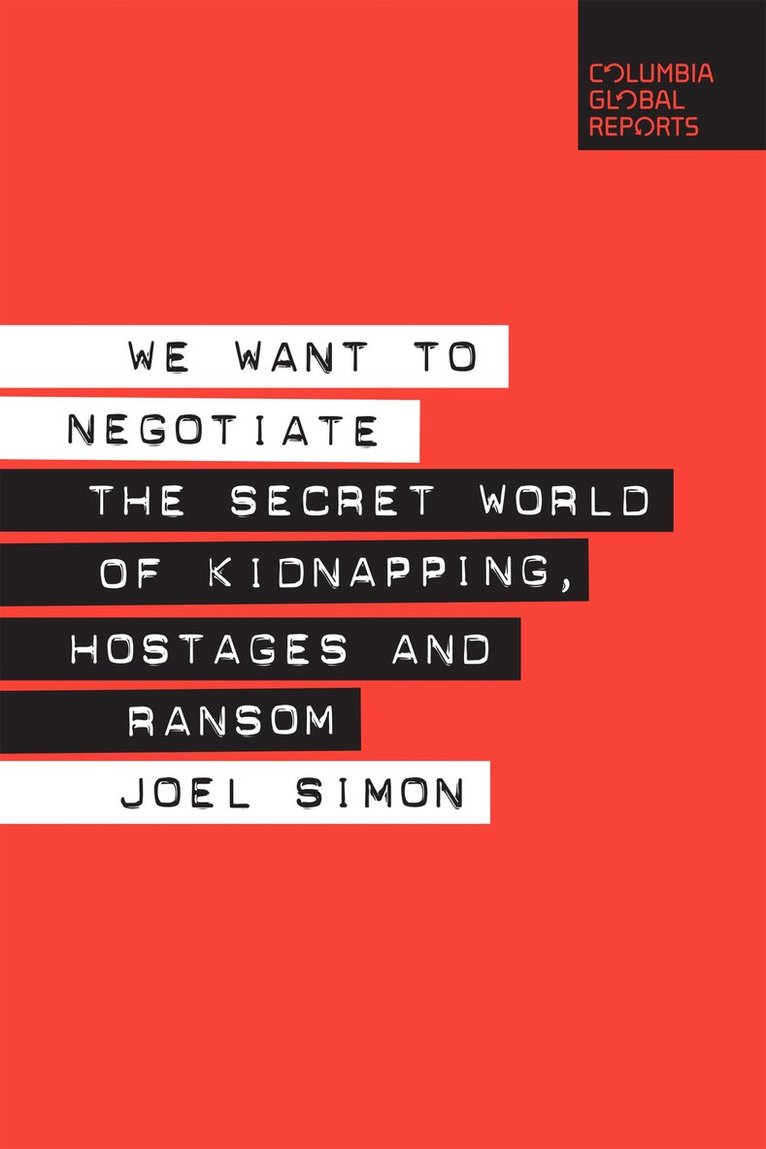
A gripping exploration of the ethical, legal, and strategic considerations of a bedeviling question: Should governments pay ransom to terrorists?
Starting in late 2012, Westerners working in Syria—journalists and aid workers—began disappearing without a trace. A year later the world learned they had been taken hostage by the Islamic State. Throughout 2014, all the Europeans came home, first the Spanish, then the French, then an Italian, a German, and a Dane. In August 2014, the Islamic State began executing the Americans—including journalists James Foley and Steven Sotloff, followed by the British hostages.
Joel Simon, who in nearly two decades at the Committee to Protect Journalists has worked on dozens of hostages cases, delves into the heated hostage policy debate. The Europeans paid millions of dollars to a terrorist group to free their hostages. The US and the UK refused to do so, arguing that any ransom would be used to fuel terrorism and would make the crime more attractive, increasing the risk to their citizens. We Want to Negotiate is an exploration of the ethical, legal, and strategic considerations of a bedeviling question: Should governments pay ransom to terrorists?
154 kr
Skickas inom 5-8 vardagar