A NATIONAL BESTSELLERPublishers Weekly BestsellerUSA Today BestsellerWall Street Journal BestsellerSeattle Times BestsellerAmazon BestsellerIs this even a question? What is a woman? But all of a sudden, way too many people don't seem to know the answer. Is a woman a woman just by feeling or acting a particular way? Aren't gender roles just a "social construct"? Can a woman be "trapped in a man's body"? Does being a woman mean anything at all?We used to think being a woman had something to do with biology, but the nation's top experts keep assuring us that is definitely not the case. So Matt decided to do what no man (whatever that means) had done before. He sat down with the experts and asked them directly.In What Is a Woman?, our hero:* Discovers that no one-not doctors, therapists, psychiatrists, or politicians-can actually define the word "woman"* Hilariously convinces a radical gender therapist that Matt is questioning his own gender identity* Uncovers the shocking and horrifying roots of radical gender ideology* Learns exactly how activists and ideologues are trying to brainwash our kids* Reveals a strategy to defeat the collective insanity that has taken over our society Join Matt on his often comical, yet deeply disturbing, journey as he answers the question generations before us never knew they needed to ask: What is a woman?
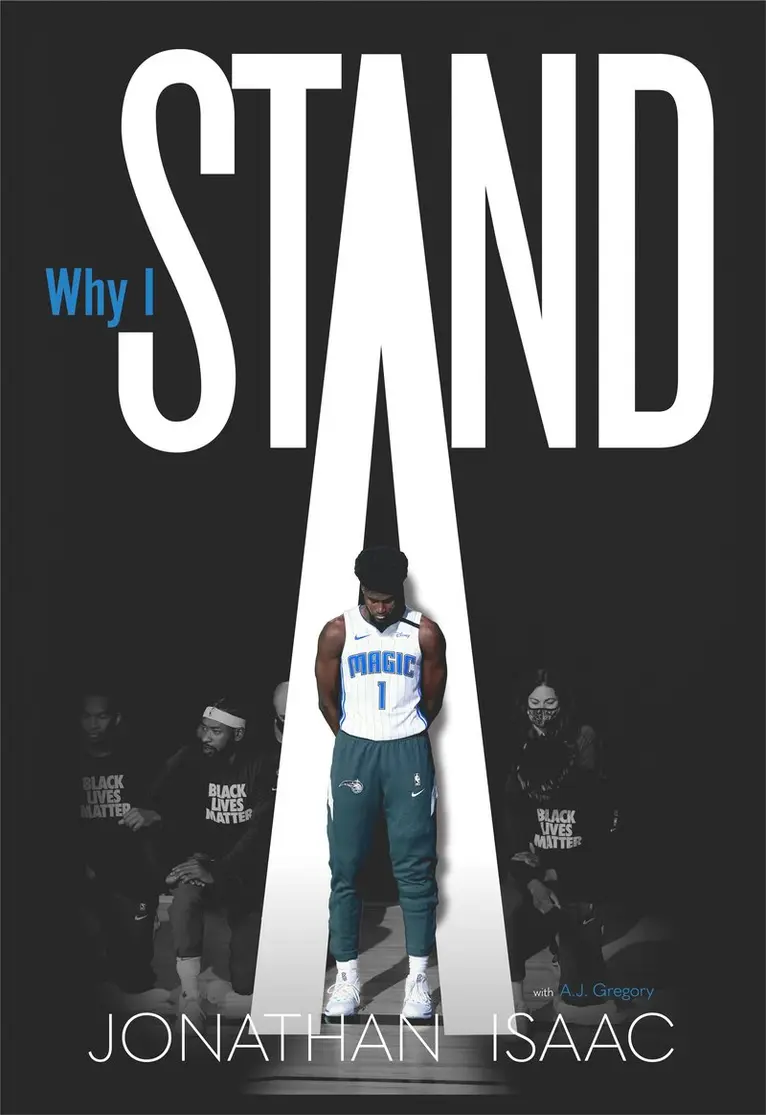
A NATIONAL BESTSELLERWSJ BestsellerUSA Today BestsellerPublishers Weekly BestsellerFacing public criticism, peer hostility, and widespread disapproval, would you compromise your principles to blend in with the crowd, or would you stand for what you believe?On July 31, 2020, the Orlando Magic starting forward Jonathan Isaac was the lone NBA player not to kneel for the national anthem amid a league-wide demonstration in support of Black Lives Matter. Standing alone, knowing the scrutiny to come, Jonathan had a peace he at one time never could have imagined possible. In Why I Stand, Jonathan shares the journey of how—through a series of divine connections and a willingness to follow Christ—his fear and insecurity-driven life was transformed into one of confidence and purpose. From his childhood in the Bronx to his high school years in Florida, from rail-skinny freshman at FSU to top draft pick in the NBA, Jonathan uses his life story to illuminate the freedom and peace found in the love of Jesus Christ. More than the story of an NBA player’s transformation from man on the court to man of God, Why I Stand is a testament to His love, power, and grace that extends to us all. This book is a discovery that no matter your level of confidence today, God’s strength will develop in your weakness. That courage is found in trusting that God is greater than your fears. As Jonathan takes you through the experiences that drove his decisions, he offers insight and inspiration to help you to grow to a point where standing alone is better than not standing at all. This is the story behind the stand.
Does your workplace have too few black people in top jobs? It's racist. Does the advanced math and science high school in your city have too many Asians? It's racist. Does your local museum employ too many white women? It's racist, too.After the Black Lives Matter protests of 2020, prestigious American institutions, from the medical profession to the fine arts, pleaded guilty to "systemic racism." How else explain why blacks are overrepresented in prisons and underrepresented in C-suites and faculty lounges, their leaders asked?The official answer for those disparities is "disparate impact," a once obscure legal theory that is now transforming our world. Any traditional standard of behavior or achievement that impedes exact racial proportionality in any enterprise is now presumed racist. Medical school admissions tests, expectations of scientific accomplishment in the award of research grants, the enforcement of the criminal law-all are under assault, because they have a "disparate impact" on underrepresented minorities.When Race Trumps Merit provides an alternative explanation for those racial disparities. It is large academic skills gaps that cause the lack of proportional representation in our most meritocratic organizations and large differences in criminal offending that account for the racially disproportionate prison population.The need for such a corrective argument could not be more urgent. Federal science agencies now treat researchers' skin color as a scientific qualification. Museums and orchestras choose which art and music to promote based on race. Police officers avoid making arrests and prosecutors decline to bring charges to avoid disparate impact on minority criminals.When Race Trumps Merit breaks powerful taboos. But it is driven by a sense of alarm, supported by detailed case studies of how disparate-impact thinking is jeopardizing scientific progress, destroying public order, and poisoning the appreciation of art and culture. As long as alleged racism remains the only allowable explanation for racial differences, we will continue tearing down excellence and putting lives, as well as civilizational achievement, at risk.