302 kr
Skickas
302 kr
Skickas
268 kr
Skickas inom 5-8 vardagar
The book presents a day-long symposium with Adam Phillips and includes additional contributions from John Bliss, Patricia Ticineto Clough, Edward Corrigan, Holly Levenkron, Kathleen DelMar Miller, Thomas Rini, Ron Taffel, Betty P. Teng, Karen Weiser, and Melissa White Gomez.
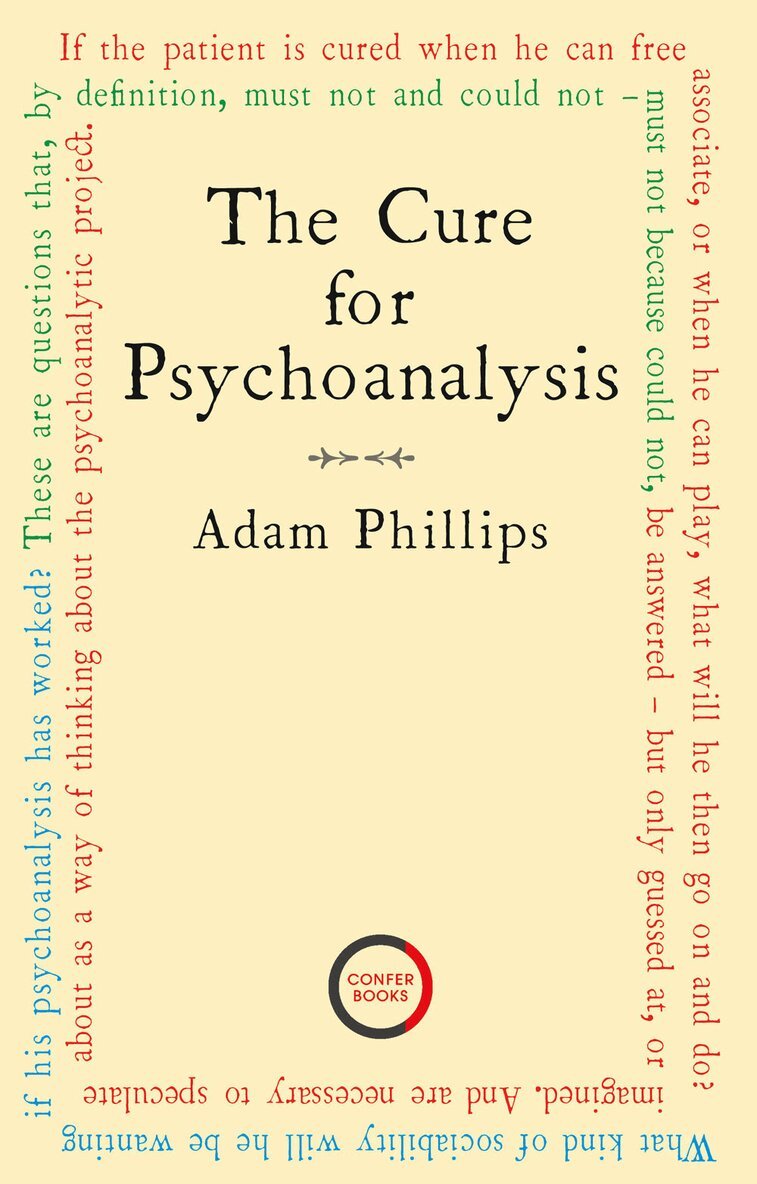
In his first essay, ‘The Magic of Winnicott: Playing and reality, and reality’, Adam Phillips makes clear the subtlety and wisdom of Winnicott’s concept of play. Its inspiration came from a wonderful and unanticipated encounter with the extraordinary Marion Milner that plays into and influences the entire essay. In his second, ‘The Cure for Psychoanalysis’, he works through psychoanalytic theories about cure and instructs us to take most seriously those that free the analyst and patient to wonder and to take pleasure in the unknowable adventure ahead of them.
These two thought-provoking writings frame a discussion between the author and Edward Corrigan, analyst and friend, which offers an intimate portrait of two analysts in conversation, thoughtfully reflecting on traditions that inform Phillips’ practice and prolific works. This record of ‘A Day with Adam Phillips’ at The Institute for Contemporary Psychotherapy in New York includes questions and commentaries which demonstrate the creative and open expression encouraged by and reflected in the practice of psychoanalysis itself.
250 kr
Skickas inom 5-8 vardagar
Towards an Ecopsychotherapy offers diverse stories, from the therapy room to therapy in the forest, about the healing process of reconnection with the more-than-human world as well as with our wild animal selves. It provides an insight into ecopsychotherapy in practice and outlines its history, key themes, ideas, and controversies. This book is for anyone in the caring professions who seeks to practice therapy with the earth in mind, and for those struggling with eco-anxiety or eco-grief who wish to deepen their relationship with the earth and find hope in turbulent times.
331 kr
Skickas inom 5-8 vardagar
536 kr
Skickas
386 kr
Skickas
391 kr
Skickas inom 5-8 vardagar
256 kr
Skickas
534 kr
Skickas inom 5-8 vardagar
433 kr
Skickas
339 kr
Skickas
510 kr
Skickas inom 5-8 vardagar
255 kr
Skickas inom 5-8 vardagar
“This diminutive book packs a powerful punch … Mollon skilfully manages to bring together the many facets of this subject in a succinct, engaging way… a complex subject, artfully curated and expressed.” -- Sussex Counselling and Psychotherapy News, Spring 2021
Pathologies of the Self draws on almost 45 years of clinical practice to explore the nature and structure of human identity. Collectively, we are trapped in images of self, whether constructed by us, or imposed by others. These illusions are inextricably bound to our sense of who we are, and sometimes defended so fiercely that it leads to narcissistic disturbances and borderline states of mind. In this fascinating book Phil Mollon explores narcissistic phenomena in both the clinic and everyday life, demonstrating the illusory nature of the self, and showing how, beneath our defences, we are all ‘borderline’.
462 kr
Tillfälligt slut
330 kr
Skickas
433 kr
Skickas
423 kr
Skickas
389 kr
Skickas
394 kr
Skickas inom 5-8 vardagar
420 kr
Skickas inom 5-8 vardagar
432 kr
Skickas inom 5-8 vardagar
204 kr
Skickas inom 5-8 vardagar
558 kr
Läs direkt efter köp
This book, a classic in Finnish psychoanalytic thinking, presents central features of the work of leading psychoanalysts Pentti Ikonen and Eero Rechardt for an English-speaking audience, focussing on the integration of Freud’s final drive theory with object relations theory. Their most thought-provoking contribution is a new interpretation of Thanatos (the death drive), which forms the core of this book. It opens up a totally new perspective not only on aggressiveness, but also on phenomena like narcissism and shame.
713 kr
Läs direkt efter köp
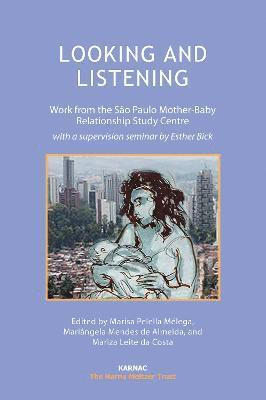
Infant observation and its applications still constitutes the bedrock for understanding the origin of the human mind, and the training of all the authors is rooted in this method of observation as well as in the work of later object relations clinicians and theoricians (Klein, Bion, Winnicott, Meltzer etc). The authors from the São Paulo Mother-Baby Relationship Study Centre, working in the fields of infant, child and family psychology, cover a variety of interesting settings, such as: the seminar room where Esther Bick herself led a discussion group; the homes of observed babies; the consulting room with parents and children in therapy; a nursery; a child psychiatric hospital department; and a neonatal intensive care unit. The book ends with an innovative and timely chapter on research on the link between maternal reverie and the development of symbolic play in babies.
650 kr
Läs direkt efter köp
Martha Harris (1919–1987) was one of the most influential and also one of the most loved psychoanalysts of the generation that trained with Melanie Klein. She also worked with Wilfred Bion, and wrote many books and papers on psychoanalytic training and child development. Her colleague James Gammill cites Mrs Klein as saying: “She is one of the best people I have ever known for the psychoanalysis of children … and she has a mind of her own.” Harris was responsible for the child psychotherapy training at the Tavistock Clinic from 1960 onwards, developing laterally the method founded on infant observation that had been put in place by Esther Bick. She established cross-clinic work discussion groups, a pioneering schools’ counselling course (in collaboration with her husband Roland Harris), and individual work with disturbed children in the school environment. Her belief that psychoanalytic ideas could and should “travel”, both geographically and across the professions, led to her seeding the “Tavi Model” in many other countries through regular teaching trips, in company with her later husband Donald Meltzer.
Her influence was not as a theorist, but as a teacher with an extraordinary capacity to engage processes of introjective learning in both students and readers. This tribute by some of those who studied with her is not simply testimony to a remarkable teacher and clinician whose wisdom has been rarely equalled; it also offers inspiration to others who may be struggling to find ways of using psychoanalytic ideas imaginatively in a variety of contexts – clinical, social or scholarly – in what can at times appear to be an unreceptive world.
666 kr
Läs direkt efter köp
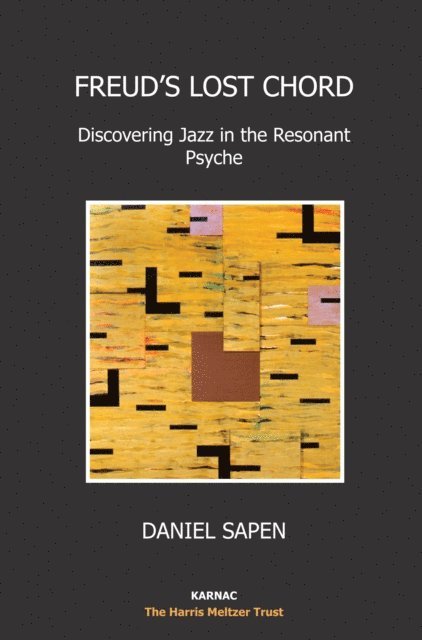
In Freud’s Lost Chord, Daniel Sapen explores what it means for the development of depth psychology that Freud was perplexed by music, and unlike nearly every other aspect of human life, had little to say about it – a problem shared by most others in the early generations of psychoanalytic thought. Psychoanalyst Charles Rycroft wrote “One cannot help regretting that none of the pioneers of the unconscious thought naturally in auditory terms”; more than this, over 100 years later, not only is music per se rarely looked it in psychodynamic terms, jazz music is almost completely absent from the literature. Dr Sapen looks in depth at the intricate details of psychodynamic theory and practice, as well as an overview of its development, to address the possibility that a theoretical model that has little to say about such a basic and omni-present aspect of human life must be seriously flawed in its effort to explain what it is to be human, and how the mind functions and what it creates. However, Sapen illustrates how numerous other thinkers (Jung, Winnicott, Bion, Loewald, Rycroft), some seemingly at odds with and others serving as essential developments and re-workings of psychoanalytic principles, have managed to illuminate and integrate those missing principles so basic to music and creativity – to development, dreaming, thinking, and relating among other human beings intimately and in a society. Nearly uniquely in the psychodynamic literature, Sapen looks in depth at the music of Miles Davis and John Coltrane as examples of the living, breathing psychological processes so essential to understanding the meaning and dynamics of being human that Freud could not, for a variety of reasons, conceptualize.
333 kr
Läs direkt efter köp
A unique psychoanalytic perspective on family patterns and cultural educability, originally commissioned by the Organisation for Economic and Cultural Development as part of a project to develop policies and programmes that would support families in their educational task. The book integrates a psychoanalytical theory of learning with an ecological conception of how the various systems involved in the educational process are interconnected, and as such is still of great present-day relevance, both to clinical and educational practitioners and to policy-makers. It has been extensively used in many countries by therapists, teachers, teacher-trainers and social workers.
444 kr
Läs direkt efter köp
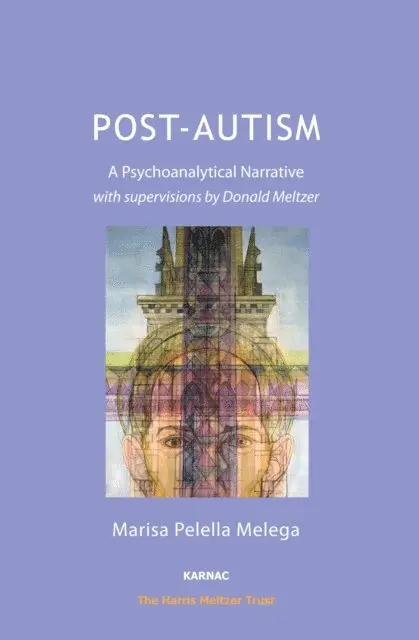
Post-Autism recounts in close and vivid detail the story of the author’s struggle to analyse and communicate with a pubertal boy who presented with a diagnosis of untreated infantile autism. Marisa Mélega, who was at that time a young and relatively inexperienced analyst, worked with Mário in São Paulo, Brazil, from 1978 to 1982 and during most of that period the case was supervised by Donald Meltzer, who had recently published his pioneering work Explorations in Autism, based on ten years of collaborative endeavour with a group of therapists. At that period the condition of autism was relatively little understood, and psychological therapies undeveloped.
This book is therefore of particular interest from several viewpoints: as a detailed record of autistic features and their manifestations in a teenage child; as an example of the potentialities of distance supervision; historically, as a basis for comparison with our current understanding of the condition and the efficacy of psychoanalytic treatment; and perhaps above all, as an intimate record of the making of a psychoanalyst, by means of a particularly difficult yet highly emotionally stressful relationship with a patient. As Melega writes in her introduction: ‘I received brilliant lessons from Donald Meltzer that have enlarged my general psychoanalytical capacity to investigate the transference and countertransference … to avoid sticking exclusively to verbalizations, and to search for my own oneiric images during the sessions in order to make analysing Mário possible.’
797 kr
Läs direkt efter köp
In Freud’s Lost Chord, Daniel Sapen explores what it means for the development of depth psychology that Freud was perplexed by music, and unlike nearly every other aspect of human life, had little to say about it – a problem shared by most others in the early generations of psychoanalytic thought. Psychoanalyst Charles Rycroft wrote “One cannot help regretting that none of the pioneers of the unconscious thought naturally in auditory terms”; more than this, over 100 years later, not only is music per se rarely looked it in psychodynamic terms, jazz music is almost completely absent from the literature. Dr Sapen looks in depth at the intricate details of psychodynamic theory and practice, as well as an overview of its development, to address the possibility that a theoretical model that has little to say about such a basic and omni-present aspect of human life must be seriously flawed in its effort to explain what it is to be human, and how the mind functions and what it creates. However, Sapen illustrates how numerous other thinkers (Jung, Winnicott, Bion, Loewald, Rycroft), some seemingly at odds with and others serving as essential developments and re-workings of psychoanalytic principles, have managed to illuminate and integrate those missing principles so basic to music and creativity – to development, dreaming, thinking, and relating among other human beings intimately and in a society. Nearly uniquely in the psychodynamic literature, Sapen looks in depth at the music of Miles Davis and John Coltrane as examples of the living, breathing psychological processes so essential to understanding the meaning and dynamics of being human that Freud could not, for a variety of reasons, conceptualize.
589 kr
Läs direkt efter köp
This edition is an introductory selection from the writings of Adrian Stokes (1902-1972), the Kleinian aesthete who created a unique vision of the relation between psychoanalysis, art, and aesthetic experience in general. His approach was founded initially on his travels in Italy which then acquired a more formal theoretical foundation during his analysis with Melanie Klein. Stokes was a close friend of leading figures in both psychoanalytic and artistic-literary circles, including Richard Wollheim who organised a previous edition of extracts, The Image in Form. The present edition concentrates specifically on the writing that demonstrates the parallels between art and psychoanalysis.