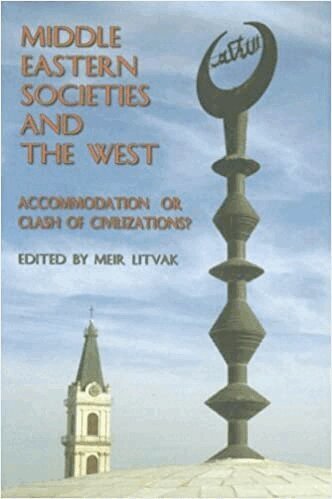
For many Middle Eastern Muslims the "West" came to personify the ultimate "other," occupying a space that was simultaneously appealing, intimidating, and often abhorrent. The multilayered, ambivalent interaction between Middle Eastern societies and the West has been a major theme in the history of this region for the past two centuries. The al-Qa eda terrorist attack against the United States on September 11, 2001, the 2003 U.S. invasion of Iraq, and Israel's war against Hizbullah in the summer of 2006 have made the in-depth study of this interaction more critically important than ever. Taking the concepts of the Middle East and the West into account as useful analytical categories, the various articles in this volume examine and analyze a broad spectrum of Middle Eastern encounters and attitudes toward the West. This collection provides a fuller understanding of the complexities involved in both the historical and contemporary relationship between Middle Eastern societies and the West.
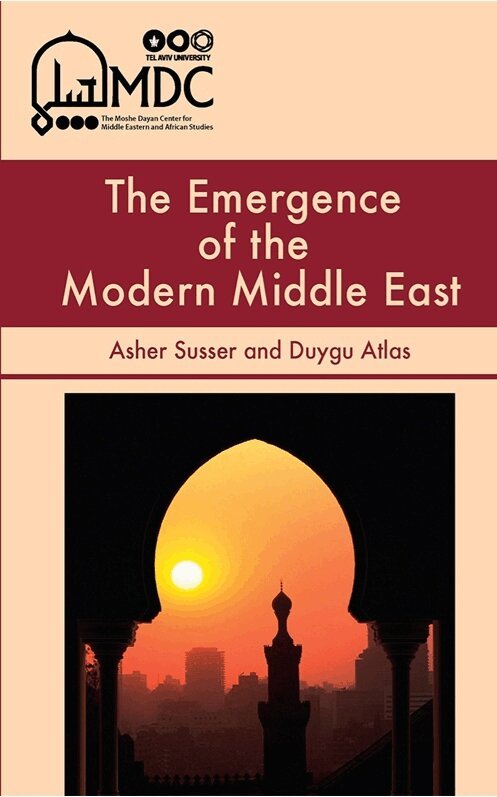
This book discusses the emergence of the modern Middle East over the last two centuries, starting with the Napoleonic invasion of Egypt in 1798, to the present. It examines the Ottoman legacy in the region and the Western imperial impact on the creation of the Arab state system. It then addresses rise and retreat of Arab nationalism, the problems of internal cohesion of the Arab states, issues of religion and state, and the evolution of Islamist politics. It also focuses on the evolution of the Arab-Israeli conflict and its impact on the region and concludes with an in depth analysis of the Arab Spring by placing these contemporary revolutionary events in their historical context.
In this book, Shimon Shapira explores the evolution of Hizballah, addressing key questions about the organization’s mission and influence: How did it take control of Lebanon’s Shi‘ite community and, indirectly, of the Lebanese political system and state? How does Iran control and use the organization? Is it still a pure instrument of Iranian policy or is it also a self-standing Lebanese movement and party? What explains Hassan Nasrallah’s unique style of leadership? Those who thought that the story of Hizballah begins in 1982 will discover its roots in Iranian policy and investment in the Shi’a of Lebanon in the days of the Shah. This early history and more contemporary events shed light on a question that preoccupies students of Iran: to what extent is Iranian policy in the Middle East an ideological policy of a revolutionary Islamist regime and to what extent is it a new incarnation of Persian imperial policy? Whatever the answer to this question, Iran’s ambition and activism in the Middle East after 1979 have served to transform the Middle Eastern political arena.
The simplistic attitude that reduces the various conceptions in the modern Palestinian national thinking into stereotypical dictums, such as "the overall aim of all the Palestinians is to liquidate the state of Israel," instills perhaps a superfluous sense of meaning but it does not accomodate with the development of the historical reality. The reader of this book will find that the Palestinian national attitudes have departed from the original unanimity as far as means and aims are concerned. A discrepancy has emerged between their ideal aspirations and their perceptions of what can be achieved.Based mainly on primary Arabic sources, this book delves into the cognitive dissonances created since the 1967 War and their bearing on the Palestinans' self-images and on their perceptions vis a vis Israel as the intimate adversary. It shows that in spite of the authenticity of the Palestinian transformations, they might be reversible if they are not acknowledged and responded to by Israel and the international community.
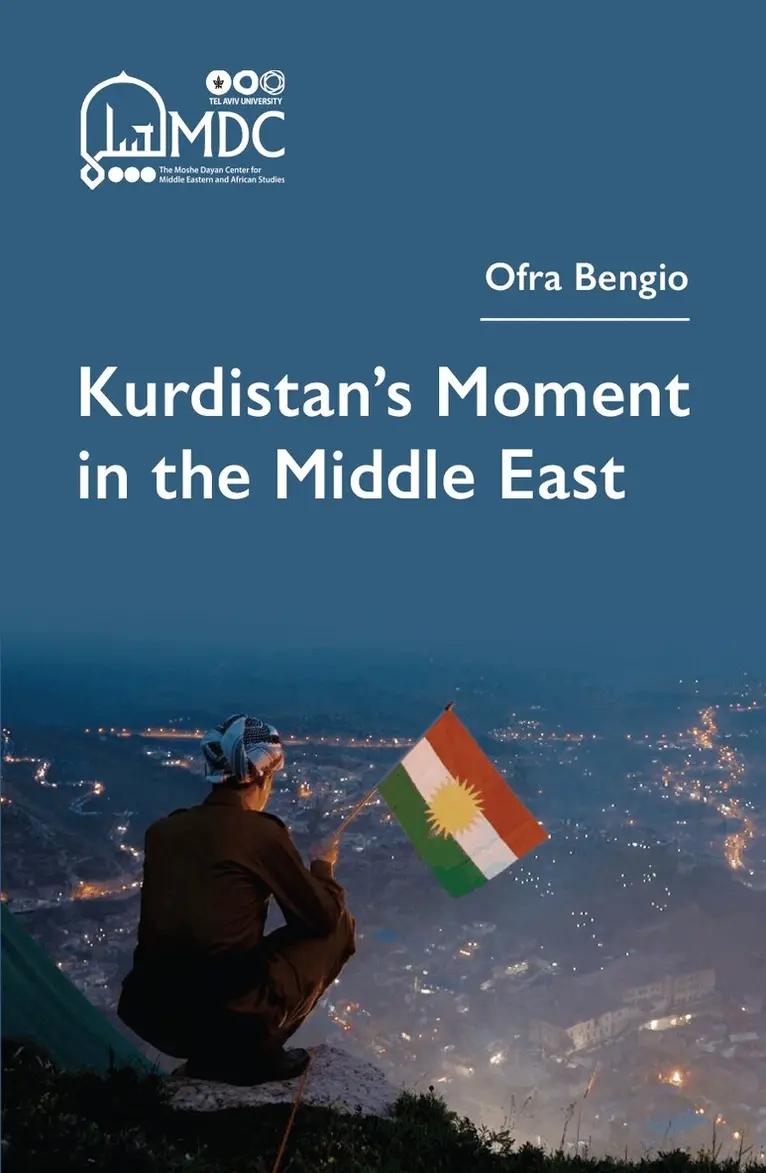
This compilation of essays on Kurdish history, society, identity, and politics covering developments over the last four decades reflects the sea changes that have taken place in Greater Kurdistan and the sociopolitical processes it has undergone during this crucial time span.Challenging conventional wisdom, Ofra Bengio argues that the harsh treatment of the Kurds at the hands of central governments caused instability in the Middle East rather than the Kurds who have been blamed for it. Another theme that was canonized by the West and that this book calls into question is the urge to maintain by force of arms the integrity of states such as Iraq, even if they have proved to be failed ones. It was this urge that made the West pay heavily, economically, militarily, and politically, throughout Iraq’s hundred years of existence. Finally, the book argues that the international community’s support of existing central governments and its disregard for the Kurdish national movements have bolstered the policies of denial and subjugation of the Kurds, policies that were common to all four states comprising Greater Kurdistan.