Ad Gruter – illustratör
Upptäck titlar med illustrationer av Ad Gruter.
4 produkter
4 produkter
Inbunden, Engelska, 2023
2 574 kr
Skickas inom 10-15 vardagar
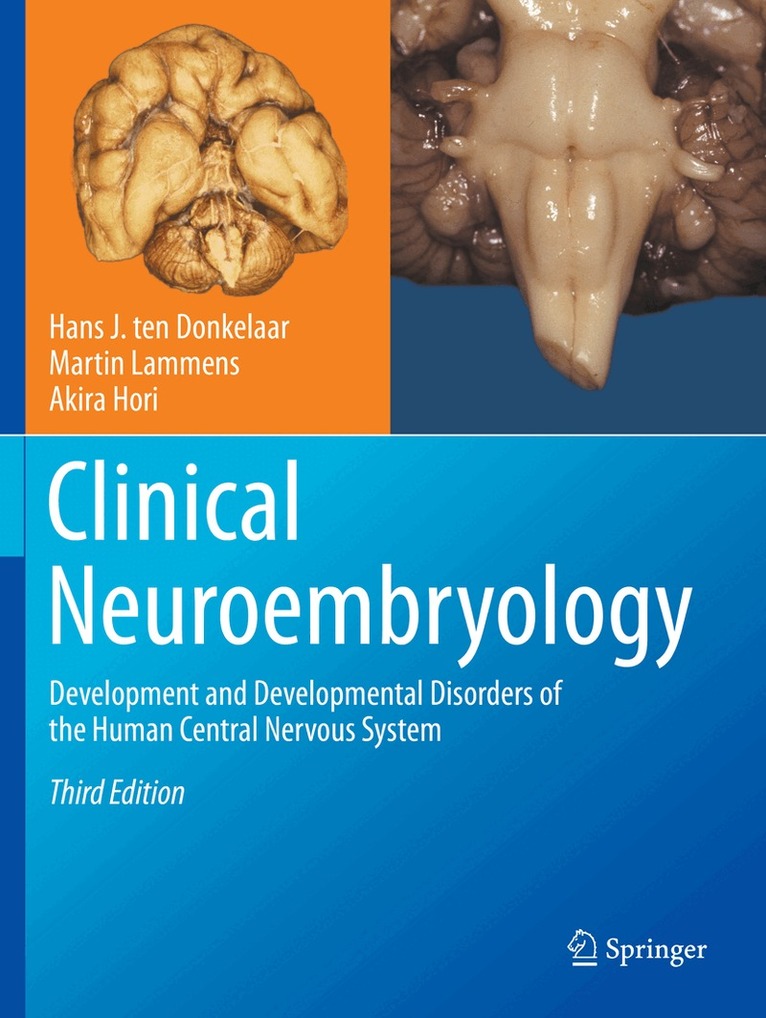
This book provides a comprehensive overview of the development of the human central nervous system (CNS) in the context of its many developmental disorders due to genetic, environmental and hypoxic/ischaemic causes. The book contains three general, introductory chapters in which an overview of the development of the human brain and spinal cord, a summary of mechanisms of development as obtained in experimental studies in various invertebrates and vertebrates, and an overview of the causes of congenital malformations are presented. The developmental disorders of the human brain and spinal cord are presented in a regional, more or less segmental way, starting with neurulation and neural tube defects, and ending with developmental disorders of the cerebral cortex. These chapters are abundantly illustrated in colour with carefully chosen clinical case studies with imaging data, and when available, postmortem verification of the developmental disorders involved.In thethird edition, more emphasis has been given to the developmental ontology based on the prosomeric approach, and fetal development. Prenatal diagnosis by ultrasound, MRI and DTI, and classifications of developmental disorders have been updated. A number of new Clinical Cases have been included. Several new co-authors participate in various chapters. The book is intended for advanced medical students, and all those clinicians working with children and adults with developmental disorders of the CNS. Unique to the book is the integration of data from human embryology, experimental and molecular findings in mice in particular, imaging and developmental neuropathology.
Häftad, Engelska, 2024
2 574 kr
Skickas inom 10-15 vardagar
This book provides a comprehensive overview of the development of the human central nervous system (CNS) in the context of its many developmental disorders due to genetic, environmental and hypoxic/ischaemic causes. The book contains three general, introductory chapters in which an overview of the development of the human brain and spinal cord, a summary of mechanisms of development as obtained in experimental studies in various invertebrates and vertebrates, and an overview of the causes of congenital malformations are presented. The developmental disorders of the human brain and spinal cord are presented in a regional, more or less segmental way, starting with neurulation and neural tube defects, and ending with developmental disorders of the cerebral cortex. These chapters are abundantly illustrated in colour with carefully chosen clinical case studies with imaging data, and when available, postmortem verification of the developmental disorders involved.In thethird edition, more emphasis has been given to the developmental ontology based on the prosomeric approach, and fetal development. Prenatal diagnosis by ultrasound, MRI and DTI, and classifications of developmental disorders have been updated. A number of new Clinical Cases have been included. Several new co-authors participate in various chapters. The book is intended for advanced medical students, and all those clinicians working with children and adults with developmental disorders of the CNS. Unique to the book is the integration of data from human embryology, experimental and molecular findings in mice in particular, imaging and developmental neuropathology.
Inbunden, Engelska, 2025
2 239 kr
Skickas inom 10-15 vardagar
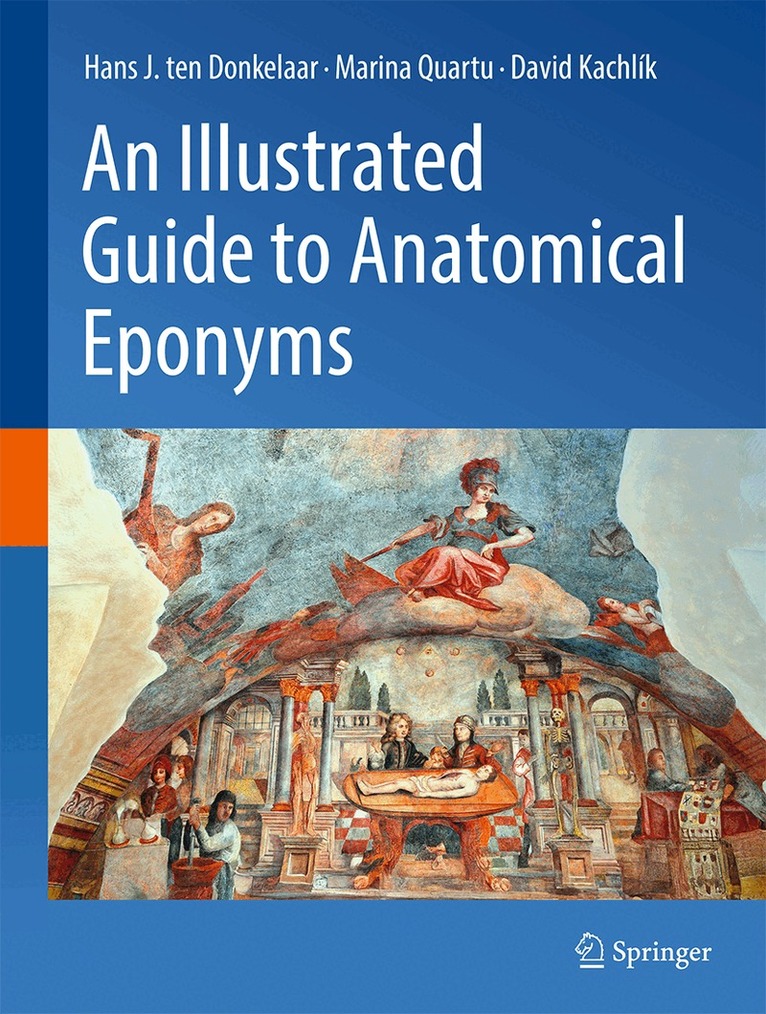
This book provides a comprehensive overview of the anatomical eponyms in use in anatomy and in clinical disciplines. It includes brief descriptions of those to whom eponyms were given with personal data, their relevant publications and illustrations. For the illustrations, engravings, portraits or photographs are included as well as examples of the original illustrations or newer ones showing what is meant by a certain eponym. The book contains three Sections: Section I The Classical Anatomical Eponyms, in which the major classical eponyms on arteries, bands, bodies, bundles, canals, corpuscles, ducts, fasciae, fibres, folds, foramina, fossae, ganglia, glands, ligaments, membranes, muscles, nerves, nodes, nuclei, plexuses, spaces, triangles, tubercles, valves and veins are summarized. This Section clearly shows that in various countries, different eponyms are given for the same structure. Section II lists the anatomical eponyms together with some relevant histological, embryological and anthropological eponyms, from A-Z. In Section III, anatomical eponyms in use in Abdominal Surgery, Dentistry, Neurology, Obstetrics and Gynaecology, Oncology, Ophthalmology, Orthopaedics, Otology, Phlebology, and Radiology of the Digestive System are discussed. Sections II and III are both abundantly illustrated. The book is intended for advanced medical students, anatomists, and clinicians using anatomical eponyms in their daily practice. Unique to the book is the combination of descriptions of the anatomical eponyms with illustrations.
E-bok
Engelska, 20252 848 kr
Läs direkt efter köp
This book provides a comprehensive overview of the anatomical eponyms in use in anatomy and in clinical disciplines. It includes brief descriptions of those to whom eponyms were given with personal data, their relevant publications and illustrations. For the illustrations, engravings, portraits or photographs are included as well as examples of the original illustrations or newer ones showing what is meant by a certain eponym. The book contains three Sections: Section I The Classical Anatomical Eponyms, in which the major classical eponyms on arteries, bands, bodies, bundles, canals, corpuscles, ducts, fasciae, fibres, folds, foramina, fossae, ganglia, glands, ligaments, membranes, muscles, nerves, nodes, nuclei, plexuses, spaces, triangles, tubercles, valves and veins are summarized. This Section clearly shows that in various countries, different eponyms are given for the same structure. Section II lists the anatomical eponyms together with some relevant histological, embryological and anthropological eponyms, from A-Z. In Section III, anatomical eponyms in use in Abdominal Surgery, Dentistry, Neurology, Obstetrics and Gynaecology, Oncology, Ophthalmology, Orthopaedics, Otology, Phlebology, and Radiology of the Digestive System are discussed. Sections II and III are both abundantly illustrated. The book is intended for advanced medical students, anatomists, and clinicians using anatomical eponyms in their daily practice. Unique to the book is the combination of descriptions of the anatomical eponyms with illustrations.