Andrei Karachtchouk – illustratör
Upptäck titlar med illustrationer av Andrei Karachtchouk.
5 produkter
5 produkter
153 kr
Skickas inom 10-15 vardagar
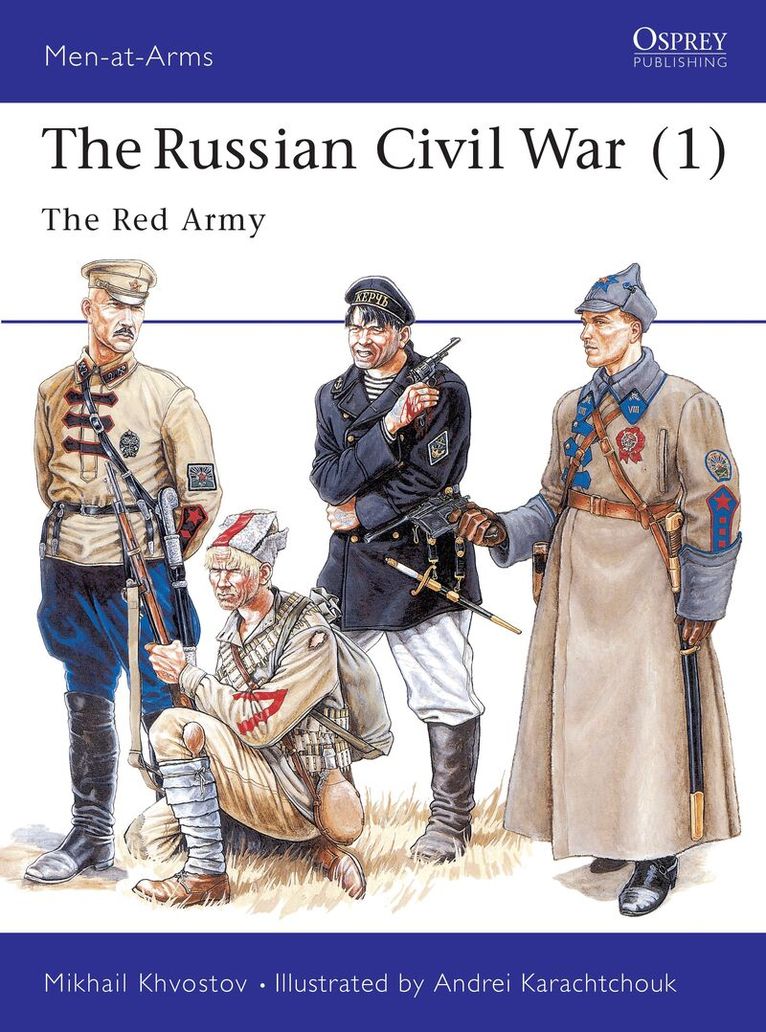
The main instrument with which the Bolsheviks imposed communism on Russia was the Red Army.Traditionally the origins of this army were among the factory workers who laid down their tools and took up arms as a way of expressing their grievances. Already formed by the time of the revolutions of 1905 and February 1917, these militant workers organised themselves into parliamentary detachments known as the krasnogvardeytsi, or 'Red Guards'.In this first of two volumes [see Men-at-Arms 305: White Armies] focusing on the Russian Civil War, Mikhail Khvostov examines the Red Army's organisation, weaponry, uniforms and insignia.
153 kr
Skickas inom 10-15 vardagar
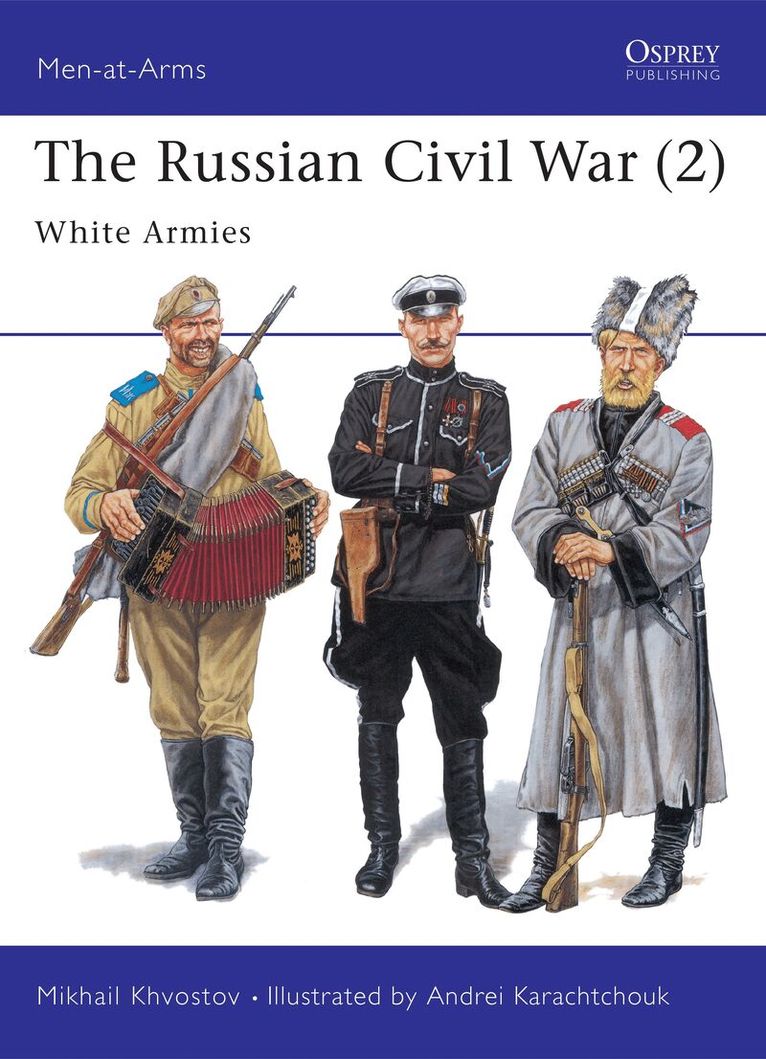
Soon after the 1917 February revolution, and the abdication of Tsar Nicholas II, the White cause began to emerge and oppose the Bolsheviks.There was, however, no single, united White Army to fight the Red Army and the forces available to the Whites represented a spectrum of political factions including monarchist military organisations and social-democrats. Many of the Cossack hosts also sided with the Whites, seeing it as an opportunity to create their own independent states; others remained neutral or hostile to both sides.This fascinating text by Mikhail Khvostov examines the colourful uniforms and the equipment of the White armies of the Russian Civil War.
175 kr
Skickas inom 10-15 vardagar
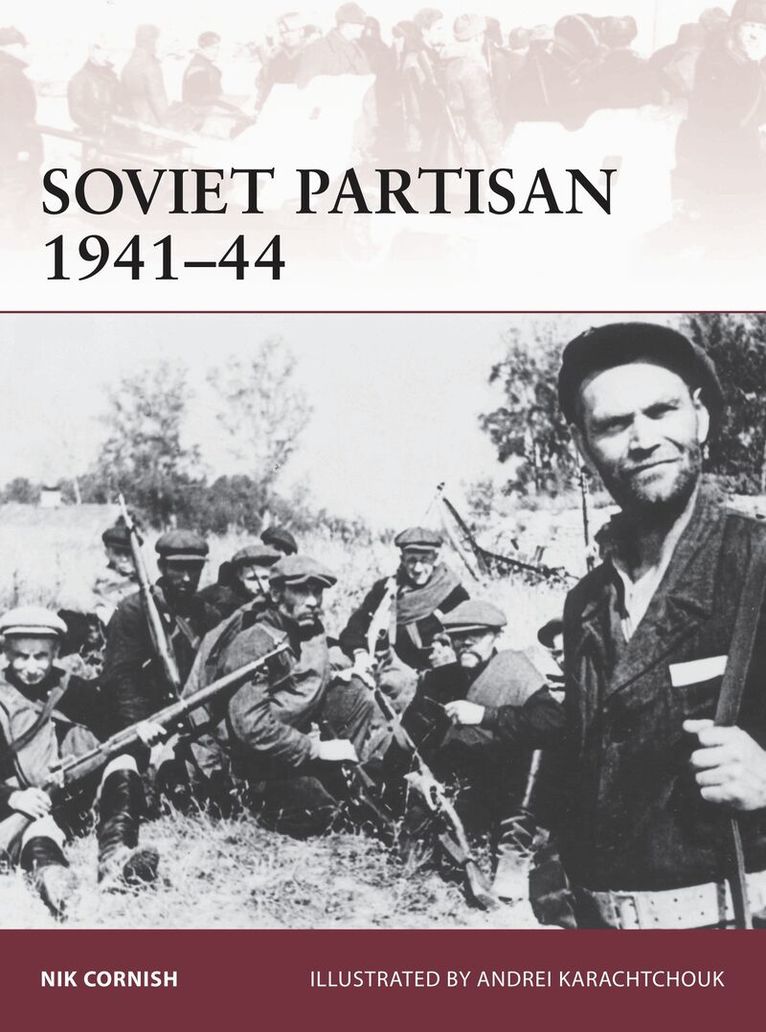
The partisan war in the Soviet Union from 1941 to 1944 has been the subject of considerable political manipulation in the decades following 1945.In great part this was due to the need to project the image of a country united behind Joseph Stalin and the Communist regime when the truth was much more complex than that. The opening weeks of Operation Barbarossa had exposed the lack of unity in the Soviet Empire as nationalist and anti-Communist groups emerged in the western provinces such as Belo Russia, Galicia, Bukovina, Ukraine and the Baltic states of Latvia, Lithuania and Estonia. Consequently it was vital for the survival of the Soviet Union that such groups were countered in situ and that the authority of Moscow was maintained in what were known as the Occupied Territories. During the summer of 1941 plans, dormant since the 1930s, for the conduct of partisan warfare behind the lines of an invading force were resurrected.The plans were intended to make life for the invaders as problematic as possible by acts of sabotage, but most important of all to maintain the physical presence of Soviet authority.
153 kr
Skickas inom 10-15 vardagar
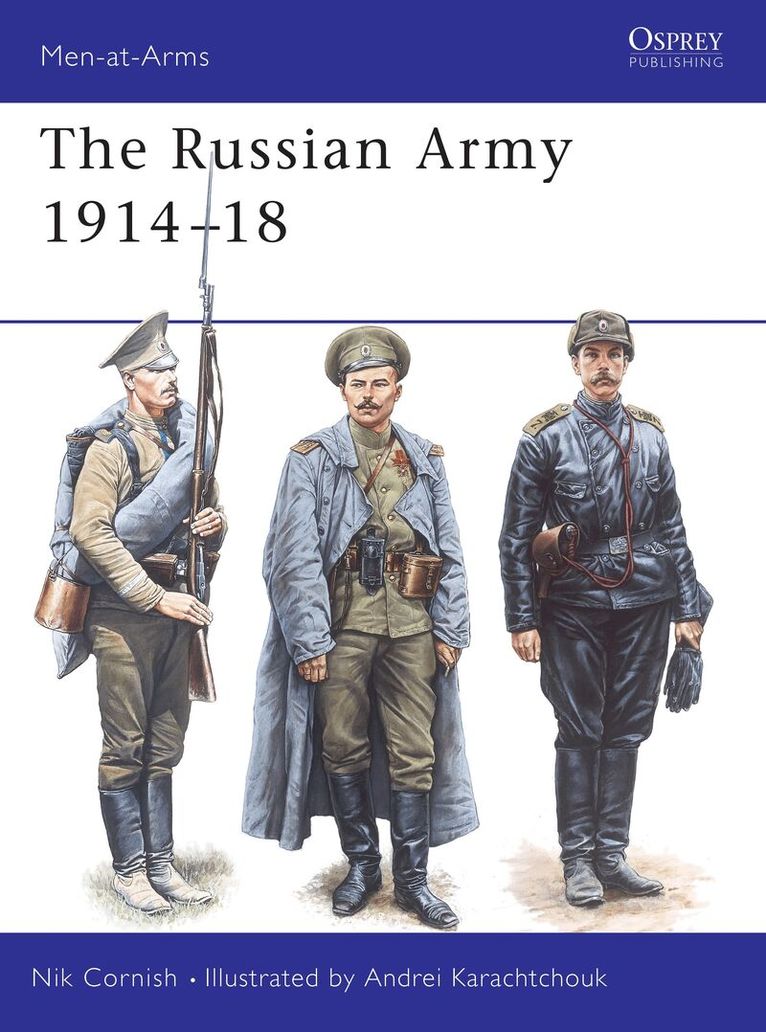
Often overshadowed by the drama of its catastrophic collapse in the November 1917 Revolution, the Imperial Russian Army's record in 1914-16 included some notable victories.Its human qualities of patriotism and endurance were remarkable, and in 1916 the 'Brusilov Offensive' on the South-Western Front outdistanced anything that was being achieved in France. The variety of its uniforms - infantry and cavalry, Guards and Line, Cossacks, armour and Air Service crewmen, even a priest - are splendidly captured here by Russia's leading military artist.Nik Cornish's expert text is supported by tables of insignia and many rare photographs.
153 kr
Skickas inom 10-15 vardagar
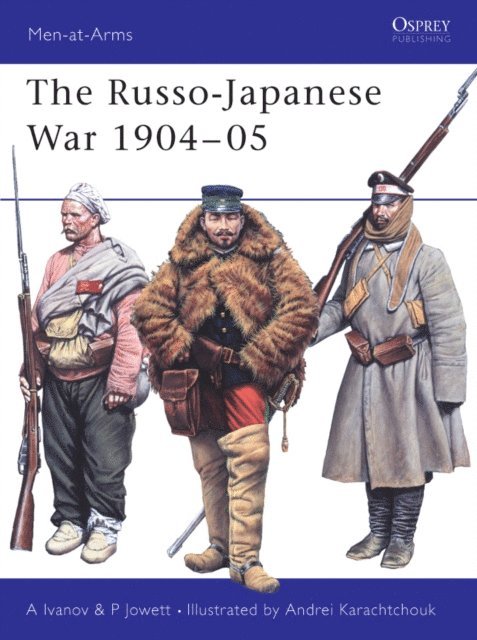
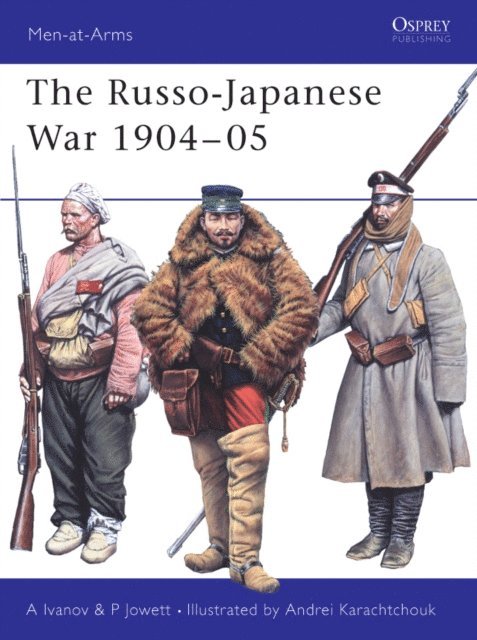
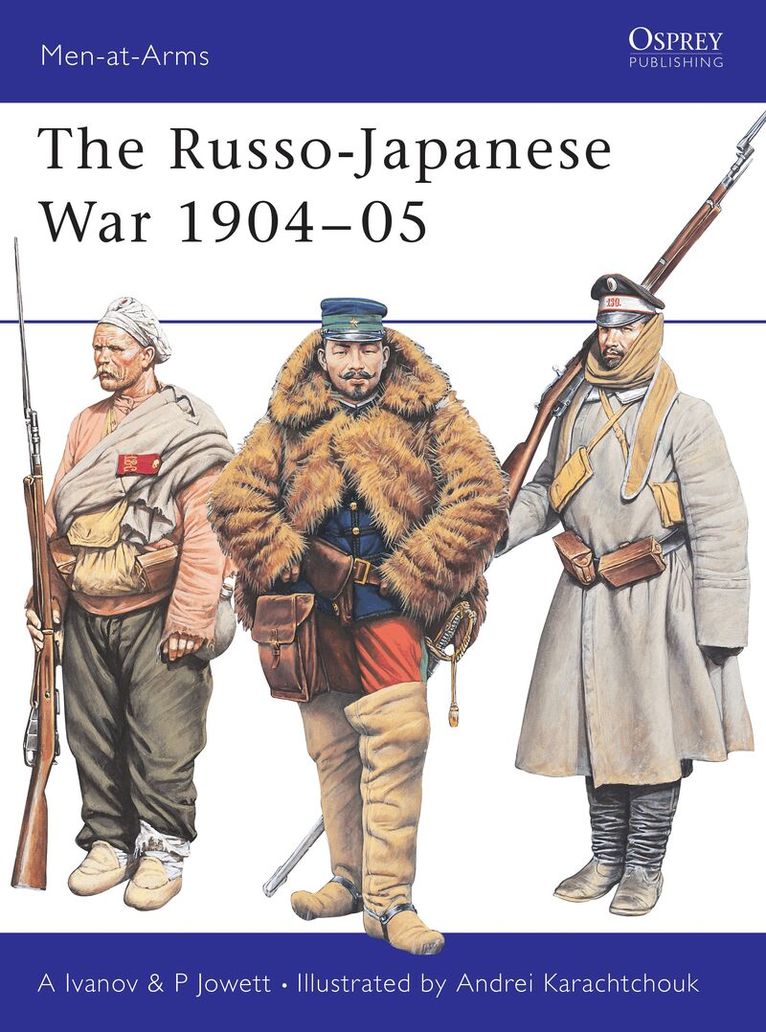
The Russo-Japanese War in Manchuria was the first 20th century conflict fought between the regular armies of major powers, employing the most modern means – machine guns, trench warfare, minefields and telephone communications.The battle of Mukden in March 1905 was the largest clash of armies in world history up to that date. Events were followed by many foreign observers; but the events of 1914 in Western Europe suggest that not all of them drew the correct conclusions.For the first time in the West, the armies of this distant but important war are described and illustrated in detail, with rare photos and the superbly atmospheric paintings of Russia's leading military illustrator.