Bryan Fosten – illustratör
Upptäck titlar med illustrationer av Bryan Fosten.
20 produkter
20 produkter
153 kr
Skickas inom 10-15 vardagar
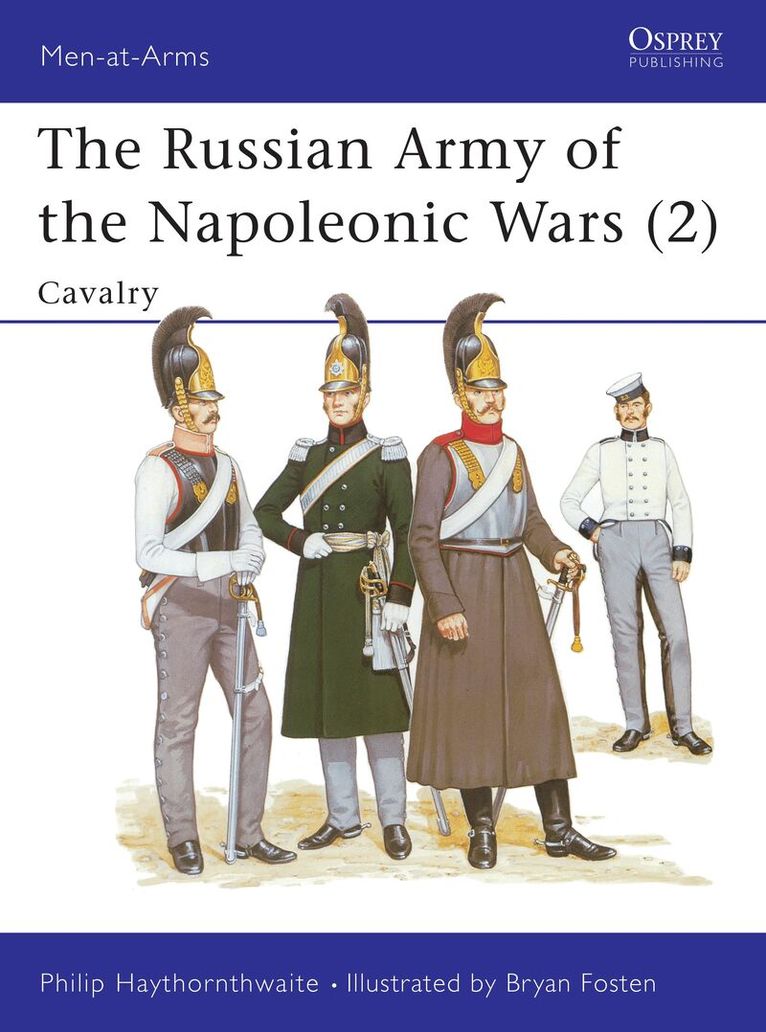
During the Napoleonic era, Russia possessed a vast force of cavalry, forming a greater percentage than that of most European armies.This stemmed partly from their service against the Turks, who had huge numbers of troops, and partly from the fact that much Russian terrain was suitable for the manoeuvre of large bodies of cavalry.This companion volume to Men-at-Arms 185 examines the organisation, tactics and uniforms of the Russian cavalry during this dynamic and turbulent period, covering Cuirassiers, Dragoons, Hussars, Uhlans, Mounted Jägers and the Lifeguard, as well as the Opolchenie militia and Cossacks.
149 kr
Skickas inom 10-15 vardagar
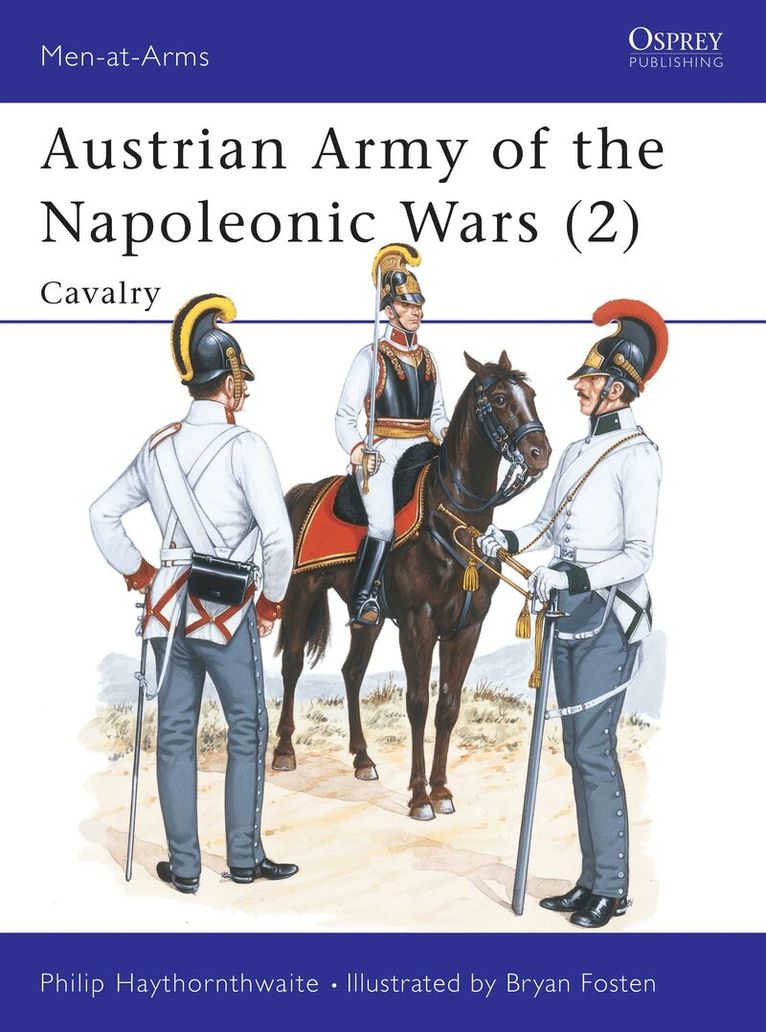
The mounted troops of the Hapsburg Empire comprised one of the most powerful forces of the Napoleonic Wars.However, from the outset the cavalry's higher command was less capable than its infantry counterpart: appointments were influenced by nepotism and politics, which resulted in commands often being given to those who lacked experience. The cavalry underwent many re-organisations and expansions in the course of the wars that attempted to redress these matters, and to modernise the force as a whole.This book examines these processes and documents in detail, along with the tactics, uniforms and equipment of the Austrian cavalry, covering Cuirassiers, Dragoons, Chevauxlegers, Hussars, Uhlan (lancer) and auxiliary units.
153 kr
Skickas inom 10-15 vardagar
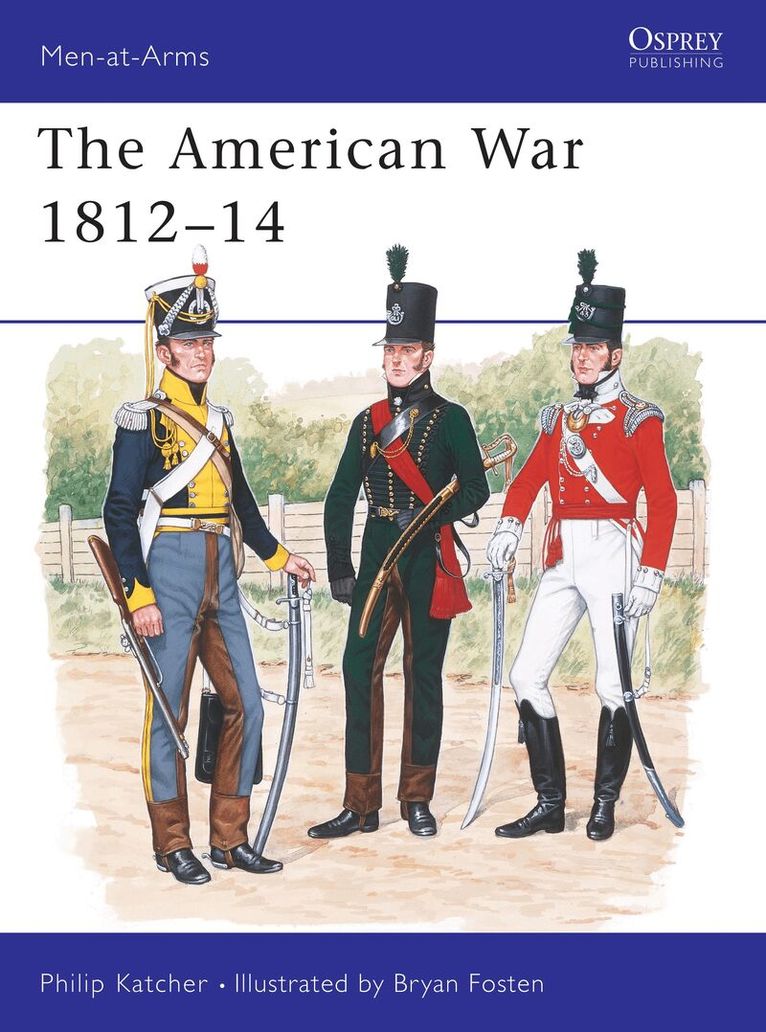
Typically the United States is said to have declared war on Great Britain in 1812 because of the Royal Navy's impressment of American seamen and the British desire to create an Indian buffer state.An Englishman, William Cobbett, described the real cause of the conflict: 'There seemed to be wanting just such a war as this to complete the separation of England from America; and to make the latter feel that she had no safety against the former but in the arms of her free citizens.' Regardless of the reasons, however, on 4 June 1812, U.S. President James Madison asked Congress to declare war.Featuring plates and illustrations, this is a detailed exploration of the uniforms worn by both sides.
149 kr
Skickas inom 10-15 vardagar
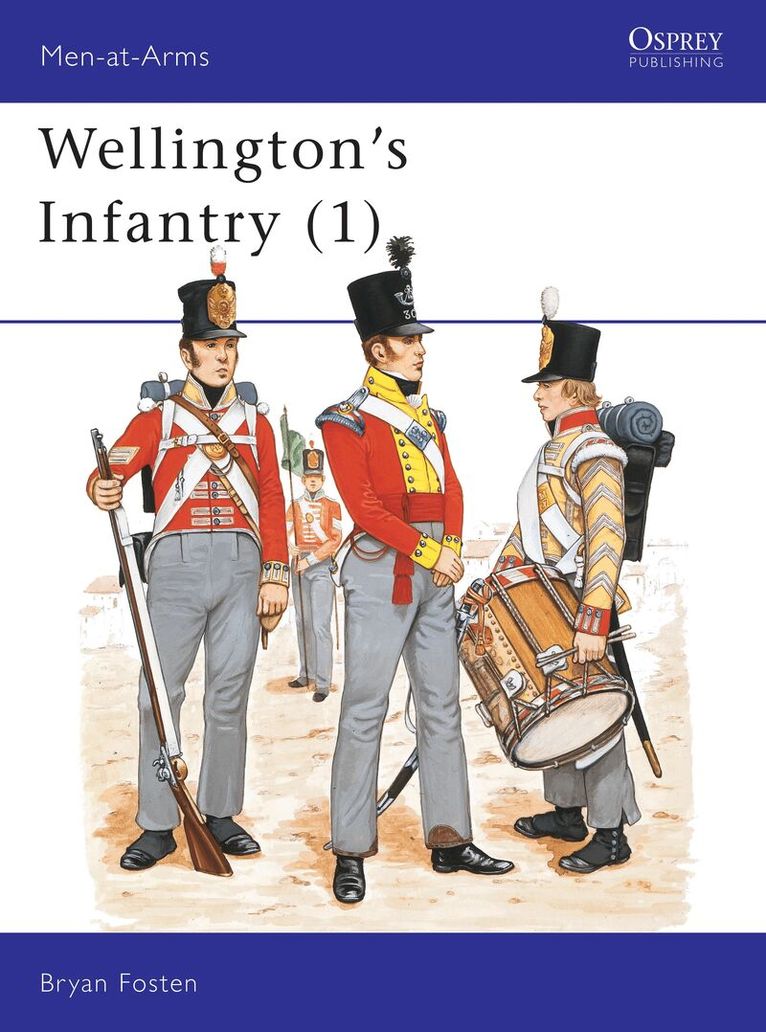
The infantry was Wellington's favoured tool, and he played a major role in raising its standards of excellence.He used it carefully, on ground which he selected to give it maximum advantage and protection; and he came to understand its capabilities and weaknesses exactly. In this worthy addition to Osprey's Men-at-Arms series, Bryan Fosten examines all aspects of Wellington's infantry, including army life, organisation, uniforms, drill, regimental distinctions, weapons and equipment, in an engaging text well-illustrated throughout including eight full page colour plates by the author himself.
149 kr
Skickas inom 10-15 vardagar
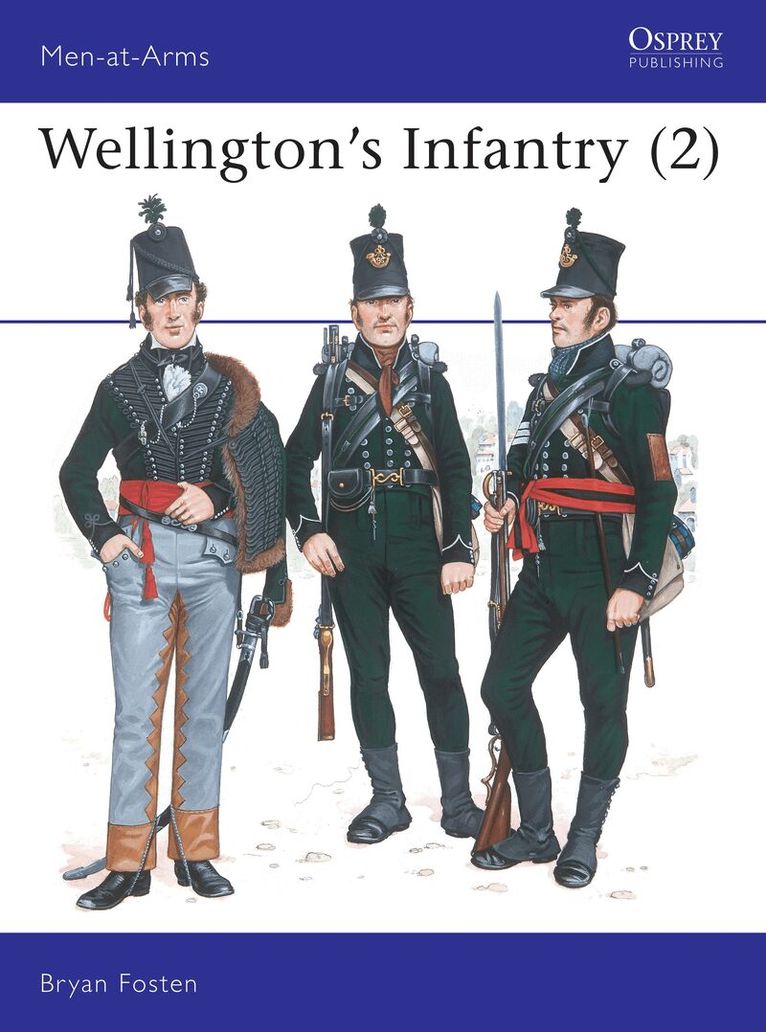
In 1803 Sir John Moore's policy was to produce quick-thinking, intelligent, mobile soldiers capable of attacking on their own initiative.Old-style drill manuals, which still governed the training of the mass of British infantry, were set aside; and discipline was maintained, at least to some extent, by appeals to pride in self and unit rather than by the lash.In this companion volume to Men-at-Arms 114 Wellington's Infantry (1), Bryan Fosten provides an engaging account of the history and uniforms of the light infantry troops who served under Wellington, together with numerous illustrations including eight detailed full page colour plates by the author himself.
153 kr
Skickas inom 10-15 vardagar
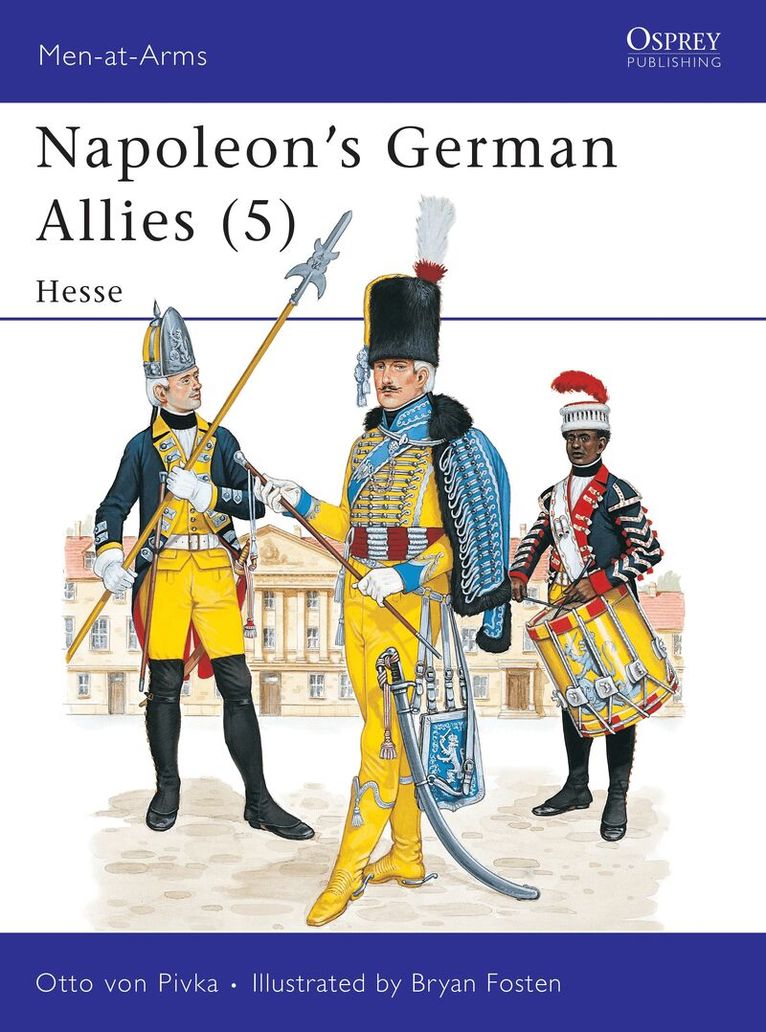
During the Napoleonic Wars the region of Hesse was divided between Hessen-Kassel and Hessen-Darmstadt.Under Napoleon's patronage, in 1806 Hessen-Darmstadt received all remaining imperial possessions within its borders and was elevated to a Grand Duchy. That same year, Hessen-Kassel, under Imperial Elector Wilhelm I, was dissolved and incorporated into Jerome Bonaparte's Kingdom of Westphalia, resulting in significant political, administrative and sartorial changes.This richly illustrated book details the organization, campaigns, uniforms, and colours and standards of the forces of Hessen-Darmstadt and Hessen-Kassel from 1792 to Napoleon's defeat in 1813.
149 kr
Skickas inom 10-15 vardagar
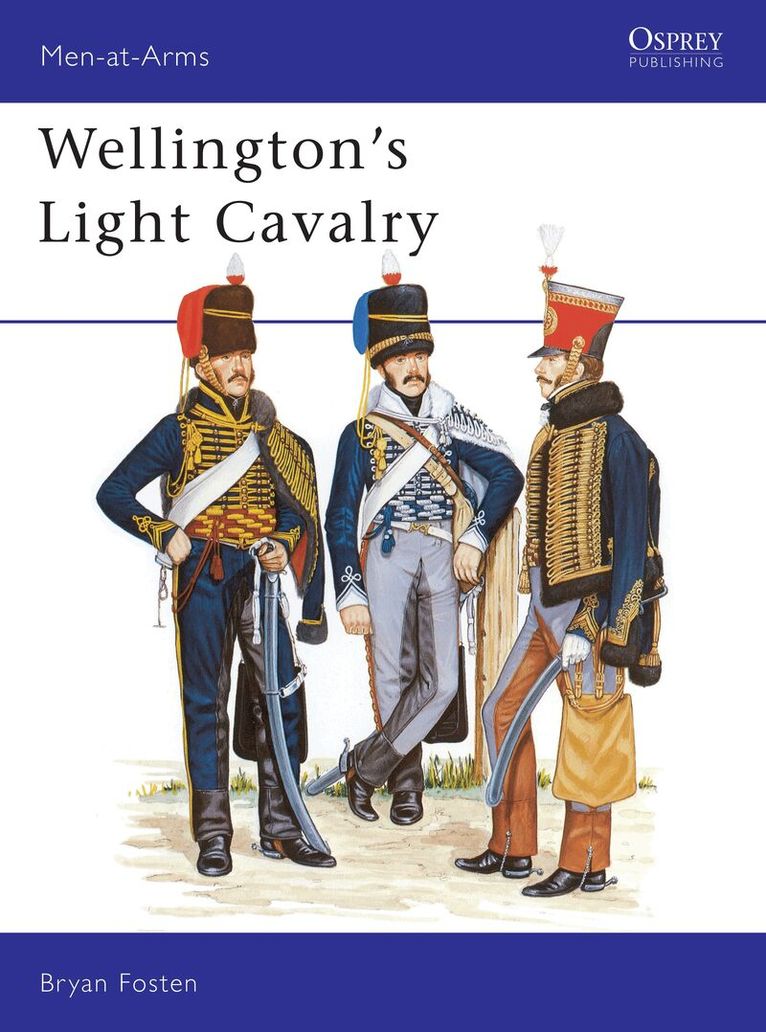
In April 1756 the Horse Guards agreed, with some reluctance, to the addition of a single 'light troop' to most cavalry regiments.From their formation these troops were fashionable and treated as having a special character, and they became so useful that by 1759 it was decided to form complete regiments of light cavalry.Bryan Fosten provides an in depth account of the organization, uniforms and history of Wellington's Light Cavalry in a text backed by numerous illustrations including eight full page colour plates by the author himself.
149 kr
Skickas inom 10-15 vardagar
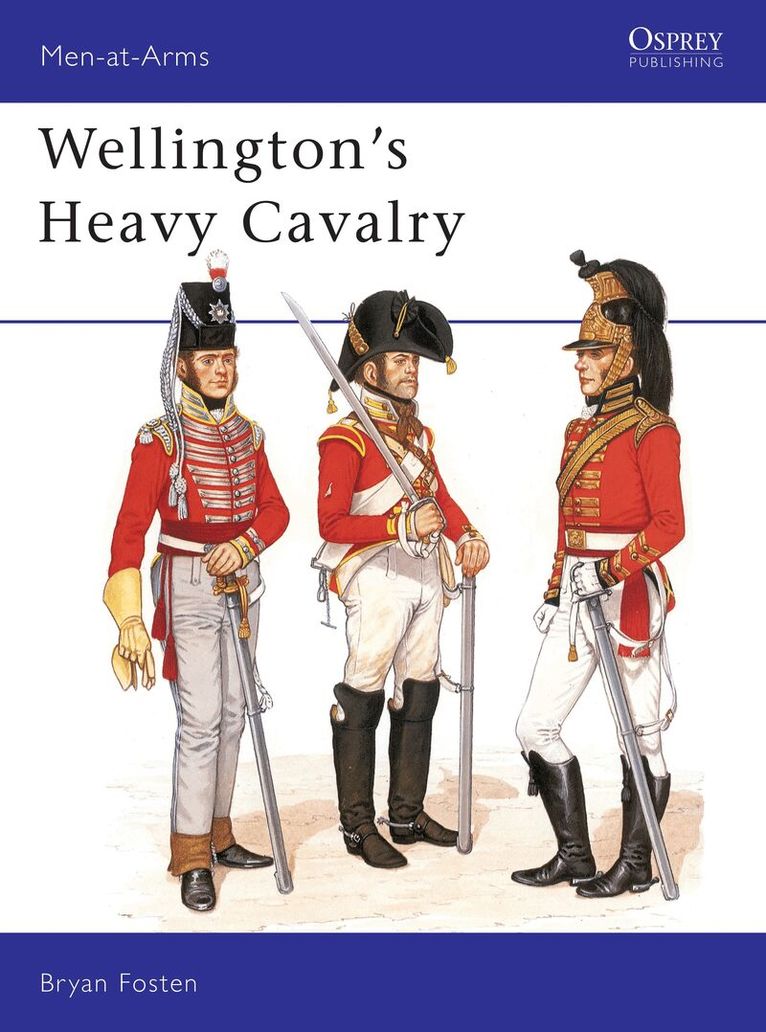
Wellington considered the British cavalry to be technically inferior to the French, although paradoxically he also said that one British squadron would be a match for two of the enemy.His main concern was that although the British cavalry lacked neither courage nor dash, they lacked discipline, in that they invariably failed to rally and re-form once they had charged home. At Waterloo, although the cavalry generally performed superbly well, the endemic faults which Wellington had already identified were repeated more than once, resulting in the decimation of several fine regiments. In this illustrated volume, Bryan Fosten explores the history, organisation and uniforms of Wellington's Heavy Cavalry.
149 kr
Skickas inom 10-15 vardagar
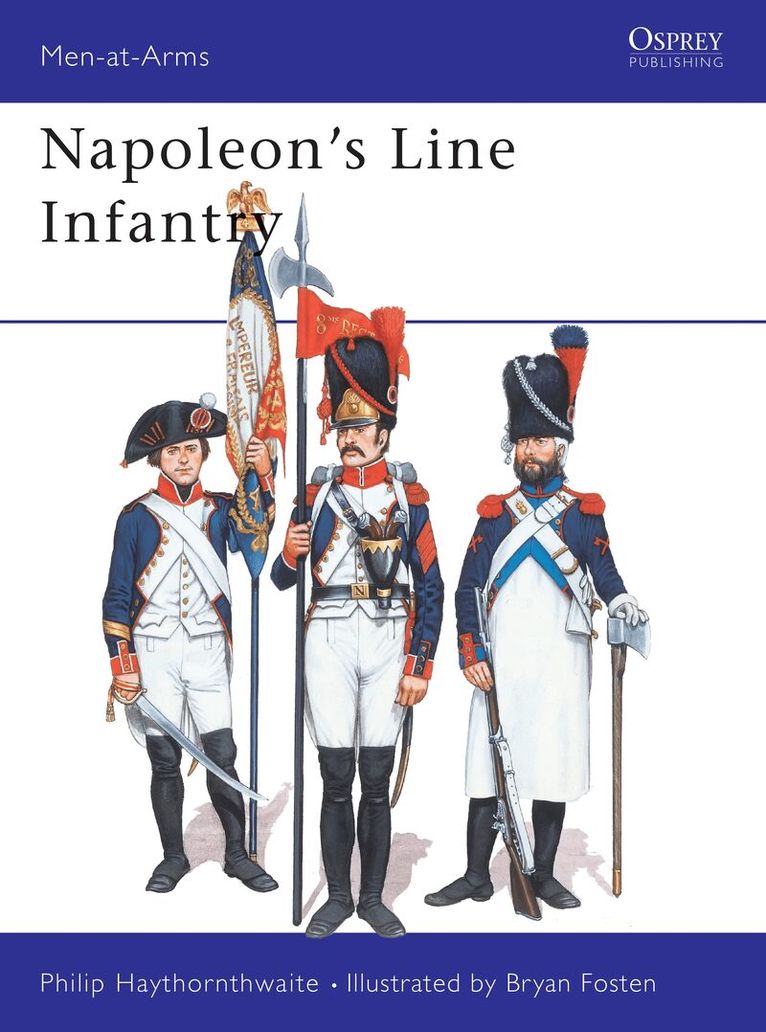
Napoleon's line infantry was founded upon that of the Ancien Régime.A total re-organisation began on 1 January 1791 with the abolition of the old regimental titles, and over the next two years an increasing number of conscript and volunteer battalions were formed. Their quality varied from the proficiency of the early National Guard regiments to the untrained and ill-equipped rabble of the levée.To combine the discipline and steadiness of the regular army with the revolutionary fervour of the new army, the Amalgame was decreed on 21 February; by this measure each regular battalion became the nucleus of a new Demi-Brigade.
149 kr
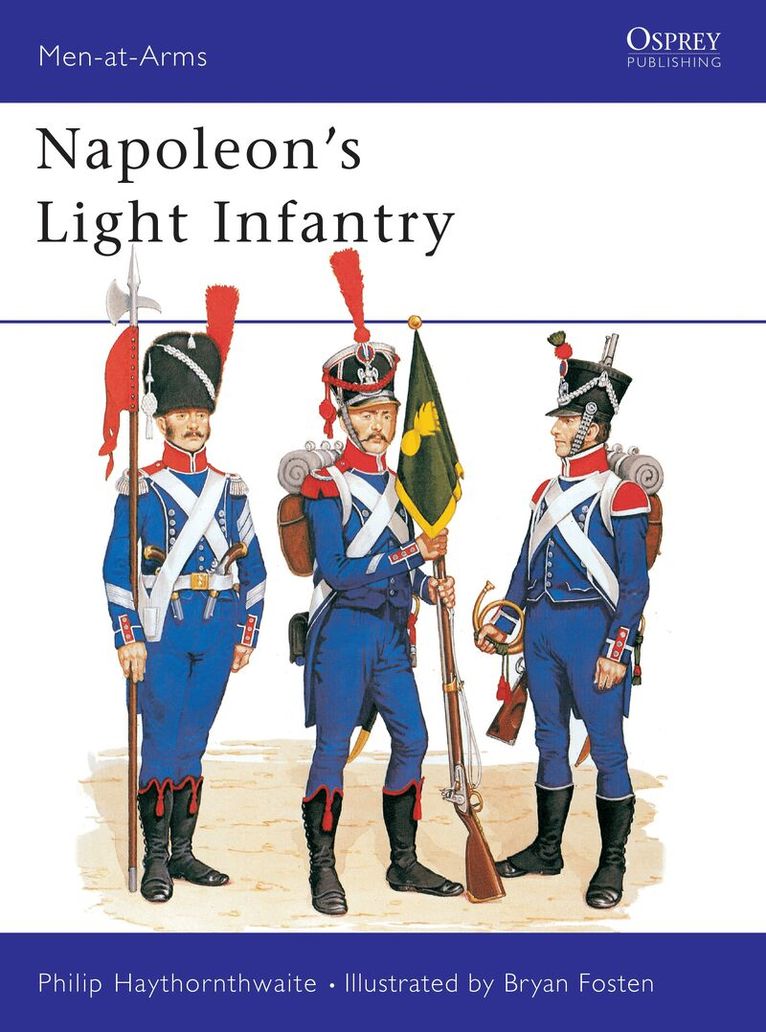
Although light infantry tactics formed one of the cornerstones of Napoleonic warfare, their employment was by no means restricted to Light regiments.Thus, from the early 1800s if not before, the distinction between Light and Line infantry was largely one of costume and tradition. One marked difference from the Line infantry, however, was in the superior ésprit de corps of the Light regiments. Their attitude of superiority was reinforced by their different (and often more impressive) uniform, the theoretical difference in role, and supposed superior training.Philip Haythornwaite examines their uniforms in a volume including eight superb colour plates by Brian Fosten.
149 kr
Skickas inom 10-15 vardagar
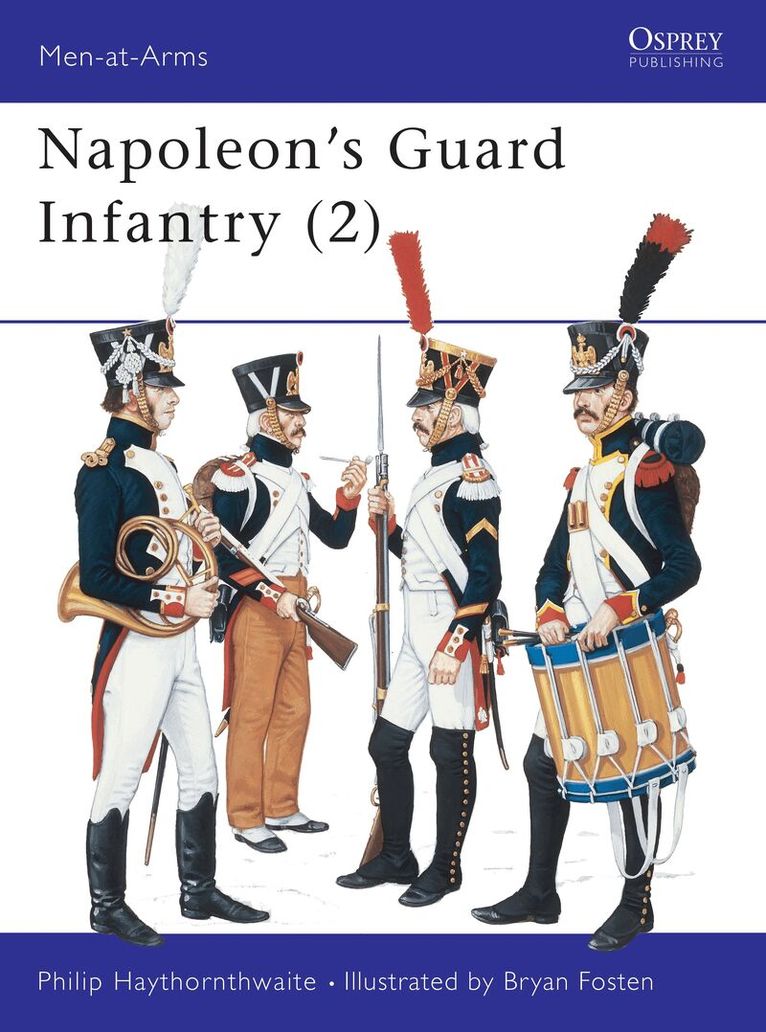
The seniority of Guard infantry was only established definitely in 1812 by the Guard's chief of personnel, Courtois.The title 'Young Guard' was assigned to the newly-raised regiments in 1809, but the term 'Middle Guard' came into use about 1811. From the beginning the newer guard regiments were committed to action first, the Old Guard, as Napoleon wrote, 'being so precious, one fears to expose them'; thus the Fusiliers-Chasseurs distinguished themselves at Hilsberg whilst the rest of the Guard was kept in reserve. In 1808 the Fusiliers went to Spain, serving at the Madrid rising, Medina and Guadalajara.Philip Haythornwaite examines these troops in a detailed text, backed by numerous illustrations including eight full page colour plates by Bryan Fosten.
149 kr
Skickas inom 10-15 vardagar
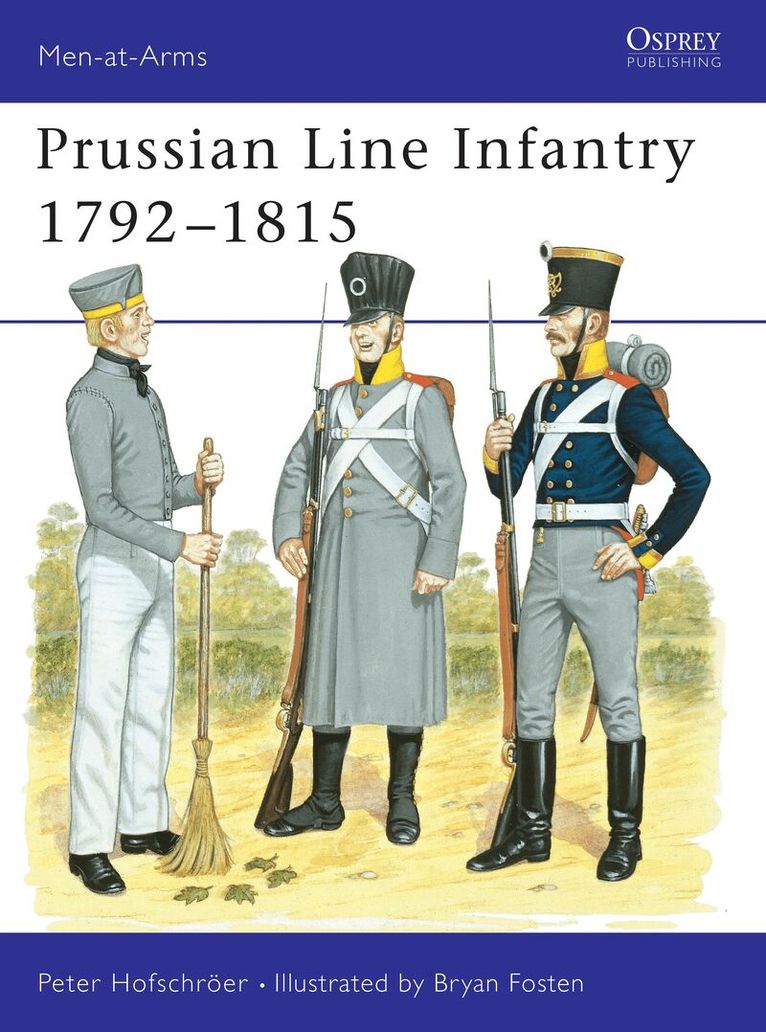
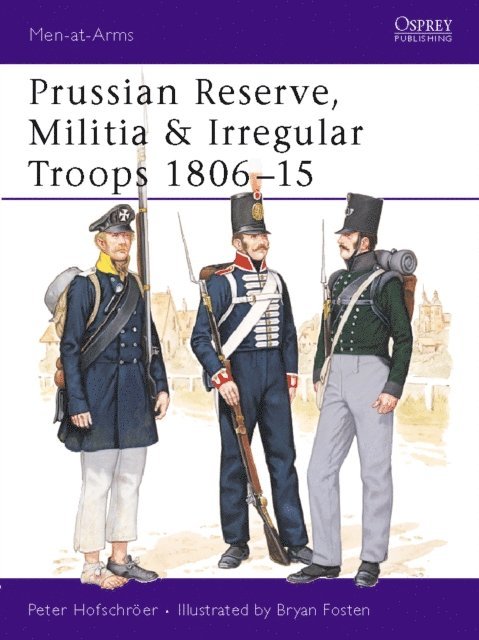
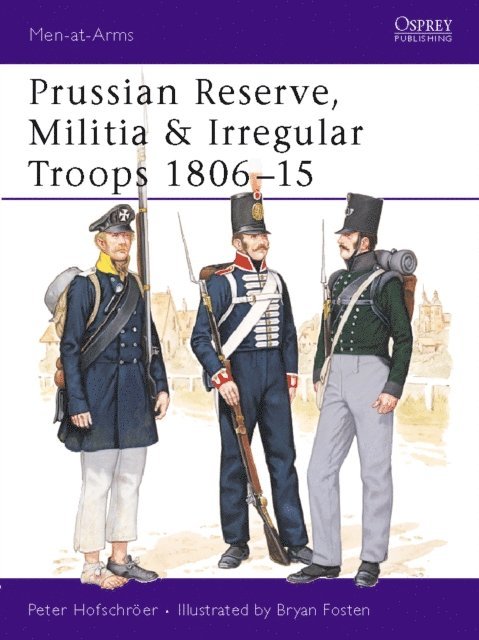
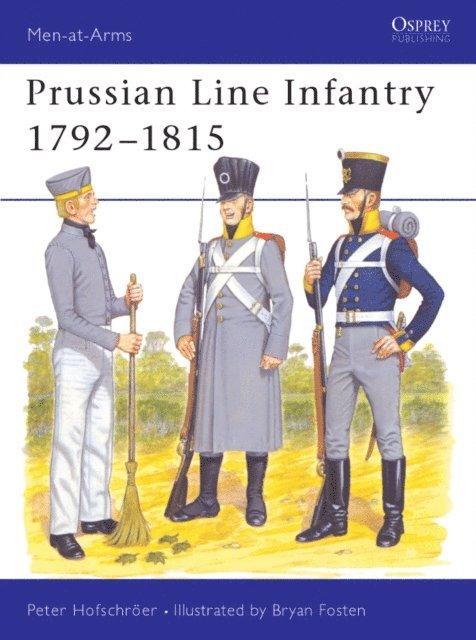
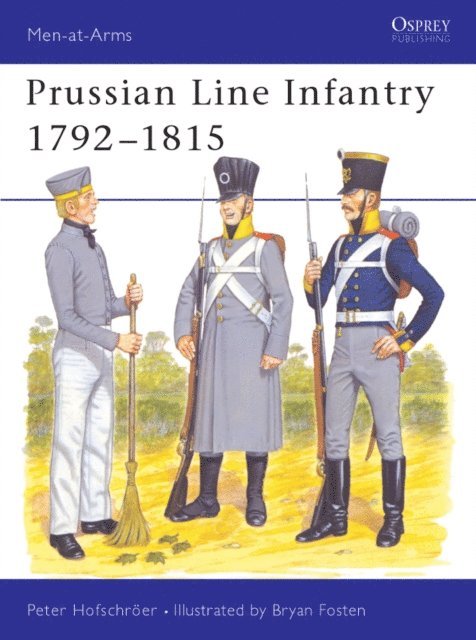
At the beginning of this period, the battalions of the Prussian Line usually fought in a linear formation three ranks deep, overwhelming the enemy with fire before a well-timed bayonet attack.By the end, the preferred formation was eight to 12 ranks deep. The responsibility for conducting the fire-fight was now given to the skirmish elements and the artillery. The formed battalions provided support for the fire line, and conducted the decisive bayonet charge. Whatever the change, the spirit and ability of the infantry remained consistently high throughout this bloody period.Peter Hofschroer's text is accompanied by illustrations throughout.
153 kr
Skickas inom 10-15 vardagar
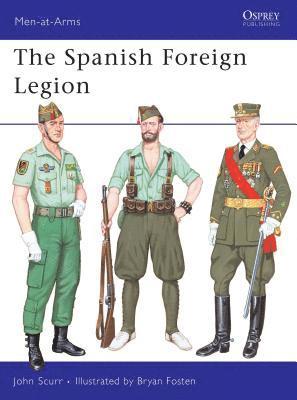
Although overshadowed by its French counterpart, the Tercio de Extrangeros, 'Regiment of Foreigners' has a rich and eventful history beginning with its formation in 1920.Under the command of LtCol Millán Astray and Comandante Francisco Franco, the Spanish Foreign Legion developed into a formidable force, led by Astray's belief that 'to die in combat is the greatest honour.' This book examines the main campaigns in which the Legion participated, from Melilla in 1921-23 until its withdrawal from the Sahara in 1976.A wealth of contemporary photographs and colour plates detail the uniforms and insignia of the Spanish Foreign Legion.
149 kr
Skickas inom 10-15 vardagar
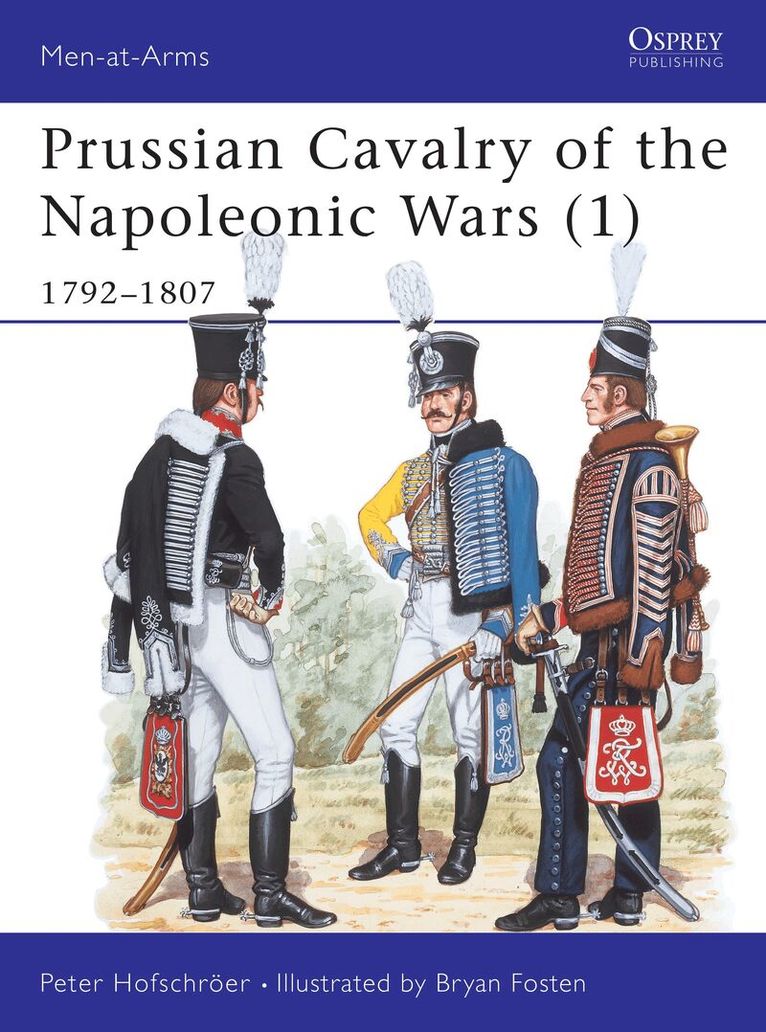
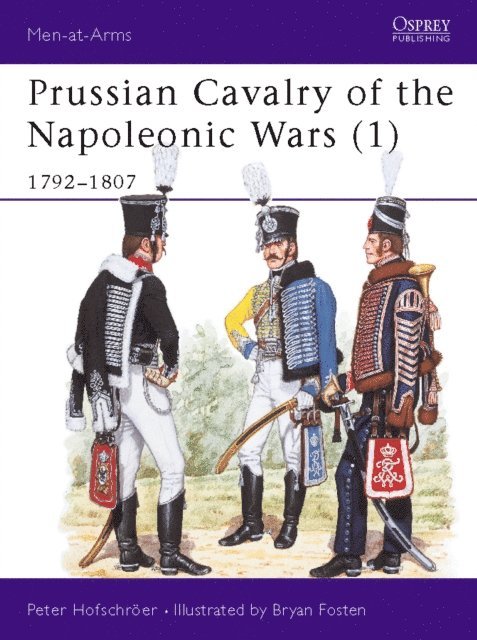
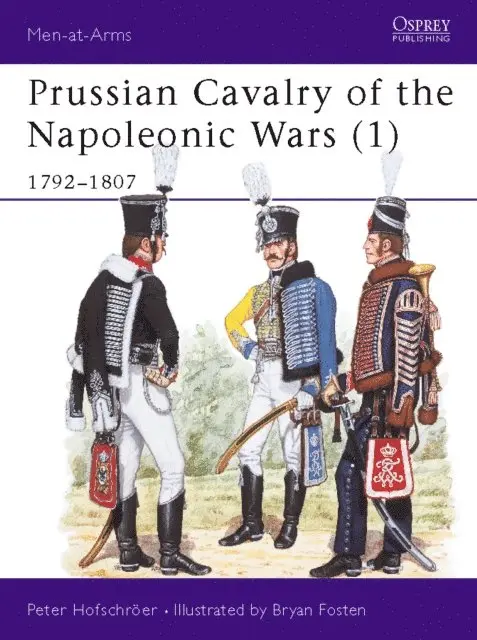
When Frederick II (later known as Frederick the Great) came to the throne in 1740, he had three advantages for which he owed thanks to his father: a modern, well-organised state; full coffers; and a properly trained and equipped army.Under a leader as renowned as Seydlitz, the Prussian cavalry achieved the nearest to a state of perfection that it was ever going to. So great was its reputation in the Seven Years' War that Napoleon made a special point of warning his men at the beginning of the 1806 campaign to beware of the Prussian cavalry.In this detailed volume, Peter Hofschröer's text is accompanied by illustrations throughout.
149 kr
Skickas inom 10-15 vardagar
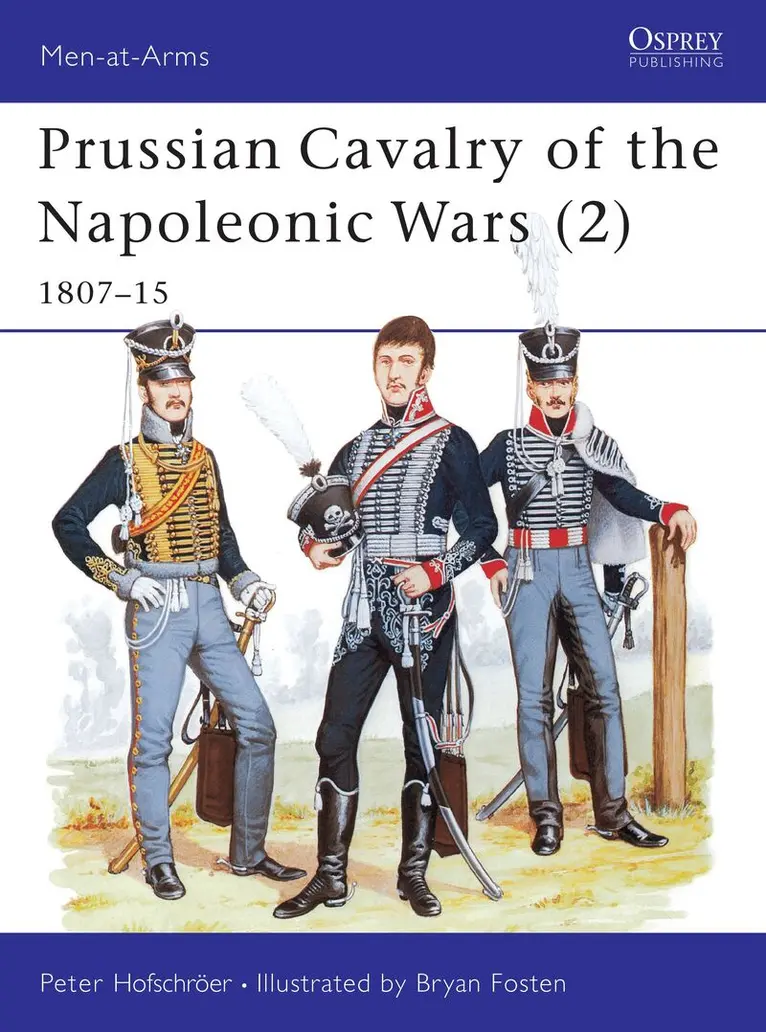
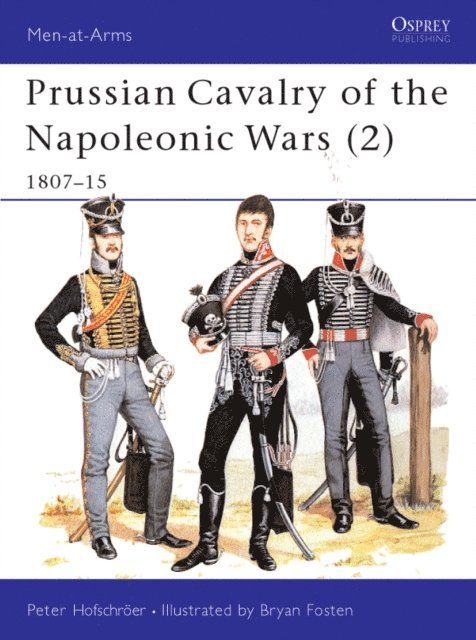
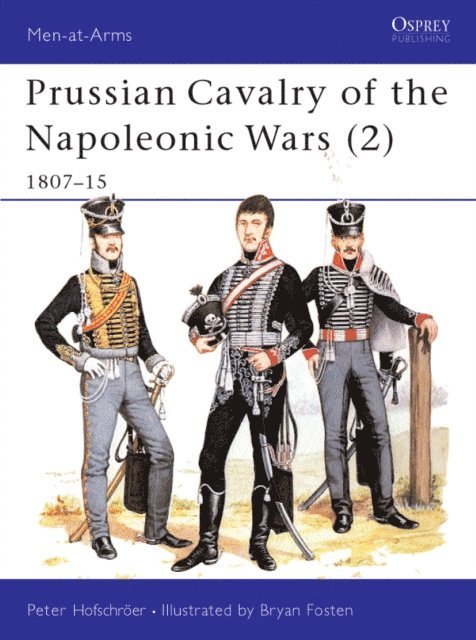
After Prussia's dismemberment a drastic re-organisation of the entire army was necessary, and the cavalry underwent this process with the rest.At the time of the mobilisation in 1813, the somewhat reduced mounted arm was supplemented by voluntary and militia formations; and once peace was established after the First Abdication, a further re-organisation was begun. The fateful campaign of 1815 was fought with the Prussian cavalry still in the throes of this re-organisation.Packed with diagrams, illustrations and eight full page colour plates by Bryan Fosten, this book by Peter Hofschröer details the history, organisation, equipment and uniforms of the Prussian cavalry which fought in the Napoleonic wars.
149 kr
Skickas inom 10-15 vardagar
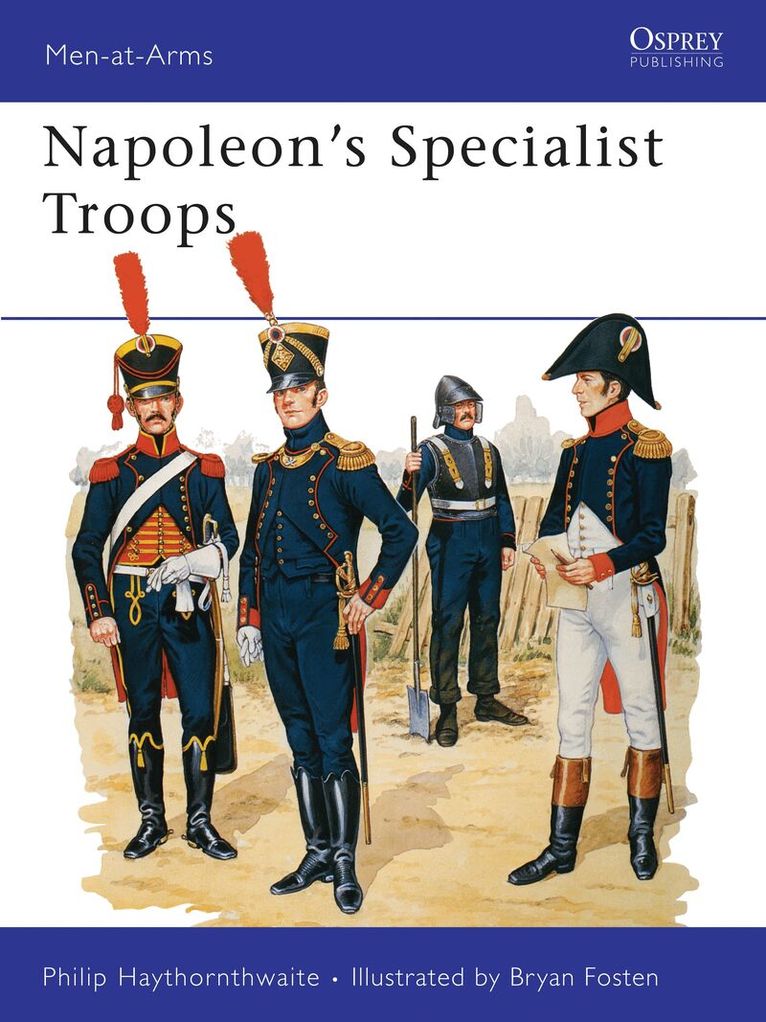
Though less celebrated than the infantry and cavalry, Napoleon's 'specialist' troops – artillery, engineers and supporting services – were indispensable elements.Without them, no army could have operated, and they frequently assumed greater significance than the line regiments. Indeed, having suffered least from the emigration of Royalist officers, the artillery was the best element of the early Republican armies, the nucleus of the old Royal artillery serving with distinction in the early campaigns such as Valmy.The organisation and uniform of Napoleon's specialist troops are here examined by Philip Haythornwaite in a engaging volume complemented by a wealth of illustrations including eight full page colour plates by Bryan Fosten.
149 kr
Skickas inom 10-15 vardagar
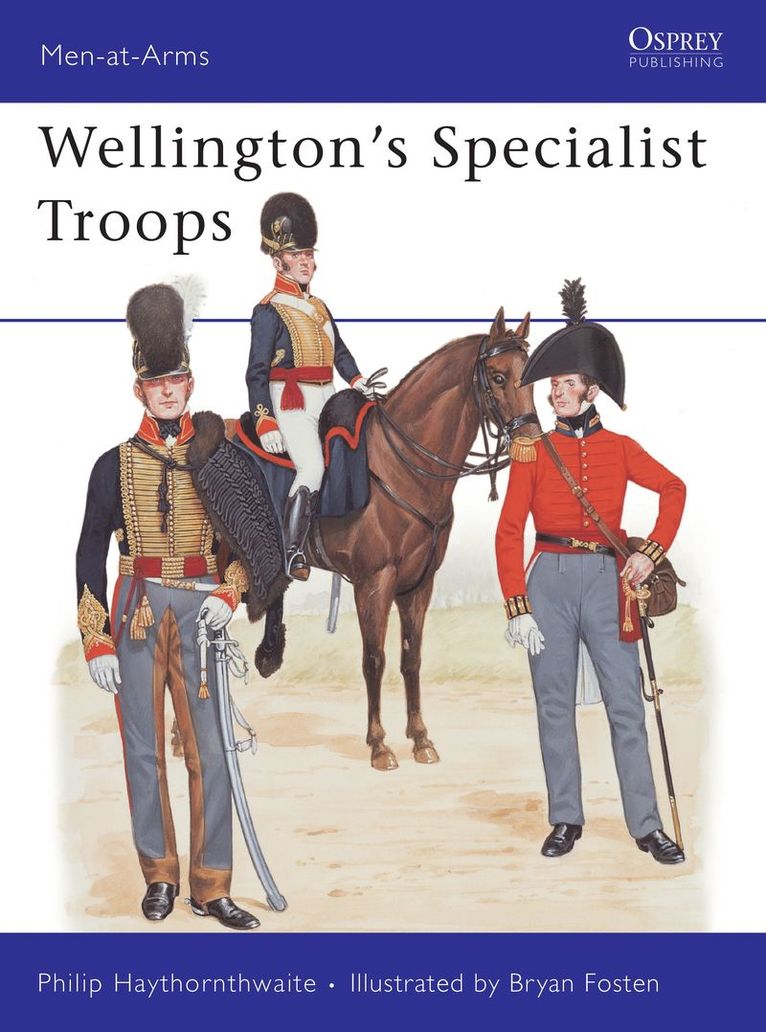
The specialist troops of Wellington's army played a crucial role in the success of the British Army.Though often understaffed and ineptly managed, the artillery, engineers, transport and commissariat, and medical services contributed to Wellington's ultimate victory in 1815. The Royal Artillery and Corps of Royal Engineers comprised a small number of highly trained officers, while the commissariat was composed of untrained civilians outside military discipline, and the medical services suffered from a shortage of trained surgeons.This richly illustrated book examines the organization, uniforms and equipment of each of these specialist departments.
153 kr
Skickas inom 10-15 vardagar
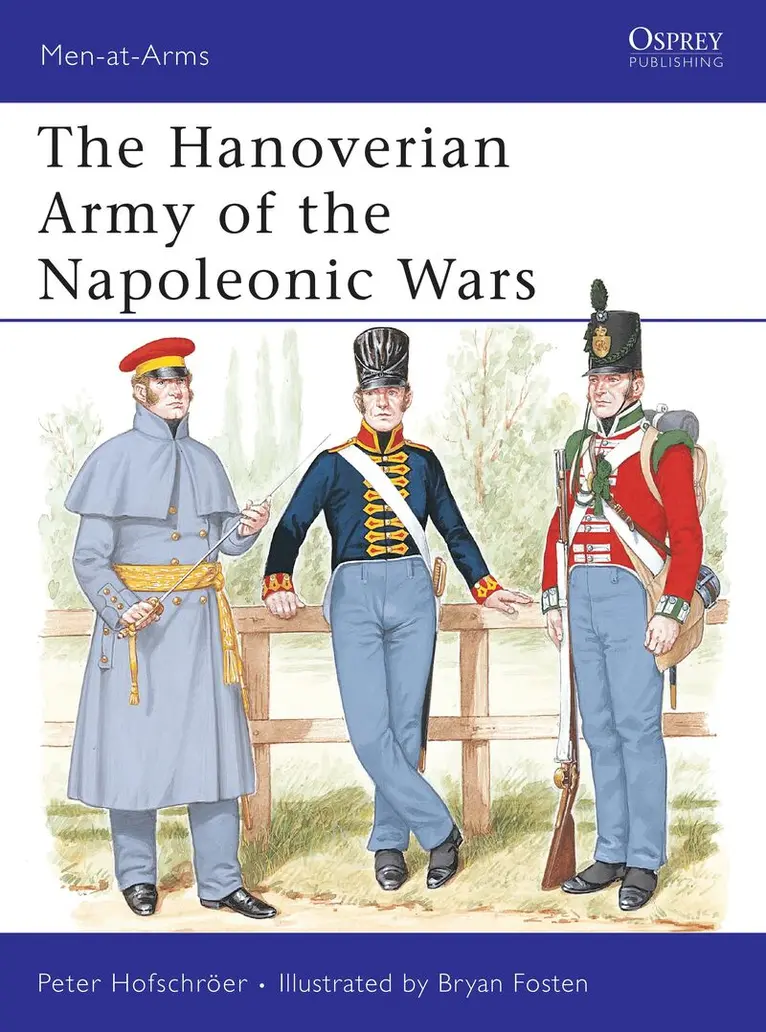
Throughout the Napoleonic era Britain and Hanover had the same head of state, George III.Symbolic of their close relationship, the Hanoverian Army wore uniforms and used equipment largely similar to those used by the British Army.Complemented by numerous illustrations and photographs, plus eight full page colour plates, this text explores the uniforms and organization of the army of the Electorate of Hanover and the King's German Legion.
153 kr
Skickas inom 10-15 vardagar
Throughout the wars undertaken by Frederick the Great, probably his greatest resource was his infantry. It is a mark of the king's determination that despite wars which almost destroyed both Prussia and its army (such as the Seven Years' War), he was able to maintain its numbers – even if the quality declined as the attritional campaigns took their toll.Philip Haythornthwaite examines the uniforms, tactics and organisation of Frederick's infantry in detail – a fighting force that contested battles such as Mollwitz, Hohenfriedberg, Kesselsdorf, Liegnitz, Burkersdorf and the siege of Prague.
153 kr
Skickas inom 10-15 vardagar
Ultimately, regiments are judged by their behaviour in battle; and highlanders have always had a reputation as 'stormers', as exemplified by the impetuous charge of the Gordons at Waterloo, intermingled with the Scots greys.This reputation probably resulted at least in part from an unusually close bonding between officers and men, and an assumption that highlanders were natural soldiers, possessed of an impetuous spirit and temperamentally more inclined to use the bayonet.Complemented by many illustrations, including eight full page colour plates by Bryan Fosten, Stuart Reid's engaging text examines the uniforms and organisation of Wellington's Highlanders.