''It was at Rome, on the 15th of October 1764, as I sat musing amid the ruins of the capitol, while the barefooted friars were singing vespers in the temple of Jupiter, that the idea of writing the decline and fall of the city first started to my mind,'' recorded Edward Gibbon with characteristic exactitude. Over a period of some twenty years, the luminous eighteenth-century historian--a precise, dapper, idiosyncratic little gentleman famous for rapping his snuff-box--devoted his considerable genius to writing an epic chronicle of the entire Roman Empire''s decline. His single flash of inspiration produced what is arguably the greatest historical work in any language--and surely the most magnificent narrative history ever written in English. ''Gibbon is one of those few who hold as high a place in the history of literature as in the roll of great historians,'' noted Professor J.B. Bury, his most celebrated editor.This three-volume Modern Library edition of The Decline and Fall of the Roman Empire--with Gibbon''s notes--is edited with a general introduction and index by Bury, along with an introduction by Pulitzer Prize-winning historian Daniel J. Boorstin. The Volumes are illstrated with reproductions of etchings by Gian Battista Piranesi.The first volume contains chapters one through twenty-six of The Decline and fall of the Roman Empire.
"I devoured Gibbon," wrote Winston Churchill. "I rode triumphantly through it from end to end and enjoyed it all." Gibbon''s magnum opus -- which encompasses thirteen hundred years of history, swinging across Europe, North Africa, and Asia -- remains one of the greatest works of history ever written. "Gibbon is a kind of bridge that connects the ancient with the modern ages," noted Thomas Carlyle. "And how gorgeously does it swing across the gloomy and tumultuous chasm of these barbarous centuries." Indeed, Gibbon, the supreme historian of the Enlightenment--the illustrious scholar who envisioned history as a branch of literature--seemed almost predestined to write his monumental account of the Roman Empire''s terrible self-destruction. "I have described the triumph of barbarism and religion," wrote the author in the famous epigram that summed up his towering achievement in The Decline and Fall of the Roman Empire. "Gibbon is not merely a master of the pageant and the story; he is also the critic and the historian of the mind," said Virginia Woolf. "Without his satire, his irreverence, his mixture of sedateness and slyness, of majesty and mobility, and above all that belief in reason which pervades the whole book and gives it unity, an implicit if unspoken message, the Decline and Fall would be the work of another man....We seem as we read him raised above the tumult and the chaos into a clear and rational air." The second volume contains chapters twenty-seven through forty-eight of The Decline and Fall of the Roman Empire.
"I set out upon Gibbon''s Decline and Fall of the Roman Empire [and] was immediately dominated by both the story and the style," recalled Winston Churchill. "I devoured Gibbon. I rode triumphantly through it from end to end and enjoyed it all....I was not even estranged by his naughty footnotes." In the two centuries since its completion, Gibbon''s magnum opus--which encompasses some thirteen hundred years as it swings across Europe, North Africa, and Asia--has refused to go the way of many "classics" and grow musty on the shelves. "Gibbon is a landmark and a signpost--a landmark of human achievement: and a signpost because the social convulsions of the Roman Empire as described by him sometimes prefigure and indicate convulsions which shake the whole world today," wrote E.M. Forster. Never far below the surface of the magnificent narrative lies the author''s wit and sweeping irony, exemplified by Gibbon''s famous definition of history as "little more than the register of the crimes, follies and misfortunes of mankind." The third volume contains chapters forty-nine through seventy-one of The Decline and Fall of the Roman Empire.
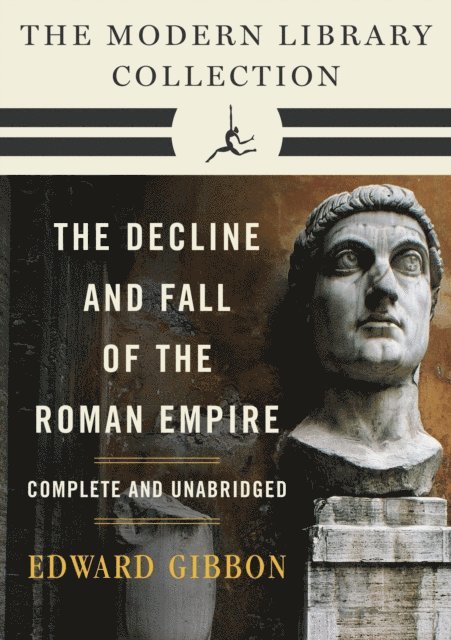
This Modern Library eBook edition collects all three volumes of Edward Gibbon’s towering masterpiece of classical history The Decline and Fall of the Roman Empire—complete and unabridged. Edward Gibbon’s magnum opus narrates the history of the Roman Empire from the second century A.D. to its collapse in the west in the fifth century and in the east in the fifteenth century. Alongside the magnificent narrative lies the author’s wit and sweeping irony, exemplified by Gibbon’s famous definition of history as “little more than the register of the crimes, follies and misfortunes of mankind.” An epic chronicle of uncommon literary distinction, The Decline and Fall of the Roman Empire is widely considered the greatest work of history ever written. This unabridged eBook bundle of the celebrated text edited by Professor J. B. Bury, considered a classic since it first appeared in 1896, includes Gibbon’s own exhaustive notes, Bury’s original Introduction and index, as well as a modern appraisal of Gibbon in an Introduction from Pulitzer Prize–winning historian Daniel J. Boorstin.