Stephen Andrew – illustratör
Upptäck titlar med illustrationer av Stephen Andrew.
17 produkter
17 produkter
153 kr
Skickas inom 10-15 vardagar
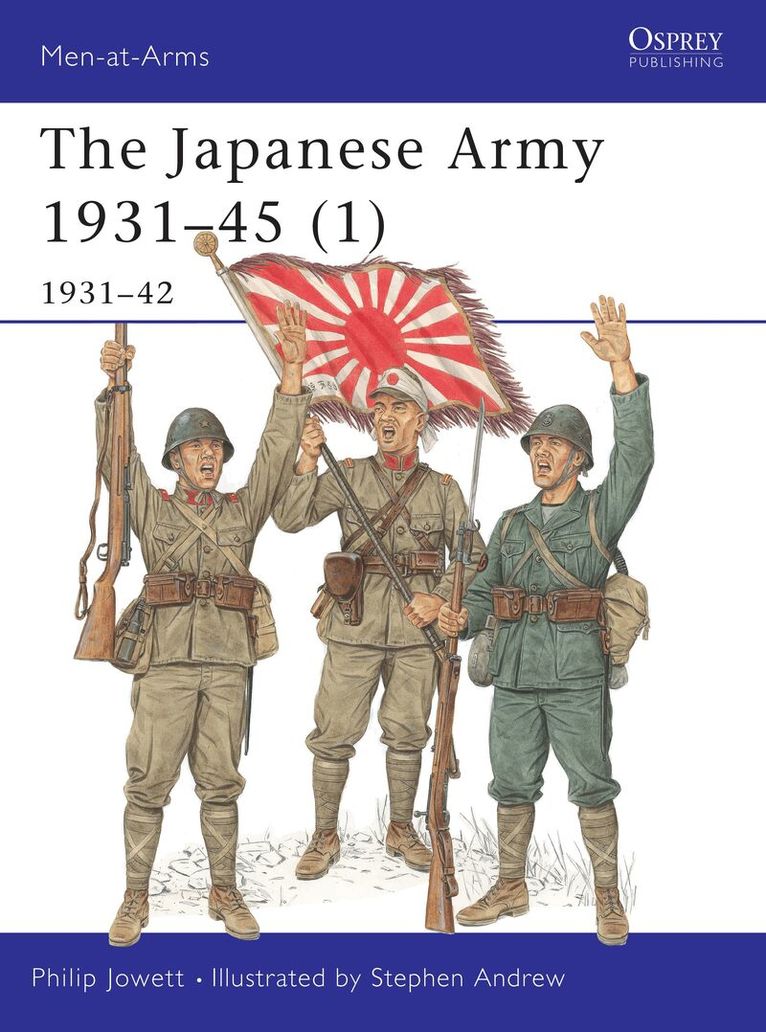
During Japan's devastating Pacific offensive of 1941/42, the Allies paid a high price for their failure to take seriously an army which had already been fighting in Manchuria and China for ten years. That army was a unique blend of the ancient and the modern and its up-to-date equipment and resourceful tactics served an almost medieval code of unquestioning obedience and ruthless aggression.This first of two titles covers the organisation, equipment, uniforms and character of Japanese ground forces in the Chinese and early Pacific campaigns, illustrated with insignia charts, many rare photographs, and eight meticulous uniform plates.
153 kr
Skickas inom 10-15 vardagar
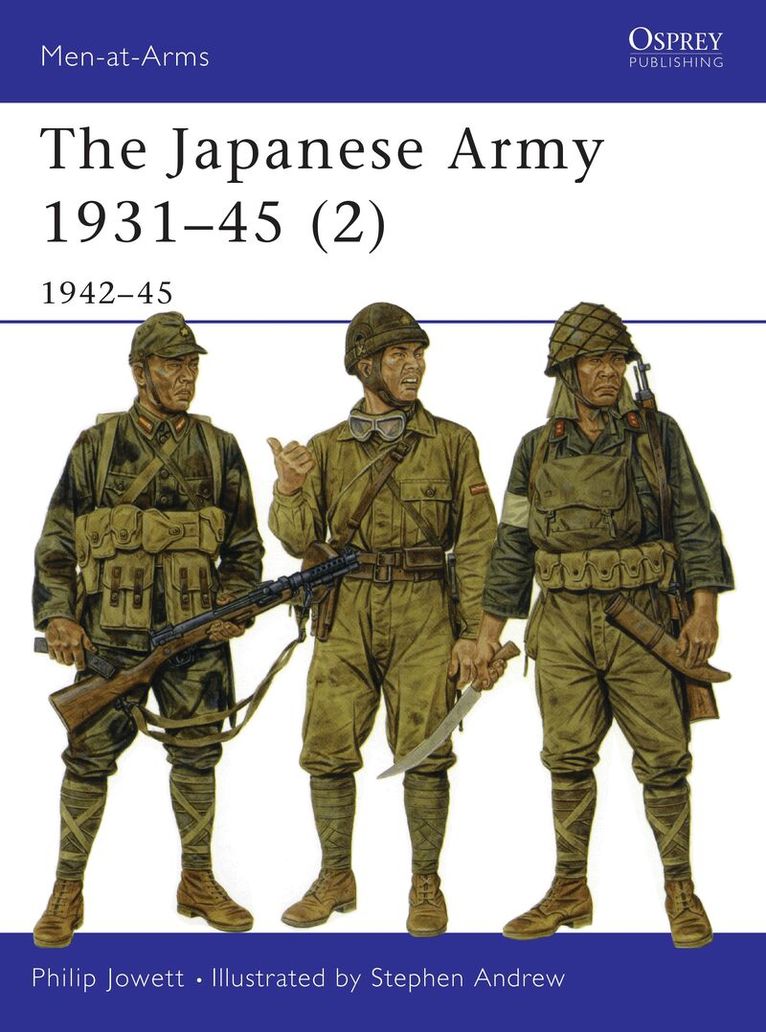
Within months of its greatest triumph in 1942, the Japanese Imperial Army began to face the difficulties which would eventually destroy it - overstretched supply lines, and inadequate industrial support.Yet as the Allies grew steadily stronger and more skilful, the Japanese Army and Naval Landing Forces dug in to defend their conquests with a determination which shocked all who fought them. In this second book the author describes the deployments, organisation, uniforms and equipment of the Army - including the dreaded Kempei-tai military police - the naval infantry, paratroopers, special raiding units, and foreign auxiliaries during the long and savage war in Burma and the Pacific.His text is illustrated with many rare photographs, three insignia charts, and eight highly detailed colour plates.
153 kr
Skickas inom 10-15 vardagar
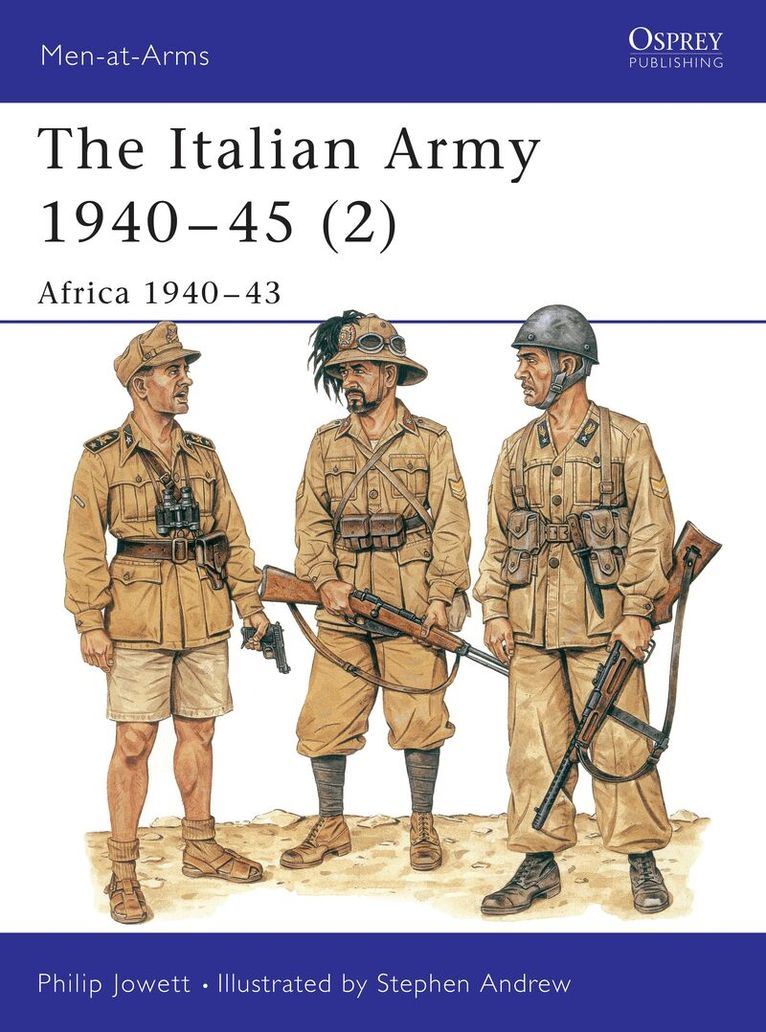
At its peak the Italian Army contributed 2.5 million troops to the Axis war effort.In addition to its major role in North Africa, Italy's army invaded, and later bore the main burden of occupying, the Balkan countries. Italy also sent 250,000 men to fight on the Russian Front.In this second book of a three-part study Philip Jowett covers the organisation, uniforms and insignia of the Italian troops committed to both the North African campaign, and the often neglected East African fighting of 1940-41, including the colonial units. Stephen Andrew's meticulous colour plates illustrate a wide range of uniforms.
153 kr
Skickas inom 10-15 vardagar
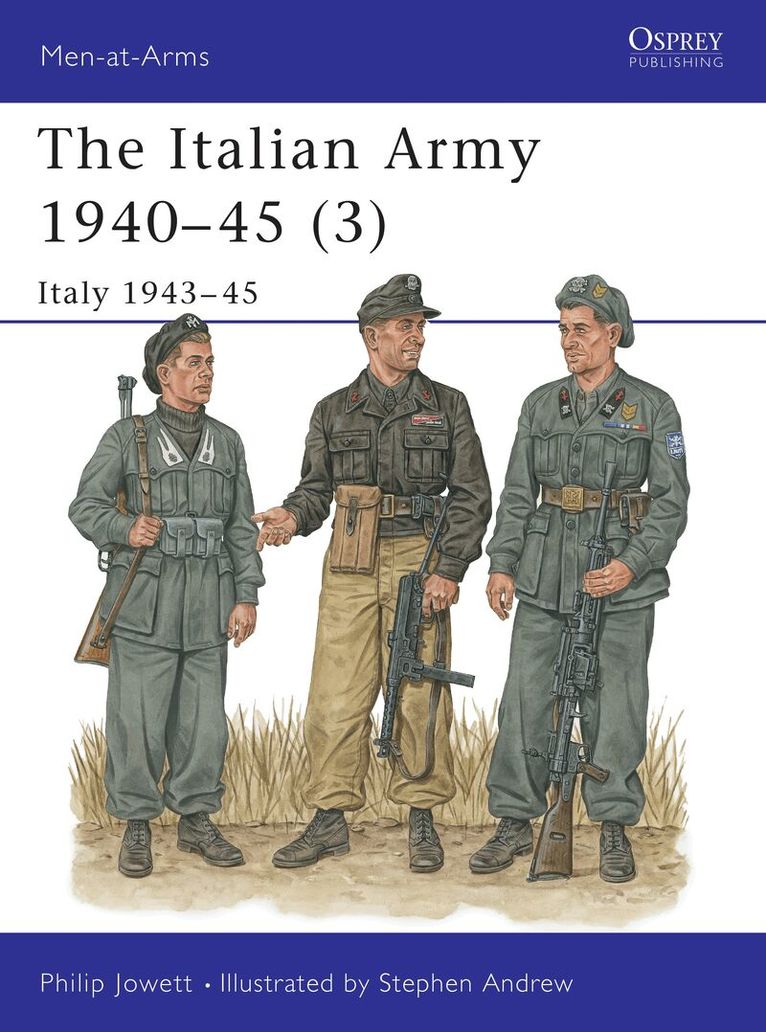
Immediately after the Allied invasion of Italy in September 1943, Mussolini was deposed and the new Italian government switched sides. The German occupying forces swiftly freed Il Duce and ruthlessly disarmed the Italian Army; and from then until the end of the war in April 1945 Italian troops fought on both sides with the forces of the new Fascist 'Salo Republic', in the Allied 'Co-Belligerent Forces', and in the Partisan movement. This period of bitter struggle saw the appearance of many new units and a wide range of interesting uniforms, described and illustrated in this final part of Philip Jowett's comprehensive three-volume series.
153 kr
Skickas inom 10-15 vardagar
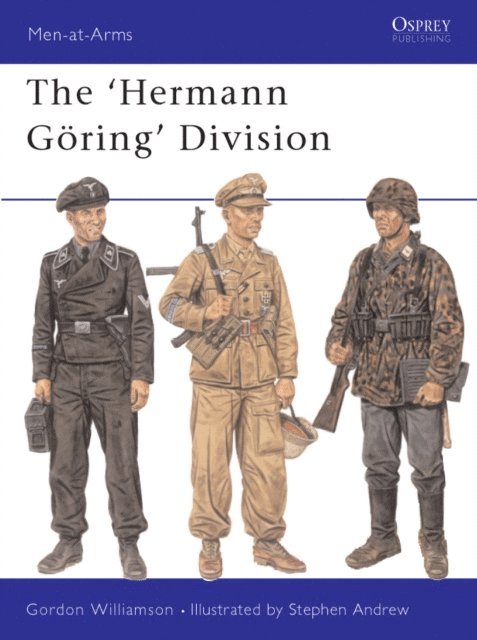
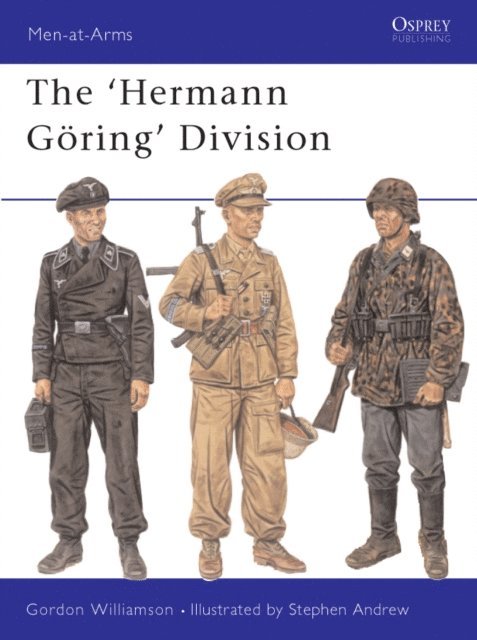
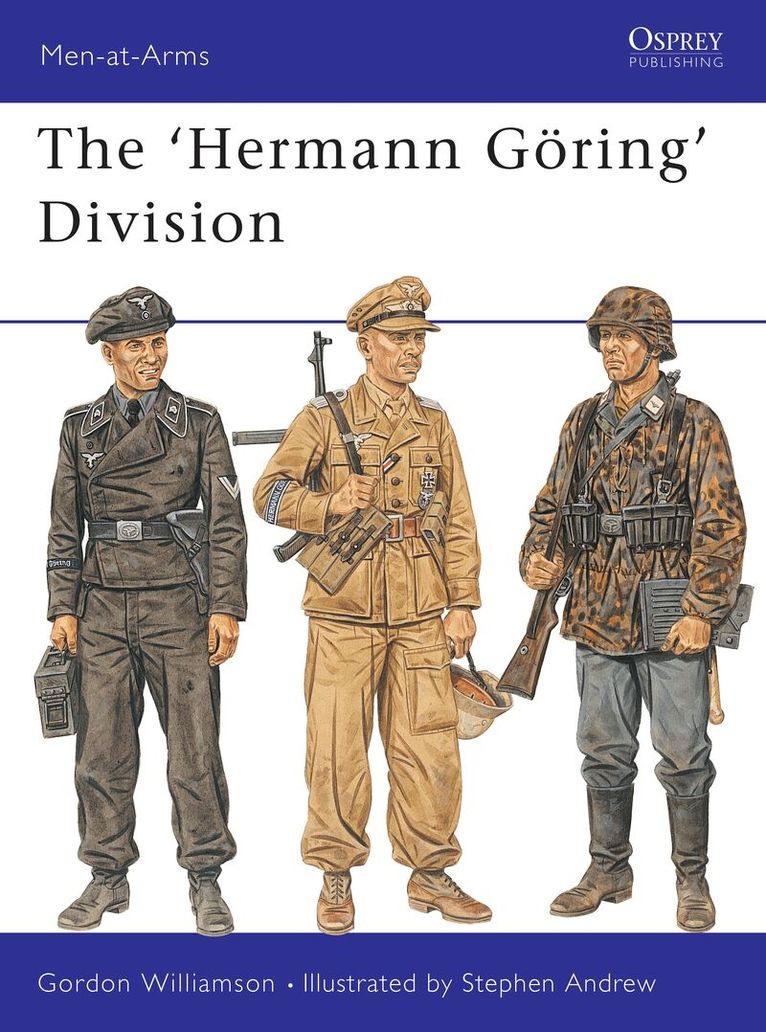
Each of Germany's World War II armed services could claim one unit which earned a unique combat reputation, and which consequently was enlarged and developed far beyond the size originally planned.Hermann Göring, commander-in-chief of the air force, was determined that his Luftwaffe should share the glory of Germany's land conquests, and gave his name to a regimental combat group of infantry and Flak artillery. This élite unit was steadily enlarged into a brigade, then an armoured division, and finally into a two-division corps, fighting with distinction in Tunisia, Sicily, Italy, and on the Russian Front. This concise history is illustrated with rare personal photographs and eight colour plates, detailing the very varied uniforms and special insignia of this crack formation.
153 kr
Skickas inom 10-15 vardagar
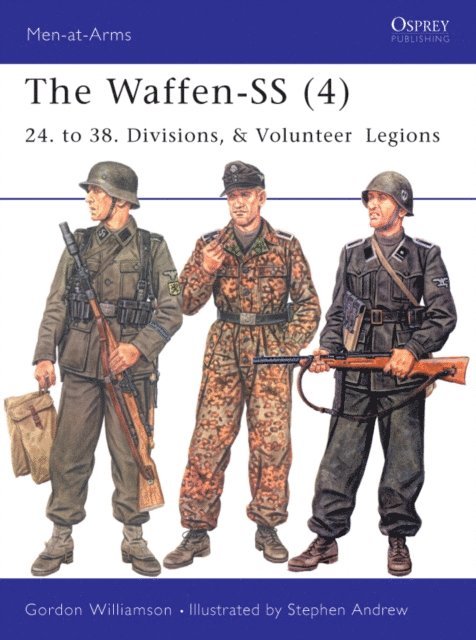
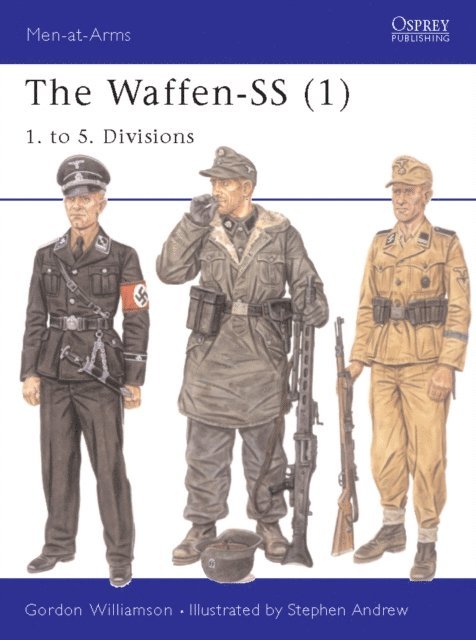
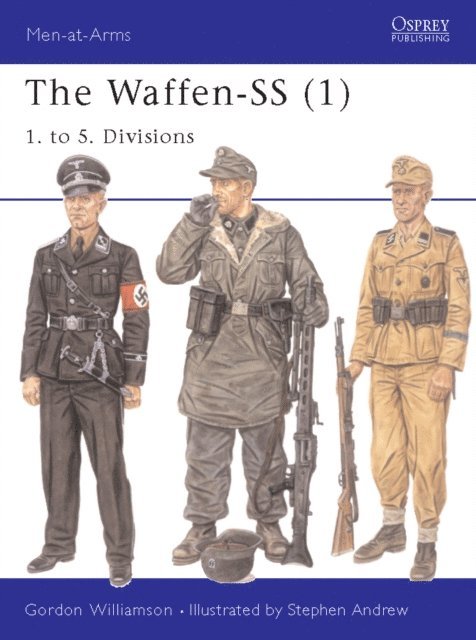
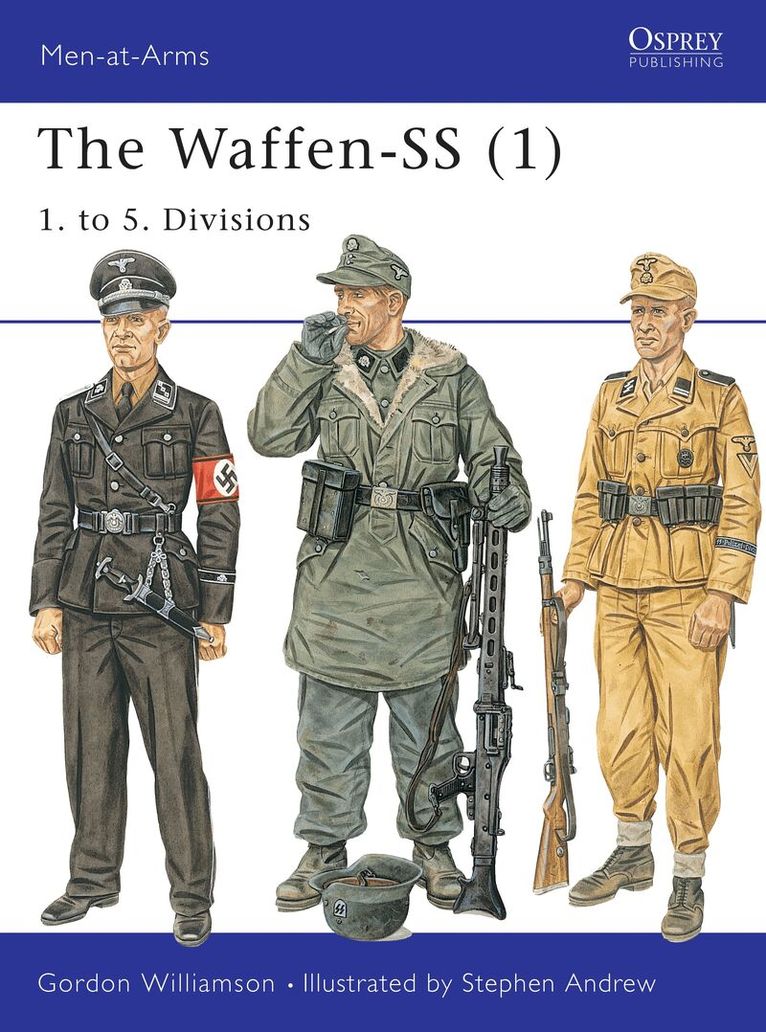
The military branch of the Nazi SS security organisation grew from only a handful of battalions at the outbreak of war in 1939 to hundreds of thousands of troops in dozens of divisions.The battlefield reputation of the premier armoured and mechanised divisions would become second to none; lavishly equipped and regarded as utterly reliable, they were thrown into many desperate battles on both Western and Eastern fronts, often achieving remarkable results.Illustrated with rare photographs, this first of four Men-at-Arms titles details the organisation, uniforms and insignia of the Waffen-SS.
153 kr
Skickas inom 10-15 vardagar
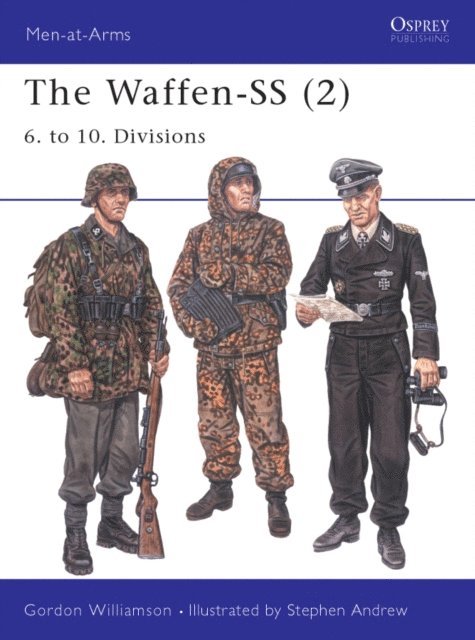
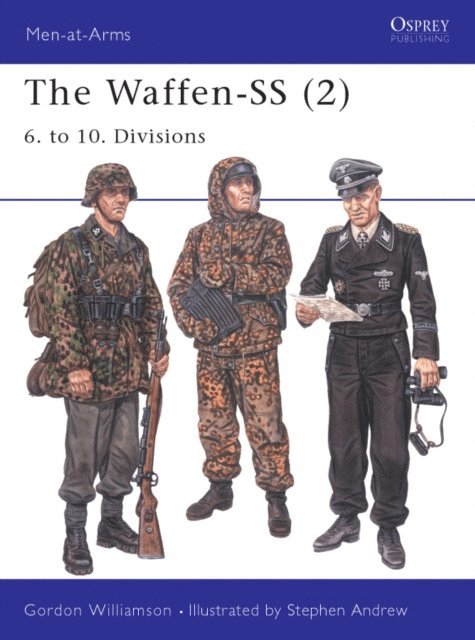
The military branch of the Nazi SS security organisation grew by the end of World War II from a handful of poorly regarded infantry battalions in 1939, into a force of more than 30 divisions including units of every type.Their battlefield reputation varied widely, from the premier armoured divisions which formed Germany's utterly reliable spearheads on both main fronts, to low quality 'anti-partisan' units. The divisions covered in this second of four titles include the first mountain and cavalry units, and two of the remarkable new Panzer divisions raised in the great 1943 expansion.Illustrated with rare photographs from private collections, the text details their organisation, uniforms and insignia, and summarises their battle record.
153 kr
Skickas inom 10-15 vardagar
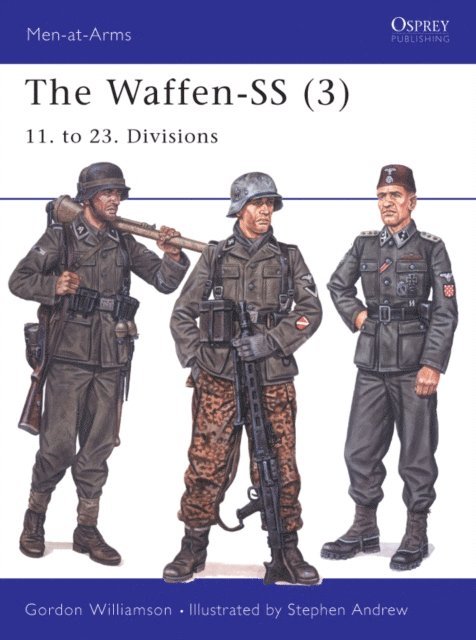
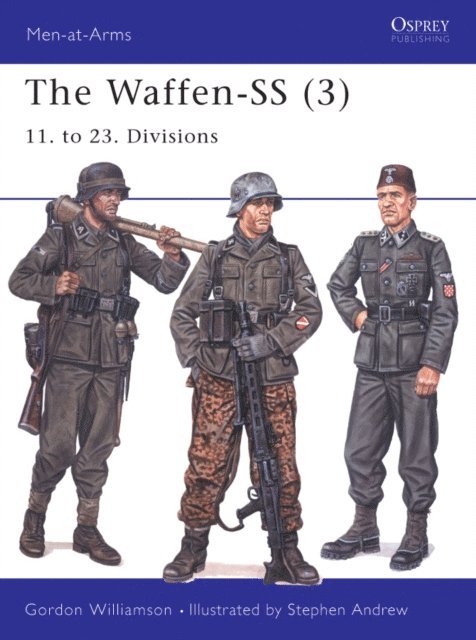
The Waffen-SS grew from a handful of obscure infantry battalions in 1939, to a force of more than 30 divisions by the end of World War II, including units of every type and every level of battlefield value.The mid-war divisions covered in this third title represent that range, from some of the most effective German and Western European volunteer formations – e.g. the 12. SS-Pz Div 'Hitlerjugend', and the Scandinavians and Dutchmen of the 11. 'Nordland' and 23. 'Nederland' divisions – to the Bosnian Muslims of the anti-partisan 13. 'Handschar' Division.Illustrated with rare photographs from private collections and meticulous colour artwork, the text details their organization, uniforms and insignia, and summarizes their battle records.
153 kr
Skickas inom 10-15 vardagar
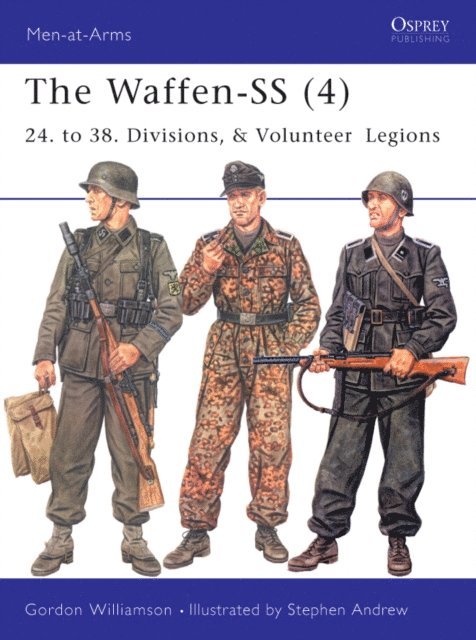
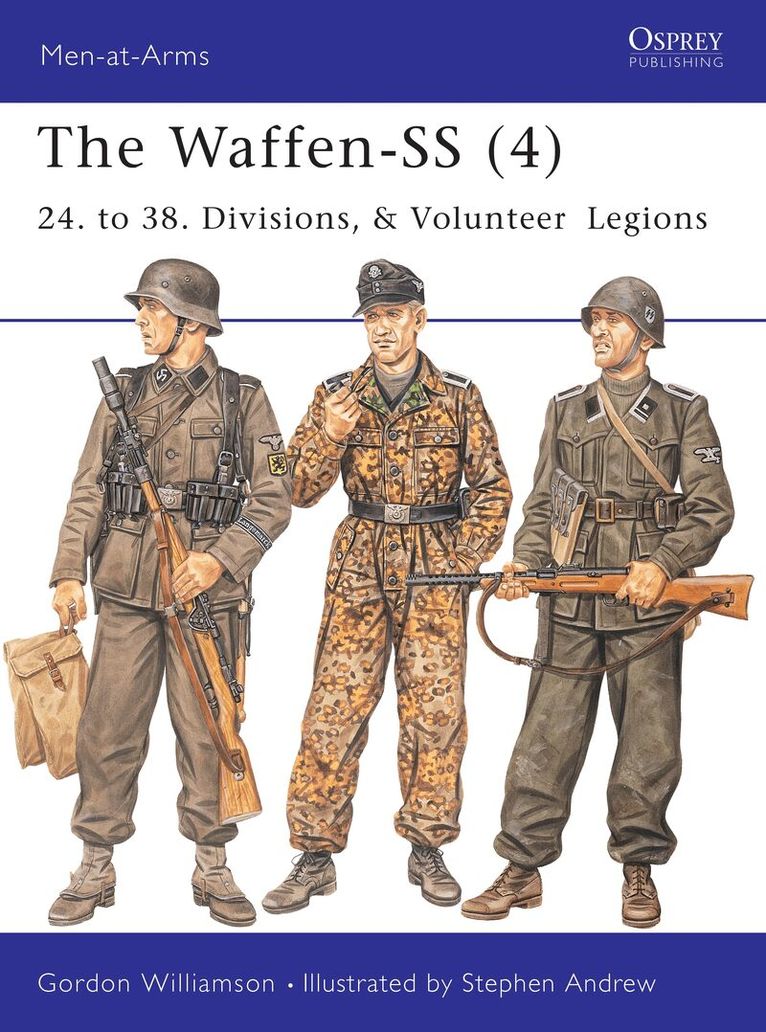
In 1944–45 the Waffen-SS formed many nominal 'divisions' from a motley range of sources, whose battlefield value was as varied as their backgrounds.The best were built around existing Western European volunteer regiments; some, raised from Central Europeans and Russians, were strong in numbers but weak in morale; some were of negligible size, scraped together from remnants and trainees; and some were sinister 'anti-partisan' gangs, assembled from the military dregs of the Eastern Front.Illustrated with rare photographs from private collections and meticulous colour artwork, this final title in our sequence details their organisation, uniforms and insignia, and summarises their battle records.
175 kr
Skickas inom 10-15 vardagar
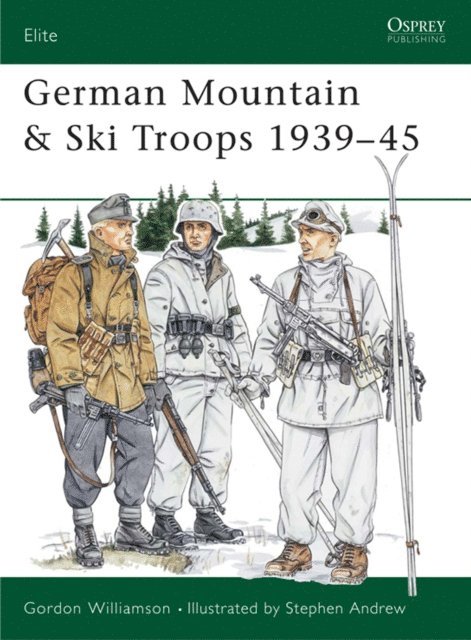
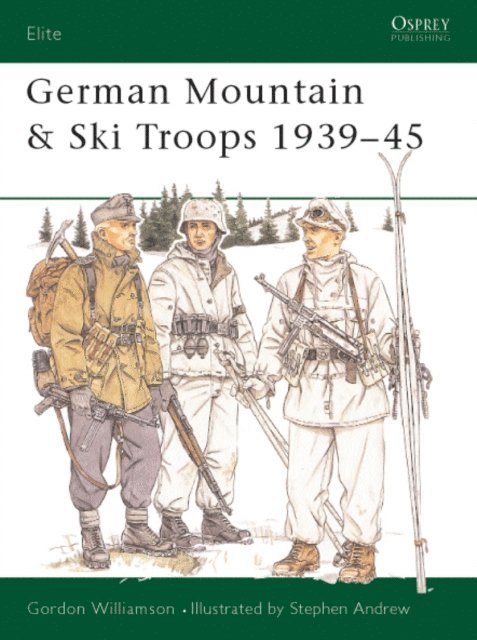
Fighting in every theatre from the burning sands of North Africa to the icy wastes above the arctic circle, the German Army's Gebirgstruppen troops were some of the most effective in the whole of the Wehrmacht.Their esprit de corps and morale were extremely high and their commanders, men such as Eduard Dietl, the 'Hero of Narvik', and Julius 'Papa' Ringel, were idolised by their men. Dietl himself was the first soldier of the Wehrmacht to be awarded the coveted Oakleaves to the Knights Cross of the Iron Cross.In this book Gordon Williamson details the uniforms, organisation and combat histories of these elite troops.
153 kr
Skickas inom 10-15 vardagar
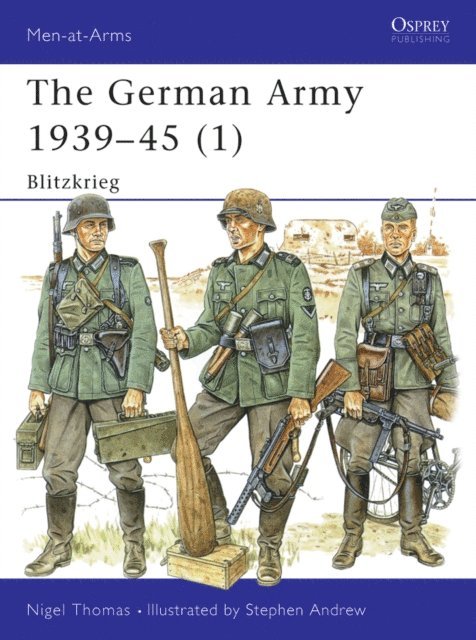
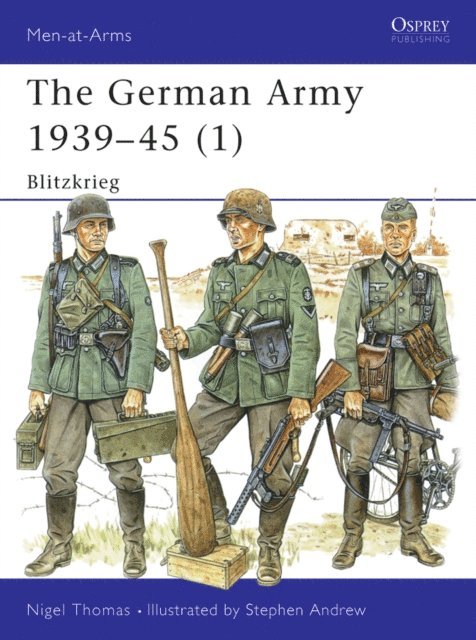
On 1 September 1939, when Germany attacked Poland, the Wehrmacht numbered 3,180,000 men.It eventually expanded to 9,500,000, and on 8-9 May 1945, the date of its unconditional surrender on the Western and Eastern Fronts, it still numbered 7,800,000. The Blitzkrieg period, from 1 September 1939 to 25 June 1940, was 10 months of almost total triumph for the Wehrmacht, as it defeated every country, except Great Britain, that took the field against it.In this first of five volumes examining the German Army of World War Two, Nigel Thomas examines the uniforms and insignia of Hitler's Blitzkrieg forces, including an overview of the Blitzkrieg campaign itself.
153 kr
Skickas inom 10-15 vardagar
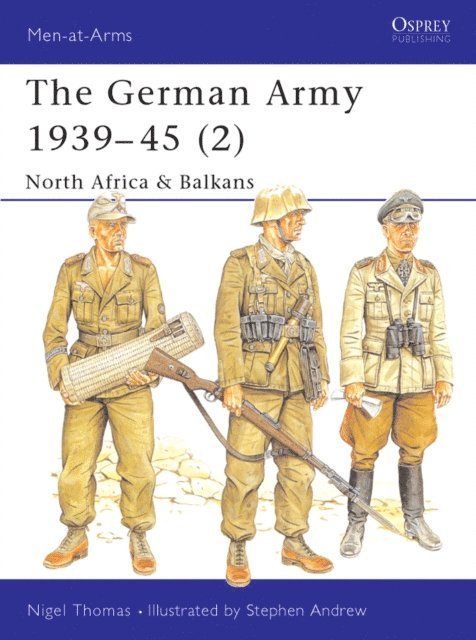
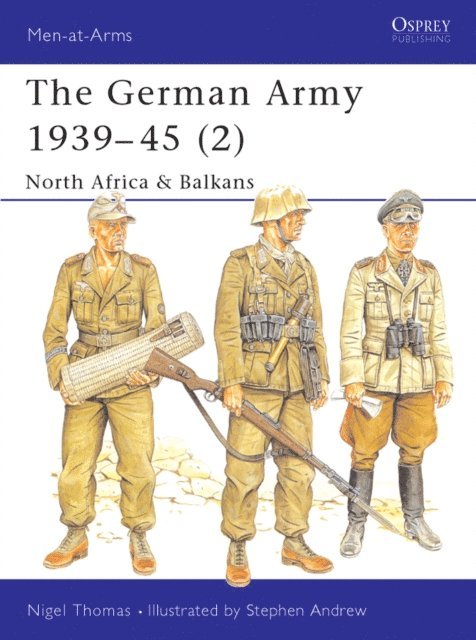
Hitler first considered an invasion of Great Britain in autumn 1940, then scheduled Operation Barbarossa, the conquest of the European part of the Soviet Union, for May 1941.Anxious to emulate Hitler's successes, the Italian dictator Mussolini embarked upon unnecessary military adventures in North Africa and the Balkans, which forced Hitler's intervention, diverting and depleting precious German resources, and a six-week postponement of Barbarossa.In this second of four volumes (Men-at-Arms 311, 316, 326 & 330) on the German Army of the Second World War, Nigel Thomas examines the uniforms and insignia of the forces involved in North Africa and the Balkans.
153 kr
Skickas inom 10-15 vardagar
The fall of the Manchu Empire in 1911 ended thousands of years of Imperial rule and ushered in almost 40 years of conflict in China.From the abdication of Pu-Yi, the last emperor, the invasion of Manchuria by the Japanese, and the 'long march', to the birth of the People's Republic of China in 1949, this book looks in detail at the fighting men, and women, who fought for the communists, imperialists, republicans, nationalists, warlords and the puppet armies.The result is a comprehensive and illuminating work covering a large and complex series of combatants and conflicts.
153 kr
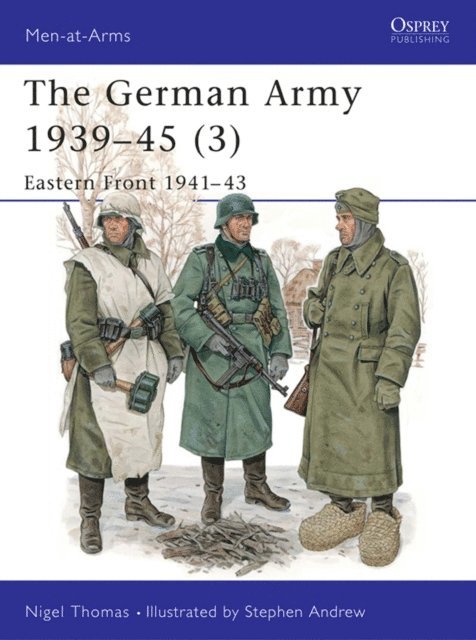
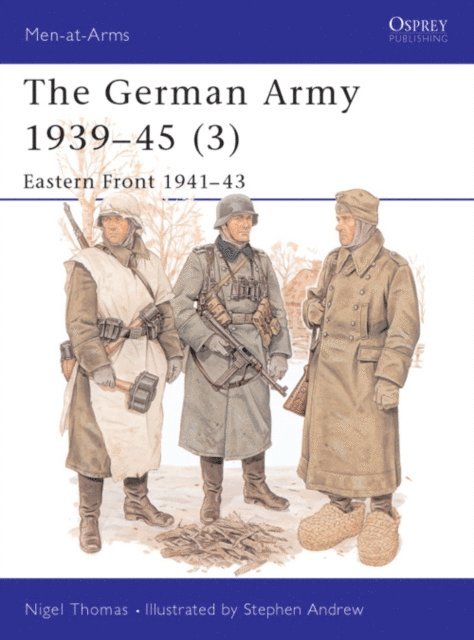
Operation Barbarossa, the attack on the Soviet Union, commenced on 22 June 1941.It became the biggest conflict in military history, with some three million German troops and about 900,000 allies facing almost 4.7 million Soviet troops. The effects would colour postwar European history for the next 50 years.This title examines the history of the conflict, and the organisation, uniforms and insignia of the German Army on the Eastern Front from 1941-43. The book contains numerous illustrations and photographs throughout, including eight fine full-page colour plates by Stephen Andrew.
153 kr
Skickas inom 10-15 vardagar
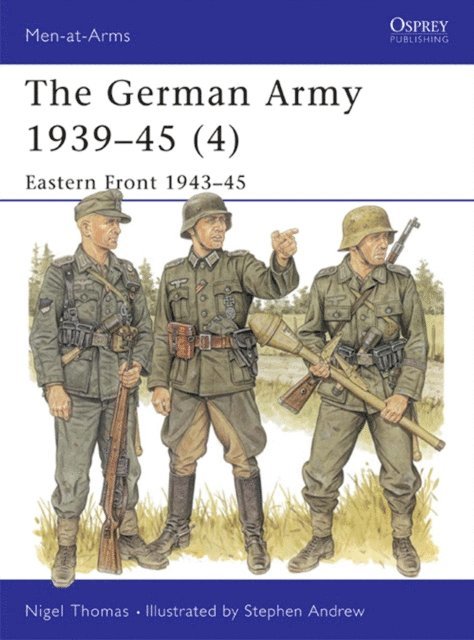
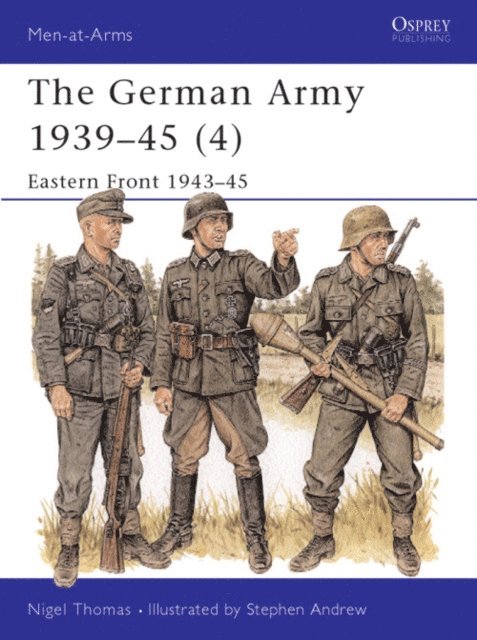
In early 1943 the annihilation of the 6th Army at Stalingrad marked the irreversible turning-point of the war in the East.Despite occasional local successes gained in the face of great odds – testimony to the Wehrmacht's extraordinary resilience – from now on Germany was on the defensive. Despite Hitler's damaging interference the quality of German field leadership, and of new weapons, remained high; but each new Soviet offensive pushed the front line closer to – and finally, across – the borders of the Reich.In this fourth title of their sequence, Nigel Thomas and Stephen Andrew describe and illustrate the developments in unit organization, uniforms and equipment during 1943–45, including information on European and Eastern volunteer units; text and illustrations are supported by detailed tables.
153 kr
Skickas inom 10-15 vardagar
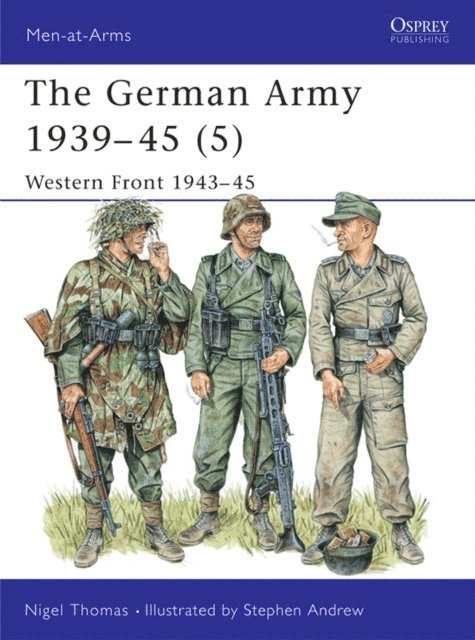
Despite the huge pressure of fighting on three fronts, ever-worsening shortages of manpower and equipment, and Allied command of the skies, Germany's decimated divisions fought on with impressive skill and determination.This period also saw a fascinating mixture of obsolescent, newly designed, and field-made combat clothing which gave the German soldier a radically different appearance from his predecessor of just five years before.Featuring illustrations throughout, this book covers the high command, the developments in unit organisation, the campaigns and the uniforms and equipment of the German Army in the last two years of the war in North-West Europe and Italy.
151 kr
Skickas inom 7-10 vardagar
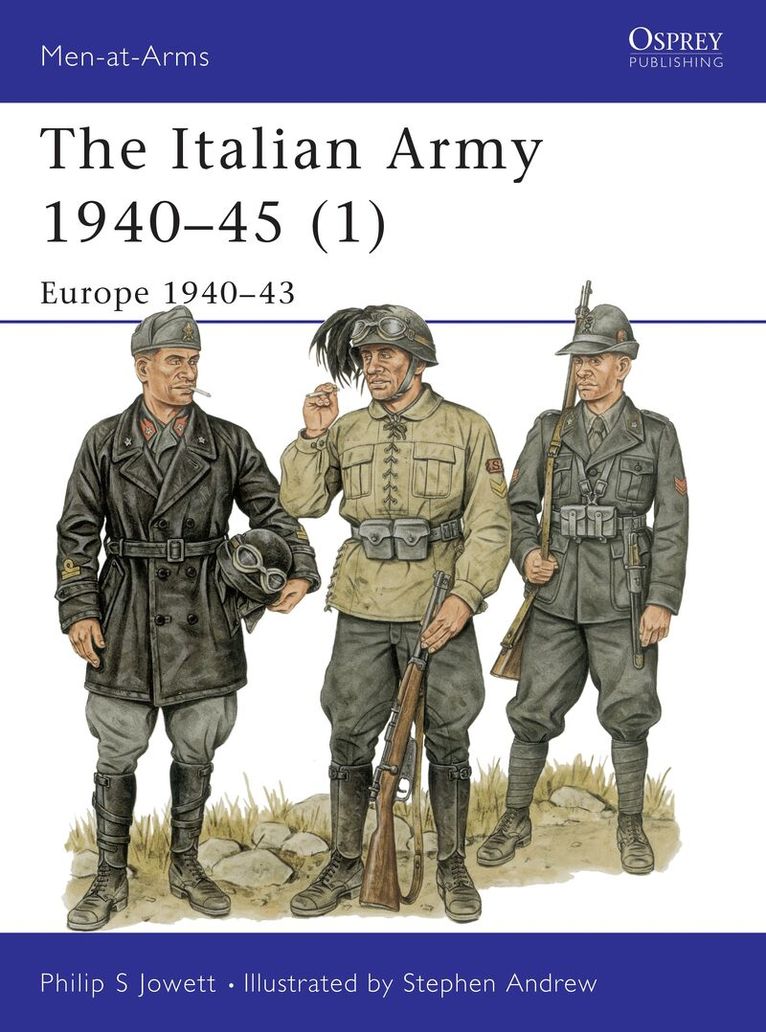
At its peak the Italian Army contributed 2.5 million troops to the Axis war effort.English-speaking readers tend to think of this army in terms of the North African campaign; but far more Italian troops served in other theatres. They invaded, and later bore the major burden of occupying, the Balkan countries; and Italy sent 250,000 troops to fight on the Russian Front. In this, the first of a three-part study, Philip Jowett covers the European theatre including Russia from 1940 to Italy's armistice with the Allies in 1943.Many interesting uniforms, a number of them less often found in print, are meticulously illustrated by Stephen Andrew.