1 900 kr
Skickas inom 7-10 vardagar
1 900 kr
Skickas inom 7-10 vardagar
643 kr
Skickas inom 7-10 vardagar
766 kr
Läs direkt efter köp
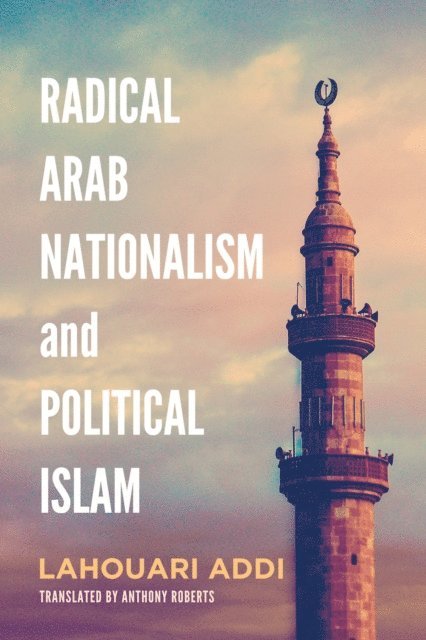
In Radical Arab Nationalism and Political Islam, Lahouari Addi attempts to assess the history and political legacy of radical Arab nationalism to show that it contained the seeds of its own destruction. While the revolutionary regimes promised economic and social development and sought the unity of Arab nations, they did not account for social transformations, such as freedom of speech, that would eventually lead to their decline. But while radical Arab nationalism fell apart, authoritarian populism did not disappear. Today it is expressed by political Islam that aims to achieve the kind of social justice radical Arab nationalism once promised.
Addi creatively links the past and present while also raising questions about the future of Arab countries. Is political Islam the heir of radical Arab nationalism? If political Islam succeeds, will it face the same challenges faced by radical Arab nationalism? Will it be able to implement modernity? The future of Arab countries, Addi writes, depends on this crucial issue.
Published in collaboration with Center for Contemporary Arab Studies, Georgetown University.

281 kr
Skickas
185 kr
Läs direkt efter köp
195 kr
Skickas inom 7-10 vardagar
130 kr
Läs direkt efter köp
371 kr
Skickas inom 7-10 vardagar
315 kr
Skickas inom 7-10 vardagar
315 kr
Skickas inom 7-10 vardagar
894 kr
Lyssna direkt efter köp
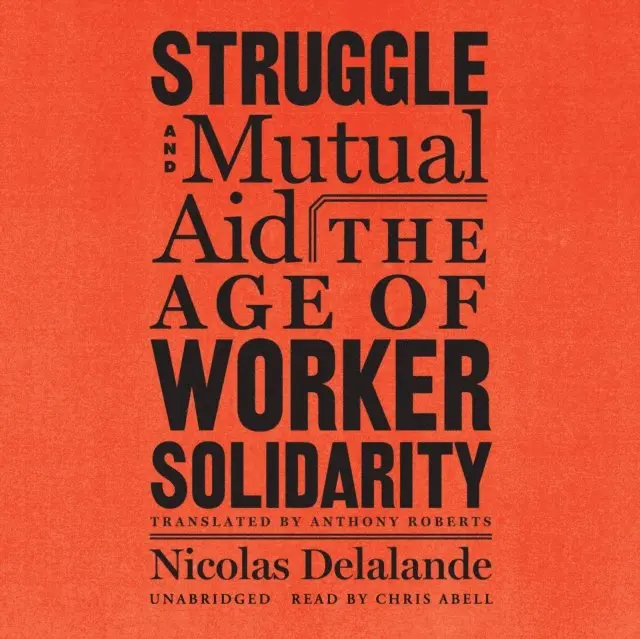
A dynamic historian revisits the workers’ internationals, whose scope and significance are commonly overlooked.
In current debates about globalization, open and borderless elites are often set in opposition to the immobile and protectionist working classes. This view obscures a major historical fact: for around a century—from the 1860s to the 1970s—worker movements were at the cutting edge of internationalism.
The creation in London of the International Workingmen’s Association in 1864 was a turning point. What would later be called the “First International” aspired to bring together European and American workers across languages, nationalities, and trades. It was a major undertaking in a context marked by opening borders, moving capital, and exploding inequalities.
In this urgent, engaging work, historian Nicolas Delalande explores how international worker solidarity developed, what it accomplished in the nineteenth and twentieth centuries, and why it collapsed over the past fifty years, to the point of disappearing from our memories.
298 kr
Lyssna direkt efter köp
A dynamic historian revisits the workers’ internationals, whose scope and significance are commonly overlooked.
In current debates about globalization, open and borderless elites are often set in opposition to the immobile and protectionist working classes. This view obscures a major historical fact: for around a century—from the 1860s to the 1970s—worker movements were at the cutting edge of internationalism.
The creation in London of the International Workingmen’s Association in 1864 was a turning point. What would later be called the “First International” aspired to bring together European and American workers across languages, nationalities, and trades. It was a major undertaking in a context marked by opening borders, moving capital, and exploding inequalities.
In this urgent, engaging work, historian Nicolas Delalande explores how international worker solidarity developed, what it accomplished in the nineteenth and twentieth centuries, and why it collapsed over the past fifty years, to the point of disappearing from our memories.