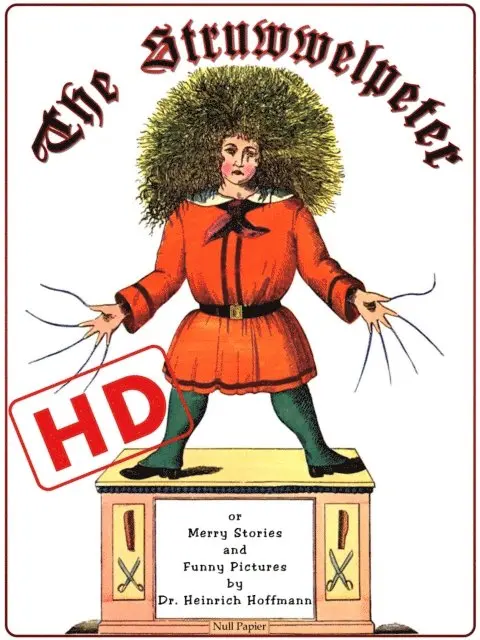
"Der Struwwelpeter" is regarded as the most successful German children''s book ever and has been translated into many languages.In 1844, the doctor Heinrich Hoffmann tried to find a picture book that he could give to his three-year-old son Carl for Christmas. Unfortunately (or fortunately for the reader) he found nothing that seemed appropriate for a child of Carl''s age.Instead, Hoffmann bought an empty notebook and decided to draw a picture book for his son himself.The original manuscript is exhibited in the German National Museum. Soon after the first edition, the children''s book was translated into many languages. There were also parodies or politicizing rewritings early on. From the very beginning, the subject of raising children split the readership and provoked a critical discourse.By the time copyright became free in 1925, more than 540 editions had appeared. The classic English translation is by Mark Twain.Null Papier Verlag
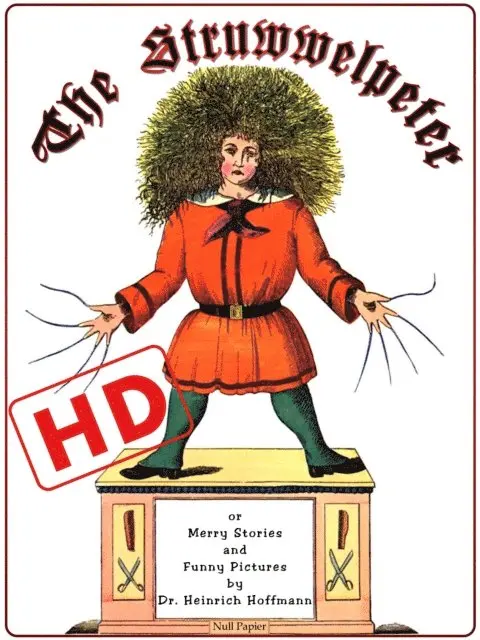
"Der Struwwelpeter" is regarded as the most successful German children''s book ever and has been translated into many languages.In 1844, the doctor Heinrich Hoffmann tried to find a picture book that he could give to his three-year-old son Carl for Christmas. Unfortunately (or fortunately for the reader) he found nothing that seemed appropriate for a child of Carl''s age.Instead, Hoffmann bought an empty notebook and decided to draw a picture book for his son himself.The original manuscript is exhibited in the German National Museum. Soon after the first edition, the children''s book was translated into many languages. There were also parodies or politicizing rewritings early on. From the very beginning, the subject of raising children split the readership and provoked a critical discourse.By the time copyright became free in 1925, more than 540 editions had appeared. The classic English translation is by Mark Twain.Null Papier Verlag
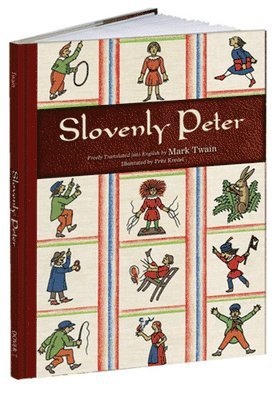
Written in 1845 by German physician Heinrich Hoffmann, Slovenly Peter has entertained generations of readers around the world. This marvelous hardcover edition features Mark Twain's witty translation of the hilarious rhymes that recount the disastrous consequences that befall naughty children. Hoffmann's captivating colour illustrations, adapted by Fritz Kredel from a rare limited edition, complement the comical verses.A Calla Edition, originally published by The Marchbanks Press for the Limited Edition Club, New York, 1935.