• Fri frakt över 249 kr
  • •
  • Snabba leveranser
  • •
  • Billiga böcker
Kundservice

Du är på sajten för privatpersoner.

Företag, bibliotek eller offentlig verksamhet?

Du handlar på classic.bokus.com, där alla dina funktioner finns intakta.
Till classic.bokus.com
Bokus logotyp. Gå till startsidan.
  • Erbjudanden
  • Nyheter
  • Student
  • Topplistor
  • Barn & ungdom
  • Bokus Play
  • E-böcker
  • Pocketböcker
  • Spel & pussel

10% rabatt på allt med kod: NYSTART10 →

Sidfot

Mina sidor

    Hjälp

    • Kundservice
    • Vanliga frågor och svar
    • Frakt och leverans
    • Retur vid ångerrätt
    • Reklamera vara
    • Betalning
    • Köpvillkor
    • Allmänna villkor
    • Information om webbplatsens tillgänglighet

    Om Bokus

    • Om oss
    • Pressrum
    • För studenter
    • För företag
    • För bibliotek och offentlig verksamhet
    • För leverantörer
    • Hållbarhet

    Populärt

    • Aktuella erbjudanden
    • Presentkort
    • Studentlitteratur
    • Nya böcker
    • Topplistor
    • Signerade böcker
    • Engelska böcker

    Inspiration

    • Boktips
    • BookTok
    • Populära bokserier
    • Barnbokskaraktärer
    • Populära författare
    Logotyp för Bokus
    Följ oss på Facebook (extern länk)Följ oss på Instagram (extern länk)Följ oss på YouTube (extern länk)Följ oss på TikTok (extern länk)
    bokus @ CookiesAnpassa cookiesIntegritetspolicyKöpvillkor
    Till Citymail hemsida (extern länk)Till Budbee hemsida (extern länk)Till Postnord hemsida (extern länk)Till Schenker hemsida (extern länk)Till Early Bird hemsida (extern länk)Till Walleys hemsida (extern länk)
    1. Samhälle och politik
    2. Social välfärd och brottslighet
    3. Socialt arbete och välfärd

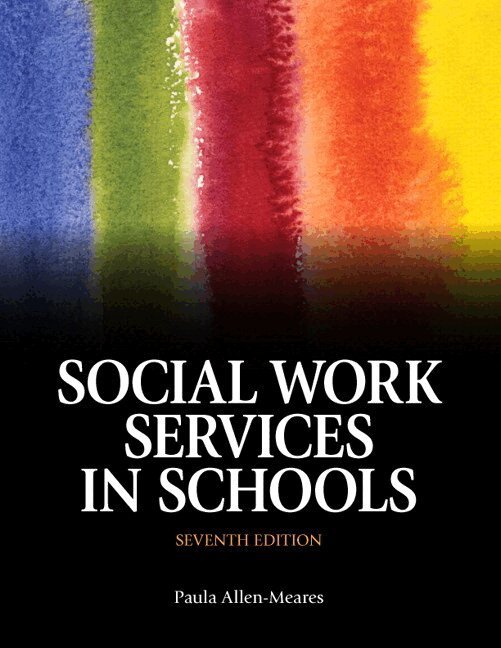
    Social Work Services in Schools with Pearson eText -- Access Card Package

    AvPaula Allen-Meares

    Pearson Education (US)

    2015

    4 265 kr

    Beställningsvara. Skickas inom 3-6 vardagar. Fri frakt över 249 kr.

    Beskrivning

    Discusses social work practices within the US educational system. This title is also available as a more affordable e-book. Social Work Services in Schools discusses major issues confronting education as well as practice directions for the design, delivery, and evaluation of social work in schools. Historical and contemporary concepts, policies, and evidence-based interventions in school social work services are closely examined. The seventh edition provides insight into the proposals and suggestions for a better education system, and offers supplement research and commentary to help reconsider the needs of public schools in the 21st century. Other materials include empirical findings described in professional literature, case illustrations of social work practice in schools, and interviews. Social Work Services in Schools is designed for individuals specializing in social work services in schools, as well as for those who are preparing to work in related agencies of the community.  Instructors, visit pearsonhighered.com/etextbooks to register for your digital examination copy, or contact your Pearson Representative to learn more.    013394476X / 9780133944761 Social Work Services in Schools with Pearson eText -- Access Card PackagePackage consists of:   013400437X / 9780134004372 Social Work Services in Schools, Pearson eText -- Access Card0205917275 / 9780205917273 Social Work Services in Schools

    Produktinformation

    • Märke:Pearson Education (US)
    • Utgivningsdatum:2015-01-28
    • Höjd:10 x 10 x 10 mm
    • Vikt:1 066 g
    • Språk:Engelska
    • Antal sidor:480
    • Upplaga:7
    • Förlag:Pearson Education (US)
    • EAN:9780133944761

    Utforska kategorier

    • Socialt arbete och välfärd inom Samhälle och politik

    Mer om författaren

    Paula Allen-Meares is currently Chancellor of the University of Illinois at Chicago (UIC), Vice President of the University of Illinois, John Corbally Presidential, and Dean Emerita/Professor Emerita of Schools of Social Work and Education at the University of Michigan, Ann Arbor. Her research interests include school social work, the tasks and functions of social workers employed in educational settings and the organizational variables that influence service delivery; improving the mental health/health of poor children and adolescents of color; adolescent pregnancy, including repeat births among adolescents and young adults; health care utilization, and social integration factors which influence sexual behavior and parenthood; and maternal psychiatric disorders and their direct and indirect effects on parenting skills and developmental outcomes of offspring. In addition, she has published on such topics as conceptual frameworks for social work and re-search methodologies. She has served as Principal Investigator on a W. K. Kellogg Foundation Grant, entitled Global Program for Youth, was Co-Principal Investigator of the NIMH Center on Poverty, Risk, and Mental Health, Co-Principal Investigator on an R01 of the National Institute of Mental Health’s Pathways for Youth, Risk and Resilience and is currently Co-Principle Investigator of the Skillman Good Neighborhoods Grant. Dr. Allen-Meares serves as a board member of the New York Academy of Medicine and is a member of the Institute of Medicine of the National Academies (IOM).  Lauren Akers, M.P.P, is a research analyst at Mathematica Policy Research, Inc. Her research and public policy interests include early childhood intervention and education, as well as K-12 education.  Sally Atkins-Burnett, Ph.D., is a Senior Researcher at Mathematica Policy Research, Inc. Her research interests include assessment, early childhood development, dual language learners, and children with disabilities. Her background in teaching children with disabilities and in teacher preparation of special educators, as well as per personal experience as a parent to individuals with disabilities, informs her writing and research.  Ron Avi Astor, Ph.D., is the Richard M. and Ann L. Thor Professor in Urban Social Development. He holds appointments in the schools of Social Work and Education at the University of Southern California. His professional interests include children's understanding of violence, large-scale, city-wide youth empowerment monitoring systems, and school violence interventions, and he has authored over 100 scientific publications and has numerous research projects on school violence.  Rami Benbenishty, Ph.D., is a professor at Bar Ilan School of Social Work in Israel. His work focuses on child welfare and children at risk. He partners with the Israeli Ministry of Education to develop monitoring and intervention systems to improve school climate and prevent school violence in Israel.  Gary L. Bowen, Ph.D., MSW, is a William R. Kenan Distinguished Professor in the School of Social Work at The University of North Carolina at Chapel Hill. He co-directs the School Success Profile project. Dr. Bowen is Past President (2009-2011) of the National Council on Family Relations.  Cynthia Franklin, Ph.D., LCSW, is Stiernberg/Spencer Family Professor in Mental Health and Coordinator of the Clinical Concentration at The University of Texas at Austin, School of Social Work. Dr. Franklin is an imminent researcher and expert in school social work and school mental health practice, with over 125 publications. Some of her most notable contributions include re-search on school social work, the effectiveness of solution-focused brief therapy in schools, and dropout prevention.Mary Beth Harris, Ph.D., LCSW, is a Clinical Associate Professor and Director of the San Die-go Academic Center Campus at the University of Southern California. She has conducted numerous clinical studies and authored a number of seminal publications on adolescent mothers in the school environment. Dr. Harris was a family therapist and administrator in family and school-based services for more than two decades.  Sandra Kopels, J.D., MSW, is a Professor at the University of Illinois at Urbana-Champaign School of Social Work, where her primary teaching assignment is teaching social work students about the law. Her research generally focuses on the law’s impact on the rights of vulnerable clients and the responsibilities of social workers to practice ethically and legally. Her specific focus pertains to the confidentiality of client communications and the disclosure of information in child abuse and duty to warn situations.  Katherine L. Montgomery, Ph.D., MSSW, is an NIMH-funded (T32MH019960) postdoctoral fellow in the Brown School of Social Work at Washington University in Saint Louis. Her re-search coalesces around dissemination and implementation of empirically supported school-based interventions and the treatment and prevention of juvenile delinquency.  Ronald O. Pitner, Ph.D., ACSW, is an Assistant Professor in the College of Social Work, and is in the Faculty Excellence Initiative (FEI) position for African American Health and Social Dis-parities. His current research examines the effects that community-based civic engagement has on residents' perceptions of community ownership, community safety, and positive community development. Dr. Pitner holds a Ph.D. in Social Work and Psychology from the University of Michigan.  Tara Powell, MSW, MPH, is a Ph.D. candidate at The University of Texas School of social work. Her concentration is in school-based mental health, policy, and long-term disaster response. Her research interests include school-based psycho-educational programs for children after disasters, violence prevention, and community mental health. John W. Sipple, PhD, is an Associate Professor in the Department of Development Sociology. His research focuses on the implementation of public policy and the interrelationship between school and community vitality. He directs the Community and Regional Development Institute at Cornell and the New York State Center for Rural Schools.  Danielle C. Swick, Ph.D, MSW, is a Research Assistant Professor at the University of North Carolina at Chapel Hill. Her areas of interest include evidence-based practice, school-based interventions, child and adolescent mental health, and community-engaged research.  Bruce Thyer, Ph.D., MSW, received his MSW from the University of Georgia in 1978 and his Ph.D. in social work and psychology from the University of Michigan in 1982. He is the founding and continuing Editor of the bimonthly journal "Research on Social Work Practice" is a member of the Social Work Academy of the National Academies of Practice. He is a current LCSW and a Board Certified Behavior Analyst.

    Innehållsförteckning

    • In this Section:  I) Brief Detailed Table of ContentsII) Detailed Table of Contents    I) Brief Detailed Table of Contents  Chapter 1. School Social Work: A Historical and Contemporary ViewChapter 2. Major Issues in American SchoolsChapter 3. Perspectives in School Social Work ServicesChapter 4. The Design of Social Work Services: School EnvironmentChapter 5. The Design of Social Work Services: Addressing Student Needs   Chapter 6. The Design of Social Work Services: Responding to Needs of Culture, Race, Gender, and Sexual Orientation Chapter 7. The Delivery of School Social Work Services    Chapter 8. Familiarizing Oneself with Key Groups of Children and Adolescents   Chapter 9. Children with Special Needs    Chapter 10. Student Rights and Control of Behavior    Chapter 11. Violence in Schools Chapter 12. Evaluating School Social Work        II) Detailed Table of Contents  Chapter 1. School Social Work: A Historical and Contemporary ViewThe Profession of Social WorkThe Establishment of Social Work  Chapter 2. Major Issues in American SchoolsPurposes of Public EducationSchool ReformThe School as Community HubFinance  Chapter 3. Perspectives in School Social Work ServicesAn Ecosystems Perspective Ecological TheoryGeneral Systems Theory  Chapter 4. The Design of Social Work Services: School EnvironmentWorking within A SchoolPolitical Dimensions in the OrganizationThe Effects of School Culture and CollaborationServices Evaluation and Reporting  Chapter 5. The Design of Social Work Services: Addressing Student Needs   Socioeconomic PatternsMental Health, Behavioral, and Learning DifficultiesAssessment as the Initial Process in Designing ServicesAssessing and Engaging the FamilyPolicies Affecting Services to Individual Students and FamiliesCollaborating with the Community  Chapter 6. The Design of Social Work Services: Responding to Needs of Culture, Race, Gender, and Sexual Orientation Culturally Grounded AssessmentDesigning Empirically Supported Culturally Grounded InterventionsBilingual and Bicultural EducationGender in EducationSexual Orientation and School-Based Social WorkEmpirically Supported Interventions that Work  Chapter 7. The Delivery of School Social Work Services    Emerging Roles of School Social Workers within Expanded School Mental Health and School-Linked ServicesEvidence-Based Practice and Empirically Supported InterventionsCurrent Intervention RolesSpecialized Intervention Roles  Chapter 8. Familiarizing Oneself with Key Groups of Children and Adolescents   Enrollment and StaffingThe Concept of Pupil Life TasksPupil Life TasksAcademic and Social ChallengesChildren with Challenges at HomeChildren Facing AbuseAdolescents, Sex, and Sexuality  Chapter 9. Children with Special Needs    Key Legislation Supporting Students with Special NeedsNo Child Left Behind Act of 2001Jacob Javits Gifted and Talented Education ActIssues in Implementation: Renewed Attention to the Primary of Emotional Development  Chapter 10. Student Rights and Control of Behavior    Sources of School Districts’ AuthorityBasic Constitutional RightsDiscipline in the SchoolsSchool Attendance  Chapter 11. Violence in Schools Major Trends and IssuesTypes of InterventionsCommon Types of Interventions that Schools and School Social Workers are UsingEmpirically-Supported Prevention and Intervention Programs  Chapter 12. Evaluating School Social Work    Designing and Implementing Evaluation Studies Selected Types of Single-System Designs Useful in Evaluating School Social Work ServicesSelected Group Research Designs for Evaluating School Social Work PracticeEthical and Human Subjects Issues in Evaluation  Annotated Bibliography of Evaluation Resources Appendix I    An Example of Rural PracticeAppendix II  An Example of Urban Practice        Appendix III Assessment of Adaptive Behavior and an Individual Education Program