• Fri frakt över 249 kr
  • •
  • Snabba leveranser
  • •
  • Billiga böcker
Kundservice

Du är på sajten för privatpersoner.

Företag, bibliotek eller offentlig verksamhet?

Du handlar på classic.bokus.com, där alla dina funktioner finns intakta.
Till classic.bokus.com
Bokus logotyp. Gå till startsidan.
  • Erbjudanden
  • Nyheter
  • Student
  • Topplistor
  • Barn & ungdom
  • Bokus Play
  • E-böcker
  • Pocketböcker
  • Spel & pussel

Må bättre, för mindre! Upp till 50% rabatt på hälsoböcker

Sidfot

Mina sidor

    Hjälp

    • Kundservice
    • Vanliga frågor och svar
    • Frakt och leverans
    • Retur vid ångerrätt
    • Reklamera vara
    • Betalning
    • Köpvillkor
    • Allmänna villkor
    • Information om webbplatsens tillgänglighet

    Om Bokus

    • Om oss
    • Pressrum
    • För studenter
    • För företag
    • För bibliotek och offentlig verksamhet
    • För leverantörer
    • Hållbarhet

    Populärt

    • Aktuella erbjudanden
    • Presentkort
    • Studentlitteratur
    • Nya böcker
    • Topplistor
    • Signerade böcker
    • Engelska böcker

    Inspiration

    • Boktips
    • BookTok
    • Populära bokserier
    • Barnbokskaraktärer
    • Populära författare
    Logotyp för Bokus
    Följ oss på Facebook (extern länk)Följ oss på Instagram (extern länk)Följ oss på YouTube (extern länk)Följ oss på TikTok (extern länk)
    bokus @ CookiesAnpassa cookiesIntegritetspolicyKöpvillkor
    Till Citymail hemsida (extern länk)Till Budbee hemsida (extern länk)Till Postnord hemsida (extern länk)Till Schenker hemsida (extern länk)Till Early Bird hemsida (extern länk)Till Walleys hemsida (extern länk)
    1. Medicin
    2. Andra medicinska specialiteter
    3. Behandling och behandlingsmetoder
    4. Tal- och språkstörningar

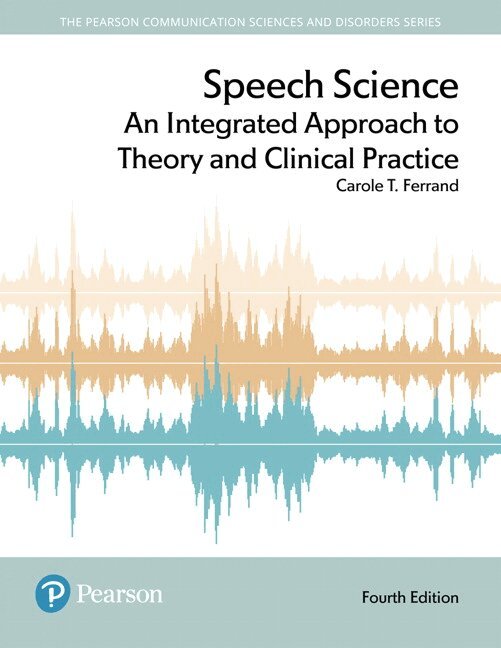
    Speech Science

    An Integrated Approach to Theory and Clinical Practice, with Enhanced Pearson eText -- Access Card Package

    AvCarole Ferrand

    Pearson Education

    2017

    2 995 kr

    Tillfälligt slut

    Fler format och utgåvor

    Häftad

    2 025 kr

    Övrigt

    Tillf. slut

    Övrigt

    Tillf. slut

    Beskrivning

    NOTE: Used books, rentals, and purchases made outside of Pearson

    If purchasing or renting from companies other than Pearson, the access codes for the Enhanced Pearson eText may not be included, may be incorrect, or may be previously redeemed. Check with the seller before completing your purchase. 


    This package includes the Enhanced Pearson eText and the bound book version.


    Speech Science: An Integrated Approach to Theory and Clinical Practice, 4th Edition focuses on the relationship between the scientific study of speech production and perception and the application of the material to the effective evaluation and treatment of communication disorders. Theoretical material is presented first, followed by clinical application chapters highlighting specific disorders. The organization of chapters in the new edition now more closely follows the speech subsystems approach, beginning with basic acoustics, and moving on to the respiratory system, phonatory system, articulatory/resonatory system, auditory system, and nervous system. As in previous editions, the book concludes with information on classic and current models and theories of speech production and perception. New and revised full color illustrations and larger spectrograms supplement the concepts presented by clearly depicting scientific and anatomical material and ensuring understanding of the links between the underlying science and human communicative behavior.


    Improve mastery and retention with the Enhanced Pearson eText*
    The Enhanced Pearson eText provides a rich, interactive learning environment designed to improve student mastery of content. The Enhanced Pearson eText is:

    • Engaging. The new interactive, multimedia learning features were developed by the authors and other subject-matter experts to deepen and enrich the learning experience.
    • Convenient. Enjoy instant online access from your computer or download the Pearson eText App to read on or offline on your iPad® and Android® tablet.*
    • Affordable. Experience the advantages of the Enhanced Pearson eText along with all the benefits of print for 40% to 50% less than a print bound book.

    *The Enhanced eText features are only available in the Pearson eText format. They are not available in third-party eTexts or downloads.

    *The Pearson eText App is available on Google Play and in the App Store. It requires Android OS 3.1-4, a 7” or 10” tablet, or iPad iOS 5.0 or later.


    0134675444 / 9780134675442 Speech Science: An Integrated Approach to Theory and Clinical Practice, with Enhanced Pearson eText -- Access Card Package


    Package consists of:

    • 0134481453 / 9780134481456 Speech Science: An Integrated Approach to Theory and Clinical Practice
    • 0134675436 / 9780134675435 Speech Science: An Integrated Approach to Theory and Clinical Practice, Enhanced Pearson eText -- Access Card


    Produktinformation

    • Märke:Pearson Education
    • Utgivningsdatum:2017-01-23
    • Höjd:213 x 272 x 20 mm
    • Vikt:1 089 g
    • Språk:Engelska
    • Antal sidor:512
    • Upplaga:4
    • Förlag:Pearson Education
    • EAN:9780134675442

    Utforska kategorier

    • Tal- och språkstörningar inom Medicin
    • Lärarutbildning inom Psykologi och pedagogik
    • Audiologi och otologi inom Medicin

    Mer om författaren

    Dr. Carole Ferrand earned her BA in English at the University of the Witwatersrand in Johannesburg, and her MS and PhD in Communication Sciences and Disorders from the Pennsylvania State University. She teaches undergraduate and graduate courses in speech science, and a graduate level course in Voice Disorders. Her research focuses on acoustic attributes of normal and disordered speech production. In addition to  Speech Science: An Integrated Approach to Theory and Clinical Practice, she is the author of the textbook, Voice Disorders: Scope of Theory and Practice. When not writing books, Dr. Ferrand enjoys reading historical fiction, a capella singing, and playing banjo.

    Innehållsförteckning

    • BRIEF TABLE OF CONTENTSCHAPTER 1: The Nature of SoundCHAPTER 2: The Respiratory SystemCHAPTER 3: Clinical Application: Evaluation and Treatment of Respiratory DisordersCHAPTER 4: The Phonatory/Laryngeal SystemCHAPTER 5: Clinical Application: Evaluation and Treatment of Phonatory DisordersCHAPTER 6: The Articulatory/Resonatory SystemCHAPTER 7: Clinical Application: Evaluation and Treatment of Articulatory and Resonance DisordersCHAPTER 8: The Auditory SystemCHAPTER 9: Clinical Application: Evaluation and Treatment of Disorders Related to Hearing ImpairmentCHAPTER 10: The Nervous SystemCHAPTER 11: Clinical Application: Brain Imaging in the Evaluation and Treatment of Disorders of the Nervous SystemCHAPTER 12: Models and Theories of Speech Production and Perception DETAILED TABLE OF CONTENTSForeword xiiiPreface xvAcknowledgments xviiIntroduction xix Chapter 1: The Nature of Sound   1International System of Units  2 Basic Physics Concepts  3Mass, Force, Weight, Volume, and Density  3Speed, Velocity, Momentum, Acceleration, (and Inertia  5Elasticity and Stiffness  5Work, Energy, Power, and Intensity  5Pressure  6 Sound: Changes in Air Pressure  7 Behavior of Air  7Air Pressure  7Airflow  8Relationship between Air Pressure, Air Volume, and Air Density  8The Nature of Sound  9Why Molecules Keep Vibrating: Elasticity, Inertia, and Friction  11Sound Propagation  13Wave Motion of Sound  13Longitudinal Versus Transverse Waves  13Mass/Spring System  15Simple Harmonic Motion  15Frequency, Period, Wavelength, Velocity, and Amplitude  16Visually Depicting Sound Waves: Waveforms  18 Pure Tones and Complex Sounds  21 Pure Tones  21Complex Sounds  21Periodic Versus Aperiodic Complex Waves  21Visually Depicting Sound Waves: Spectra  23 Sound Absorption, Reflection, Refraction, and Diffraction  24Constructive and Destructive Interference  28Attributes of Sounds  31 Frequency and Pitch  31Frequency: Human Range of Hearing  32Amplitude, Intensity, and Loudness  32 Decibel Scale  34 Logarithms and Ratios  34Perception on the dB Scale  36Advantages of the Decibel Scale  37Applications of the Decibel Scale  38 Resonance  39 Acoustic Resonance  42 Tube Resonance and Standing Waves  44 Acoustic Resonators as Filters  47 Bandwidth  48 Cutoff Frequencies  49 Resonance Curves  49 Parameters of a Filter  49 Types of Filters  50  Summary 53Review Exercises 54 Chapter 2: The Respiratory System      55Pulmonary Apparatus  55 Bronchial Tree  56Chest Wall  59 Muscles of Respiration  62 Accessory Muscles of Respiration  62Muscles of the Abdomen  62 Pleural Linkage  64Moving Air Into and Out of the Lungs  66 Inhalation  66Exhalation  67Rate of Breathing  67 Lung Volumes and Capacities  68 Resting Expiratory Level  69Lung Volumes  69Tidal Volume  70Inspiratory Reserve Volume  70Expiratory Reserve Volume  71Residual Volume  71Dead Air  72 Lung Capacities  72 Vital Capacity  72Functional Residual Capacity  72Inspiratory Capacity  72Total Lung Capacity  73 Differences between Breathing for Life and Breathing for Speech  75 Location of Air Intake  76Ratio of Time for Inhalation Versus (Exhalation  77Volume of Air Inhaled and Exhaled (per Cycle  77Muscle Activity for Exhalation  78Chest Wall Shape  79 Breathing Patterns for Speech  80 Speech Breathing for Isolated Vowels and Connected Speech  82 Changes in Speech Breathing Over the Life Span  83 Features of Speech Breathing in Children  83Features of Speech Breathing in Older Adults  84 Summary 86Review Exercises 87 Chapter 3: Clinical Application: Evaluation and Treatment of Respiratory Disorders 88Measurement of Respiratory Variables  88 Pulmonary Function Testing  89Respiratory Kinematic Analysis  92Air Pressures  94Airflow  95 Classification of Respiratory Problems  96 Symptoms of Respiratory Disorders  97 Respiratory Function and Speech Production in Selected Disorders  98 Principles of Clinical Management of Speech Breathing Disorders  98 Neurological Disorders  99 Parkinson’s Disease  99 Cerebellar Disease  101 Cervical Spinal Cord Injury  102 Cerebral Palsy  103 Mechanical Ventilation  104 Voice Disorders  106 Stuttering  108 Asthma  111 Paradoxical Vocal Fold Motion  113 Summary 115Review Exercises 115Integrative Case Studies 116 Chapter 4: The Phonatory/Laryngeal System 118Laryngeal Skeleton  118 Bones, Cartilages, and Membranes  118Joints of the Larynx  123 Valves within the Larynx  127 Aryepiglottic Folds  127False Vocal Folds  127True Vocal Folds  127Cover–Body Model  129Glottis  130 Muscles of the Larynx  130 Extrinsic Muscles  130Intrinsic Muscles  131 Myoelastic–Aerodynamic Theory of Phonation  137 Models of Vocal Fold Vibration  138Features of Vocal Fold Vibration  139 Changes in the Phonatory/Laryngeal System Over the Life Span  144 Infancy and Childhood  144Puberty  144Adulthood  145 Vocal Quality  147 Normal Voice Quality  148Abnormal Voice Qualities  149 Vocal Registers  151 Physiologic and Acoustic Characteristics of Registers  152Use of Different Registers in Singing and Speaking  153 Summary 154Review Exercises 154 Chapter 5: Clinical Application: Evaluation and Treatment of Phonatory Disorders 155Measurement of Phonatory Variables  155 Acoustic Analysis  155Perturbation Measures  160Noise Measures  162 Laryngeal Visualization Methods  163 Electroglottography  163EGG and Register  167EGG Slope Quotients  167Techniques for Visualizing the Larynx  170Advantages of Acoustic and Visual Analysis of Phonatory Function  174 Evaluation and Treatment of Communication Disorders Involving the Phonatory System  176 Neurological Disorders  176Benign Mucosal Lesions  181Laryngeal Cancer  183Hearing Impairment  186Transsexual Voice  187Stuttering  188 Summary 191Review Exercises 192Integrative Case Studies 192 Chapter 6: The Articulatory/Resonatory System      195Articulators of the Vocal Tract  195 Oral Cavity  196Lips  197Mandible  198Maxilla  199Teeth  200Hard Palate  203Soft Palate  203Tongue  207 Pharynx  211 Muscles of the Pharynx  212Nasal Cavities  213Valves of the Vocal Tract  214 Traditional Classification System of Consonants and Vowels  215 Place of Articulation of English (Consonants  215Manner of Articulation of English (Consonants  216Voicing  221Vowel Classification  221 Vocal Tract Resonance  223 Characteristics of the Vocal Tract Resonator  224Source-Filter Theory of Vowel Production  226Formant Frequencies Related to Oral and Pharyngeal Volumes  228Vowel Formant Frequencies  231F1/F2 Plots  233 Spectrographic Analysis  234 Narrowband and Wideband Spectrograms  235Relationship Between Articulation and Spectrographic Characteristics of Vowels and Consonants  235Vowels  236Diphthongs  236Nasals  238Glides  239Liquids  239Stops  240Fricatives  244Affricates  246 The Production of Speech Sounds in Context  246 Coarticulation  247Speaking Rate  249Suprasegmentals  249 Summary 253Review Exercises 253 Chapter 7: Clinical Application: Evaluation and Treatment of Articulatory and Resonance Disorders 255Articulation, Intelligibility, and Instrumental Measurement  255 Ultrasound  256Electropalatography and Glossometry  257Magnetic Resonance Imaging  258Electromagnetic Articulography  258 Evaluation and Treatment of Communication Disorders Involving Articulation and Resonation  260 Dysarthria/Apraxia  260Hearing Impairment  267Cochlear Implantation  270Speech Sound Disorders  272Cleft Palate  274Stuttering  275Resonance Problems  76 Summary 278Review Exercises 278Integrative Case Studies 279 Chapter 8: The Auditory System 282Anatomy of the Ear  282 Outer Ear  282Tympanic Membrane  284Middle Ear  284Inner Ear  288 Perception of Speech  293 Segmentation Problem  293Role of Redundancy in Speech (Perception  294Instrumental Analysis of Vowel and Consonant Perception  294 Perception of Vowels and Diphthongs  295 Formant Frequency Relationships  295Diphthongs  297 Consonants  298 Categorical Perception  298Multiple Acoustic Cues  299Influence of Coarticulation  299 Perception of Consonants  300 Liquids  300Glides  300Nasals  300Stops  301Fricatives  303Affricates  303 Summary 304Review Exercises 304 Chapter 9: Clinical Application: Evaluation and Treatment of Disorders Related to Hearing Impairment 305Types of Hearing Loss  305Diagnosis of Hearing Impairment  306 Immittance Audiometry  306Tympanometry  307Static-Acoustic Middle Ear Admittance  311Acoustic Reflex Testing  311Otoacoustic Emissions Testing  312Auditory Brain Stem Response Testing  313 Hearing Loss and Speech Perception  314 Clinical Application  314Phoneme Recognition in Speakers with Hearing Loss  315Acoustic Cues Used in Phoneme (Recognition  316Vowel Perception  316Consonant Perception  317 Cochlear Implants  317Clinical Application  320Otitis Media and Speech Perception  320Language and Reading Disability and Speech Perception  321 Temporal Processing Problems  322Developmental Dyslexia and Speech Perception  324 Articulatory Problems and Speech Perception  324 Clinical Application  326 Summary 326Review Exercises 327Integrative Case Studies 327Chapter 10 Chapter 10: The Nervous System 328Brain Tissue  329 Glial Cells  329Neurons  330 Neuronal Function  333 Neurotransmission  333 Central and Peripheral Nervous (Systems  338 Central Nervous System  339 Functional Brain Anatomy  342Cortex  342Cortical Connections  344Lobes of the Brain  345Subcortical Areas of the Brain  350 Basal Nuclei  350Thalamus  352Hypothalamus  353 Brain Stem  354 Midbrain  355Pons  355Medulla  355 Cerebellum  356Spinal Cord  357Spinal Nerves  361Cranial Nerves  362 CN V: Trigeminal  363CN VII: Facial  365CN VIII: Vestibulocochlear  365CN IX: Glossopharyngeal  365CN X: Vagus  365CN XII: Hypoglossal  367 Blood Supply to the Brain  368Motor Control Systems Involved in Speech Production  369 Motor Cortex  370Upper and Lower Motor Neurons  372Direct and Indirect Systems  375Motor Units  375 Principals of Motor Control  378 Role of Feedback and Feedforward in Speech Motor Control  378Role of Sensory Information in Speech Motor Control  379Efference Copy  379 Summary 380Review Exercises 380 Chapter 11: Clinical Application: Brain Imaging in the Evaluation and Treatment of Disorders of the Nervous System 381Techniques for Imaging Brain (Structure  382 Computerized Tomography  382Magnetic Resonance Imaging  383 Techniques for Imaging Brain Function  384 Functional Magnetic Resonance Imaging  384Positron Emission Tomography  385Single Photon Emission Computed Tomography  385Electroencephalography and Evoked Potentials  386Transcranial Magnetic Stimulation  388 Use of Brain Imaging Techniques in Communication Disorders  390 Stuttering  390Stroke  391Parkinson’s Disease  392Multiple Sclerosis  393Alzheimer’s Disease  394 Summary 395Review Exercises 395Integrative Case Studies 396 Chapter 12: Models and Theories of Speech Production and Perception 397Models and Theories  398 Models  398Theories  399 Issues Related to Organization and Regulation of Speech Motor Control  400 The Serial-Order Issue  400Degrees of Freedom  401Context-Sensitivity Problem  401 Models and Theories of Speech Production  401 Dynamic Systems Models  401Connectionist Models  402Spatial and Articulatory Target Models  402Feedback and Feedforward Models  404The DIVA Model  405 Speech Perception  406 Specialization of Speech Perception  406Infant Perception  407 Models and Theories of Speech Perception  408 Acoustic Invariance Theory  408Direct Realism  409TRACE Model  409Logogen Theory  410Cohort Theory  410Fuzzy Logical Model of Perception  410Native Language Magnet Theory  411Motor Theory  411 Summary 413Review Exercises 414Glossary 415References 431 Index 459