• Fri frakt över 249 kr
  • •
  • Snabba leveranser
  • •
  • Billiga böcker
Kundservice

Du är på sajten för privatpersoner.

Företag, bibliotek eller offentlig verksamhet?

Du handlar på classic.bokus.com, där alla dina funktioner finns intakta.
Till classic.bokus.com
Bokus logotyp. Gå till startsidan.
  • Erbjudanden
  • Nyheter
  • Student
  • Topplistor
  • Barn & ungdom
  • Bokus Play
  • E-böcker
  • Pocketböcker
  • Spel & pussel

10% rabatt på allt med kod: NYSTART10 →

Sidfot

Mina sidor

    Hjälp

    • Kundservice
    • Vanliga frågor och svar
    • Frakt och leverans
    • Retur vid ångerrätt
    • Reklamera vara
    • Betalning
    • Köpvillkor
    • Allmänna villkor
    • Information om webbplatsens tillgänglighet

    Om Bokus

    • Om oss
    • Pressrum
    • För studenter
    • För företag
    • För bibliotek och offentlig verksamhet
    • För leverantörer
    • Hållbarhet

    Populärt

    • Aktuella erbjudanden
    • Presentkort
    • Studentlitteratur
    • Nya böcker
    • Topplistor
    • Signerade böcker
    • Engelska böcker

    Inspiration

    • Boktips
    • BookTok
    • Populära bokserier
    • Barnbokskaraktärer
    • Populära författare
    Logotyp för Bokus
    Följ oss på Facebook (extern länk)Följ oss på Instagram (extern länk)Följ oss på YouTube (extern länk)Följ oss på TikTok (extern länk)
    bokus @ CookiesAnpassa cookiesIntegritetspolicyKöpvillkor
    Till Citymail hemsida (extern länk)Till Budbee hemsida (extern länk)Till Postnord hemsida (extern länk)Till Schenker hemsida (extern länk)Till Early Bird hemsida (extern länk)Till Walleys hemsida (extern länk)
    1. Naturvetenskap och teknik
    2. Matematik och naturvetenskap
    3. Kemi

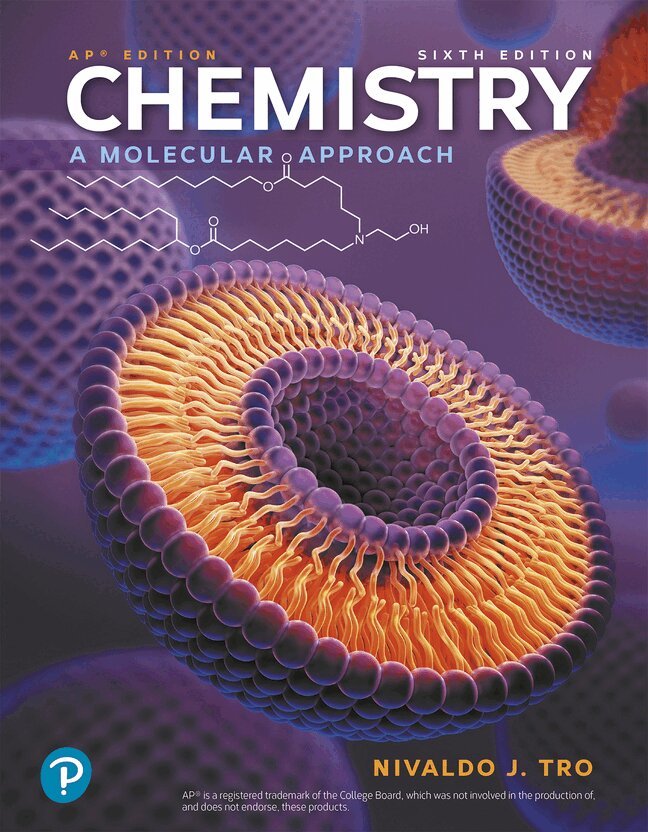
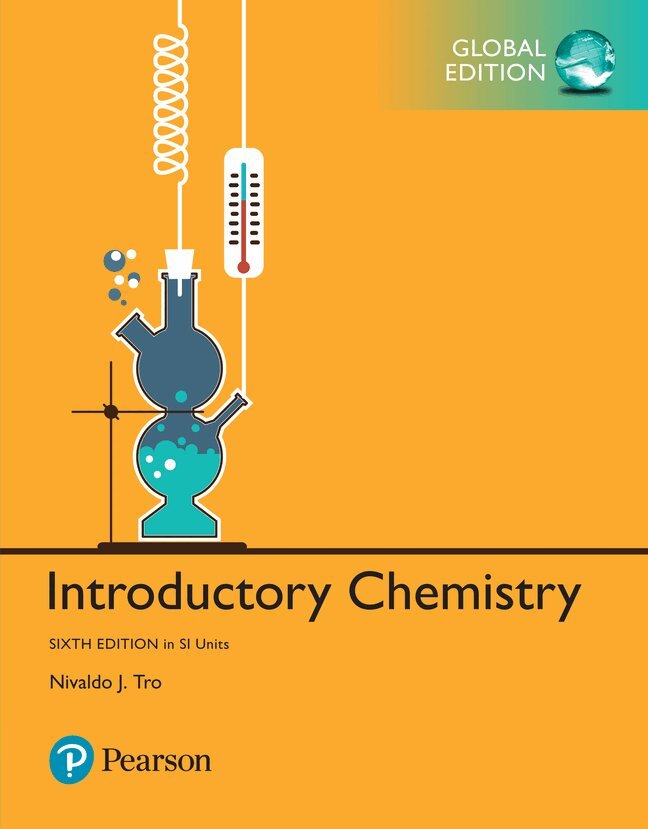
    Introductory Chemistry Essentials

    AvNivaldo Tro

    Pearson Education

    2018

    632 kr

    Tillfälligt slut

    Beskrivning

    Builds 21st century and problem-solving skills, preparing students for success
    Now in its 6th edition, the best-selling Introductory Chemistry Essentials continues to encourage student interest by showing how chemistry manifests in students' daily lives. Author Nivaldo Tro draws upon his classroom experience as an award-winning instructor to extend chemistry from the laboratory to the student's world, capturing student attention with relevant applications and an engaging writing style. The text provides a superior teaching and learning experience, enabling deep conceptual understanding, fostering the development of problem-solving skills, and encouraging interest in chemistry with concrete examples. Extending chemistry from the lab to the student's world, the text reveals that anyone can master chemistry.

    DIGITAL UPDATE available for Fall 2020 classes
    Pearson eText has been updated to provide new pedagogy that enhances the student experience.

    Pearson eText is an easy-to-use digital textbook that you can purchase on your own or instructors can assign for their course. The mobile app lets you keep on learning, no matter where your day takes you -- even offline. You can also add highlights, bookmarks, and notes in your Pearson eText to study how you like.

    NOTE: This ISBN is for the Pearson eText access card. Pearson eText is a fully digital delivery of Pearson content. Before purchasing, check that you have the correct ISBN. To register for and use Pearson eText, you may also need a course invite link, which your instructor will provide. Follow the instructions provided on the access card to learn more.

    Produktinformation

    • Märke:Pearson Education
    • Utgivningsdatum:2018-08-08
    • Språk:Engelska
    • Antal sidor:840
    • Upplaga:6
    • Förlag:Pearson Education
    • EAN:9780135214305

    Utforska kategorier

    • Kemi inom Naturvetenskap och teknik

    Innehållsförteckning

    • Table of Contents The Chemical World 1.1 Sand and Water1.2 Chemicals Compose Ordinary Things1.3 The Scientific Method: How Chemists Think1.4 Analyzing and Interpreting Data1.5 A Beginning Chemist: How to SucceedMeasurement and Problem Solving 2.1 The Metric Mix-up: A $125 Million Unit Error2.2 Scientific Notation: Writing Large and Small Numbers2.3 Significant Figures: Writing Numbers to Reflect Precision2.4 Significant Figures in Calculations2.5 The Basic Units of Measurement2.6 Problem Solving and Unit Conversion2.7 Solving Multistep Unit Conversion Problems2.8 Unit Conversion in Both the Numerator and Denominator2.9 Units Raised to a Power2.10 Density2.11 Numerical Problem-Solving Strategies and the Solution MapMatter and Energy 3.1 In Your Room3.2 What Is Matter?3.3 Classifying Matter According to Its State: Solid, Liquid, and Gas3.4 Classifying Matter According to Its Composition: Elements, Compounds, and Mixtures3.5 Differences in Matter: Physical and Chemical Properties3.6 Changes in Matter: Physical and Chemical Changes3.7 Conservation of Mass: There Is No New Matter3.8 Energy3.9 Energy and Chemical and Physical Change3.10 Temperature: Random Motion of Molecules and Atoms3.11 Temperature Changes: Heat Capacity3.12 Energy and Heat Capacity CalculationsAtoms and Elements 4.1 Experiencing Atoms at Tiburon4.2 Indivisible: The Atomic Theory4.3 The Nuclear Atom4.4 The Properties of Protons, Neutrons, and Electrons4.5 Elements: Defined by Their Numbers of Protons4.6 Looking for Patterns: The Periodic Law and the Periodic Table4.7 Ions: Losing and Gaining Electrons4.8 Isotopes: When the Number of Neutrons Varies4.9 Atomic Mass: The Average Mass of an Element’s AtomsMolecules and Compounds 5.1 Sugar and Salt5.2 Compounds Display Constant Composition5.3 Chemical Formulas: How to Represent Compounds5.4 A Molecular View of Elements and Compounds5.5 Writing Formulas for Ionic Compounds5.6 Nomenclature: Naming Compounds5.7 Naming Ionic Compounds5.8 Naming Molecular Compounds5.9 Naming Acids5.10 Nomenclature Summary5.11 Formula Mass: The Mass of a Molecule or Formula UnitChemical Composition 6.1 How Much Sodium?6.2 Counting Nails by the Pound6.3 Counting Atoms by the Gram6.4 Counting Molecules by the Gram6.5 Chemical Formulas as Conversion Factors6.6 Mass Percent Composition of Compounds6.7 Mass Percent Composition from a Chemical Formula6.8 Calculating Empirical Formulas for Compounds6.9 Calculating Molecular Formulas for CompoundsChemical Reactions 7.1 Grade School Volcanoes, Automobiles, and Laundry Detergents7.2 Evidence of a Chemical Reaction7.3 The Chemical Equation7.4 How to Write Balanced Chemical Equations7.5 Aqueous Solutions and Solubility: Compounds Dissolved in Water7.6 Precipitation Reactions: Reactions in Aqueous Solution That Form a Solid7.7 Writing Chemical Equations for Reactions in Solution: Molecular, Complete Ionic, and Net Ionic Equations7.8 Acid–Base and Gas Evolution Reactions7.9 Oxidation–Reduction Reactions7.10 Classifying Chemical ReactionsQuantities in Chemical Reactions 8.1 Climate Change: Too Much Carbon Dioxide8.2 Making Pancakes: Relationships between Ingredients8.3 Making Molecules: Mole-to-Mole Conversions8.4 Making Molecules: Mass-to-Mass Conversions8.5 More Pancakes: Limiting Reactant, Theoretical Yield, and Percent Yield8.6 Limiting Reactant[JJ2] , Theoretical Yield, and Percent Yield from Initial Masses of Reactants8.7 Enthalpy: A Measure of the Heat Evolved or Absorbed in a ReactionElectrons in Atoms and the Periodic Table 9.1 Blimps, Balloons, and Models of the Atom9.2 Light: Electromagnetic Radiation9.3 The Electromagnetic Spectrum9.4 The Bohr Model: Atoms with Orbits9.5 The Quantum-Mechanical Model: Atoms with Orbitals9.6 Quantum-Mechanical Orbitals and Electron Configurations9.7 Electron Configurations and the Periodic Table9.8 The Explanatory Power of the Quantum-Mechanical Model9.9 Periodic Trends: Atomic Size, Ionization Energy, and Metallic CharacterChemical Bonding 10.1 Bonding Models and AIDS Drugs10.2 Representing Valence Electrons with Dots10.3 Lewis Structures of Ionic Compounds: Electrons Transferred10.4 Covalent Lewis Structures: Electrons Shared10.5 Writing Lewis Structures for Covalent Compounds10.6 Resonance: Equivalent Lewis Structures for the Same Molecule10.7 Predicting the Shapes of Molecules10.8 Electronegativity and Polarity: Why Oil and Water Don’t MixGases 11.1 Extra-Long Straws11.2 Kinetic Molecular Theory: A Model for Gases11.3 Pressure: The Result of Constant Molecular Collisions11.4 Boyle’s Law: Pressure and Volume11.5 Charles’s Law: Volume and Temperature11.6 The Combined Gas Law: Pressure, Volume, and Temperature11.7 Avogadro’s Law: Volume and Moles11.8 The Ideal Gas Law: Pressure, Volume, Temperature, and Moles11.9 Mixtures of Gases11.10 Gases in Chemical ReactionsLiquids, Solids, and Intermolecular Forces 12.1 Spherical Water12.2 Properties of Liquids and Solids12.3 Intermolecular Forces in Action: Surface Tension and Viscosity12.4 Evaporation and Condensation12.5 Melting, Freezing, and Sublimation12.6 Types of Intermolecular Forces: Dispersion, Dipole–Dipole, Hydrogen Bonding, and Ion–Dipole12.7 Types of Crystalline Solids: Molecular, Ionic, and Atomic12.8 Water: A Remarkable MoleculeSolutions 13.1 Tragedy in Cameroon13.2 Solutions: Homogeneous Mixtures13.3 Solutions of Solids Dissolved in Water: How to Make Rock Candy13.4 Solutions of Gases in Water: How Soda Pop Gets Its Fizz13.5 Specifying Solution Concentration: Mass Percent13.6 Specifying Solution Concentration: Molarity13.7 Solution Dilution13.8 Solution Stoichiometry13.9 Freezing Point Depression and Boiling Point Elevation: Making Water Freeze Colder and Boil Hotter13.10 Osmosis: Why Drinking Saltwater Causes DehydrationAcids and Bases 14.1 Sour Patch Kids and International Spy Movies14.2 Acids: Properties and Examples14.3 Bases: Properties and Examples14.4 Molecular Definitions of Acids and Bases14.5 Reactions of Acids and Bases14.6 Acid–Base Titration: A Way to Quantify the Amount of Acid or Base in a Solution14.7 Strong and Weak Acids and Bases14.8 Water: Acid and Base in One14.9 The pH and pOH Scales: Ways to Express Acidity and Basicity14.10 Buffers: Solutions That Resist pH ChangeChemical Equilibrium 15.1 Life: Controlled Disequilibrium15.2 The Rate of a Chemical Reaction15.3 The Idea of Dynamic Chemical Equilibrium15.4 The Equilibrium Constant: A Measure of How Far a Reaction Goes15.5 Heterogeneous Equilibria: The Equilibrium Expression for Reactions Involving a Solid or a Liquid15.6 Calculating and Using Equilibrium Constants15.7 Disturbing a Reaction at Equilibrium: Le Châtelier’s Principle15.8 The Effect of a Concentration Change on Equilibrium15.9 The Effect of a Volume Change on Equilibrium15.10 The Effect of a Temperature Change on Equilibrium15.11 The Solubility-Product Constant15.12 The Path of a Reaction and the Effect of a CatalystOxidation and Reduction 16.1 The End of the Internal Combustion Engine?16.2 Oxidation and Reduction: Some Definitions16.3 Oxidation States: Electron Bookkeeping16.4 Balancing Redox Equations16.5 The Activity Series: Predicting Spontaneous Redox Reactions[JJ3]16.6 Batteries: Using Chemistry to Generate Electricity16.7 Electrolysis: Using Electricity to Do Chemistry16.8 Corrosion: Undesirable Redox ReactionsRadioactivity and Nuclear Chemistry 17.1 Diagnosing Appendicitis17.2 The Discovery of Radioactivity17.3 Types of Radioactivity: Alpha, Beta, and Gamma Decay17.4 Detecting Radioactivity17.5 Natural Radioactivity and Half-Life17.6 Radiocarbon Dating: Using Radioactivity to Measure the Age of Fossils and Other Artifacts17.7 The Discovery of Fission and the Atomic Bomb17.8 Nuclear Power: Using Fission to Generate Electricity17.9 Nuclear Fusion: The Power of the Sun17.10 The Effects of Radiation on Life17.11 Radioactivity in Medicine