• Fri frakt över 249 kr
  • •
  • Snabba leveranser
  • •
  • Billiga böcker
Kundservice

Du är på sajten för privatpersoner.

Företag, bibliotek eller offentlig verksamhet?

Du handlar på classic.bokus.com, där alla dina funktioner finns intakta.
Till classic.bokus.com
Bokus logotyp. Gå till startsidan.
  • Erbjudanden
  • Nyheter
  • Student
  • Topplistor
  • Barn & ungdom
  • Bokus Play
  • E-böcker
  • Pocketböcker
  • Spel & pussel

10% rabatt på allt med kod: NYSTART10 →

Sidfot

Mina sidor

    Hjälp

    • Kundservice
    • Vanliga frågor och svar
    • Frakt och leverans
    • Retur vid ångerrätt
    • Reklamera vara
    • Betalning
    • Köpvillkor
    • Allmänna villkor
    • Information om webbplatsens tillgänglighet

    Om Bokus

    • Om oss
    • Pressrum
    • För studenter
    • För företag
    • För bibliotek och offentlig verksamhet
    • För leverantörer
    • Hållbarhet

    Populärt

    • Aktuella erbjudanden
    • Presentkort
    • Studentlitteratur
    • Nya böcker
    • Topplistor
    • Signerade böcker
    • Engelska böcker

    Inspiration

    • Boktips
    • BookTok
    • Populära bokserier
    • Barnbokskaraktärer
    • Populära författare
    Logotyp för Bokus
    Följ oss på Facebook (extern länk)Följ oss på Instagram (extern länk)Följ oss på YouTube (extern länk)Följ oss på TikTok (extern länk)
    bokus @ CookiesAnpassa cookiesIntegritetspolicyKöpvillkor
    Till Citymail hemsida (extern länk)Till Budbee hemsida (extern länk)Till Postnord hemsida (extern länk)Till Schenker hemsida (extern länk)Till Early Bird hemsida (extern länk)Till Walleys hemsida (extern länk)
    1. Läromedel
    2. Läromedel: samhälle och humaniora
    3. Läromedel: företagande och ekonomi

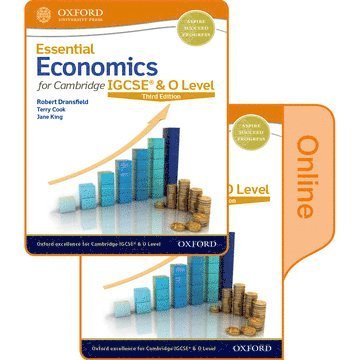
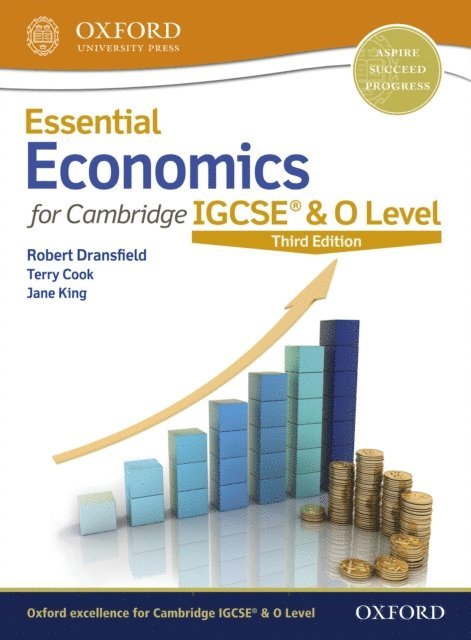
    Essential Economics for Cambridge IGCSE® & O Level

    AvRobert Dransfield,Terry Cook

    OUP OXFORD

    2018

    679 kr

    Beställningsvara. Skickas inom 5-8 vardagar. Fri frakt över 249 kr.

    Fler format och utgåvor

    E-bok

    487 kr

    Beskrivning

    Ensure your EAL learners succeed in Economics with a structured approach for the IGCSE & O Level (0455/2281) syllabuses, for examination from 2020. Written by examiners, the step-by-step approach is fully aligned to the Cambridge syllabuses with a comprehensive mapping grid so you can be sure of complete support. Embed comprehension for EAL students with topic guidance drawn from the syllabus and specialist vocabulary that is clearly highlighted and explained. Summary questions on every topic consolidate knowledge and understanding, while updated exam-style practice at the end of every unit builds assessment confidence.Engage students and link learning to real life with international case studies. Plus, support learning with interactive tests, exam-style practice and Student Book answers on the accompanying support site.

    Produktinformation

    • Märke:OUP OXFORD
    • Utgivningsdatum:2018-04-19
    • Höjd:196 x 265 x 12 mm
    • Vikt:585 g
    • Språk:Engelska
    • Antal sidor:248
    • Upplaga:3
    • Förlag:OUP OXFORD
    • EAN:9780198424895

    Utforska kategorier

    • Läromedel: företagande och ekonomi inom Läromedel

    Innehållsförteckning

    • Syllabus matching grid 1 The basic economic problem: Choice and the allocation of resources 1.1 The nature of the economic problem 1.1.1: The economic problem 1.1.2: Economic and free goods 1.2 The factors of production 1.2.1: Factors of production and their rewards 1.2.2: Mobility, quantity and quality of factors of production 1.3 Opportunity cost 1.3.1: Definition and examples of opportunity cost 1.3.2: Opportunity cost and economic decision making 1.4 Production possibility curves 1.4.1: The production possibility frontier 1.4.2: Movements and shifts along a production possibility curve Test yourself 2 The allocation of resources: How the market works and market failure 2.1 Microeconomics and macroeconomics 2.1.1: The difference between microeconomics and macroeconomics 2.2 The roles of markets in allocating resources 2.2.1: The market system 2.2.2: Resource allocation decisions 2.3 Demand 2.3.1: Price and demand 2.3.2: Causes of shifts in the demand curve 2.4 Supply 2.4.1: Price and supply 2.4.2: Conditions of supply 2.5 Price determination 2.5.1: Market equilibrium 2.6 Price changes 2.6.1: Causes and consequences of price changes 2.7 Elasticity of demand 2.7.1: Price elasticity of demand 2.7.2: Elasticity of demand and total spending/product revenue 2.8 Elasticity of supply 2.8.1: Price elasticity of supply 2.9 Market economic systems 2.9.1: The market economic system 2.9.2: Merits and weaknesses of a market system 2.10 Market failure 10 Market failure 48 2.10.1: The nature of market failure 2.10.2: Private and social costs and benefits 2.10.3: Causes of market failure 2.11 Mixed economic systems 2.11.1: The nature of a mixed economy 2.11.2: Government influence on micro-economy: regulation 2.11.3: Government influence on micro-economy: subsidies 2.11.4: Government influence on micro-economy: indirect taxes Test yourself 3 Microeconomic decision makers: The individual as producer, consumer and borrower 3.1 Money and banking 3.1.1: Money 3.1.2: Commercial banks 3.1.3: Central banks 3.2 Households 3.2.1: Influences on spending, saving and borrowing 3.2.2: Income and expenditure patterns 3.3 Workers 3.3.1: Factors affecting occupation choice 3.3.2: Wage determination 3.3.3: Differences in earnings 3.3.4: Division of labour/specialisation 3.4 Trade unions 3.4.1: Nature and purpose of trade unions 3.5 Firms 3.5.1: Classification of firms 3.5.2: Small firms 3.5.3: Growth of firms 3.5.4: Mergers and integration 3.5.5: Economies and diseconomies of scale 3.6 Firms and production 3.6.1: Demand for factors of production 3.6.2: Labour-intensive and capital-intensive production 3.6.3: Production and productivity 3.7 Firms' cost, revenue and objectives 3.7.1: Fixed and variable costs 3.7.2: Total and average costs 3.7.3: Output and costs 3.7.4: Revenue 3.7.5: Objectives of firms 3.8 Market structure 3.8.1: Competitive markets 3.8.2: Monopoly markets Test yourself 4 Government and the macroeconomy 4.1 The role of government 4.1.1: Government roles 4.2 Macroeconomic aims of government 4.2.1: Macroeconomic aims 4.2.2: Conflicts between government aims 4.3 Fiscal policy 4.3.1: Elements of fiscal policy 4.3.2: Classification of taxes 4.3.3: Principles and impacts of taxation 4.3.4: Fiscal policy and government aims 4.4 Monetary policy 4.4.1: Monetary policy measures 4.5 Supply-side policy 4.5.1: The effects of supply-side policy 4.6 Economic growth 4.6.1: Measuring Gross Domestic Product 4.6.2: Economic growth and recession 4.6.3: Illustrating growth and recession 4.6.4: Government policies for economic growth 4.7 Employment and unemployment 4.7.1: Patterns and levels of employment 4.7.2: Full employment 4.7.3: Causes of unemployment 4.7.4: Consequences of unemployment 4.8 Inflation and deflation 4.8.1: The Retail Prices Index and inflation 4.8.2: Causes of inflation 4.8.3: Consequences of inflation 4.8.4: Causes and consequences of deflation 4.8.5: Policies to control inflation and deflation Test yourself 5 Economic development 5.1: Living standards 5.1.1: Indicators of living standards 5.1.2: Comparing living standards and income distribution 5.2 Poverty 5.2.1: Causes of poverty 5.2.2: Policies to alleviate poverty 5.3 Population 5.3.1: Factors that affect population growth 5.3.2: Reasons for different rates of population growth 5.3.3: Problems of population change 5.3.4: The effect of changing population sizes on an economy 5.3.5: Changes in population structure and their effect on an economy 5.4 Differences in economic development between countries 5.4.1: Different rates of development 5.4.2: Factors affecting development Test yourself 6 International trade and globalisation 6.1 International specialisation 6.1.1: Advantages and disadvantages of specialisation 6.2 Globalisation, free trade and protection 6.2.1: Globalisation 6.2.2: Multinationals 6.2.3: The benefits of free trade 6.2.4: Methods of protection 6.2.5: Reasons for protection 6.3 Foreign exchange rates 6.3.1: Exchange rates 6.3.2: Causes of foreign exchange rate fluctuations 6.3.3: Consequences of fluctuations 6.4 The balance of payments 6.4.1: The current account of the balance of payments 6.4.2: Current account deficit and surplus 6.4.3: Policies to achieve balance of payments stability Test yourself Glossary Index