747 kr
Skickas inom 10-15 vardagar
747 kr
Skickas inom 10-15 vardagar
2 504 kr
Skickas inom 10-15 vardagar
498 kr
Skickas inom 5-8 vardagar
367 kr
Skickas inom 5-8 vardagar
388 kr
Skickas inom 5-8 vardagar
205 kr
Skickas inom 5-8 vardagar
820 kr
Skickas inom 10-15 vardagar
820 kr
Skickas inom 10-15 vardagar
2 504 kr
Skickas inom 10-15 vardagar
2 504 kr
Skickas inom 10-15 vardagar
883 kr
Läs direkt efter köp
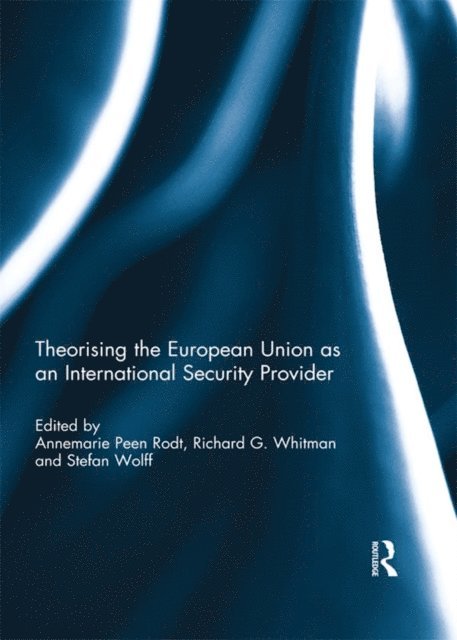
The European Union has increasingly taken on a role as international security provider that extends beyond the geographical scope of its membership. This is clear from the wide range of military and civilian crisis management missions that the Union has undertaken, but also identifiable through its other policies, such as the European Neighbourhood Policy and development assistance, which have also to some extent become security focused. Yet, the role of the EU as an international security provider remains under-theorized and weakly understood. The proposed book analyses the Union’s role as an international security provider in a comprehensive way developing theoretical as well as empirical grounding for the understanding of the making and implementation of EU security policy. The contributions in this book cover actors involved in the policy making process, the dynamics of this process itself, its outcomes (strategies and policies) and their impact on the ground. They examine the relevance of, and apply, existing theories of international relations, international security and foreign policy analysis to the specific case of the EU, investigate empirically how particular policies are formulated and implemented, and study the impact and effectiveness of the Union as an international security provider in a variety of cases compared. This book was previously published as a special issue of Global Society.
883 kr
Läs direkt efter köp
The European Union has increasingly taken on a role as international security provider that extends beyond the geographical scope of its membership. This is clear from the wide range of military and civilian crisis management missions that the Union has undertaken, but also identifiable through its other policies, such as the European Neighbourhood Policy and development assistance, which have also to some extent become security focused. Yet, the role of the EU as an international security provider remains under-theorized and weakly understood. The proposed book analyses the Union’s role as an international security provider in a comprehensive way developing theoretical as well as empirical grounding for the understanding of the making and implementation of EU security policy. The contributions in this book cover actors involved in the policy making process, the dynamics of this process itself, its outcomes (strategies and policies) and their impact on the ground. They examine the relevance of, and apply, existing theories of international relations, international security and foreign policy analysis to the specific case of the EU, investigate empirically how particular policies are formulated and implemented, and study the impact and effectiveness of the Union as an international security provider in a variety of cases compared. This book was previously published as a special issue of Global Society.
892 kr
Läs direkt efter köp
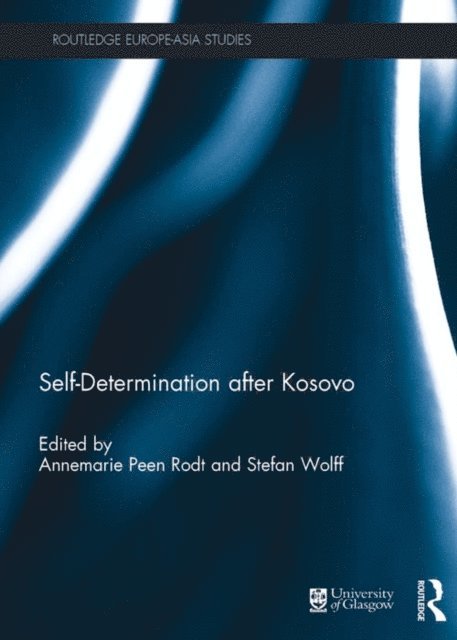
Kosovo embodies a key moment in the international practice of dealing with secessionist self-determination conflicts. For the first time, outside of the colonial context, and excepting Bangladesh in 1971, an entity''s declaration of independence has been widely, albeit not universally, recognised. As such, the case of Kosovo has sharpened the focus and intensified the debate on the issue of self-determination conflicts and how they are managed by the international community. This volume contributes to this debate by examining Kosovo in historical and contemporary comparative perspective and by reflecting on the legal, ethical and political implications of its successful declaration of independence.
This book was originally published as a special issue of Europe-Asia Studies.
949 kr
Läs direkt efter köp
Kosovo embodies a key moment in the international practice of dealing with secessionist self-determination conflicts. For the first time, outside of the colonial context, and excepting Bangladesh in 1971, an entity''s declaration of independence has been widely, albeit not universally, recognised. As such, the case of Kosovo has sharpened the focus and intensified the debate on the issue of self-determination conflicts and how they are managed by the international community. This volume contributes to this debate by examining Kosovo in historical and contemporary comparative perspective and by reflecting on the legal, ethical and political implications of its successful declaration of independence.
This book was originally published as a special issue of Europe-Asia Studies.
935 kr
Läs direkt efter köp
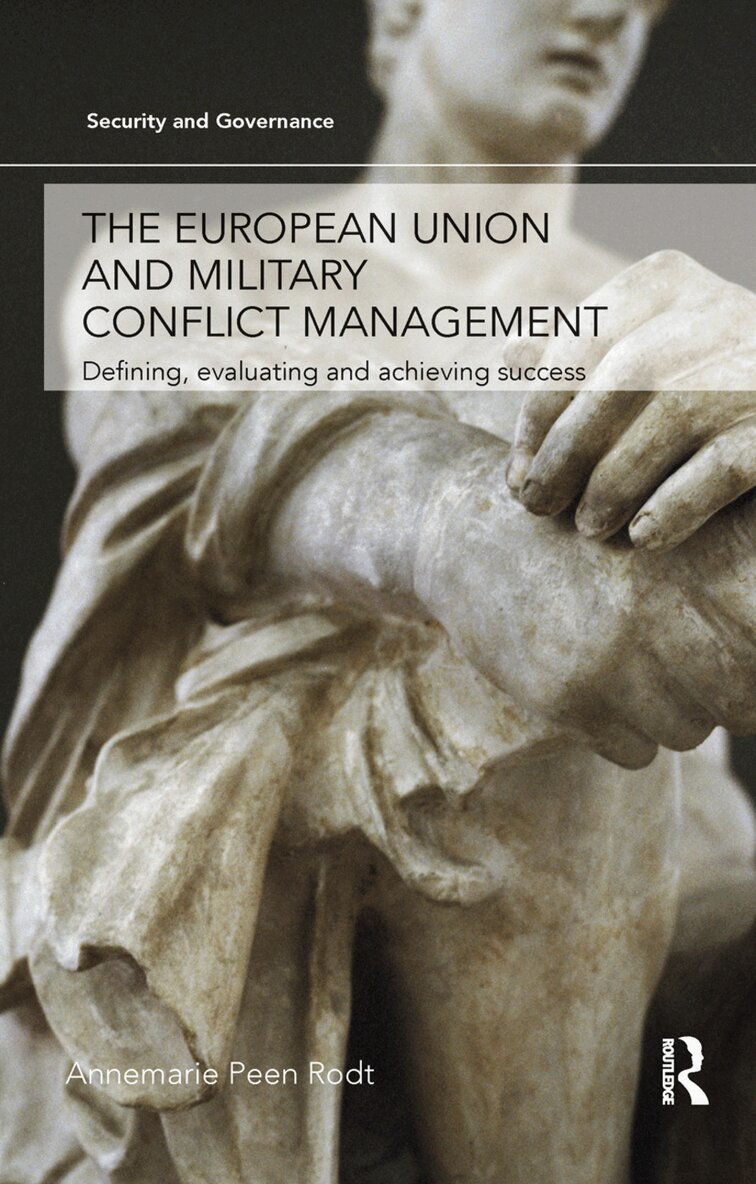
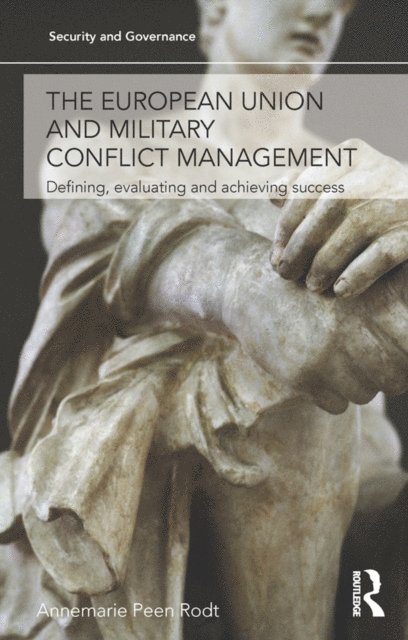
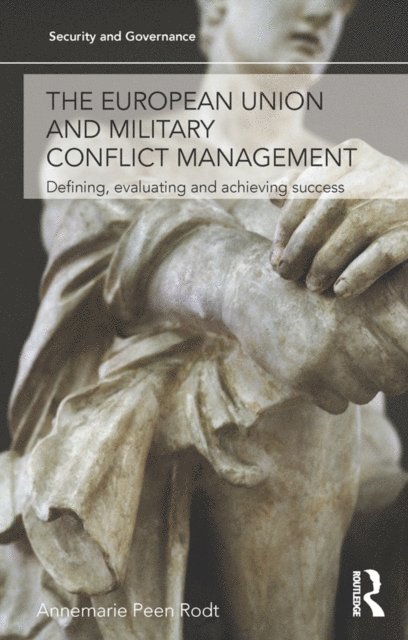
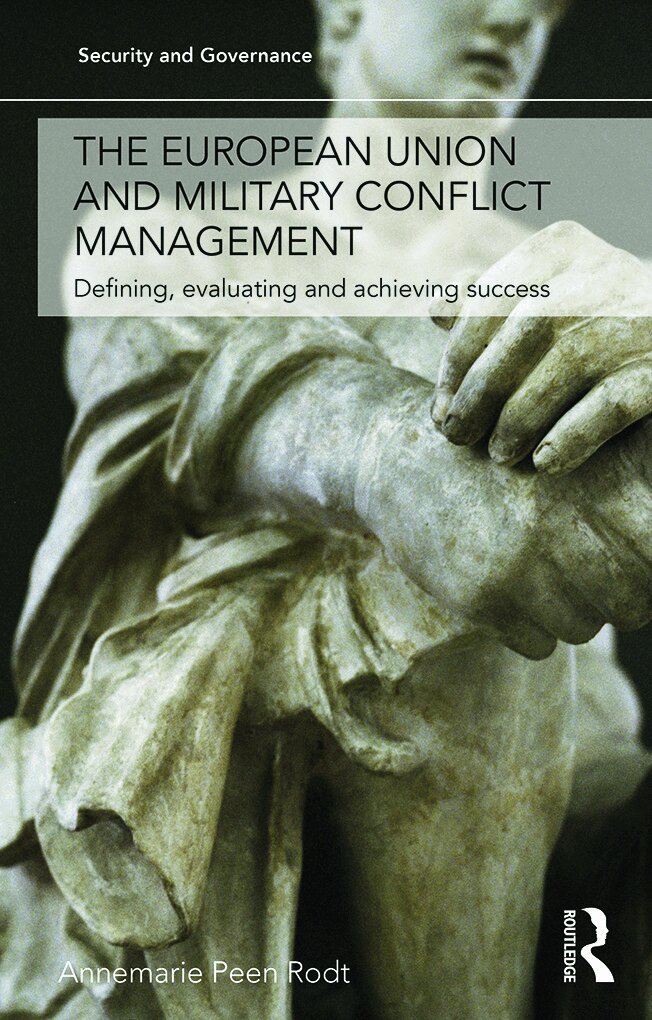
This book provides the first comprehensive review of the European Union’s role in military conflict management beyond its borders and makes an important contribution to debates on the EU’s role in global security governance.
The EU has launched five military operations within the framework of its Common Security and Defence Policy with the explicit purpose to help manage violent conflicts beyond its borders. This book develops a definition and a set of criteria for success in military conflict management and applies this new analytical framework in a comparative case study of the five EU military operations undertaken in Macedonia, Bosnia and Herzegovina, the Democratic Republic of Congo, Chad and the Central African Republic. Having evaluated their success the book goes on to explore the conditions under which military conflict management operations conducted by international organizations are successful and explores the implications of its findings for the future theory and practice of military conflict management.
The European Union and Military Conflict Management will be of interest to students and scholars of security studies, conflict studies, European Union politics and foreign policy and global security governance.
956 kr
Läs direkt efter köp
This book provides the first comprehensive review of the European Union’s role in military conflict management beyond its borders and makes an important contribution to debates on the EU’s role in global security governance.
The EU has launched five military operations within the framework of its Common Security and Defence Policy with the explicit purpose to help manage violent conflicts beyond its borders. This book develops a definition and a set of criteria for success in military conflict management and applies this new analytical framework in a comparative case study of the five EU military operations undertaken in Macedonia, Bosnia and Herzegovina, the Democratic Republic of Congo, Chad and the Central African Republic. Having evaluated their success the book goes on to explore the conditions under which military conflict management operations conducted by international organizations are successful and explores the implications of its findings for the future theory and practice of military conflict management.
The European Union and Military Conflict Management will be of interest to students and scholars of security studies, conflict studies, European Union politics and foreign policy and global security governance.
438 kr
Skickas inom 3-6 vardagar
703 kr
Skickas inom 5-8 vardagar
143 kr
Läs direkt efter köp
371 kr
Skickas inom 3-6 vardagar
1 128 kr
Skickas inom 10-15 vardagar
1 128 kr
Skickas inom 10-15 vardagar
1 502 kr
Läs direkt efter köp
1 502 kr
Läs direkt efter köp
285 kr
Skickas inom 3-6 vardagar
892 kr
Läs direkt efter köp
The concepts of estimands, analyses (estimators), and sensitivity are interrelated. Therefore, great need exists for an integrated approach to these topics. This book acts as a practical guide to developing and implementing statistical analysis plans by explaining fundamental concepts using accessible language, providing technical details, real-world examples, and SAS and R code to implement analyses. The updated ICH guideline raises new analytic and cross-functional challenges for statisticians. Gaps between different communities have come to surface, such as between causal inference and clinical trialists, as well as among clinicians, statisticians, and regulators when it comes to communicating decision-making objectives, assumptions, and interpretations of evidence.
This book lays out a path toward bridging some of these gaps. It offers
A common language and unifying framework along with the technical details and practical guidance to help statisticians meet the challenges
A thorough treatment of intercurrent events (ICEs), i.e., postrandomization events that confound interpretation of outcomes and five strategies for ICEs in ICH E9 (R1)
Details on how estimands, integrated into a principled study development process, lay a foundation for coherent specification of trial design, conduct, and analysis needed to overcome the issues caused by ICEs:
A perspective on the role of the intention-to-treat principle
Examples and case studies from various areas
Example code in SAS and R
A connection with causal inference
Implications and methods for analysis of longitudinal trials with missing data
Together, the authors have offered the readers their ample expertise in clinical trial design and analysis, from an industrial and academic perspective.
574 kr
Skickas inom 3-6 vardagar
310 kr
Skickas inom 3-6 vardagar
206 kr
Skickas inom 3-6 vardagar
663 kr
Skickas inom 3-6 vardagar