Advances in Biomedical Informatics - Böcker
Visar alla böcker i serien Advances in Biomedical Informatics. Handla med fri frakt och snabb leverans.
6 produkter
6 produkter
1 791 kr
Skickas inom 7-10 vardagar
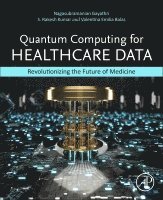
Quantum Computing for Healthcare Data: Revolutionizing the Future of Medicine presents an advanced overview of the fundamentals of quantum computing, from the transition of traditional to quantum computing, to the challenges and opportunities encountered as various industries enter into the paradigm shift. The book investigates how quantum AI, quantum data processing, and quantum data analysis can best be integrated into healthcare data systems. The book also introduces a range of case studies which feature applications of quantum computing in connected medical devices, medical simulations, robotics, medical diagnosis, and drug discovery. The book will be a valuable resource for researchers, graduate students, and professional programmers and computer engineers working in the areas of healthcare data management and analytics, blockchain, IoT, and big data analytics.Explores the challenges and opportunities presented by quantum computing technology within healthcare data and applicationsCompares quantum machine learning models and analyzes which offer the most promise for healthcare data analyticsPresents a range of case studies where quantum computing is starting to be applied, including connected medical devices, medical simulations, robotics, medical diagnosis, and drug discovery
1 791 kr
Skickas inom 7-10 vardagar
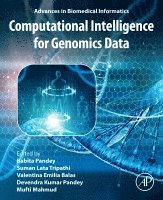
Computational Intelligence for Genomics Data presents an overview of machine learning and deep learning techniques being developed for the analysis of genomic data and the development of disease prediction models. The book focuses on machine and deep learning techniques applied to dimensionality reduction, feature extraction, and expressive gene selection. It includes designs, algorithms, and simulations on MATLAB and Python for larger prediction models and explores the possibilities of software and hardware-based applications and devices for genomic disease prediction. With the inclusion of important case studies and examples, this book will be a helpful resource for researchers, graduate students, and professional engineers.Provides comparative analysis of machine learning and deep learning methods in the analysis of genomic data, discussing major design challenges, best practices, pitfalls, and research potentialExplores machine and deep learning techniques applied to dimensionality reduction, feature extraction, data selection, and their application in genomicsPresents case studies of various diseases based on gene microarray expression data, including cancer, liver disorders, neuromuscular disorders, and neurodegenerative disorders
1 791 kr
Kommande
Intelligent and Soft Computing: Techniques and Applications illustrates the synergistic effect of cutting-edge developments in all areas of both fields to build intelligent software systems to solve a multitude of problems. The book offers an introduction to artificial intelligence as well as fuzzy logic concepts, systems, and methods. Additional sections focus on AI tools and applications, search and data mining, reasoning and evolution, as well as nature-inspired computing techniques. Applications and case studies are included in all chapters, making this an ideal resource for researchers, graduate students, and professionals working in these domains.Readers will find this to be a timely reference on current and future developments in this emerging domain for decision support, management, information technology, and business applications.Presents new directions of research in the fields of intelligent computing and soft computingExplores tools and software pertaining to both intelligent computing and soft computing which can address challenges to imprecision, uncertainty, and variabilityBrings together leading scholars from the fields of intelligent and soft computing to discuss how these applications can be trained to work together to solve complex real-world problems
Emerging Fuzzy Intelligent Systems for Smart Healthcare Management
Applications of Disc q-Rung Orthopair Fuzzy Sets
Häftad, Engelska, 2025
1 841 kr
Skickas inom 7-10 vardagar
Emerging Fuzzy Intelligent Systems for Smart Healthcare Management: Applications of Disc q-Rung Orthopair Fuzzy Sets presents comprehensive methodological frameworks and the latest empirical research findings concerning disc q-rung orthopair fuzzy operators, with a specific focus on their applications in smart technologies for healthcare management. The book solves a crucial problem by offering readers an invaluable opportunity to conduct a comparative analysis, contrasting the proposed methods with their existing knowledge base. Disc q-Rung Orthopair sets, being the generalization of q-Rung Orthopair fuzzy sets, which are, in turn, the generalization of Pythagorean fuzzy sets, extend the capabilities of handling uncertainty beyond conventional fuzzy sets.The authors strive to narrow the knowledge gap by clarifying the practical applications of disc q-rung orthopair fuzzy logic. In addition, it explores an enhanced version of q-Rung Orthopair Fuzzy Sets, specifically focusing on Disc q-Rung Orthopair Fuzzy Sets, introducing various types of operators. These operators play a crucial role in solving decision-making and optimization problems. A notable contribution is the development of a hybrid operator, termed as the Disc q-Rung Orthopair Fuzzy Hybrid Weighted Averaging/Geometric (D-qROFHWA/G) operator.Proposes a novel enhancement in the realm of q-rung orthopair fuzzy operatorsProvides insights for both practitioners and academia, focusing on debated aspects in the fieldCovers Advanced Aggregation Operators and MADM Methods for Smart Healthcare ManagementDiscusses comparative analysis and integration with established mathematical results
1 739 kr
Kommande
Development of Multi-Agent Systems Infrastructure: A Practical Approach explores the creation of modular frameworks to support the deployment of real-world software applications utilizing multi-agent systems (MAS). Drawing from the author’s hands-on experience with the FLASH-MAS framework-a Fast Lightweight Agent Shell-the book delves into both theoretical models and practical solutions for MAS implementation. It addresses the complexities of deploying autonomous agents across diverse fields such as manufacturing, robotics, health care, and supply chain management, highlighting the shared challenges developers face when managing distributed, networked, or large-scale agent interactions. The book is organized into three main sections, covering models and languages for MAS, the deployment and interaction between system entities, and practical guidance for implementing robust MAS frameworks. Emphasizing modularity, the author presents adaptable tools and solutions that can be independently utilized for system development and maintenance. Practical issues such as entity lifecycle management, environmental interactions, and system robustness are thoroughly examined, making this resource valuable for both new and experienced MAS developers.Presents models and languages for multi-agent systems (MAS) developmentIncludes three key sections covering: modeling and languages for multi-agent systems; entity deployment and interaction; and practical considerations for implementing contemporary MAS frameworksProvides a hands-on method for developing working MAS solutions across a variety of applicationsShowcases solutions in a structured, modular format so they can be replicated and used independently from one another
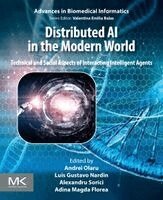
Distributed AI in the Modern World
Technical and Social Aspects of Interacting Intelligent Agents
Häftad, Engelska, 2026
1 791 kr
Kommande
Distributed AI in the Modern World: Technical and Social Aspects of Interacting Intelligent Agents presents state-of-the-art insights into the various forms of distribution of artificial intelligence, with practical application instances. Sections provide readers with practical solutions at an architectural level, with solutions presented on the distribution of the learning process and the utilization of machine learning models in a distributed system, tools that enable the distribution and interaction of artificial learning entities, how multi-agent systems and machine learning can be combined, the physical embodiment of intelligent agents, and the interaction of intelligent computing units bound to physical space.Following sections emphasize the challenges that are common to all scenarios and solutions that apply in a wider range of cases. This book does not analyze the internal workings of machine learning models (for instance, in the case of multi-agent reinforcement learning), but instead provides readers with an overview of the challenges brought by the need of artificially intelligent entities to interact with other entities and with their environments, along with practical solutions at an architectural level.Presents leading-edge insights on the diverse ways artificial intelligence is distributed, along with real-world application examplesOffers readers a summary of the challenges posed by the necessity for artificially intelligent entities to engage with other entities and their surroundingsProposes practical architectural-level solutionsExplores communication in local networks, on the web, and within physical environmentsExamines machine learning distributed across a network into software agents using machine learning models to make decisions, and into agents working on the web, in socio-technical networks, and in AI embodied in robots