Advances in Plant Biology – serie
Visar alla böcker i serien Advances in Plant Biology. Handla med fri frakt och snabb leverans.
10 produkter
10 produkter
Inbunden, Engelska, 2010
2 174 kr
Skickas inom 10-15 vardagar
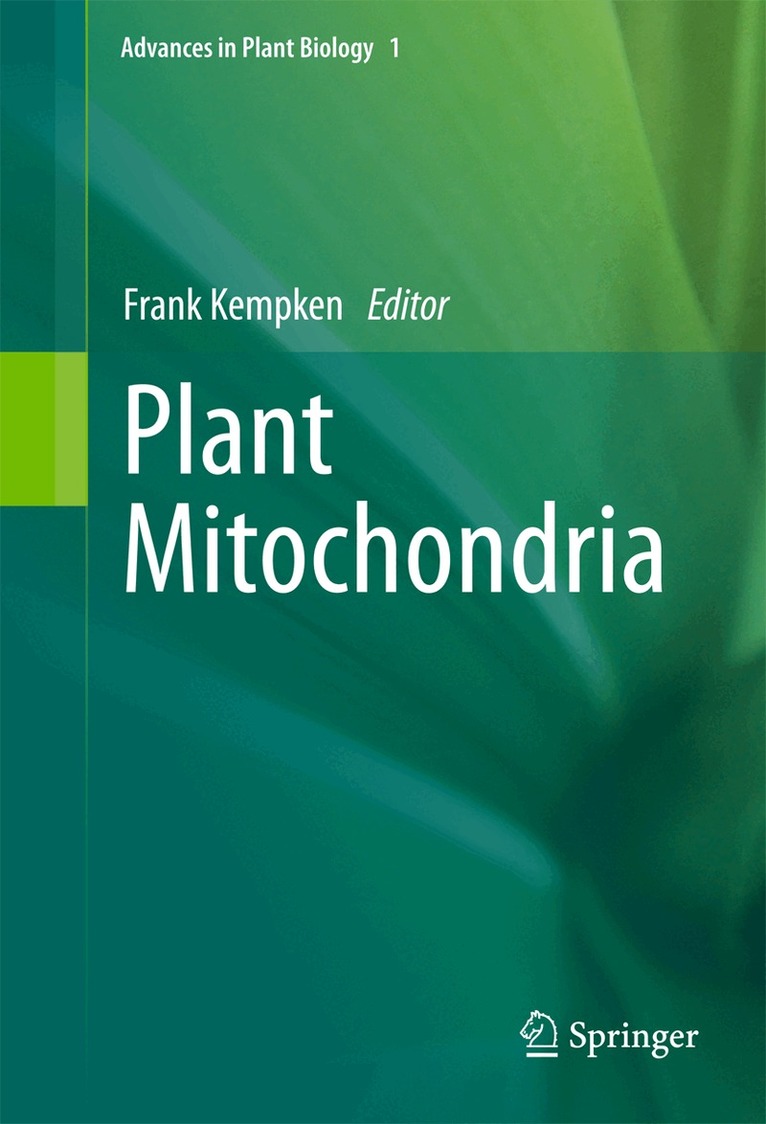
Mitochondria are the product of a long evolutionary history. It is now a well established fact that mitochondria did evolve from free living bacteria being the common ancestor of both, eukaryotic mitochondria and α-proteobacteria. Advances in genome sequencing, the establishment of in organello and in vitro assays to name only a few, contributed significantly to advances in plant mitochondrial research. Second generation sequencing and the ability to directly sequence and analyse the whole plant transcriptome certainly will help to develop the research on plant mitochondria to another level in the future. In this book the current knowledge about plant mitochondria is presented in a series of detailed chapters, which have been organized in five main sections: (i) dynamics, genes and genomes; (ii) transcription and RNA processing; (iii) translation and import; (iv) biochemistry, regulation and function; and (v) mitochondrial dysfunction and repair. These sections consist of two to five chapters, each written by well-known specialists in the field. This book thus provides a comprehensive inside in the field of plant mitochondria for the specialist. The addition of a glossary and text boxes to each chapter provides easy access for readers from other subjects and hopefully will attract young scientist to the fascinating and exiting field of plant mitochondria.
Del 2 - Advances in Plant Biology
Plant Cytoskeleton
Inbunden, Engelska, 2010
1 633 kr
Skickas inom 10-15 vardagar
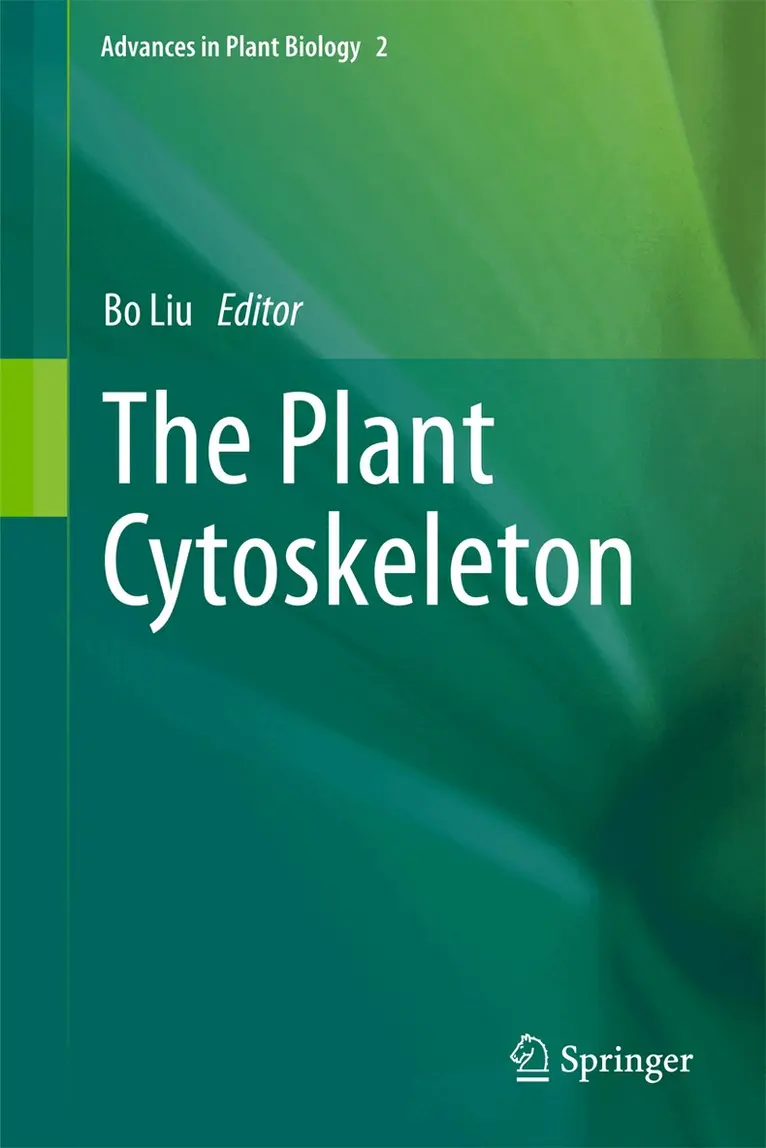
Plant cells house highly dynamic cytoskeletal networks of microtubules and actin microfilaments. They constantly undergo remodeling to fulfill their roles in supporting cell division, enlargement, and differentiation. Following early studies on structural aspects of the networks, recent breakthroughs have connected them with more and more intracellular events essential for plant growth and development. Advanced technologies in cell biology (live-cell imaging in particular), molecular genetics, genomics, and proteomics have revolutionized this field of study. Stories summarized in this book may inspire enthusiastic scientists to pursue new directions toward understanding functions of the plant cytoskeleton. The Plant Cytoskeleton is divided into three sections: 1) Molecular Basis of the Plant Cytoskeleton; 2) Cytoskeletal Reorganization in Plant Cell Division; and 3) The Cytoskeleton in Plant Growth and Development. This book is aimed at serving as a resource for anyone who wishes to learn about the plant cytoskeleton beyond ordinary textbooks.
Del 3 - Advances in Plant Biology
Short and Long Distance Signaling
Inbunden, Engelska, 2011
1 633 kr
Skickas inom 10-15 vardagar
The ability of plants to exchange RNA molecules and transcription factors between cells and tissues is a relatively recent discovery. However, all areas of research such as plant development, metabolism, and plant pathogen interactions now realize the importance of this phenomenon. In this book, experts from the field of intercellular transport deal with various aspects on intercellular transport of viruses and plant endogenous macromolecules such as transcription factors, small silencing-induced and micro RNAs, and other RNAs and their function as signals. The aim of the book is to provide the basic information on the cell-to-cell transport mechanism and to give an overview of the current knowledge of this relatively new field of research. To quote the words of W.J. Lucas “…pioneering discoveries in this field of cell-to-cell and long-distance signaling should certainly entice talented young scholars to join this frontier area of plant biology” . He is certainly right as we got only a first glimpse on the cellular factors regulating intercellular transport and the functional diversity of the ever-increasing number of proteins and RNA molecules found to move between cells.
Del 2 - Advances in Plant Biology
Plant Cytoskeleton
Häftad, Engelska, 2012
1 633 kr
Skickas inom 10-15 vardagar
Plant cells house highly dynamic cytoskeletal networks of microtubules and actin microfilaments. They constantly undergo remodeling to fulfill their roles in supporting cell division, enlargement, and differentiation. Following early studies on structural aspects of the networks, recent breakthroughs have connected them with more and more intracellular events essential for plant growth and development. Advanced technologies in cell biology (live-cell imaging in particular), molecular genetics, genomics, and proteomics have revolutionized this field of study. Stories summarized in this book may inspire enthusiastic scientists to pursue new directions toward understanding functions of the plant cytoskeleton. The Plant Cytoskeleton is divided into three sections: 1) Molecular Basis of the Plant Cytoskeleton; 2) Cytoskeletal Reorganization in Plant Cell Division; and 3) The Cytoskeleton in Plant Growth and Development. This book is aimed at serving as a resource for anyone who wishes to learn about the plant cytoskeleton beyond ordinary textbooks.
Del 1 - Advances in Plant Biology
Plant Mitochondria
Häftad, Engelska, 2013
2 174 kr
Skickas inom 10-15 vardagar
Mitochondria are the product of a long evolutionary history. It is now a well established fact that mitochondria did evolve from free living bacteria being the common ancestor of both, eukaryotic mitochondria and α-proteobacteria. Advances in genome sequencing, the establishment of in organello and in vitro assays to name only a few, contributed significantly to advances in plant mitochondrial research. Second generation sequencing and the ability to directly sequence and analyse the whole plant transcriptome certainly will help to develop the research on plant mitochondria to another level in the future. In this book the current knowledge about plant mitochondria is presented in a series of detailed chapters, which have been organized in five main sections: (i) dynamics, genes and genomes; (ii) transcription and RNA processing; (iii) translation and import; (iv) biochemistry, regulation and function; and (v) mitochondrial dysfunction and repair. These sections consist of two to five chapters, each written by well-known specialists in the field. This book thus provides a comprehensive inside in the field of plant mitochondria for the specialist. The addition of a glossary and text boxes to each chapter provides easy access for readers from other subjects and hopefully will attract young scientist to the fascinating and exiting field of plant mitochondria.
Inbunden, Engelska, 2013
1 633 kr
Skickas inom 10-15 vardagar
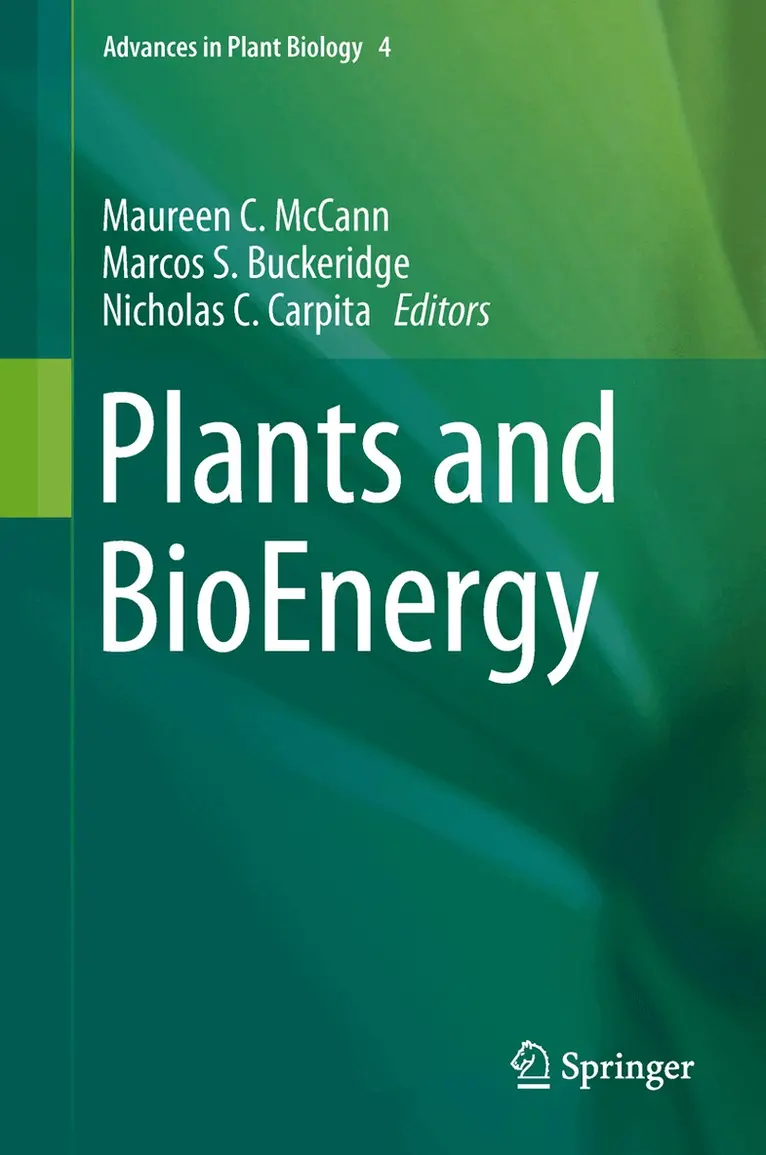
A country's vision for developing renewable and sustainable energy resources is typically propelled by three important drivers – security, cost, and environmental impact. The U.S. currently accounts for a quarter of the world’s total oil consumption, with domestic demands necessitating – at an ever growing cost – a net import of more than 50% of the oil used in this country. At the same time, Brazil, because of its forward thinking on energy strategy, is today energy independent. As emerging economies around the world increase their petroleum use by large margins and as large fractions of that new consumption are necessarily supplied from unstable parts of the world, the inevitable repercussions on petroleum-driven economies will continue to escalate. In addition, there is an unequivocal imperative to take immediate and aggressive measures to reduce net greenhouse gas emissions by decreasing fossil fuel consumption and increasing our use of carbon-neutral or carbon-negative fuels as well as improving efficiency of fuel use. Economic growth and development worldwide depend increasingly on secure supplies of reliable, affordable, clean energy. Together with its counterpart societies, was convened the First Pan-American Congress on Plants and BioEnergy, which was held in June, 2008, in Mérida, Mexico. Sponsored by the American Society of Plant Biologists, this congress was designed to initiate Pan-American research collaborations in energy biosciences. At that congress, the organizational committee committed themselves to continue the meeting biennially, resulting in the 2nd Pan-American Congress on Plants and BioEnergy to be held with the endorsement of ASPB, July 6-10, 2010, in São Paulo, Brazil. Whereas the 1st congress covered a broad range of topics that bioenergy impacted, the second congress will focus more on the advances in plant biology: the genetic improvement of energy crop plants, their fit into regional environments, and the development ofa sustainable energy agriculture.
Del 3 - Advances in Plant Biology
Short and Long Distance Signaling
Häftad, Engelska, 2014
1 633 kr
Skickas inom 10-15 vardagar
The ability of plants to exchange RNA molecules and transcription factors between cells and tissues is a relatively recent discovery. However, all areas of research such as plant development, metabolism, and plant pathogen interactions now realize the importance of this phenomenon. In this book, experts from the field of intercellular transport deal with various aspects on intercellular transport of viruses and plant endogenous macromolecules such as transcription factors, small silencing-induced and micro RNAs, and other RNAs and their function as signals. The aim of the book is to provide the basic information on the cell-to-cell transport mechanism and to give an overview of the current knowledge of this relatively new field of research. To quote the words of W.J. Lucas “…pioneering discoveries in this field of cell-to-cell and long-distance signaling should certainly entice talented young scholars to join this frontier area of plant biology” . He is certainly right as we got only a first glimpse on the cellular factors regulating intercellular transport and the functional diversity of the ever-increasing number of proteins and RNA molecules found to move between cells.
Del 5 - Advances in Plant Biology
Plastid Biology
Inbunden, Engelska, 2014
1 633 kr
Skickas inom 10-15 vardagar
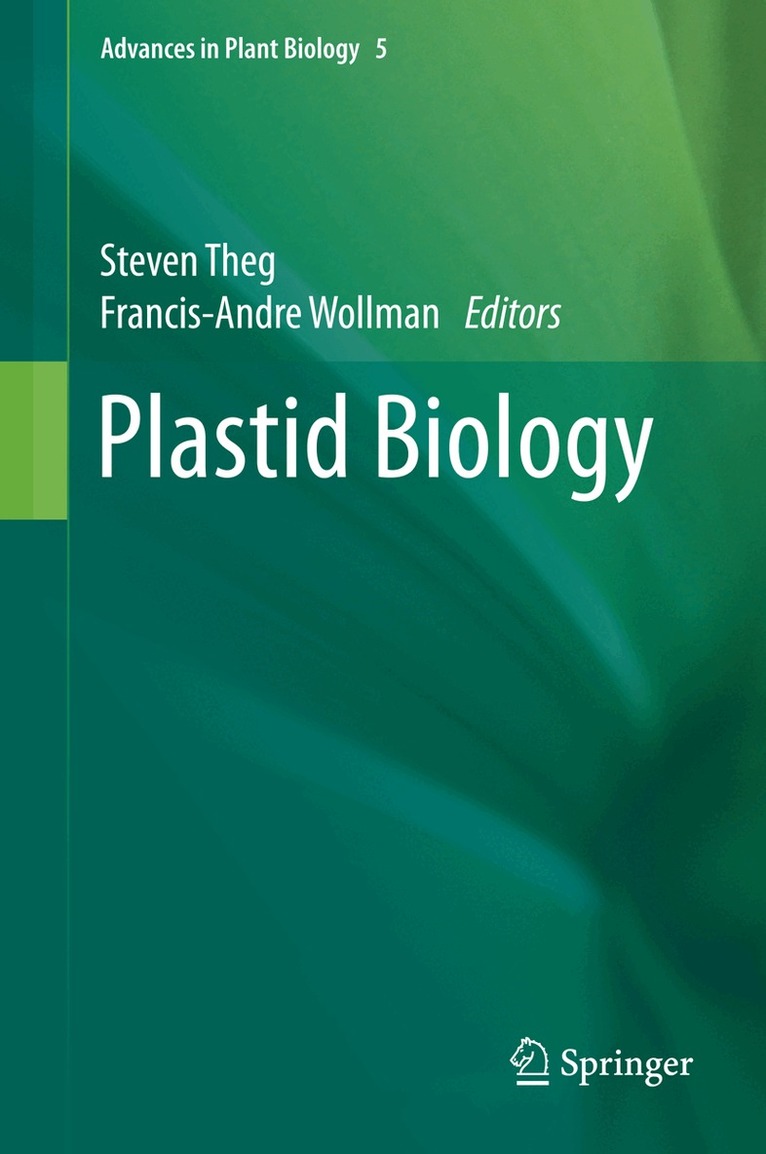
Plastids are the sites of conversion of solar energy into the chemical energy usable to sustain life. They are also responsible for the production of the vast majority of the oxygen in the atmosphere. Through these activities they play a unique role in the biosphere, producing two critical products upon which life on Earth depends. It covers in 21 chapters nearly all actively investigated areas of plastid biology, from biosynthesis to function to their uses in biotechnology. The editors have compiled an extensive list of international experts from whom to solicit chapters. As is evident from the suggested Table of Contents, the book will start with a discussion of genetic material and its expression, followed by differentiation and development of different plastid types and internal organization. This is followed by an in depth look at biogenesis and assembly of plastid proteins and protein complexes and then by the important metabolic functions in plastids. The book will end with two chapters discussing the role of plastid biology in protein expression biotechnology and in hydrogen and biofuel production.
Häftad, Engelska, 2016
1 633 kr
Skickas inom 10-15 vardagar
A country's vision for developing renewable and sustainable energy resources is typically propelled by three important drivers – security, cost, and environmental impact. The U.S. currently accounts for a quarter of the world’s total oil consumption, with domestic demands necessitating – at an ever growing cost – a net import of more than 50% of the oil used in this country. At the same time, Brazil, because of its forward thinking on energy strategy, is today energy independent. As emerging economies around the world increase their petroleum use by large margins and as large fractions of that new consumption are necessarily supplied from unstable parts of the world, the inevitable repercussions on petroleum-driven economies will continue to escalate. In addition, there is an unequivocal imperative to take immediate and aggressive measures to reduce net greenhouse gas emissions by decreasing fossil fuel consumption and increasing our use of carbon-neutral or carbon-negative fuels as well as improving efficiency of fuel use. Economic growth and development worldwide depend increasingly on secure supplies of reliable, affordable, clean energy. Together with its counterpart societies, was convened the First Pan-American Congress on Plants and BioEnergy, which was held in June, 2008, in Mérida, Mexico. Sponsored by the American Society of Plant Biologists, this congress was designed to initiate Pan-American research collaborations in energy biosciences. At that congress, the organizational committee committed themselves to continue the meeting biennially, resulting in the 2nd Pan-American Congress on Plants and BioEnergy to be held with the endorsement of ASPB, July 6-10, 2010, in São Paulo, Brazil. Whereas the 1st congress covered a broad range of topics that bioenergy impacted, the second congress will focus more on the advances in plant biology: the genetic improvement of energy crop plants, their fit into regional environments, and the development ofa sustainable energy agriculture.
Del 5 - Advances in Plant Biology
Plastid Biology
Häftad, Engelska, 2016
1 633 kr
Skickas inom 10-15 vardagar
Plastids are the sites of conversion of solar energy into the chemical energy usable to sustain life. They are also responsible for the production of the vast majority of the oxygen in the atmosphere. Through these activities they play a unique role in the biosphere, producing two critical products upon which life on Earth depends. It covers in 21 chapters nearly all actively investigated areas of plastid biology, from biosynthesis to function to their uses in biotechnology. The editors have compiled an extensive list of international experts from whom to solicit chapters. As is evident from the suggested Table of Contents, the book will start with a discussion of genetic material and its expression, followed by differentiation and development of different plastid types and internal organization. This is followed by an in depth look at biogenesis and assembly of plastid proteins and protein complexes and then by the important metabolic functions in plastids. The book will end with two chapters discussing the role of plastid biology in protein expression biotechnology and in hydrogen and biofuel production.