Stanford Ottoman World Series: Critical Studies in Empire, Nature, and Knowledge – serie
Visar alla böcker i serien Stanford Ottoman World Series: Critical Studies in Empire, Nature, and Knowledge. Handla med fri frakt och snabb leverans.
12 produkter
12 produkter
Inbunden, Engelska, 2023
831 kr
Skickas inom 5-8 vardagar
The final decades of the Ottoman Empire and the period of the French mandate in Syria and Lebanon coincided with a critical period of transformation in agricultural technologies and administration. Chemical fertilizers and mechanized equipment inspired model farms while government officials and technocratic elites pursued new land tenure, credit-lending, and tax collection policies to maximize revenue. These policies transformed rural communities and environments and were central to projects of reform and colonial control—as well as to resistance of that control.States of Cultivation examines the processes and effects of agrarian transformation over more than a century as Ottoman, Syrian, Lebanese, and French officials grappled with these new technologies, albeit with different end goals. Elizabeth Williams investigates the increasingly fragmented natures produced by these contrasting priorities and the results of their intersection with regional environmental limits. Not only did post–World War I policies realign the economic space of the mandate states, but they shaped an agricultural legacy that continued to impact Syria and Lebanon post-independence. With this book, Williams offers the first comprehensive account of the shared technocratic ideals that animated these policies and the divergent imperial goals that not only reshaped the region's agrarian institutions, but produced representations of the region with repercussions well beyond the mandate's end.
Inbunden, Engelska, 2025
1 545 kr
Skickas inom 5-8 vardagar
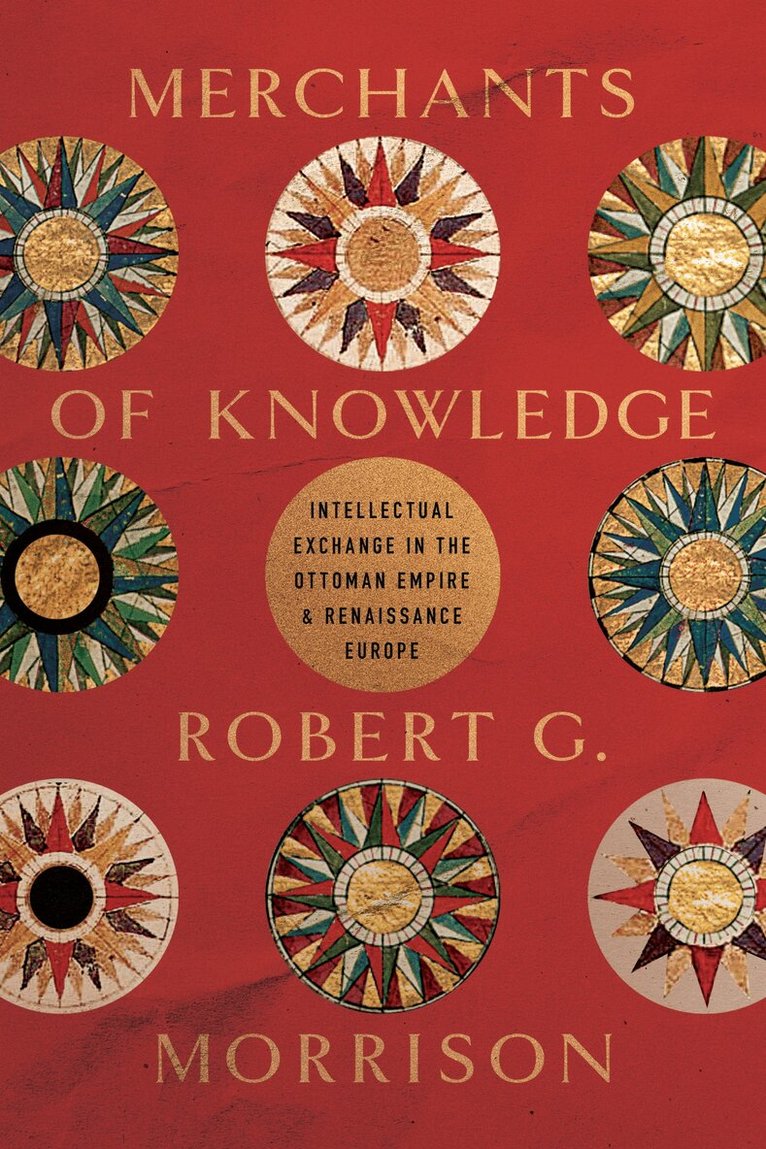
Between 1450 and 1550, a remarkable century of intellectual exchange developed across the Eastern Mediterranean. As Renaissance Europe depended on knowledge from the Ottoman Empire, and the courts of Mehmed the Conqueror and Bayezid II greatly benefitted from knowledge coming out of Europe, merchants of knowledge—multilingual and transregional Jewish scholars—became an important bridge among the powers.With this book, Robert Morrison is the first to track the network of scholars who mediated exchanges in astronomy, astrology, Qabbalah, and philosophy. Their books, manuscripts, and acts of translation all held economic value, thus commercial and intellectual exchange commingled—knowledge became transactional as these merchants exchanged texts for more intellectual material and social capital. While parallels between medieval Islamic astronomy and the famous heliocentric arrangement posited by Copernicus are already known, Morrison reveals far deeper networks of intellectual exchange that extended well beyond theoretical astronomy and shows how religion, science, and philosophy, areas that will eventually develop into separate fields, were once interwoven. The Renaissance portrayed in Merchants of Knowledge is not, from the perspective of the Ottoman Muslim contacts of the Jewish merchants of knowledge, hegemonic. It's a Renaissance permeated by diversity, the cultural and political implications of which the West is only now waking up to.
Inbunden, Engelska, 2024
1 215 kr
Skickas inom 5-8 vardagar
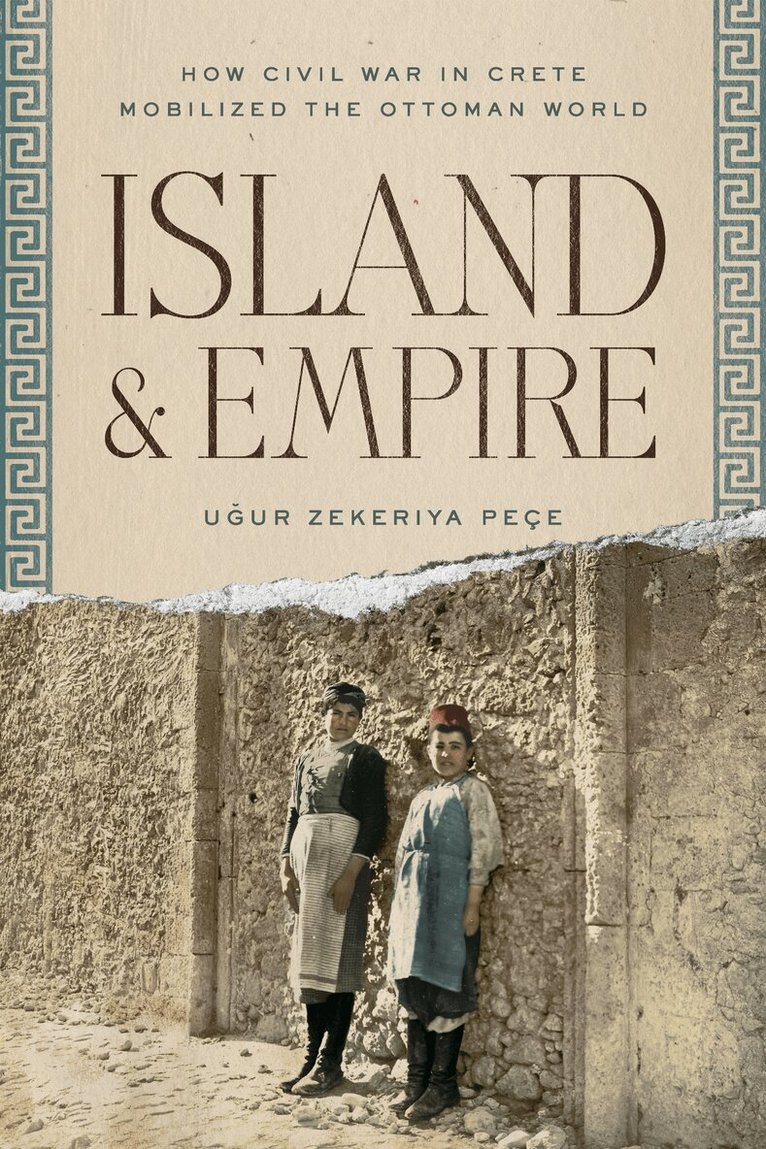
In the 1890s, conflict erupted on the Ottoman island of Crete. At the heart of the Crete Question, as it came to be known around the world, were clashing claims of sovereignty between Greece and the Ottoman Empire. The island was of tremendous geostrategic value, boasting one of the deepest natural harbors in the Mediterranean, and the conflict quickly gained international dimensions with an unprecedented collective military intervention by six European powers. Island and Empire shows how events in Crete ultimately transformed the Middle East.Uğur Zekeriya Peçe narrates a connected history of international intervention, mass displacement, and popular mobilization. The conflict drove a wedge between the island's Muslims and Christians, quickly acquiring a character of civil war. Civil war in turn unleashed a humanitarian catastrophe with the displacement of more than seventy thousand Muslims from Crete. In years following, many of those refugees took to the streets across the Ottoman world, driving the largest organized modern protest the empire had ever seen. Exploring both the emergence and legacies of violence, Island and Empire demonstrates how Cretan refugees became the engine of protest across the empire from Salonica to Libya, sending ripples farther afield beyond imperial borders. This history that begins within an island becomes a story about the end of an empire.
Inbunden, Engelska, 2024
928 kr
Skickas inom 5-8 vardagar
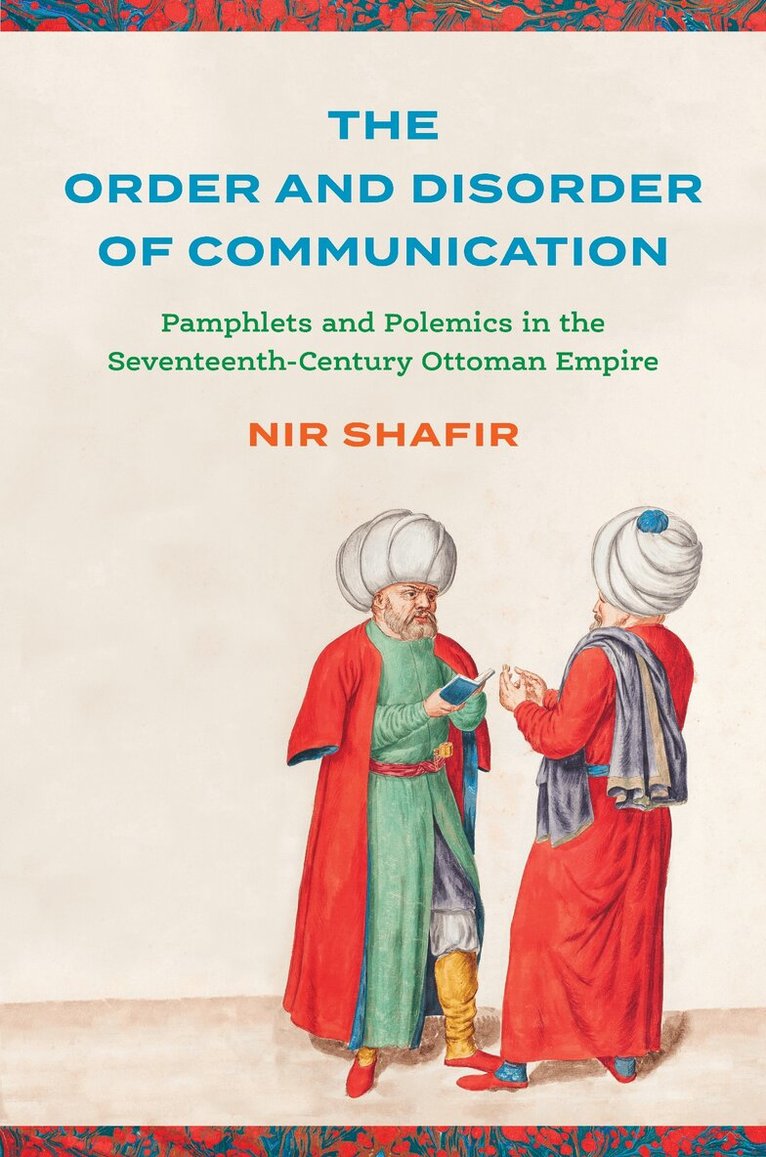
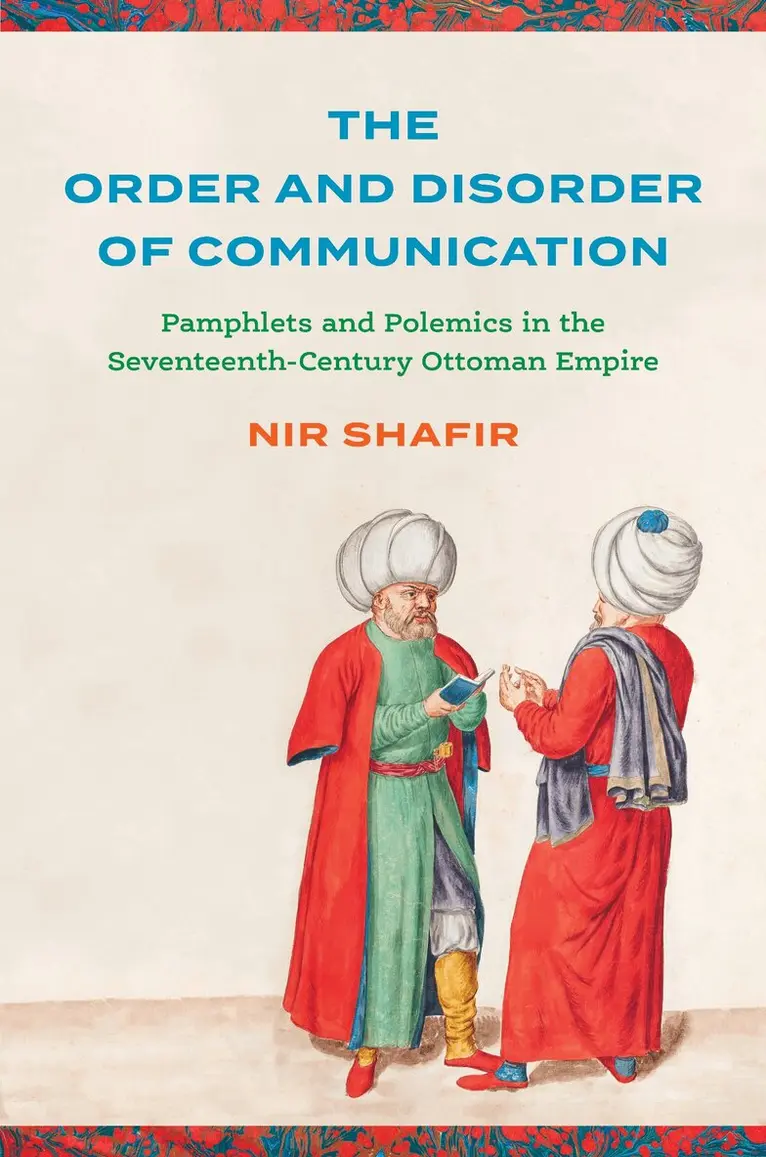
The seventeenth-century Ottoman Empire was rife with polemical debate, around worshipping at saints' graves, medical procedures, smoking tobacco, and other everyday practices. Fueling these debates was a new form of writing—the pamphlet, a cheap, short, and mobile text that provided readers with simplified legal arguments. These pamphlets were more than simply a novel way to disseminate texts, they made a consequential shift in the way Ottoman subjects communicated. This book offers the first comprehensive look at a new communication order that flourished in seventeenth-century manuscript culture.Through the example of the pamphlet, Nir Shafir investigates the political and cultural institutions used to navigate, regulate, and encourage the circulation of information in a society in which all books were copied by hand. He sketches an ecology of books, examining how books were produced, the movement of texts regulated, education administered, reading conducted, and publics cultivated. Pamphlets invited both the well and poorly educated to participate in public debates, thus expanding the Ottoman body politic. They also spurred an epidemic of fake authors and popular forms of reading. Thus, pamphlets became both the forum and the fuel for the polarization of Ottoman society. Based on years of research in Islamic manuscript libraries worldwide, this book illuminates a vibrant and evolving premodern manuscript culture.
Häftad, Engelska, 2024
296 kr
Skickas inom 5-8 vardagar
In the 1890s, conflict erupted on the Ottoman island of Crete. At the heart of the Crete Question, as it came to be known around the world, were clashing claims of sovereignty between Greece and the Ottoman Empire. The island was of tremendous geostrategic value, boasting one of the deepest natural harbors in the Mediterranean, and the conflict quickly gained international dimensions with an unprecedented collective military intervention by six European powers. Island and Empire shows how events in Crete ultimately transformed the Middle East.Uğur Zekeriya Peçe narrates a connected history of international intervention, mass displacement, and popular mobilization. The conflict drove a wedge between the island's Muslims and Christians, quickly acquiring a character of civil war. Civil war in turn unleashed a humanitarian catastrophe with the displacement of more than seventy thousand Muslims from Crete. In years following, many of those refugees took to the streets across the Ottoman world, driving the largest organized modern protest the empire had ever seen. Exploring both the emergence and legacies of violence, Island and Empire demonstrates how Cretan refugees became the engine of protest across the empire from Salonica to Libya, sending ripples farther afield beyond imperial borders. This history that begins within an island becomes a story about the end of an empire.
Inbunden, Engelska, 2025
721 kr
Skickas inom 5-8 vardagar
Forgotten Experts offers a history of Ottoman court astrologers and traces their shifting authority and prestige over the long sixteenth century. These individuals served the Ottoman court with their expertise in mathematical, astronomical, and astrological sciences, distinguishing themselves from other occult practitioners and esoteric specialists. While both prophecy and prognostication are attempts to map the terrain of the future, the astrologers' work did not claim spiritual weight as a prophecy but relied instead on methods of prediction developed from data and patterns elaborated through technical and scientific writings. Drawing on extensive manuscript and archival records written in Ottoman Turkish, Persian, and Arabic, A. Tunç Şen writes a history of science, state formation, and bureaucracy within the overarching tale of Ottoman imperial formation and protocols. He invites readers to follow Ottoman court astrologers' fluctuating careers as practitioners of a contentious science and shows how this class of learned individuals constructed its scientific authority despite numerous cultural, societal, and epistemic challenges. In understanding the expertise of court astrologers, we gain insight into the intricate social relations established and maintained between the men of knowledge and the men of rule, between expertise and statecraft, in the early modern Ottoman imperial context.
Häftad, Engelska, 2025
368 kr
Skickas
Between 1450 and 1550, a remarkable century of intellectual exchange developed across the Eastern Mediterranean. As Renaissance Europe depended on knowledge from the Ottoman Empire, and the courts of Mehmed the Conqueror and Bayezid II greatly benefitted from knowledge coming out of Europe, merchants of knowledge—multilingual and transregional Jewish scholars—became an important bridge among the powers.With this book, Robert Morrison is the first to track the network of scholars who mediated exchanges in astronomy, astrology, Qabbalah, and philosophy. Their books, manuscripts, and acts of translation all held economic value, thus commercial and intellectual exchange commingled—knowledge became transactional as these merchants exchanged texts for more intellectual material and social capital. While parallels between medieval Islamic astronomy and the famous heliocentric arrangement posited by Copernicus are already known, Morrison reveals far deeper networks of intellectual exchange that extended well beyond theoretical astronomy and shows how religion, science, and philosophy, areas that will eventually develop into separate fields, were once interwoven. The Renaissance portrayed in Merchants of Knowledge is not, from the perspective of the Ottoman Muslim contacts of the Jewish merchants of knowledge, hegemonic. It's a Renaissance permeated by diversity, the cultural and political implications of which the West is only now waking up to.
Inbunden, Engelska, 2025
1 545 kr
Skickas inom 5-8 vardagar
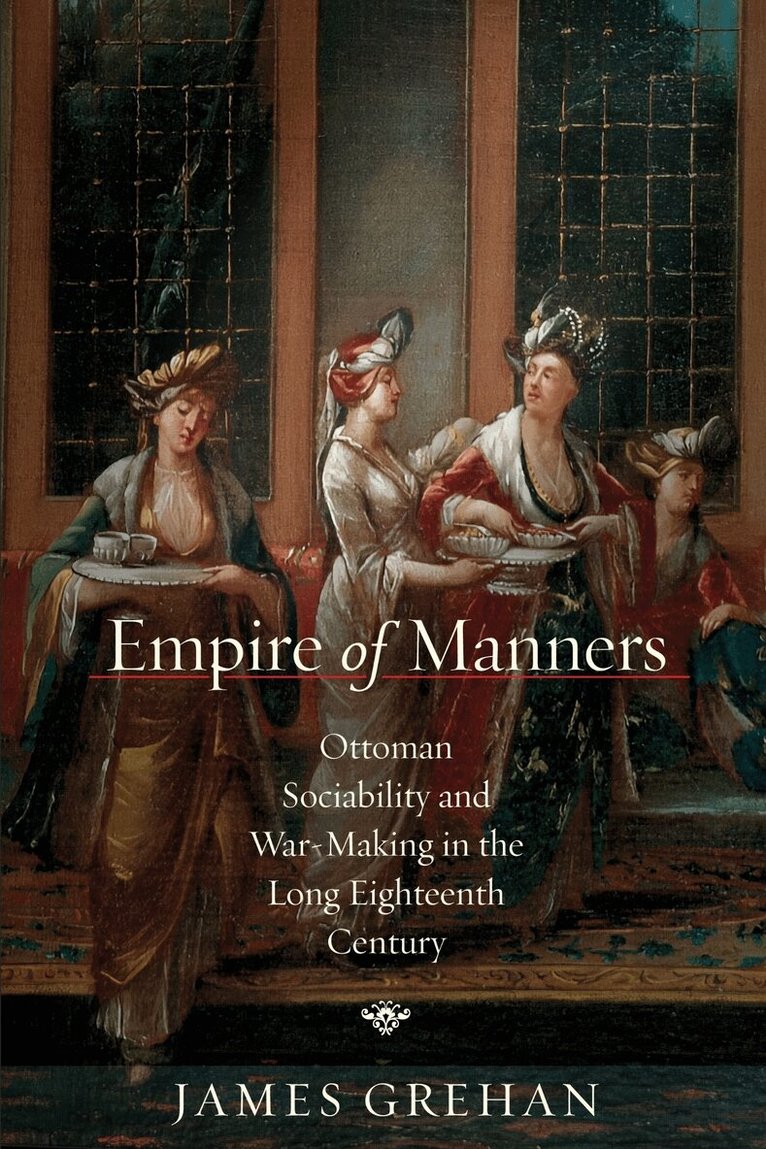
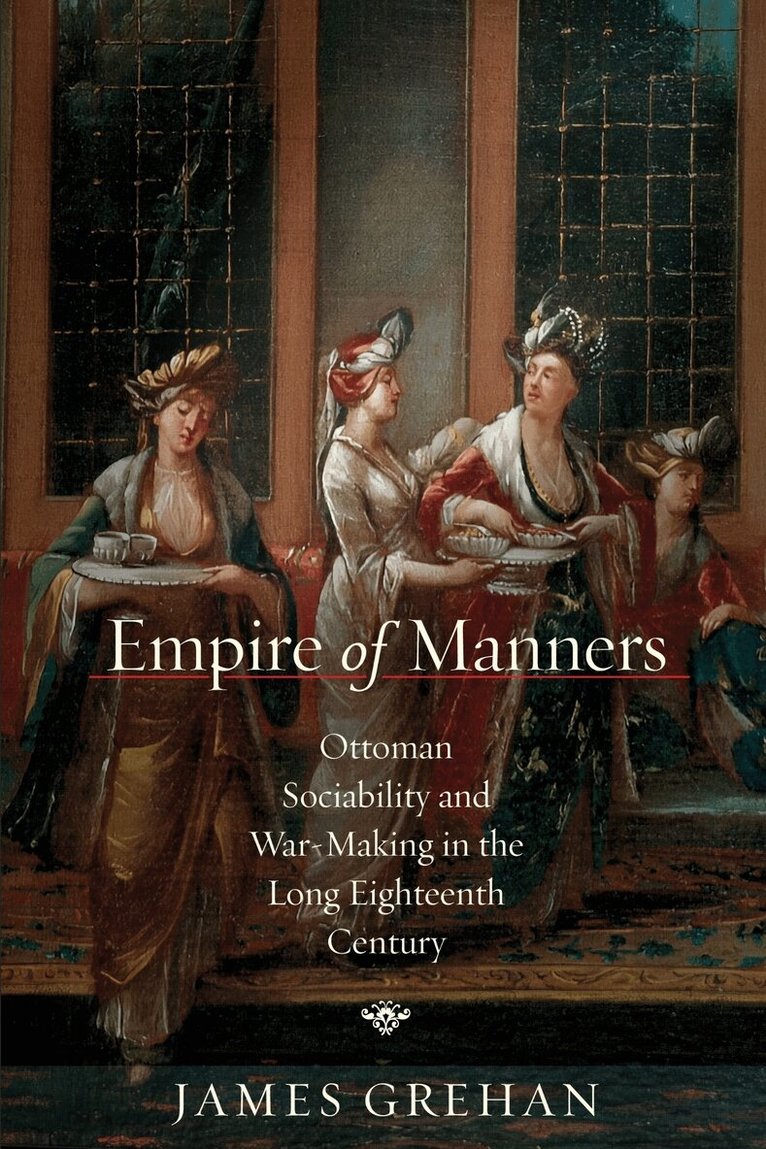
It is easy to believe that manners are empty gestures, little more than social artifice or practiced etiquette whose sole purpose is to project civility and facilitate social interaction. But if we look more closely, they can tell us much more than we might first suppose, revealing what conventional accounts of state, economy, and religion often ignore. With this book, James Grehan offers a panoramic view of manners and sociability across the eighteenth-century Ottoman Empire, from the Balkans to the Middle East to North Africa. Studying chronicles, biographical dictionaries, and travel accounts, he throws new light on the inner dynamics of Ottoman society during a transitional period in Ottoman history which has too often been misunderstood.Empire of Manners proposes a new way of thinking about the history of manners, arguing that violence and war-making, as much as civility and etiquette, have a central role in shaping them. The eighteenth century proved to be a turning point in this paradoxical relationship between violence and manners as war-making turned into a substantially more complex and costly enterprise, leaving a deeper and wider social footprint. The interplay between violence and manners, an unlikely couple, unexpectedly narrates the Ottoman path to the modern age.
Häftad, Engelska, 2025
365 kr
Skickas
It is easy to believe that manners are empty gestures, little more than social artifice or practiced etiquette whose sole purpose is to project civility and facilitate social interaction. But if we look more closely, they can tell us much more than we might first suppose, revealing what conventional accounts of state, economy, and religion often ignore. With this book, James Grehan offers a panoramic view of manners and sociability across the eighteenth-century Ottoman Empire, from the Balkans to the Middle East to North Africa. Studying chronicles, biographical dictionaries, and travel accounts, he throws new light on the inner dynamics of Ottoman society during a transitional period in Ottoman history which has too often been misunderstood.Empire of Manners proposes a new way of thinking about the history of manners, arguing that violence and war-making, as much as civility and etiquette, have a central role in shaping them. The eighteenth century proved to be a turning point in this paradoxical relationship between violence and manners as war-making turned into a substantially more complex and costly enterprise, leaving a deeper and wider social footprint. The interplay between violence and manners, an unlikely couple, unexpectedly narrates the Ottoman path to the modern age.
Inbunden, Engelska, 2026
1 325 kr
Skickas inom 5-8 vardagar
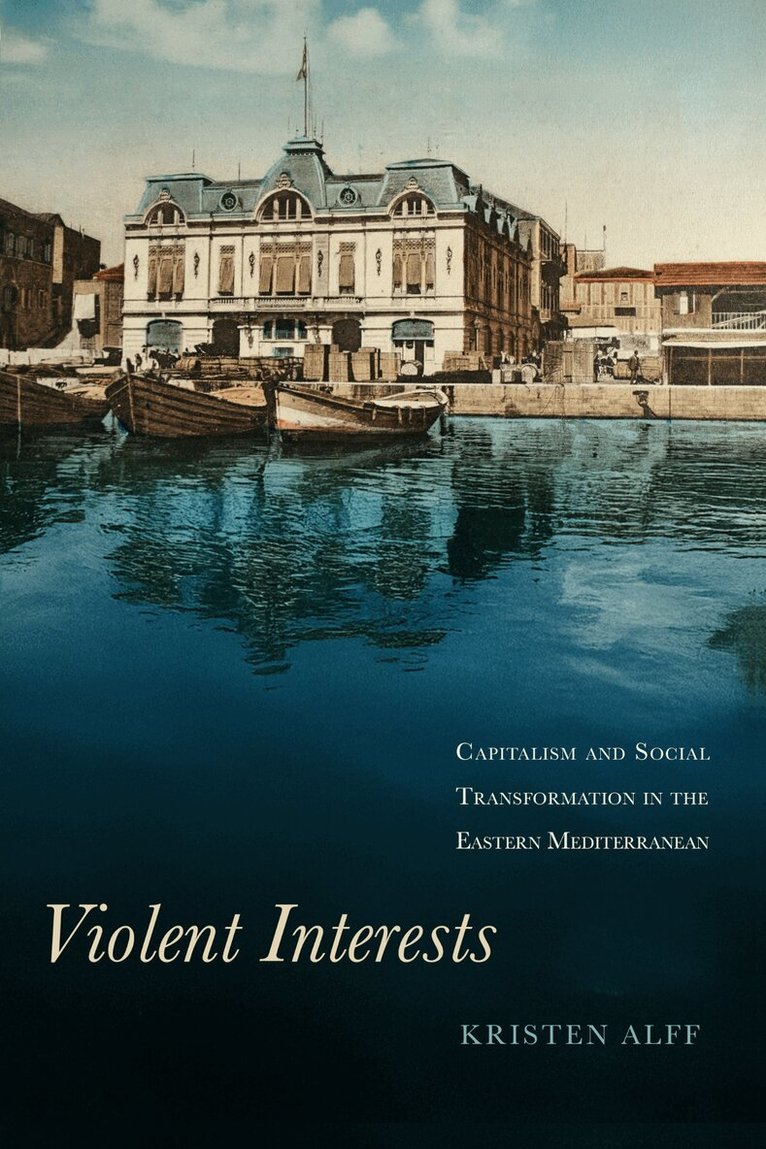
Between the 1830s and 1930s, companies established by Beirut-based businessmen emerged among the largest shareholders in major British manufacturing and trading companies. These companies transformed from small family partnerships to large shareholder corporations that wielded significant influence across the Eastern Mediterranean and Europe. People, capital, and ideas flowed from Beirut to Haifa, Alexandria, Liverpool, and London. In so doing, collaboration and competition across companies and regions gave global capitalism its shape.Violent Interests examines processes of capital accumulation in the Eastern Mediterranean and the dynamic relationships of Beiruti entrepreneurs with centers of capital in Western Europe to reveal the inner workings of capitalism on local, regional, imperial, and global scales. Kristen Alff shows how land, labor, and gender relations were reorganized across the region, and focuses on war – most notably World War I – as powerful points of political economic change critical to the naturalization of capitalism's new social order in the Eastern Mediterranean. With profit propelled by war and the logic of commodification, the companies of late Ottoman Beirut, Alff argues, advanced the subjugation of social relations to the driving demand of capital accumulation – and transformed the Eastern Mediterranean in ways that endured long after the dissolution of both companies and empire.
Häftad, Engelska, 2026
323 kr
Skickas inom 5-8 vardagar
Between the 1830s and 1930s, companies established by Beirut-based businessmen emerged among the largest shareholders in major British manufacturing and trading companies. These companies transformed from small family partnerships to large shareholder corporations that wielded significant influence across the Eastern Mediterranean and Europe. People, capital, and ideas flowed from Beirut to Haifa, Alexandria, Liverpool, and London. In so doing, collaboration and competition across companies and regions gave global capitalism its shape.Violent Interests examines processes of capital accumulation in the Eastern Mediterranean and the dynamic relationships of Beiruti entrepreneurs with centers of capital in Western Europe to reveal the inner workings of capitalism on local, regional, imperial, and global scales. Kristen Alff shows how land, labor, and gender relations were reorganized across the region, and focuses on war – most notably World War I – as powerful points of political economic change critical to the naturalization of capitalism's new social order in the Eastern Mediterranean. With profit propelled by war and the logic of commodification, the companies of late Ottoman Beirut, Alff argues, advanced the subjugation of social relations to the driving demand of capital accumulation – and transformed the Eastern Mediterranean in ways that endured long after the dissolution of both companies and empire.
Inbunden, Engelska, 2026
1 126 kr
Kommande
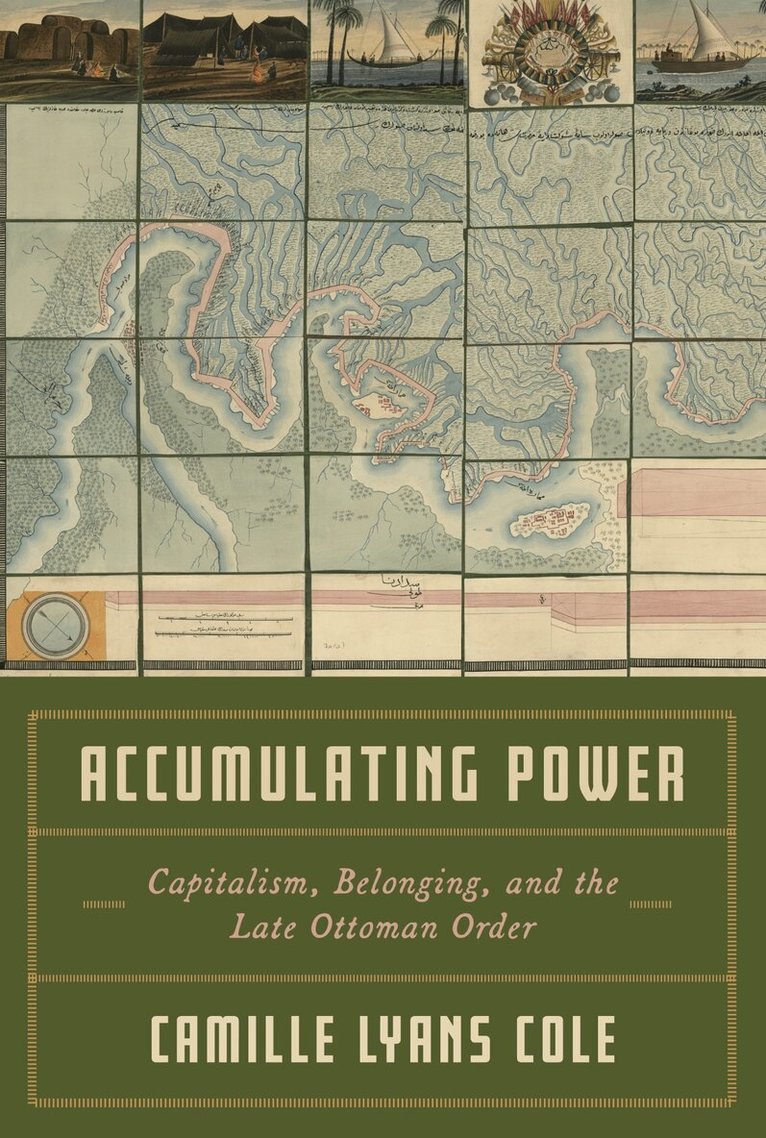
Accumulating Power offers a new way of thinking about belonging, sovereignty, and empire – and how the meanings of being "Ottoman" changed with the intersection of capitalism and imperial reform. Ottoman subjecthood and loyalty transformed around the turn of the twentieth century with the emergence of an international system and intensification of commodity production. Imperial belonging was conditioned by new discourses around community, increasing material conflict, and the new tools, forms, and ideologies of the modern state. People displayed their "Ottoman-ness" in how they coped with these novel political economies and shaped them to their own ends.With this book, Camille Lyans Cole traces Ottoman belonging through the making of a region, the Gulf of Basra – centered on the port city of Basra, extending to southern Iran and Kuwait – where people, water, commodities, ideas, and money all circulated. Here, elites' desire to claim Ottoman-ness often arose at points of friction between regional ways of life and the transforming structures of the territorializing modern empire-state. Cole centers the lives of six individuals, tracing how each contributed to the material and political worlds of the Gulf of Basra. Through these microhistories, Cole reveals how elites used "technologies of the state" – bureaucratic instruments, discourses, and symbols – to accumulate wealth, capital, access to resources, and imperial status and to declare their own Ottoman-ness.