Southern Foodways Alliance Studies in Culture, People, and Place Series – serie
504 kr
Läs direkt efter köp
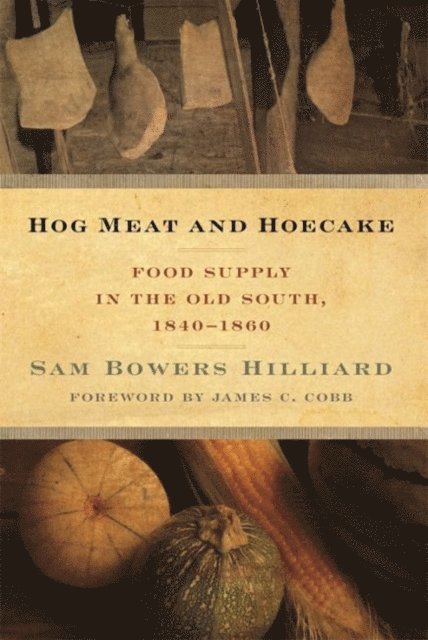
When historical geographer Sam B. Hilliard’s book Hog Meat and Hoecake was published in 1972, it was ahead of its time. It was one of the first scholarly examinations of the important role food played in a region’s history, culture, and politics, and it has since become a landmark of foodways scholarship.In the book Hilliard examines the food supply, dietary habits, and agricultural choices of the antebellum American South, including Arkansas, Louisiana, Mississippi, Tennessee, Alabama, Georgia, North Carolina, and South Carolina. He explores the major southern food sources at the time, the regional production of commodity crops, and the role of those products in the subsistence economy.Far from being primarily a plantation system concentrating on cash crops such as cotton and tobacco, Hilliard demonstrates that the South produced huge amounts of foodstuffs for regional consumption. In fact, the South produced so abundantly that, except for wines and cordials, southern tables were not only stocked with the essentials but amply laden with veritable delicacies as well. (Though contrary to popular opinion, neither grits nor hominy ever came close to being universally used in the South prior to the Civil War.)Hilliard’s focus on food habits, culture, and consumption was revolutionary—as was his discovery that malnutrition was not a major cause of the South’s defeat in the Civil War. His book established the methods and vocabulary for studying a region’s cuisine in the context of its culture that foodways scholars still employ today. This reissue is an excellent and timely reminder of that.
To Live and Dine in Dixie
The Evolution of Urban Food Culture in the Jim Crow South
430 kr
Läs direkt efter köp
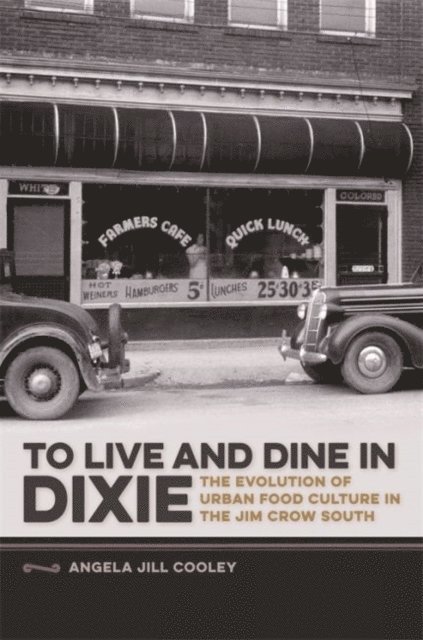
This book explores the changing food culture of the urban American South during the Jim Crow era by examining how race, ethnicity, class, and gender contributed to the development and maintenance of racial segregation in public eating places. Focusing primarily on the 1900s to the 1960s, Angela Jill Cooley identifies the cultural differences between activists who saw public eating places like urban lunch counters as sites of political participation and believed access to such spaces a right of citizenship, and white supremacists who interpreted desegregation as a challenge to property rights and advocated local control over racial issues.Significant legal changes occurred across this period as the federal government sided at first with the white supremacists but later supported the unprecedented progress of the Civil Rights Act of 1964, which—among other things—required desegregation of the nation’s restaurants. Because the culture of white supremacy that contributed to racial segregation in public accommodations began in the white southern home, Cooley also explores domestic eating practices in nascent southern cities and reveals how the most private of activities—cooking and dining— became a cause for public concern from the meeting rooms of local women’s clubs to the halls of the U.S. Congress.
Creole Italian
Sicilian Immigrants and the Shaping of New Orleans Food Culture
1 344 kr
Läs direkt efter köp
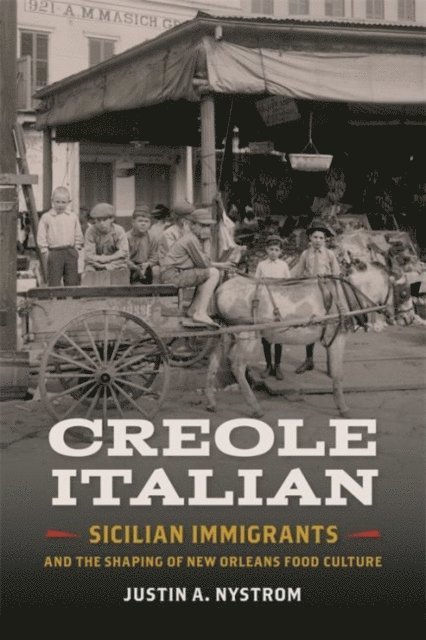
In Creole Italian, Justin A. Nystrom explores the influence Sicilian immigrants have had on New Orleans foodways. His culinary journey follows these immigrants from their first impressions on Louisiana food culture in the mid-1830s and along their path until the 1970s. Each chapter touches on events that involved Sicilian immigrants and the relevancy of their lives and impact on New Orleans. Sicilian immigrants cut sugarcane, sold groceries, ran truck farms, operated bars and restaurants, and manufactured pasta. Citing these cultural confluences, Nystrom posits that the significance of Sicilian influence on New Orleans foodways traditionally has been undervalued and instead should be included, along with African, French, and Spanish cuisine, in the broad definition of “creole.”Creole Italian chronicles how the business of food, broadly conceived, dictated the reasoning, means, and outcomes for a large portion of the nearly forty thousand Sicilian immigrants who entered America through the port of New Orleans in the nineteenth and early-twentieth centuries and how their actions and those of their descendants helped shape the food town we know today.
Catfish Dream
Ed Scott's Fight for His Family Farm and Racial Justice in the Mississippi Delta
1 176 kr
Läs direkt efter köp
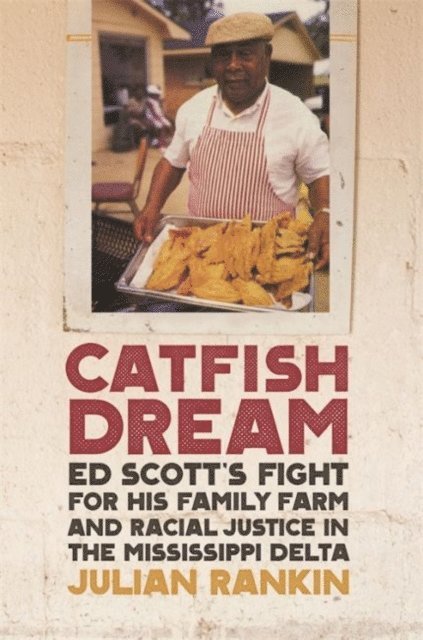
Catfish Dream centers around the experiences, family, and struggles of Ed Scott Jr. (born in 1922), a prolific farmer in the Mississippi Delta and the first ever nonwhite owner and operator of a catfish plant in the nation.Both directly and indirectly, the economic and political realities of food and subsistence affect the everyday lives of Delta farmers and the people there. Ed’s own father, Edward Sr., was a former sharecropper turned landowner who was one of the first black men to grow rice in the state. Ed carries this mantle forth with his soybean and rice farming and later with his catfish operation, which fed the black community both physically and symbolically. He provides an example for economic mobility and activism in a region of the country that is one of the nation’s poorest and has one of the most drastic disparities in education and opportunity, a situation especially true for the Delta’s vast African American population. With Catfish Dream Julian Rankin provides a fascinating portrait of a place through his intimate biography of Scott, a hero at once so typical and so exceptional in his community.
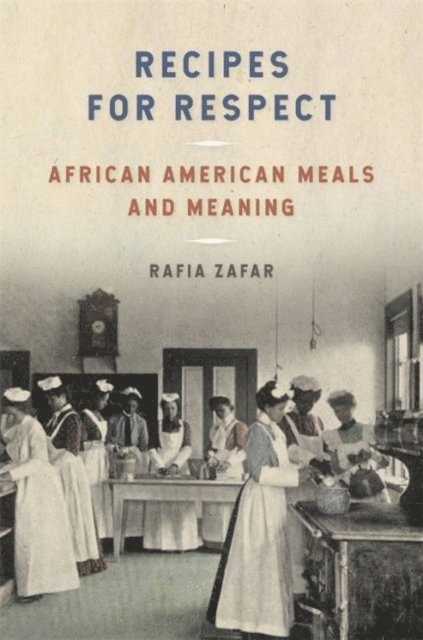
Recipes for Respect
African American Meals and Meaning
1 680 kr
Läs direkt efter köp
Food studies, once trendy, has settled into the public arena. In the academy, scholarship on food and literary culture constitutes a growing river within literary and cultural studies, but writing on African American food and dining remains a tributary. Recipes for Respect bridges this gap, illuminating the role of foodways in African American culture as well as the contributions of Black cooks and chefs to what has been considered the mainstream.Beginning in the early nineteenth century and continuing nearly to the present day, African Americans have often been stereotyped as illiterate kitchen geniuses. Rafia Zafar addresses this error, highlighting the long history of accomplished African Americans within our culinary traditions, as well as the literary and entrepreneurial strategies for civil rights and respectability woven into the written records of dining, cooking, and serving. Whether revealed in cookbooks or fiction, memoirs or hotel-keeping manuals, agricultural extension bulletins or library collections, foodways knowledge sustained Black strategies for self-reliance and dignity, the preservation of historical memory, and civil rights and social mobility. If, to follow Mary Douglas’s dictum, food is a field of action—that is, a venue for social intimacy, exchange, or aggression—African American writing about foodways constitutes an underappreciated critique of the racialized social and intellectual spaces of the United States.