Annals of Cultural Psychology – serie
Visar alla böcker i serien Annals of Cultural Psychology. Handla med fri frakt och snabb leverans.
10 produkter
10 produkter
583 kr
Skickas inom 7-10 vardagar
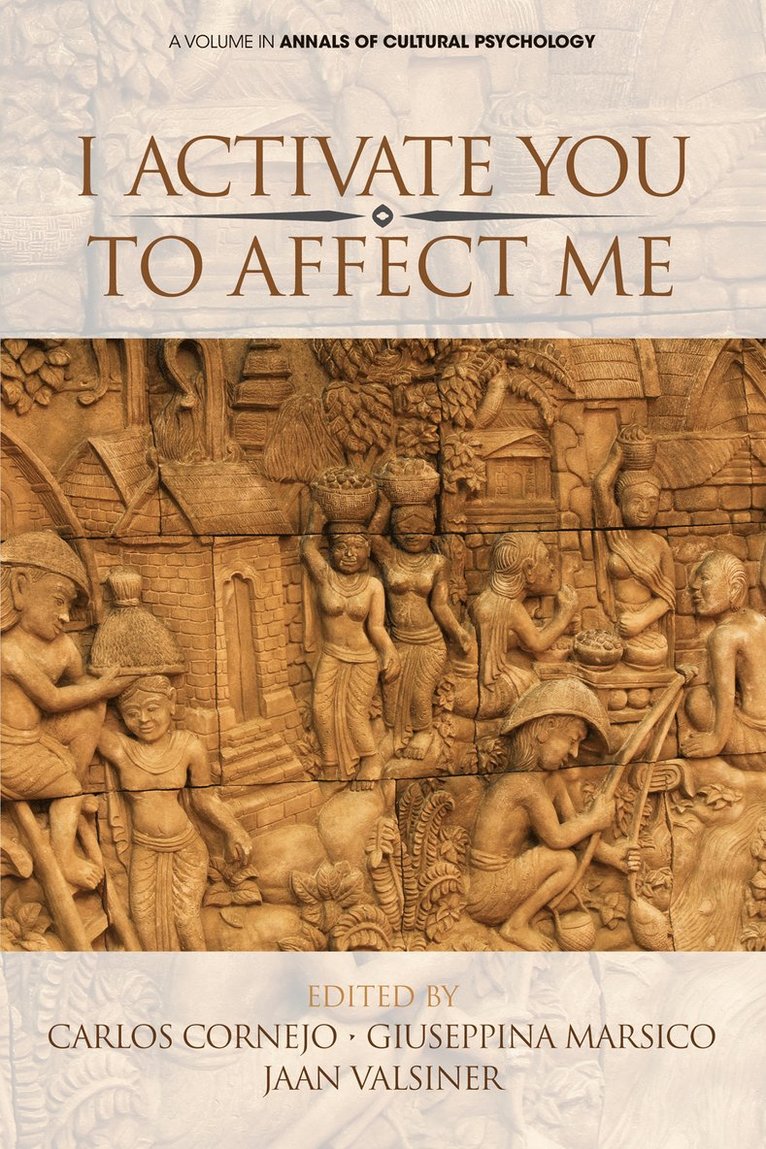
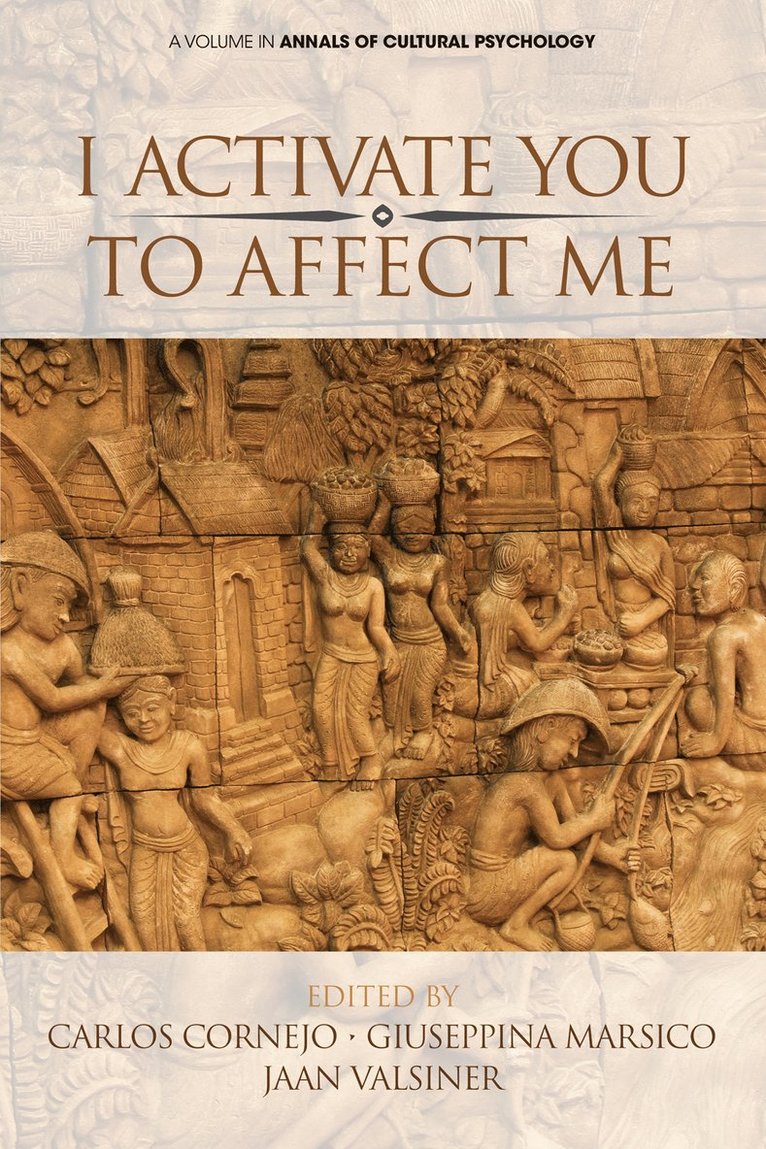
The second volume of Annals of Cultural Psychology is dedicated to the affective nature of human social relationships with the environment. The chapters here included explore the historical, theoretical and practical dimensions of the concept of affectivating originally introduced by one of us (Valsiner, 1999), as a potential tool of inquiry into the affective-sensitive dimension of psychological life within a cultural-psychological framework. The concept of affectivating involves two psychological dimensions often undervalued or even obliterated from contemporary cultural psychology, namely the affective involvement and the agentivity of people in their social encounters.Through several examples --‘feeling-at-home’, silence spaces and rituals, memorials, music and poetry, among others-- we show individual’s concrete actions in mundane everyday life aim to give an affective personal sense to the world around. This focuses on the primary affective nature of human meaning construction that guides the person in one’s continuing feeling-into-the-world.At a theoretical level the notion of affectivation challenges contemporary Cultural Psychology to rescue subjectivity, not only symbolism. Affectivation propounds a return to the long, but partially forgotten, organismic tradition, represented in the history by thinkers like Wilhelm Dilthey, Jakob von Uexküll and Kurt Goldstein. Cultural psychology has to bring semiosis back to the vital background of human experience.
1 032 kr
Skickas inom 7-10 vardagar
The second volume of Annals of Cultural Psychology is dedicated to the affective nature of human social relationships with the environment. The chapters here included explore the historical, theoretical and practical dimensions of the concept of affectivating originally introduced by one of us (Valsiner, 1999), as a potential tool of inquiry into the affective-sensitive dimension of psychological life within a cultural-psychological framework. The concept of affectivating involves two psychological dimensions often undervalued or even obliterated from contemporary cultural psychology, namely the affective involvement and the agentivity of people in their social encounters.Through several examples --‘feeling-at-home’, silence spaces and rituals, memorials, music and poetry, among others-- we show individual’s concrete actions in mundane everyday life aim to give an affective personal sense to the world around. This focuses on the primary affective nature of human meaning construction that guides the person in one’s continuing feeling-into-the-world.At a theoretical level the notion of affectivation challenges contemporary Cultural Psychology to rescue subjectivity, not only symbolism. Affectivation propounds a return to the long, but partially forgotten, organismic tradition, represented in the history by thinkers like Wilhelm Dilthey, Jakob von Uexküll and Kurt Goldstein. Cultural psychology has to bring semiosis back to the vital background of human experience.
583 kr
Skickas inom 7-10 vardagar
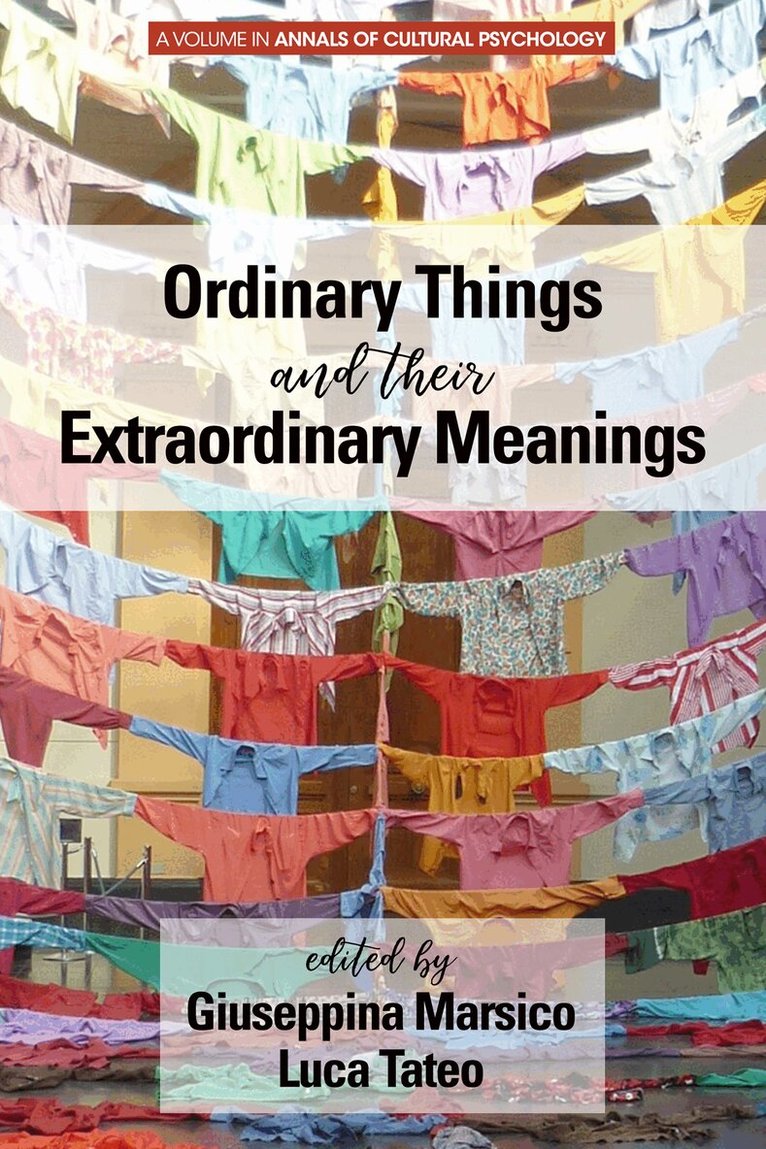
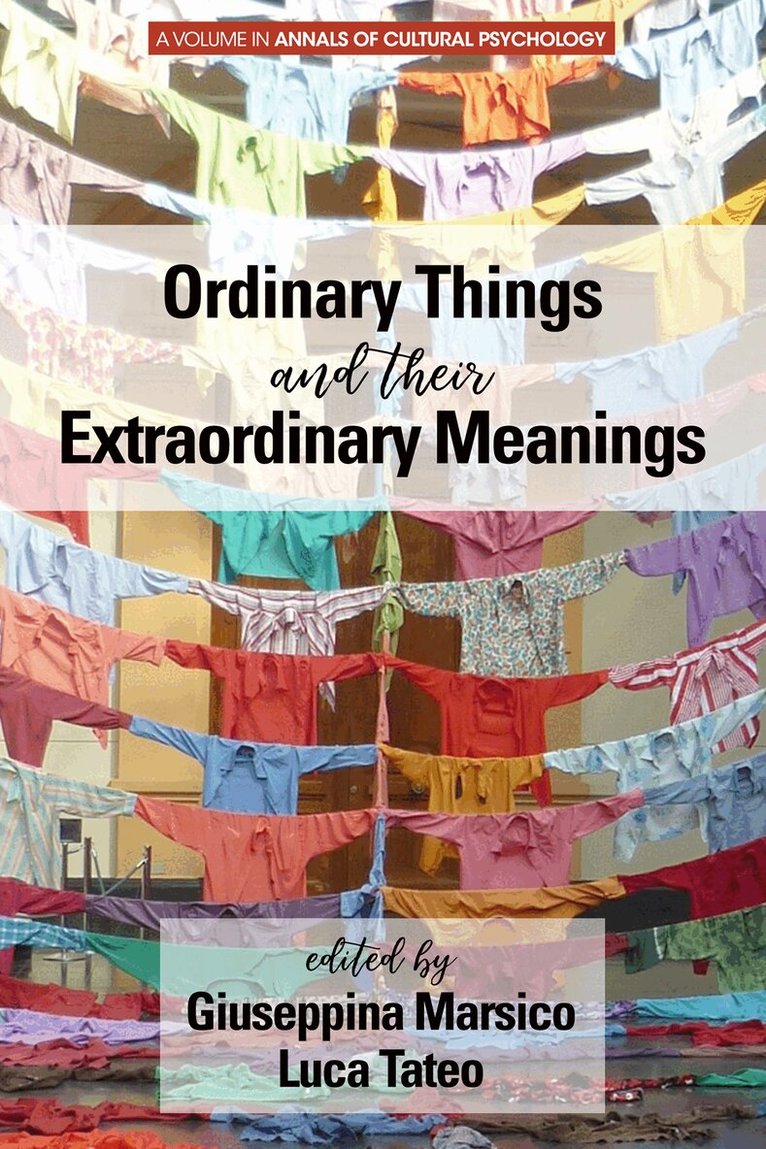
The book provides a new look at the everyday relationship between psychological processes and extraordinary aspects of ordinary phenomena. Why should we deal with ordinary things? People’s life is made of everyday practical, taken-for-granted things, such as driving a car, using money, listening music, etc. When you drive from home to workplace, you are migrating between contexts. Is this an empty space you are crossing, or the time you spend into the car is something meaningful?In psychological terms, things have, at least, three levels of existence, a material, a symbolic and an affective one. The underlying idea is that the symbolic elaboration of everyday things is characterized by the transcendence of the particular object-sign, leading to the creation of more and more complex sign fields. These fields expand according to an inclusive logic up to dialogically and dialectically incorporate opposites (i.e. clean/dirty, transparent/opaque, hide/ show, join/divide, slow/fast, etc.). Even the meaning of “ordinary” and “extraordinary” follow such an inclusive logic: if you give a positive value to ordinary, extraordinary is rule-breaking; otherwise, if ordinary means trivial, extraordinary assumes a positive value. Besides, things are cultural artifacts mediating the experience of the world, the psychological processes and the construction of mind. Reflecting upon “things” is thus a more meaningful pathway to understand Psyche.
1 032 kr
Skickas inom 7-10 vardagar
The book provides a new look at the everyday relationship between psychological processes and extraordinary aspects of ordinary phenomena. Why should we deal with ordinary things? People’s life is made of everyday practical, taken-for-granted things, such as driving a car, using money, listening music, etc. When you drive from home to workplace, you are migrating between contexts. Is this an empty space you are crossing, or the time you spend into the car is something meaningful?In psychological terms, things have, at least, three levels of existence, a material, a symbolic and an affective one. The underlying idea is that the symbolic elaboration of everyday things is characterized by the transcendence of the particular object-sign, leading to the creation of more and more complex sign fields. These fields expand according to an inclusive logic up to dialogically and dialectically incorporate opposites (i.e. clean/dirty, transparent/opaque, hide/ show, join/divide, slow/fast, etc.). Even the meaning of “ordinary” and “extraordinary” follow such an inclusive logic: if you give a positive value to ordinary, extraordinary is rule-breaking; otherwise, if ordinary means trivial, extraordinary assumes a positive value. Besides, things are cultural artifacts mediating the experience of the world, the psychological processes and the construction of mind. Reflecting upon “things” is thus a more meaningful pathway to understand Psyche.
583 kr
Skickas inom 7-10 vardagar
This volume aims at further articulating and developing the cultural psychological interest in community. It focuses on the processes through which individuals constitute communities and the processes that restrain or enable moving forward with others. This interest is necessary especially now that the world is on the move. Economic crises, political crises and ecological crises have led to reinforced migration patterns, a rise in authoritarianism and xenophobia, and have become a threat to the survival of the world as we know it, particularly to minorities and indigenous communities. At the same time, we are witnessing the birth of new networks, dialogues and actions, generated by people within, between and among communities. Therefore, this volume collects interdisciplinary theoretical, empirical and applied contributions enabling engagement with communities in cultural psychology. This involves both reflections on meaning-making processes and projections on how they feed into social transformation, in exchange with community psychology, anthropology and sociology.People vitally depend on community to effectively negotiate or resist in complex intercultural or intergroup settings. In the wake of human rights violations or to prevent further damage to the environment a community is needed to undertake action. From feminist movements and disability activism to the otherwise marginalized: how do people constitute communities? How do they resist as a community? How can cultural psychology contribute not only to understand meaning-making processes, but also connect them to processes of social transformation?Migration, moving through and connecting to different communities can affect meaning making in significant ways. People consider themselves as members of one or another community, but they also increasingly enter into new settings of social practice with new means for action. How might creative meaning-making build bridges between communities? How might new community arise in between or with others? How can cultural psychology deal with intercultural processes without reifying different cultures?These are the central questions that the, mostly emerging, scholars from many corners of the world address in this book. Their research addresses different institutional settings that are resisted and transformed from within, in dialogue with others. From social work, NGOs and municipal activity to university talent mobility and art projects for youth. Other settings are newly inhabited, from the public square and the social media to a foreign city and neighborhood church. Thus, more communities appear on the map of cultural psychology.
1 032 kr
Skickas inom 7-10 vardagar
This volume aims at further articulating and developing the cultural psychological interest in community. It focuses on the processes through which individuals constitute communities and the processes that restrain or enable moving forward with others. This interest is necessary especially now that the world is on the move. Economic crises, political crises and ecological crises have led to reinforced migration patterns, a rise in authoritarianism and xenophobia, and have become a threat to the survival of the world as we know it, particularly to minorities and indigenous communities. At the same time, we are witnessing the birth of new networks, dialogues and actions, generated by people within, between and among communities. Therefore, this volume collects interdisciplinary theoretical, empirical and applied contributions enabling engagement with communities in cultural psychology. This involves both reflections on meaning-making processes and projections on how they feed into social transformation, in exchange with community psychology, anthropology and sociology.People vitally depend on community to effectively negotiate or resist in complex intercultural or intergroup settings. In the wake of human rights violations or to prevent further damage to the environment a community is needed to undertake action. From feminist movements and disability activism to the otherwise marginalized: how do people constitute communities? How do they resist as a community? How can cultural psychology contribute not only to understand meaning-making processes, but also connect them to processes of social transformation?Migration, moving through and connecting to different communities can affect meaning making in significant ways. People consider themselves as members of one or another community, but they also increasingly enter into new settings of social practice with new means for action. How might creative meaning-making build bridges between communities? How might new community arise in between or with others? How can cultural psychology deal with intercultural processes without reifying different cultures?These are the central questions that the, mostly emerging, scholars from many corners of the world address in this book. Their research addresses different institutional settings that are resisted and transformed from within, in dialogue with others. From social work, NGOs and municipal activity to university talent mobility and art projects for youth. Other settings are newly inhabited, from the public square and the social media to a foreign city and neighborhood church. Thus, more communities appear on the map of cultural psychology.
519 kr
Skickas inom 7-10 vardagar
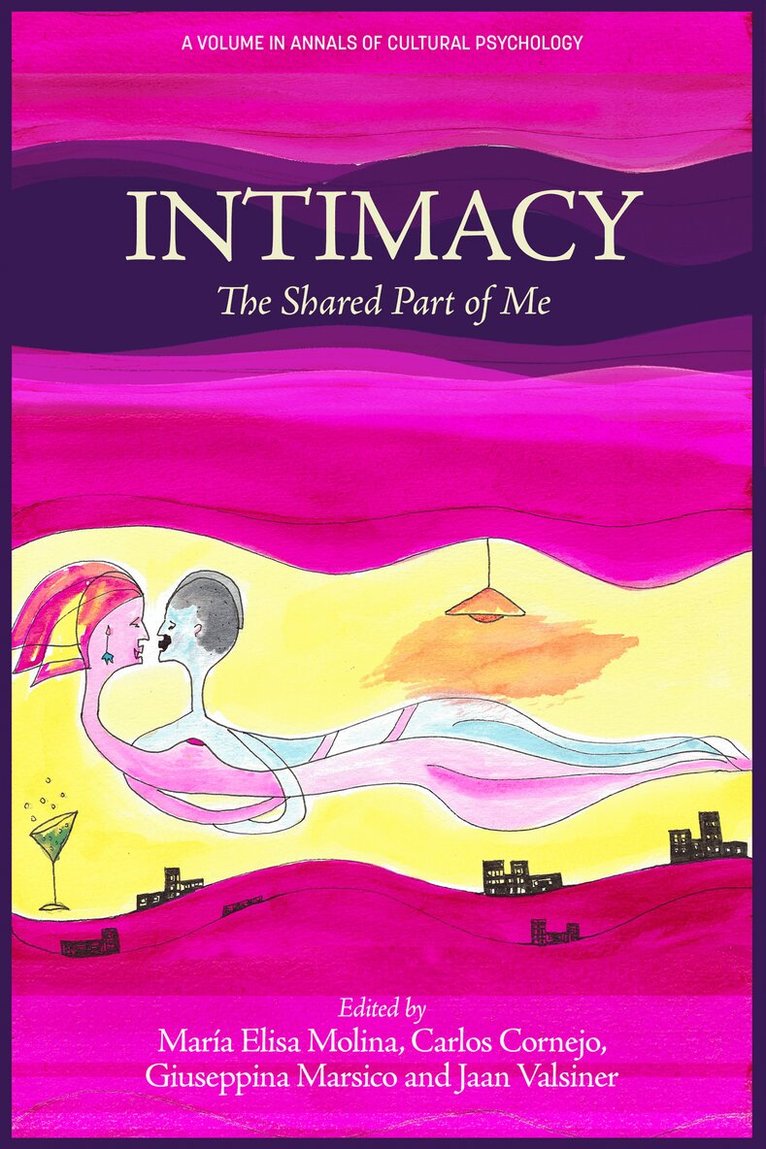
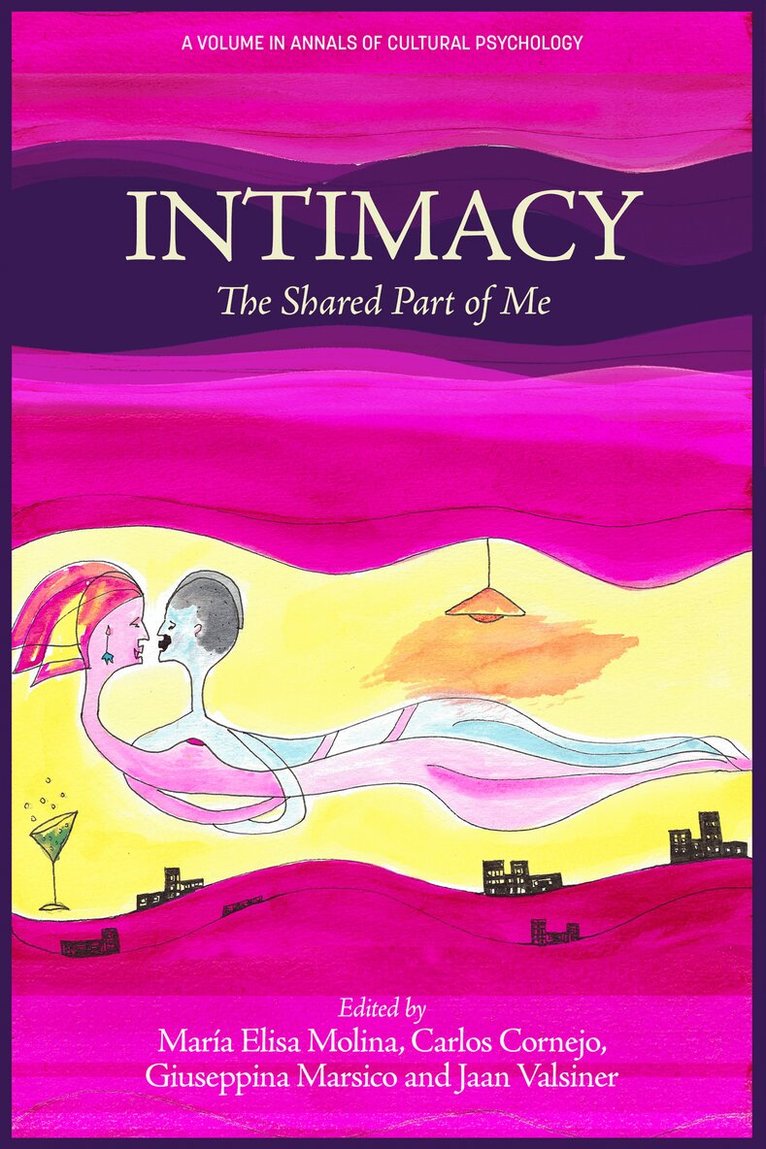
The concept of intimacy puts forth important challenges to contemporary cultural psychology. Intimacy refers to a felt experience of interiority that although is intuitively comprehensible, does not have rigorously defined limits. Intimacy can refer to a content, an object, a person, ownership, or even a part of one’s own body.A potentially problematic issue for cultural psychology is that acknowledging intimacy seems to bound the Self to areas disjointed from the social sphere. In a globalized world, we witness a developmental process where social life becomes sectioned, where people are involved in an identity search by foregrounding certain social roles. With this backdrop in mind, people redefine and rebuild their intimacy spaces and the ways they roam from these to the public and collective realm.Exploring the current historical situation leads us to consider intimacy as culture in the making; certainly, in the way it manifests itself, but particularly in how we approach and understand it. The lived (experienced) dimension of intimacy becomes truly important, since it casts new light on what we mean by intimacy in different spheres of the self’s life, as well as life with others.
958 kr
Skickas inom 7-10 vardagar
The concept of intimacy puts forth important challenges to contemporary cultural psychology. Intimacy refers to a felt experience of interiority that although is intuitively comprehensible, does not have rigorously defined limits. Intimacy can refer to a content, an object, a person, ownership, or even a part of one’s own body.A potentially problematic issue for cultural psychology is that acknowledging intimacy seems to bound the Self to areas disjointed from the social sphere. In a globalized world, we witness a developmental process where social life becomes sectioned, where people are involved in an identity search by foregrounding certain social roles. With this backdrop in mind, people redefine and rebuild their intimacy spaces and the ways they roam from these to the public and collective realm.Exploring the current historical situation leads us to consider intimacy as culture in the making; certainly, in the way it manifests itself, but particularly in how we approach and understand it. The lived (experienced) dimension of intimacy becomes truly important, since it casts new light on what we mean by intimacy in different spheres of the self’s life, as well as life with others.
647 kr
Skickas inom 7-10 vardagar
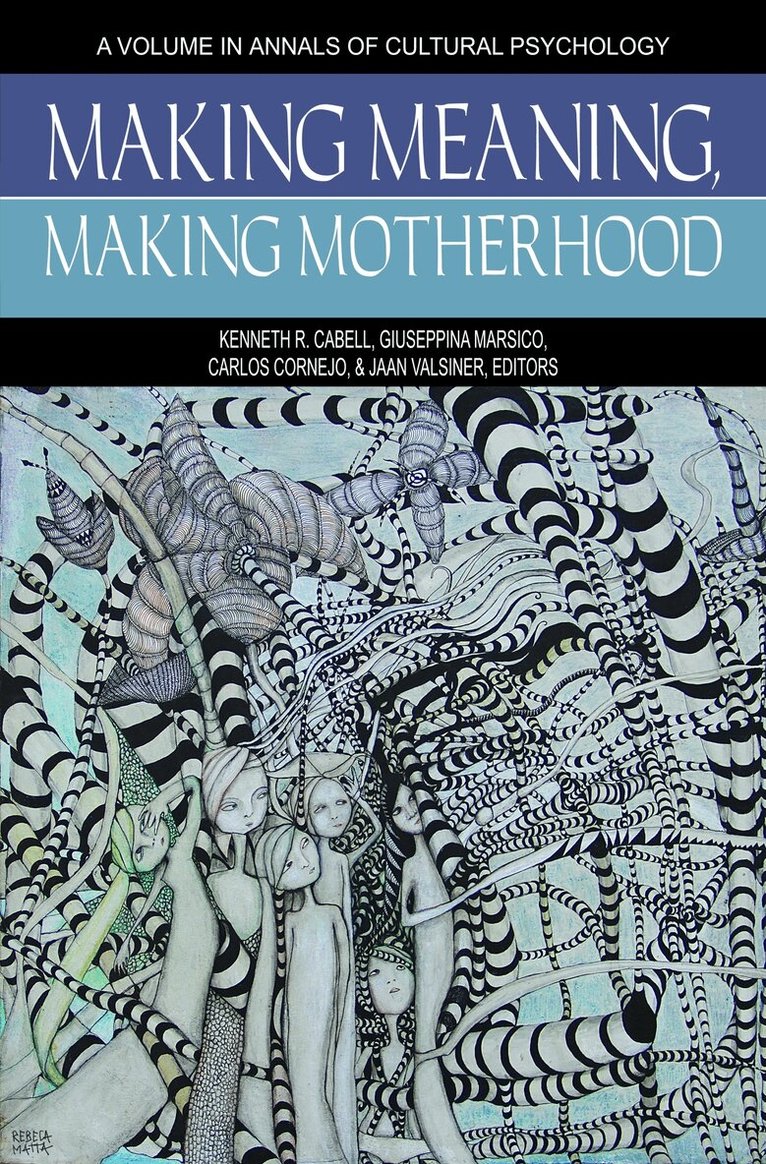
This volume is the firstborn of the Annals of Cultural Psychology-- a yearly edited book series in the field of Cultural Psychology. It came into being as there is a need for reflection on “where and what” the discipline needs to further develop, in such a way, the current frontiers and to foster the elaboration of new fruitful ideas.The topic chosen for the first volume is perhaps the most fundamental of all- motherhood. We are all here because at some unspecifiable time in the past, different women labored hard to bring each of us into this World. These women were not thinking of culture, but were just giving birth. Yet by their reproductive success—and years of worry about our growing up—we are now, thankfully to them, in a position to discuss the general notion of motherhood from the angle of cultural psychology. Each person who is born needs a mother—first the real one, and then possibly a myriad of symbolic ones—from “my mother” to “mother superior” to “my motherland”. Thus, it is not by coincidence if the first volume of the series is about motherhood. We the editors feel it is the topic that links our existence with one of the universals of human survival as a species.In very general terms what this book aims to do is to question the ontology of Motherhood in favor of an ontogenetic approach to Life’s Course, where having a child represents a big transition in a woman’s trajectory and where becoming (or not becoming) mother is heuristically more interesting than being a mother. We here present a reticulated work that digs into a cultural phenomenon giving to the readers the clear idea of making motherhood (and not taking for granted motherhood). By looking at absences, shadows and ruptures rather than the normativeness of motherhood, cultural psychology can provide a theoretical model in explaining the cultural multifaceted nature of human activity.
1 096 kr
Skickas inom 7-10 vardagar
This volume is the firstborn of the Annals of Cultural Psychology-- a yearly edited book series in the field of Cultural Psychology. It came into being as there is a need for reflection on “where and what” the discipline needs to further develop, in such a way, the current frontiers and to foster the elaboration of new fruitful ideas.The topic chosen for the first volume is perhaps the most fundamental of all- motherhood. We are all here because at some unspecifiable time in the past, different women labored hard to bring each of us into this World. These women were not thinking of culture, but were just giving birth. Yet by their reproductive success—and years of worry about our growing up—we are now, thankfully to them, in a position to discuss the general notion of motherhood from the angle of cultural psychology. Each person who is born needs a mother—first the real one, and then possibly a myriad of symbolic ones—from “my mother” to “mother superior” to “my motherland”. Thus, it is not by coincidence if the first volume of the series is about motherhood. We the editors feel it is the topic that links our existence with one of the universals of human survival as a species.In very general terms what this book aims to do is to question the ontology of Motherhood in favor of an ontogenetic approach to Life’s Course, where having a child represents a big transition in a woman’s trajectory and where becoming (or not becoming) mother is heuristically more interesting than being a mother. We here present a reticulated work that digs into a cultural phenomenon giving to the readers the clear idea of making motherhood (and not taking for granted motherhood). By looking at absences, shadows and ruptures rather than the normativeness of motherhood, cultural psychology can provide a theoretical model in explaining the cultural multifaceted nature of human activity.