Archivist's Library – serie
Visar alla böcker i serien Archivist's Library. Handla med fri frakt och snabb leverans.
8 produkter
8 produkter
Del 1 - Archivist's Library
Trusting Records
Legal, Historical and Diplomatic Perspectives
Inbunden, Engelska, 2000
1 113 kr
Skickas inom 10-15 vardagar
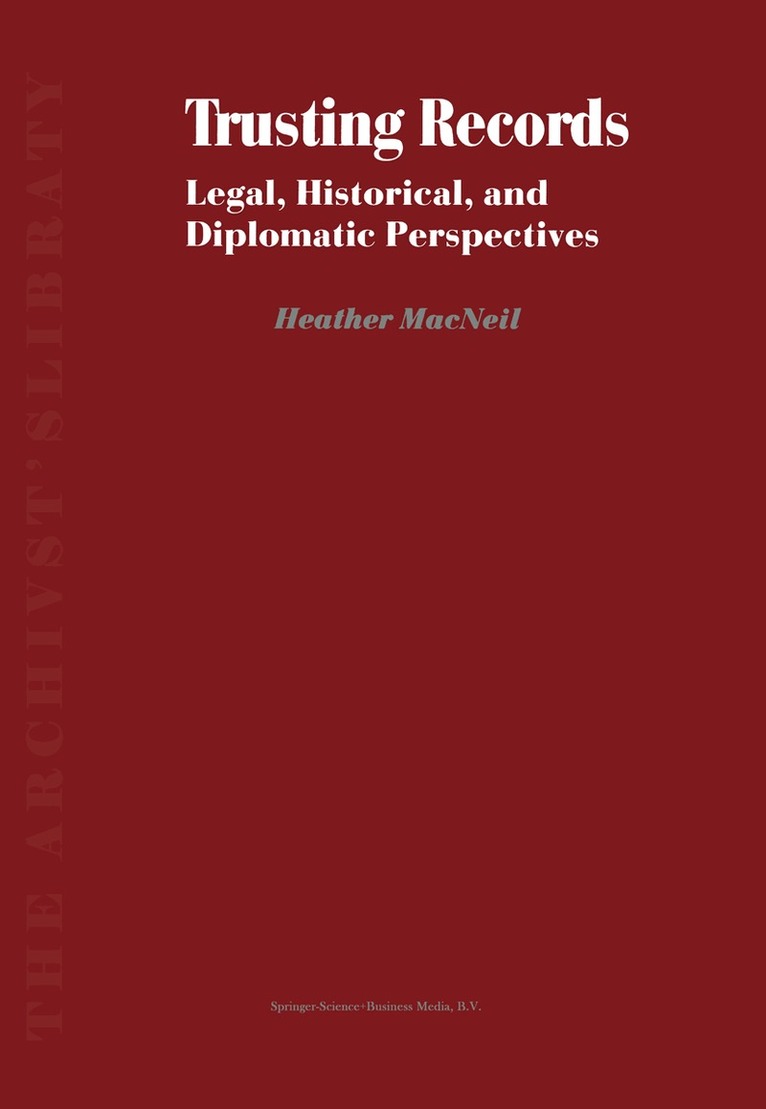
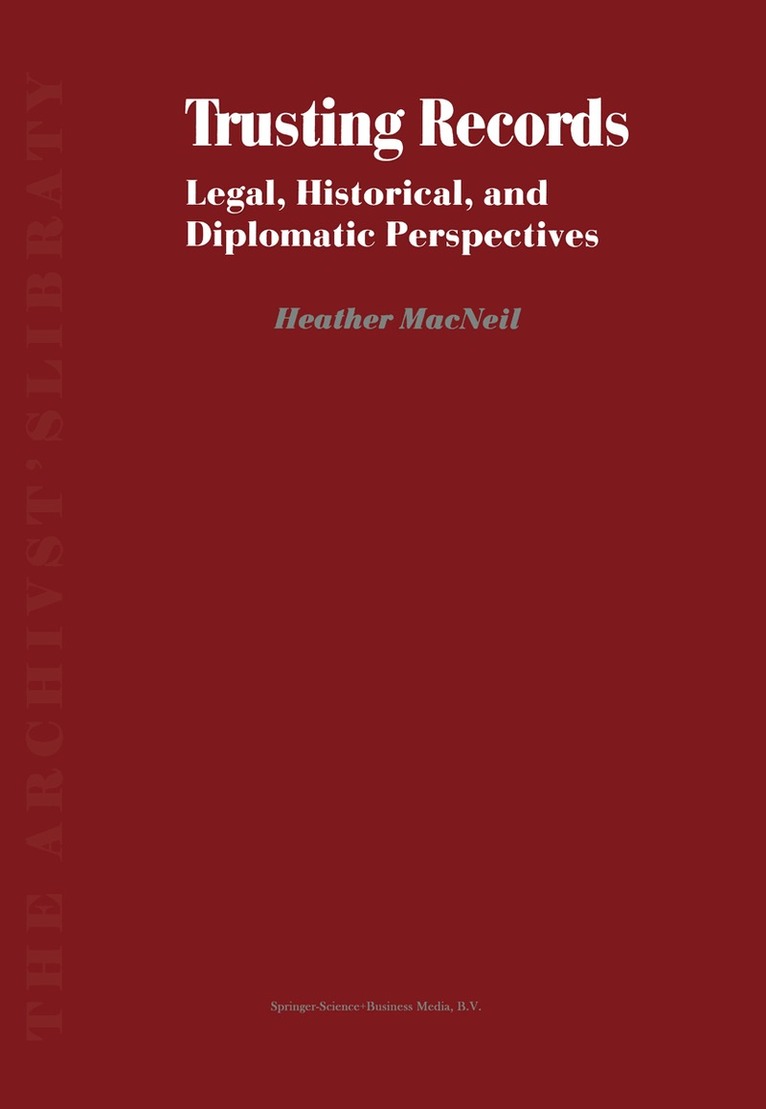
A trustworthy record is one that is both an accurate statement of facts and a genuine manifestation of those facts. Record trustworthiness thus has two qualitative dimensions: reliability and authenticity. Reliability means that the record is capable of standing for the facts to which it attests, while authenticity means that the record is what it claims to be. This study explores the evolution of the principles and methods for determining record trustworthiness from antiquity to the digital age, and from the perspectives of law and history. It also examines recent efforts undertaken by researchers in the field of archival science to develop methods for ensuring the trustworthiness of records created and maintained in electronic systems. Audience: The target audience for this study is legal scholars working in the field of evidence law, historians working in the field of historical methodology, and recordkeeping professionals (records managers, information technology specialists, archivists) working on the design and implementation of contemporary organizational recordkeeping systems.
Del 2 - Archivist's Library
Preservation of the Integrity of Electronic Records
Inbunden, Engelska, 2002
1 065 kr
Skickas inom 10-15 vardagar
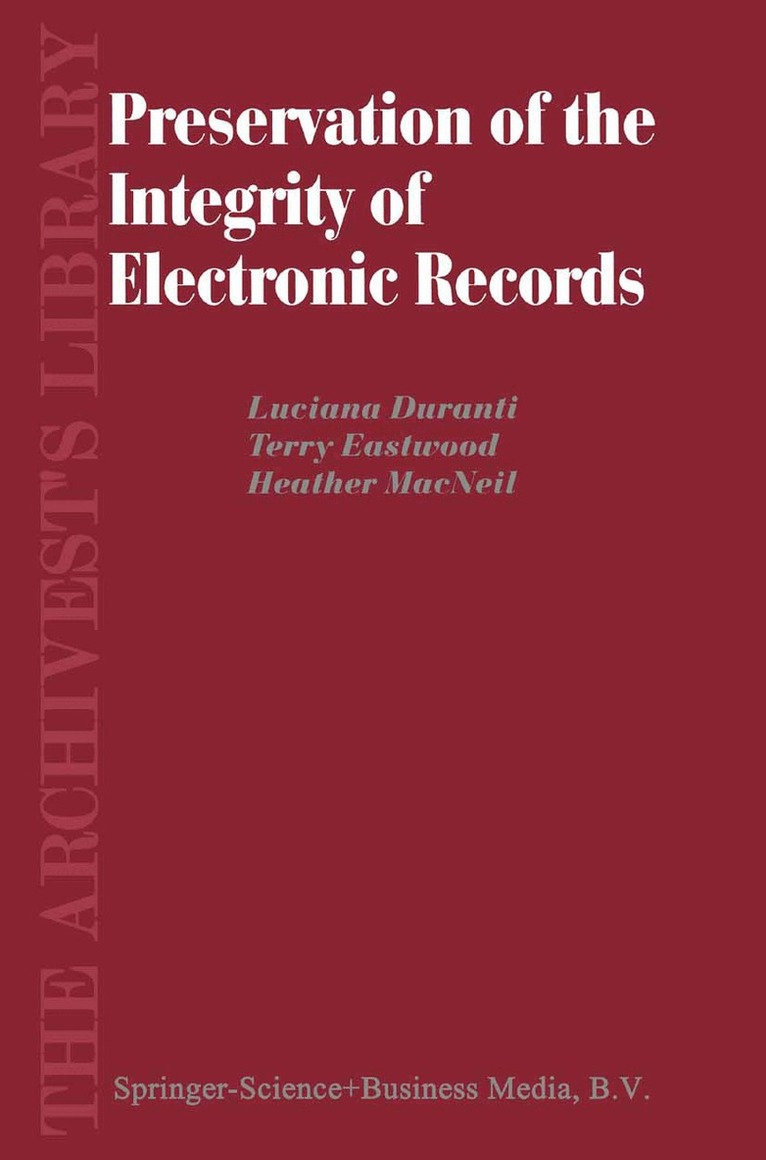
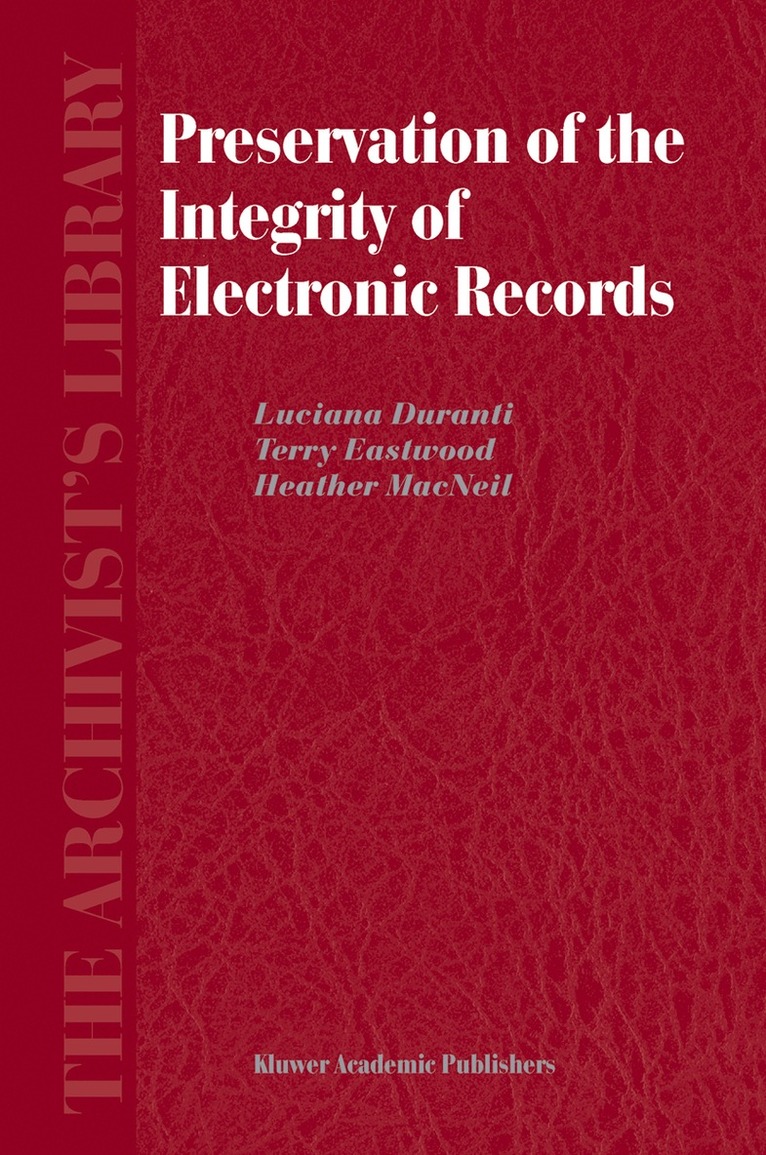
By Terry Eastwood This book reports the findings of a research project on the means of protecting the integrity of active and semi-active electronic records. The project, which is commonly referred to as "the UBC Project," was conceived by two of the authors of this book, Luciana Duranti and Terry Eastwood, and conducted between 1994 and 1997. The third author, Heather MacNeil, who worked formally as the principal research assistant on the project, acted as an equal in the research and in the writing of this book. The project investigated a number of fundamental questions that have arisen over the past decade as a consequence of the rapid development and use of computer technology for the creation, maintenance, and preservation of recorded information. One of the first comprehensive studies of the issues associated with the management of electronic records was conducted by the United Nations. The study, commonly known as the ACCIS report, aimed to "develop guidelines for implementation of electronic archives and records management programmes for use by United Nations organizations, taking into account traditional archives and records management practices. " The report of the study of electronic records in eighteen United Nations organizations identified a number of enduring issues. It recognized that the United Nations had to "distinguish between record and non-record material. "l It recognized the problem of ensuring the authenticity of records, which, rather narrowly, it construed as "assuring legality.
Inbunden, Engelska, 2004
1 113 kr
Skickas inom 10-15 vardagar
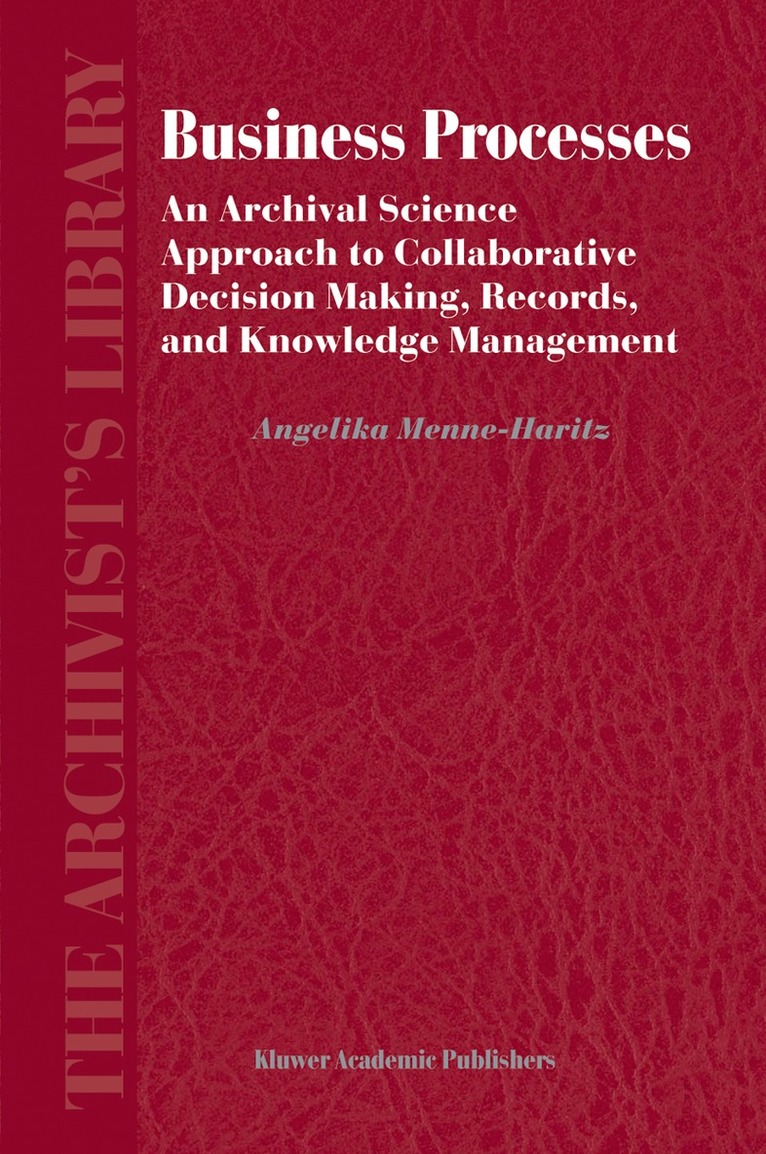
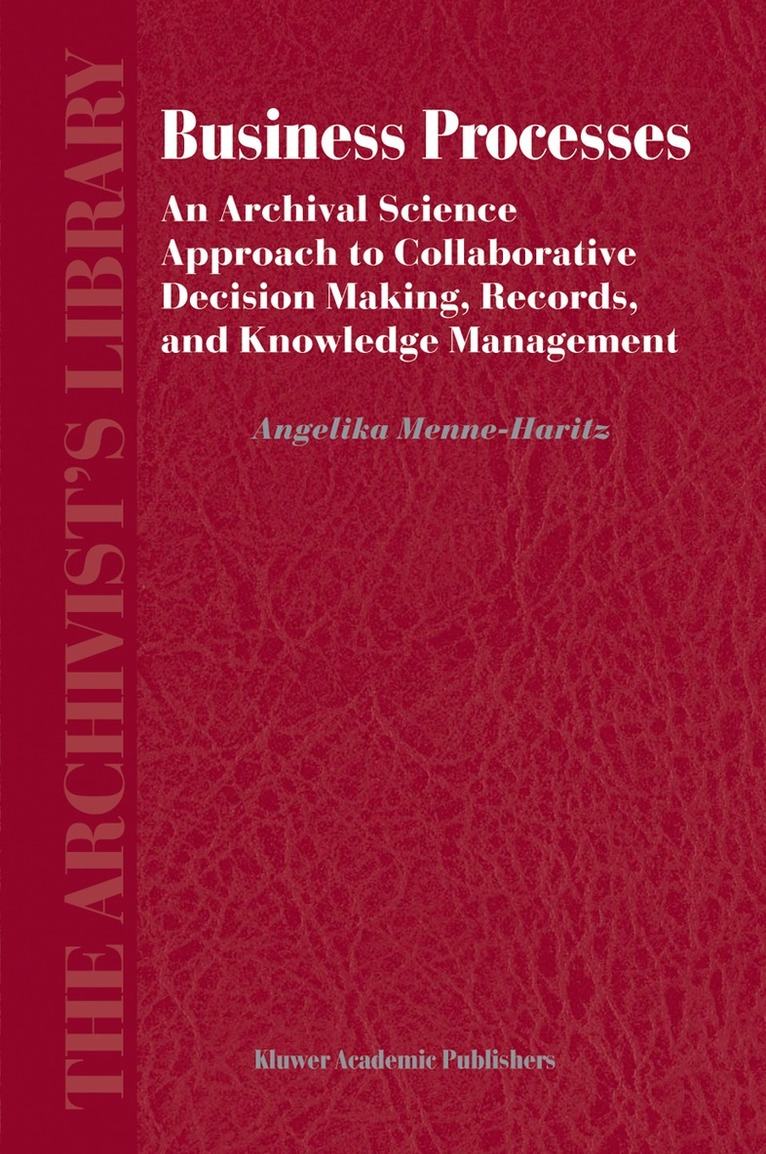
Collaborative decision making processes are a form of communication inside organizations. Their functioning can teach lessons for the design of electronic office systems. Those processes are open ended and therefore decide themselves on their form. Like oral deliberations which cannot be modelled in advance any open ended communication process needs means for common control over the further advancement and the ending of the process.The history of German administrative practice and its special methods of using disposals for the control of common processes shows the creation of records as based on communication needs generated by the intention of joint actions. For electronic decision making processes the purposes remain the same, but the means have to follow the effects of electronic communication on messages.The book is a reworked English version of a thesis for the official qualification for university professorship accepted by the German University of Administrative Sciences Speyer. Germany.
Inbunden, Engelska, 2006
1 666 kr
Skickas inom 10-15 vardagar
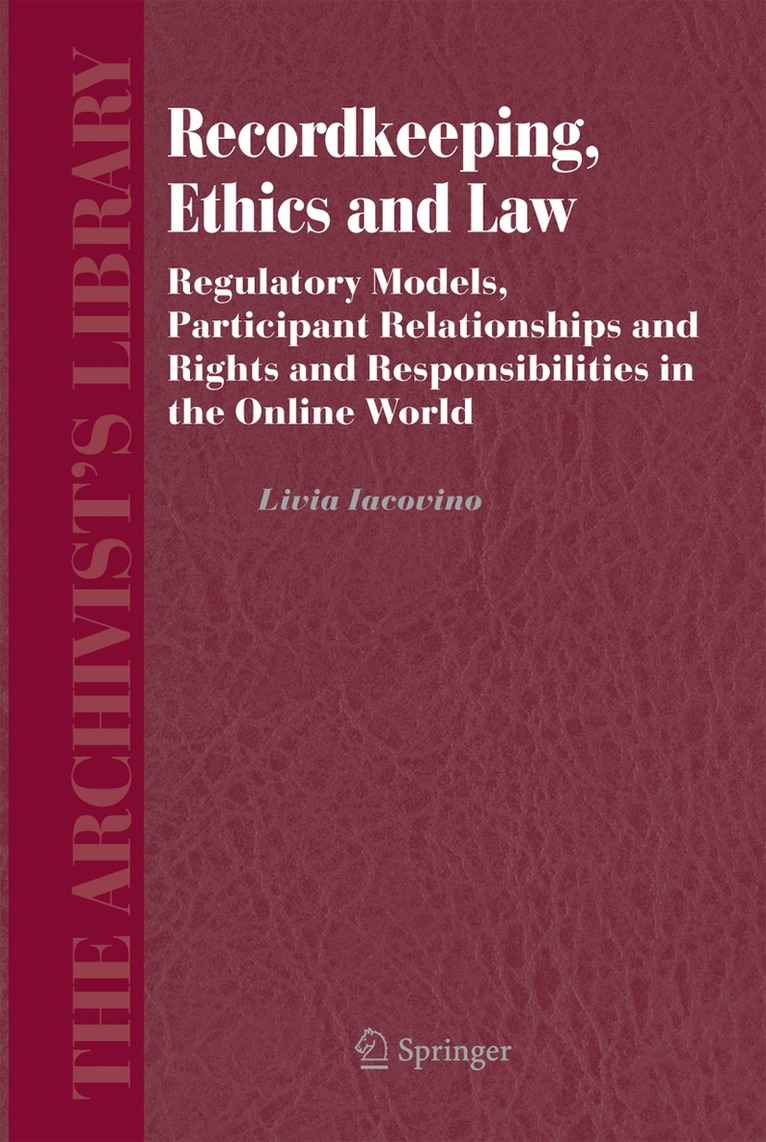
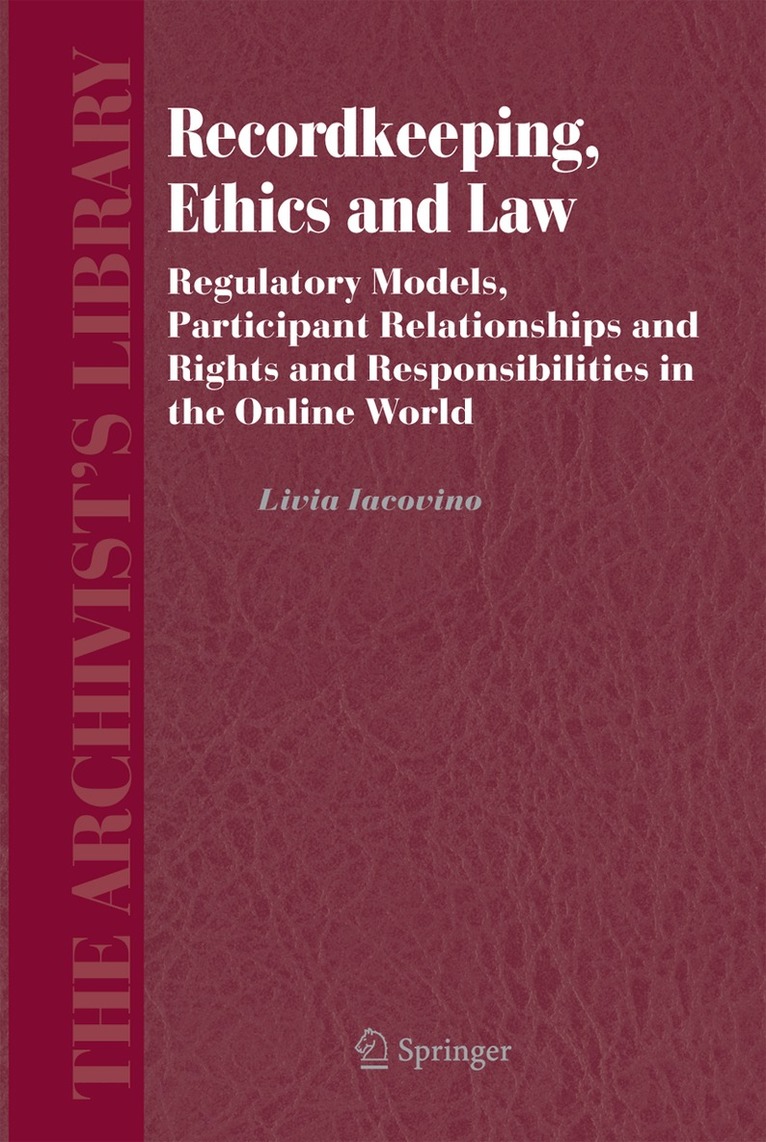
Distributed networks such as the Internet have altered the fundamental way a record is created, captured, accessed and managed over time, and therefore who controls, has access to, and is responsible for its authenticity. Law and ethics provide the major sources of regulatory controls over participants in such networks. This book analyses the interrelationship of recordkeeping, ethics and law in terms of existing regulatory models and their application to the Internet environment. It proposes the legal and social relationship model as an analytical tool for identifying the rights and obligations of recordkeeping participants in networked ‘business’ transactions within communities of common interest based on trust. The model is also used to examine the legal concepts of property, access, privacy and evidence, with particular reference to its Internet context. As legal relationships have their basis in the law of obligations found in both common and civil law systems, as well as archival science, the model has a broad-based application. The approach in this book has been to reconcile a number of archival traditions - the common strands rather than the differences, in particular concepts of identity, trust, acts, actors, and social relationships - as fundamental concepts to social regulation. It is therefore primarily directed to archives and records academics and practitioners (especially those working within the realm of electronic records), in order to provide them with a sound theoretical and practical knowledge of the legal and ethical dimensions of records created in distributed environments.
Del 1 - Archivist's Library
Trusting Records
Legal, Historical and Diplomatic Perspectives
Häftad, Engelska, 2010
994 kr
Skickas inom 10-15 vardagar
A trustworthy record is one that is both an accurate statement of facts and a genuine manifestation of those facts. Record trustworthiness thus has two qualitative dimensions: reliability and authenticity. Reliability means that the record is capable of standing for the facts to which it attests, while authenticity means that the record is what it claims to be. This study explores the evolution of the principles and methods for determining record trustworthiness from antiquity to the digital age, and from the perspectives of law and history. It also examines recent efforts undertaken by researchers in the field of archival science to develop methods for ensuring the trustworthiness of records created and maintained in electronic systems. Audience: The target audience for this study is legal scholars working in the field of evidence law, historians working in the field of historical methodology, and recordkeeping professionals (records managers, information technology specialists, archivists) working on the design and implementation of contemporary organizational recordkeeping systems.
Del 2 - Archivist's Library
Preservation of the Integrity of Electronic Records
Häftad, Engelska, 2010
1 065 kr
Skickas inom 10-15 vardagar
By Terry Eastwood This book reports the findings of a research project on the means of protecting the integrity of active and semi-active electronic records. The project, which is commonly referred to as "the UBC Project," was conceived by two of the authors of this book, Luciana Duranti and Terry Eastwood, and conducted between 1994 and 1997. The third author, Heather MacNeil, who worked formally as the principal research assistant on the project, acted as an equal in the research and in the writing of this book. The project investigated a number of fundamental questions that have arisen over the past decade as a consequence of the rapid development and use of computer technology for the creation, maintenance, and preservation of recorded information. One of the first comprehensive studies of the issues associated with the management of electronic records was conducted by the United Nations. The study, commonly known as the ACCIS report, aimed to "develop guidelines for implementation of electronic archives and records management programmes for use by United Nations organizations, taking into account traditional archives and records management practices. " The report of the study of electronic records in eighteen United Nations organizations identified a number of enduring issues. It recognized that the United Nations had to "distinguish between record and non-record material. "l It recognized the problem of ensuring the authenticity of records, which, rather narrowly, it construed as "assuring legality.
Del 3 - Archivist's Library
Business Processes
An Archival Science Approach to Collaborative Decision Making, Records, and Knowledge Management
Häftad, Engelska, 2010
1 081 kr
Skickas inom 10-15 vardagar
Collaborative decision making processes are a form of communication inside organizations. Their functioning can teach lessons for the design of electronic office systems. Those processes are open ended and therefore decide themselves on their form. Like oral deliberations which cannot be modelled in advance any open ended communication process needs means for common control over the further advancement and the ending of the process.The history of German administrative practice and its special methods of using disposals for the control of common processes shows the creation of records as based on communication needs generated by the intention of joint actions. For electronic decision making processes the purposes remain the same, but the means have to follow the effects of electronic communication on messages.The book is a reworked English version of a thesis for the official qualification for university professorship accepted by the German University of Administrative Sciences Speyer. Germany.
Häftad, Engelska, 2010
1 618 kr
Skickas inom 10-15 vardagar
Distributed networks such as the Internet have altered the fundamental way a record is created, captured, accessed and managed over time, and therefore who controls, has access to, and is responsible for its authenticity. Law and ethics provide the major sources of regulatory controls over participants in such networks. This book analyses the interrelationship of recordkeeping, ethics and law in terms of existing regulatory models and their application to the Internet environment. It proposes the legal and social relationship model as an analytical tool for identifying the rights and obligations of recordkeeping participants in networked ‘business’ transactions within communities of common interest based on trust. The model is also used to examine the legal concepts of property, access, privacy and evidence, with particular reference to its Internet context. As legal relationships have their basis in the law of obligations found in both common and civil law systems, as well as archival science, the model has a broad-based application. The approach in this book has been to reconcile a number of archival traditions - the common strands rather than the differences, in particular concepts of identity, trust, acts, actors, and social relationships - as fundamental concepts to social regulation. It is therefore primarily directed to archives and records academics and practitioners (especially those working within the realm of electronic records), in order to provide them with a sound theoretical and practical knowledge of the legal and ethical dimensions of records created in distributed environments.