AUC Press Archaeological Reports – serie
Visar alla böcker i serien AUC Press Archaeological Reports. Handla med fri frakt och snabb leverans.
3 produkter
3 produkter
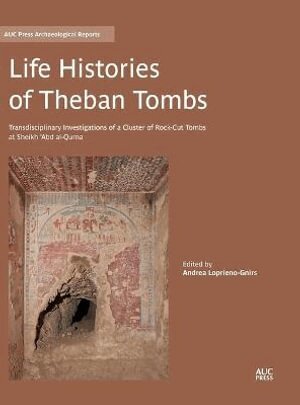
Life Histories of Theban Tombs
Transdisciplinary Investigations of a Cluster of Rock-cut Tombs at Sheikh ‘Abd al-Qurna
Inbunden, Engelska, 2021
1 132 kr
Skickas inom 5-8 vardagar
A thorough transdisciplinary archaeological study of the ancient Egyptian Theban rock-cut tombs at Sheikh ‘Abd al-Qurna In recent years, archeological research has undergone major changes. The material turn in archaeology and related disciplines prompted the adoption of sophisticated scientific, digital, and technical approaches and methods often conducted on a micro level, enhancing our understanding of depositional processes and of the creation and life of an archeological object. This volume reflects seven seasons of transdisciplinary archaeological research at a cluster of rock-cut tombs in Sheikh 'Abd al-Qurna, an ancient Egyptian hillside cemetery and part of the much larger Theban Necropolis. Organized in twelve main chapters, Life Histories of Theban Tombs presents current investigations in landscape archaeology (including recent excavations at a large debris hill previously covering a tomb), geo- and bioarcheology, the archaeology of tomb construction, burial practices, and domestic uses as well as various epigraphical, visual, and material studies. The last two sections provide additional insight into the applied recording, surveying, and visualization methods and techniques and the database system used for data recording and organization.Contributors’ Affiliations: Martina Aeschlimann-Langer, Basel, Switzerland Zulema Barahona-Mendieta, University of Basel, Switzerland Susanne Bickel, University of Basel, Switzerland Oliver Bruderer, Zurich, SwitzerlandRachael Colldeweih, Nagra, Wettingen, Switzerland Lucía Díaz-Iglesias Llanos, Spanish National Research Council, Madrid, Spain Xavier Droux, Hierakonpolis Expedition, Oxford, England Stéphane Fetler, Université Libre de Bruxelles, Brussels, Belgium Zan Gojcic, Swiss Federal Institute of Technology Zurich (ETH), Switzerland Charlotte Hunkeler, University of Basel, Switzerland Mahmoud Ibrahim, University of Cairo, Egypt Matjaž Kačičnik, Cairo, Egypt Iwona Kozieradzka-Ogunmakin, University of Manchester, England Lara Selina Kurmann, University of Basel, Switzerland Andrea Loprieno-Gnirs, University of Basel, Switzerland Sabrina Meyer, Canton of Zurich, Switzerland Matthias Müller, University of Basel, Switzerland Julianna K. Paksi, University of Basel and École Pratique des Hautes Études, Paris, France Erico Peintner, Cairo, Egypt Matthew A. Perras, York University, Toronto, Canada Lukas Richner, canton of Basel-Landschaft, Switzerland Frank Rühli, University of Zurich, Switzerland Marina Sartori, University of Basel, Switzerland Nadine Schönhütte, Cologne Institute of Conservation Sciences (CICS), Cologne, Germany Roger Seiler, University of Zurich, Switzerland Stephan M. Unter, University of Basel, Switzerland André J. Veldmeijer, American University in Cairo, Egypt Noémi Villars, University of Basel, Switzerland Andreas Wieser, Swiss Federal Institute of Technology Zurich (ETH), Switzerland Andrea Wolter, ETH Engineering Geology Group, Zurich, Switzerland Martin Ziegler, Swiss Federal Institute of Technology Zurich (ETH), Switzerland
1 610 kr
Skickas inom 5-8 vardagar
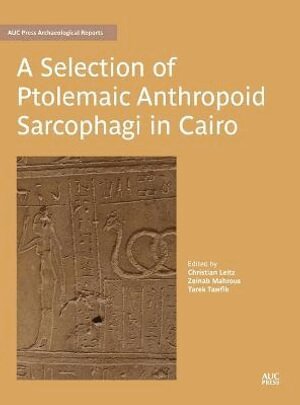
A rich study, with new research data, on eighteen Ptolemaic period sarcophagi housed in museums in Cairo, including the Grand Egyptian MuseumThe individually designed anthropoid sarcophagi of the Ptolemaic period (ca. 330–30 BCE) offer a particularly rich and varied repertoire of hieroglyphic inscriptions and religious scenes. Being at the end of a long tradition of funerary literature, many of the epigraphs on these objects are variations or reinterpretations of older texts that have been circulated and transmitted over millennia.Others are entirely new creations that provide insight into funerary beliefs of late ancient Egypt. The present volume is the second and last publication of a joint project between scholars from Cairo University and the University of Tübingen on Late and Ptolemaic period sarcophagi housed in the museums of Cairo. It includes the detailed publication of eighteen sarcophagi, which until now have only been known through brief descriptions. The facsimile drawings, detailed pictures, translations, and commentaries presented here will allow scholars to approach this corpus with a broad range of research questions.
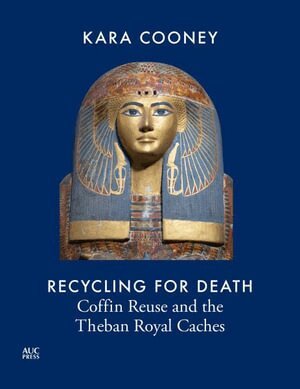
Recycling for Death
Coffin Reuse in Ancient Egypt and the Theban Royal Caches
Inbunden, Engelska, 2024
1 351 kr
Skickas inom 5-8 vardagar
“An absolute gem for specialists and students alike, abundantly illustrated in full color throughout, by an excellent scholar at the height of her powers."—David Aston, The Austrian Academy of Sciences, ViennaA meticulous study of the social, economic, and religious significance of coffin reuse and development during the Ramesside and early Third Intermediate periods, illustrated with over 900 imagesFunerary datasets are the chief source of social history in Egyptology, and the numerous tombs, coffins, Books of the Dead, and mummies of the Twentieth and Twenty-first Dynasties have not been fully utilized as social documents, mostly because the data of this time period is scattered and difficult to synthesize. This culmination of fifteen years of coffin study analyzes coffins and other funerary equipment of elites from the Nineteenth to the Twenty-second Dynasties to provide essential windows into social strategies and adaptations employed during the Bronze Age collapse and subsequent Iron Age reconsolidation.Many Twentieth to Twenty-second Dynasty coffins show evidence of reuse from other, older coffins, as well as obvious marks where gilding or inlay have been removed. Innovative vignettes painted onto coffin surfaces reflect new religious strategies and coping mechanisms within this time of crisis, while advances in mummification techniques reveal an Egyptian anxiety about long-term burial without coffins as a new style of stuffed and painted mummy was developed for the wealthy. It was in the context of necropolis insecurity, economic crisis, and group burial in reused and unpainted chambers that a complex, polychrome coffin style emerged.The first part of this book focuses on the theory and evidence of coffin reuse, contextualized within the social collapse that characterized the Twentieth and Twenty-first Dynasties. The second part presents photo essays of annotated visual data for over sixty Egyptian coffins from the so-called Royal Caches, most of them from the Egyptian Museum in Cairo.Illustrated throughout with high-quality images, the line drawings and color and black-and-white photographs are ideal for careful study, especially evidenced in the digital edition, where pages can be enlarged for close examination.