Cardiopulmonary Medicine From Imperial College Press – serie
Visar alla böcker i serien Cardiopulmonary Medicine From Imperial College Press. Handla med fri frakt och snabb leverans.
6 produkter
6 produkter
2 003 kr
Tillfälligt slut
This series of four video tapes, which is based on the demonstrations pre-recorded by Robert H Anderson and Anton E Becker, two prominent European morphologists, shows the essence of the abnormal morphology within carefully selected autopsy specimens, comparing the findings with appropriately dissected normal hearts, and supplementing the anatomic material with diagrams and cartoons. Accompanying these tapes is an explanatory book prepared with extensive full colour illustrations based on the specimens and diagrams used in the videos and supplemented by appropriate material from the extensive files of the authors.The introductory chapter of the book discusses the background to sequential segmental analysis and the importance of the morphological myocardial method of recognizing chambers and arterial trunks in congenitally malformed hearts. The book is also available without the videos.Videos and book together address such crucial questions as:∗ How many segments need to be considered within the heart?∗ Is the myocardial morphologic method the best way of recognizing chambers?∗ Is the atrioventricular junction a common structure in the ostium primum defect?∗ Is there such a thing as isomerism of the atrial appendages?∗ What is the univentricular atrioventricular connection — and are there really any univentricular hearts?∗ Is the infundibulum in tetralogy of Fallot too narrow, too shallow, and too short?To answer these, and many more questions, Anderson and Becker alternately act as devil's advocate in the four videos, each lasting approximately 40 minutes. The individual videos are devoted to:Video and Chapter Titles:∗ Atrioventricular septal defects∗ Hearts with isomeric atrial appendages∗ Tetralogy of Fallot and double outlet right ventricle∗ Hearts with univentricular atrioventricular connection
Conduction System Of The Mammalian Heart, The: An Anatomico-histological Study Of The Atrioventricular Bundle And The Purkinje Fibers
Inbunden, Engelska, 2000
1 307 kr
Skickas inom 5-8 vardagar
Sunao Tawara's epoch-making work on the excitation conduction system of the mammalian heart paved the way for the advancement of modern cardiology in the 20th century. Even today, more than 90 years after the publication of the German monograph “Das Reizleitungssystem des Säugetierherzen”, his precise account of the conduction system from the atrioventricular node through the His-Purkinje system to the ordinary ventricular muscle fibers retains all of its original actuality.This English edition of Tawara's monograph will serve as an invaluable reference for both basic and clinical cardiological research in the years ahead.
2 429 kr
Skickas inom 5-8 vardagar
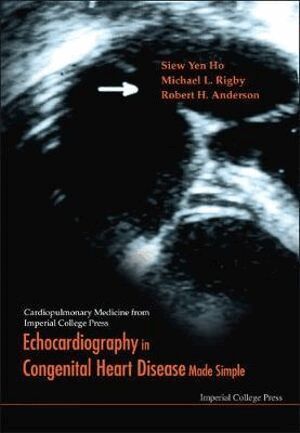
Congenital malformations of the heart are often dismissed as a form of complex heart disease, which is too difficult to understand, and is best referred to the specialists. The authors of this handbook, however, aim to dispel this myth. The advent of cross-sectional and, more recently, three-dimensional echocardiography, enables the structural malformations to be visualised virtually non-invasively. Without a thorough understanding of the arrangement of cardiac structures, interpretation of these images can be very frustrating, not to mention having to cope with difficult terminology. Contrary to popular belief, however, the reader does not require any knowledge of cardiac embryology in order to understand the morphology of a malformed heart.This book takes the reader through the subject in a straightforward fashion, beginning with recognition of the normal cardiac chambers, progressing through the process of analysing the layout of the chambers in a sequential way, and then dealing with the more common cardiac defects in turn. Each chapter deals with the anatomical arrangement illustrated with diagrams and complemented with echocardiographic images of the most important cross-sections. The text is succinct, and is accompanied by numerous diagrams and cross-sectional echocardiographic images of the highest quality. The most common defects are described chapter by chapter, emphasising the salient anatomical features.
1 116 kr
Tillfälligt slut
This important book summarises a century of research and practical applications in fetal electrocardiography. Although fetal ECG is most commonly used for the calculation of fetal heart rates, other parameters have been employed in the prediction of fetal acidons. The book presents new approaches to the interpretation and analysis of the fetal ECG signal and discusses possible new approaches to the clinical exploitation of the electrical activity of the fetal heart. The authors have made numerous contributions to the study of fetal electrocardiography over the last three decades.
2 145 kr
Tillfälligt slut
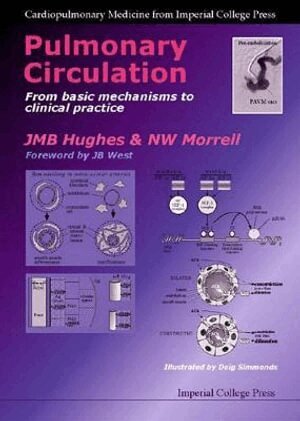
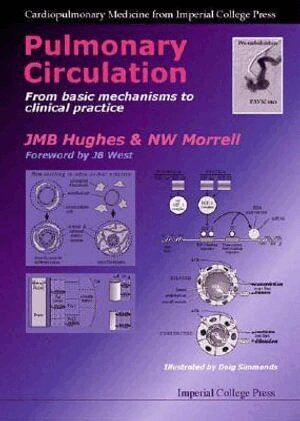
This new book with 35 chapters is a comprehensive account of the important features of the pulmonary circulation which will appeal to (1) clinical and non-clinical students who want a broad-based introduction to the subject, (2) postgraduates involved in or contemplating research on the pulmonary circulation, (3) specialists in chest medicine, cardiology and intensive and critical care whose clinical work concerns diseases affecting the pulmonary blood vessels.Pulmonary circulation is well illustrated with 132 figures, 43 tables and learning points highlighted at the end of each chapter. There are two main sections: “Basic Mechanisms” and “Clinical Practice”. All the important features of the pulmonary circulation are reviewed — genetics, cell biology, vascular remodelling, anatomy, physiology, pharmacology, pulmonary hypertension, pulmonary oedema, etc.
867 kr
Tillfälligt slut
This new book with 35 chapters is a comprehensive account of the important features of the pulmonary circulation which will appeal to (1) clinical and non-clinical students who want a broad-based introduction to the subject, (2) postgraduates involved in or contemplating research on the pulmonary circulation, (3) specialists in chest medicine, cardiology and intensive and critical care whose clinical work concerns diseases affecting the pulmonary blood vessels.Pulmonary circulation is well illustrated with 132 figures, 43 tables and learning points highlighted at the end of each chapter. There are two main sections: “Basic Mechanisms” and “Clinical Practice”. All the important features of the pulmonary circulation are reviewed — genetics, cell biology, vascular remodelling, anatomy, physiology, pharmacology, pulmonary hypertension, pulmonary oedema, etc.