Cedla Latin America Studies (CLAS) – serie
Visar alla böcker i serien Cedla Latin America Studies (CLAS). Handla med fri frakt och snabb leverans.
5 produkter
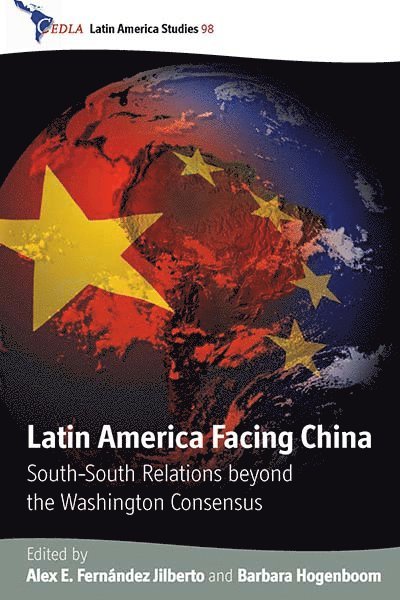
Latin America Facing China
South-South Relations Beyond the Washington Consensus
Av Alex E. Fernández Jilberto, Barbara Hogenboom
Inbunden, 2010
1880 kr
Lägg i varukorg
The last quarter of the twentieth century was a period of economic crises, increasing indebtedness as well as financial instability for Latin America and most other developing countries; in contrast, China showed amazingly high growth rates during this time and has since become the third largest …
Partnerships in Sustainable Forest Resource Management: Learning from Latin America
Häftad, 2006
1201 kr
Lägg i varukorg
This book brings together experiences with a rich variety of sustainable forest and tree resource management partnerships in various countries in Latin America – Trinidad, Costa Rica, Nicaragua, Guyana, Brazil and Ecuador. The authors reflect on the scope, objectives, institutional organisation and …
Social Movements, Indigenous Politics and Democratisation in Guatemala, 1985-1996
Inbunden, 2008
1475 kr
Lägg i varukorg
This book analyses patterns of collective action that emerged during Guatemala’s democratic transition between 1985 and 1996, focusing in particular on the role of indigenous actors in the political processes undergirding and shaping democratisation and the respective impact of the transition upon …
Cultural Tourism in Latin America
The Politics of Space and Imagery
Av Michiel Baud, Annelou Ypeij
Inbunden, 2009
1475 kr
Lägg i varukorg
Cultural tourism has become an important source of revenue for Latin American countries, especially in the Andes and Meso-America. Tourists go there looking for authentic cultures and artefacts and interact directly with indigenous people. Cultural tourism therefore takes place in close engagement …
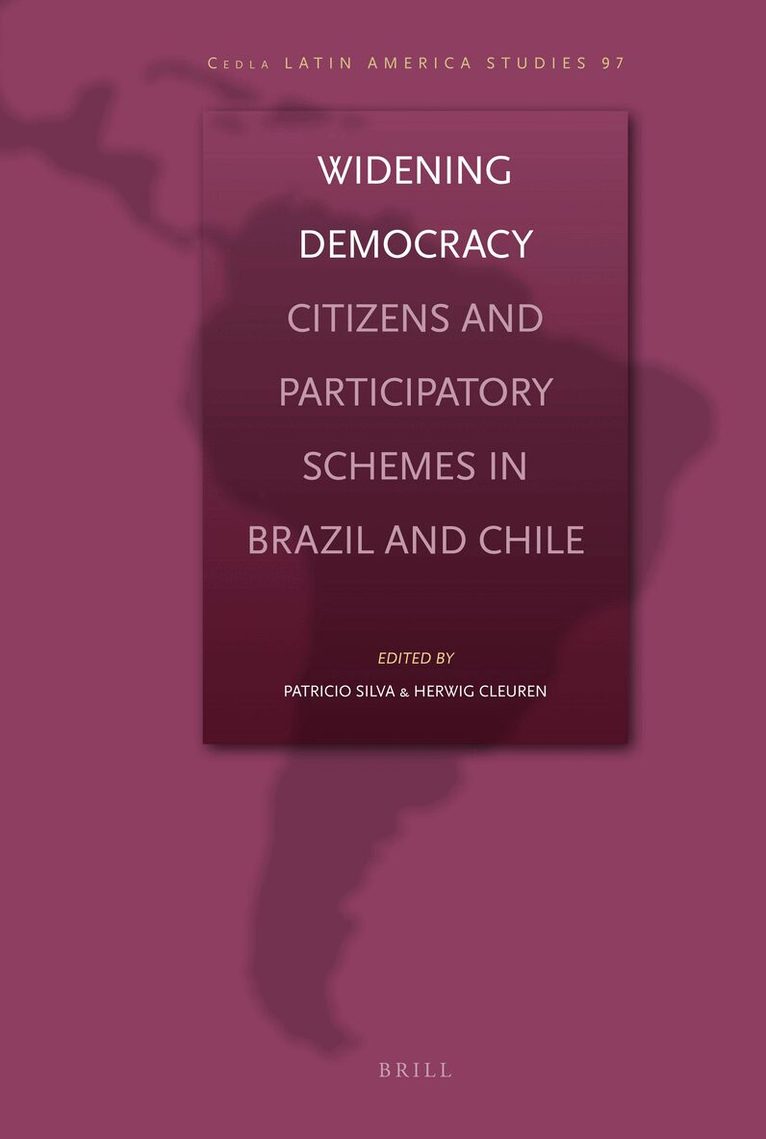
Widening Democracy: Citizens and Participatory Schemes in Brazil and Chile
Inbunden, 2009
1519 kr
Lägg i varukorg
From democratic restoration in the 1980s up to today, most Latin American countries have been struggling constantly to find a workable balance between the need to strengthen the authority of state institutions and their citizens’ aspirations to have a real say in the decision-making process. This …