Center for Environmental Structure Series - Böcker
Visar alla böcker i serien Center for Environmental Structure Series. Handla med fri frakt och snabb leverans.
5 produkter
5 produkter
Del 2 - Center for Environmental Structure Series
A Pattern Language
Towns, Buildings, Construction
Inbunden, Engelska, 1978
817 kr
Skickas inom 5-8 vardagar
You can use this book to design a house for yourself with your family; you can use it to work with your neighbors to improve your town and neighborhood; you can use it to design an office, or a workshop, or a public building. And you can use it to guide you in the actual process of construction.After a ten-year silence, Christopher Alexander and his colleagues at the Center for Environmental Structure are now publishing a major statement inthe form of three books which will, in their words, "lay the basis for an entirely new approach to architecture, building and planning, which will we hope replace existing ideas and practices entirely."The three books are The Timeless Way of Building, The Oregon Experiment, and this book, A Pattern Language.At the core of these books is the idea that people should design for themselves their own houses, streets, and communities. This idea may be radical (it implies a radical transformation of the architectural profession) but it comes simply from the observation that most of the wonderful places of the world were not made by architects but bythe people.At the core of the books, too, is the point that in designing their environments people always rely on certain "languages," which, like the languages we speak, allow them to articulate andcommunicate an infinite variety of designs within a forma system which gives them coherence. This book provides a language of this kind. It will enable a person to make a design for almost any kind of building, or any part of the built environment."Patterns," the units of this language, are answers to design problems (How high should a window sill be? How many stories should a building have? How much space in a neighborhood should be devoted to grass and trees?). Morethan 250 of the patterns in this pattern language are given: each consists of a problem statement, a discussion of the problem with an illustration, and a solution. As the authors say in theirintroduction, many of the patterns are archetypal, so deeply rooted in the nature of things that it seemly likely that they will be a part of human nature, and human action, as much in five hundred years as they are today.
Del 1 - Center for Environmental Structure Series
The Timeless Way of Building
Inbunden, Engelska, 1980
817 kr
Skickas inom 5-8 vardagar
The theory of architecture implicit in our world today, Christopher Alexander believes, is bankrupt. More and more people are aware that something is deeply wrong. Yet the power of present-day ideas is so great that many feel uncomfortable, even afraid, to say openly that they dislike what is happening, because they are afraid to seem foolish, afraid perhaps that they will be laughed at.Now, at last, there is a coherent theory which describesin modern terms an architecture as ancient as human society itself.The Timeless Way of Building is the introductory volume in the Center for Environmental Structure series,Christopher Alexander presents in it a new theory of architecture, building, and planning which has at its core that age-old process by which the people of a society have always pulled the order of their world from their own being.Alexander writes, "There is one timeless way of building. It is thousands of years old, and the same today as it has always been. The great traditional buildings of the past, the villages and tents and temples in which man feels at home, havealways been made by people who were very close to the center of this way. And as you will see, this way will lead anyone who looks for it to buildings which are themselves as ancient in their form as thetrees and hills, and as our faces are."
789 kr
Skickas inom 7-10 vardagar
After a ten-year silence, Christopher Alexander and his colleagues at the Center for Environmental Structure are not publishing a major statement in the form of three works which will, in their words, "lay the basis for an entirely new approach to architecture, building, and planning, which will, we hope, replace existing ideas and practices entirely." The three books are The Timeless Way of Building, A Pattern Language, and The OregonExperiment.At the core of these books is the idea that people should design for themselves their own houses, streets, and communities. This idea may be radical (it implies a radical transformation fo thearchitectural profession) but it comes simply from the observation that most of the wonderful places of the world were not made by architects but by the people.This book is the master plan for the University of Oregon, and is now being implemented at that university; but it shows at the same time how any community the size of a university or small town might go about designing its own future environment-with all members of the community participating personally. It is aconcrete example at the Center's theories in practice, showing in simple detail, with numerous illustrations, how to implement six guiding principles: organic order, participation, piecemeal growth,patterns, diagnosis, and coordination.
1 347 kr
Skickas inom 7-10 vardagar
As an innovative thinker about building and planning, Christopher Alexander has attracted a devoted following. His seminal books--The Timeless Way of Building, A Pattern Language, and The Oregon Experiment--defined a radical and fundamently new process of environmental design. Alexander now gives us the latest book in his series--a book that puts his theories to the test and shows what sort of production system can create the kind ofenvironment he has envisioned.The Production of Houses centers around a group of buildings which Alexander and his associates built in 1976 in northern Mexico. Each house is different and the book explains howeach family helped to lay out and construct its own home according to the family's own needs and in the framework of the pattern language. Numerous diagrams and tables as well as a variety of anecdotes make the day-today process clear.The Mexican project, however, is only the starting point for a comprehensive theory of housing production. The Production of Houses describes seven principles which apply to any system of production in any part of the world forhousing of any cost in any climate or culture or at any density.In the last part of the book, "The Shift of Paradigm," Alexander describes, in detail, the devastating nature of the revolutionin world view which is contained in his proposal for housing construction, and its overall implications for deep-seated cultural change.
841 kr
Skickas inom 5-8 vardagar
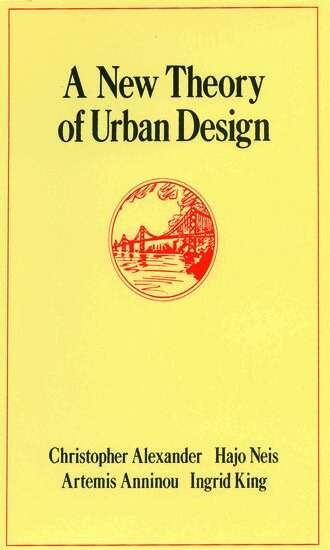
In this radical new look at the theory and practice of urban design, Christopher Alexander asks why our modern cities so often lack a sense of natural growth, and suggests a set of rules and guidelines by which we can inject that `organic' character back into our High Streets, buildings, and squares. At a time when so many of Britain's inner cities are undergoing, or are in need of, drastic renovation, Christopher Alexander's detailed account of his own experiments in urban-renewal in San Francisco makes thought-provoking reading.