Christopher Alexander – författare
Visar alla böcker från författaren Christopher Alexander. Handla med fri frakt och snabb leverans.
18 produkter
18 produkter
Del 2 - Center for Environmental Structure Series
A Pattern Language
Towns, Buildings, Construction
Inbunden, Engelska, 1978
728 kr
Skickas inom 3-6 vardagar
You can use this book to design a house for yourself with your family; you can use it to work with your neighbors to improve your town and neighborhood; you can use it to design an office, or a workshop, or a public building. And you can use it to guide you in the actual process of construction.After a ten-year silence, Christopher Alexander and his colleagues at the Center for Environmental Structure are now publishing a major statement inthe form of three books which will, in their words, "lay the basis for an entirely new approach to architecture, building and planning, which will we hope replace existing ideas and practices entirely."The three books are The Timeless Way of Building, The Oregon Experiment, and this book, A Pattern Language.At the core of these books is the idea that people should design for themselves their own houses, streets, and communities. This idea may be radical (it implies a radical transformation of the architectural profession) but it comes simply from the observation that most of the wonderful places of the world were not made by architects but bythe people.At the core of the books, too, is the point that in designing their environments people always rely on certain "languages," which, like the languages we speak, allow them to articulate andcommunicate an infinite variety of designs within a forma system which gives them coherence. This book provides a language of this kind. It will enable a person to make a design for almost any kind of building, or any part of the built environment."Patterns," the units of this language, are answers to design problems (How high should a window sill be? How many stories should a building have? How much space in a neighborhood should be devoted to grass and trees?). Morethan 250 of the patterns in this pattern language are given: each consists of a problem statement, a discussion of the problem with an illustration, and a solution. As the authors say in theirintroduction, many of the patterns are archetypal, so deeply rooted in the nature of things that it seemly likely that they will be a part of human nature, and human action, as much in five hundred years as they are today.
Häftad, Engelska, 2020
237 kr
Skickas inom 3-6 vardagar
Häftad, Engelska, 1964
290 kr
Skickas inom 5-8 vardagar
“These notes are about the process of design: the process of inventing things which display new physical order, organization, form, in response to function.” This book, opening with these words, presents an entirely new theory of the process of design.In the first part of the book, Christopher Alexander discusses the process by which a form is adapted to the context of human needs and demands that has called it into being. He shows that such an adaptive process will be successful only if it proceeds piecemeal instead of all at once. It is for this reason that forms from traditional un-self-conscious cultures, molded not by designers but by the slow pattern of changes within tradition, are so beautifully organized and adapted. When the designer, in our own self-conscious culture, is called on to create a form that is adapted to its context he is unsuccessful, because the preconceived categories out of which he builds his picture of the problem do not correspond to the inherent components of the problem, and therefore lead only to the arbitrariness, willfulness, and lack of understanding which plague the design of modern buildings and modern cities.In the second part, Mr. Alexander presents a method by which the designer may bring his full creative imagination into play, and yet avoid the traps of irrelevant preconception. He shows that, whenever a problem is stated, it is possible to ignore existing concepts and to create new concepts, out of the structure of the problem itself, which do correspond correctly to what he calls the subsystems of the adaptive process. By treating each of these subsystems as a separate subproblem, the designer can translate the new concepts into form. The form, because of the process, will be well-adapted to its context, non-arbitrary, and correct.The mathematics underlying this method, based mainly on set theory, is fully developed in a long appendix. Another appendix demonstrates the application of the method to the design of an Indian village.
Del 1 - Center for Environmental Structure Series
The Timeless Way of Building
Inbunden, Engelska, 1980
847 kr
Skickas inom 5-8 vardagar
The theory of architecture implicit in our world today, Christopher Alexander believes, is bankrupt. More and more people are aware that something is deeply wrong. Yet the power of present-day ideas is so great that many feel uncomfortable, even afraid, to say openly that they dislike what is happening, because they are afraid to seem foolish, afraid perhaps that they will be laughed at.Now, at last, there is a coherent theory which describesin modern terms an architecture as ancient as human society itself.The Timeless Way of Building is the introductory volume in the Center for Environmental Structure series,Christopher Alexander presents in it a new theory of architecture, building, and planning which has at its core that age-old process by which the people of a society have always pulled the order of their world from their own being.Alexander writes, "There is one timeless way of building. It is thousands of years old, and the same today as it has always been. The great traditional buildings of the past, the villages and tents and temples in which man feels at home, havealways been made by people who were very close to the center of this way. And as you will see, this way will lead anyone who looks for it to buildings which are themselves as ancient in their form as thetrees and hills, and as our faces are."
Del 3 - Center for Environmental Structure Series
The Oregon Experiment
Inbunden, Engelska, 1978
819 kr
Skickas inom 7-10 vardagar
After a ten-year silence, Christopher Alexander and his colleagues at the Center for Environmental Structure are not publishing a major statement in the form of three works which will, in their words, "lay the basis for an entirely new approach to architecture, building, and planning, which will, we hope, replace existing ideas and practices entirely." The three books are The Timeless Way of Building, A Pattern Language, and The OregonExperiment.At the core of these books is the idea that people should design for themselves their own houses, streets, and communities. This idea may be radical (it implies a radical transformation fo thearchitectural profession) but it comes simply from the observation that most of the wonderful places of the world were not made by architects but by the people.This book is the master plan for the University of Oregon, and is now being implemented at that university; but it shows at the same time how any community the size of a university or small town might go about designing its own future environment-with all members of the community participating personally. It is aconcrete example at the Center's theories in practice, showing in simple detail, with numerous illustrations, how to implement six guiding principles: organic order, participation, piecemeal growth,patterns, diagnosis, and coordination.
Del 4 - Center for Environmental Structure Series
The Production of Houses
Inbunden, Engelska, 1985
1 369 kr
Skickas inom 7-10 vardagar
As an innovative thinker about building and planning, Christopher Alexander has attracted a devoted following. His seminal books--The Timeless Way of Building, A Pattern Language, and The Oregon Experiment--defined a radical and fundamently new process of environmental design. Alexander now gives us the latest book in his series--a book that puts his theories to the test and shows what sort of production system can create the kind ofenvironment he has envisioned.The Production of Houses centers around a group of buildings which Alexander and his associates built in 1976 in northern Mexico. Each house is different and the book explains howeach family helped to lay out and construct its own home according to the family's own needs and in the framework of the pattern language. Numerous diagrams and tables as well as a variety of anecdotes make the day-today process clear.The Mexican project, however, is only the starting point for a comprehensive theory of housing production. The Production of Houses describes seven principles which apply to any system of production in any part of the world forhousing of any cost in any climate or culture or at any density.In the last part of the book, "The Shift of Paradigm," Alexander describes, in detail, the devastating nature of the revolutionin world view which is contained in his proposal for housing construction, and its overall implications for deep-seated cultural change.
Inbunden, Engelska, 1988
829 kr
Skickas inom 5-8 vardagar
In this radical new look at the theory and practice of urban design, Christopher Alexander asks why our modern cities so often lack a sense of natural growth, and suggests a set of rules and guidelines by which we can inject that `organic' character back into our High Streets, buildings, and squares. At a time when so many of Britain's inner cities are undergoing, or are in need of, drastic renovation, Christopher Alexander's detailed account of his own experiments in urban-renewal in San Francisco makes thought-provoking reading.
Inbunden, Engelska, 2002
838 kr
Skickas inom 5-8 vardagar
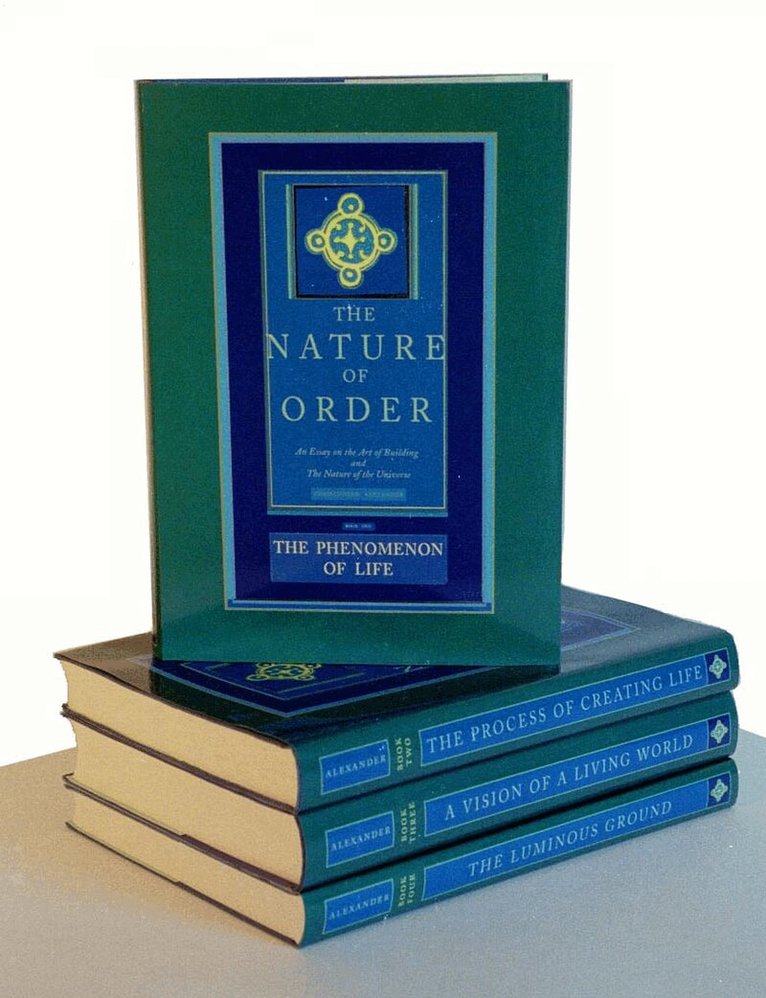
Christopher Alexander's series of ground-breaking books including A Pattern Language and The Timeless Way of Building have pointed to fundamental truths of the way we build, revealing what gives life and beauty and true functionality to our buildings and towns. Now, in The Nature of Order, Alexander explores the properties of life itself, highlighting a set of well-defined structures present in all order and in all life from micro-organisms and mountain ranges to good houses and vibrant communities.Scientifically, The Process of Creating Life is perhaps the most exciting of the four books. How do beautiful creations come into being? Nature can make an infinite number of human faces, each one unique, each one beautiful. The same is true for daffodils, streams, and stars. But man-made creations especially the towns and buildings of the 20th century have only occasionally been really good, more often mediocre, and in the last 50 years have most often been deadly. What is the reason for the difference? It hinges on the deep nature of the processes we use. Merely understanding the geometry of beautiful and living form (the topic of Book 1) is not enough to help us create such a living geometry.In the 20th century our society was locked into deadly processes which created our current built environment, process that most people were not really aware of and did not question. Despite their best efforts and intentions, architects and planners working within these processes could not achieve a living built environment. Life and beauty in the built world arise only from processes which allow living structure to unfold. The secret lies in knowing, as nature does, what must happen in what order: what sequence of events allows a living form to unfold successfully?Here, in Book 2, Alexander puts forward a fully developed theory of living process. He defines conditions for a process to be living: that is, capable of generating living structure. He shows how such processes work, and how they may be created. At the core of the new theory is the theory of structure-preserving transformations. This concept, new in scientific thinking, is based on the concept of wholeness defined in Book 1: A structure-preserving transformation is one which preserves, extends, and enhances the wholeness of a system.Structure-preserving transformations provide the means for any step-by-step process social, biological, architectural, or technical to reach configurations which are most profound, most capable of supporting life. The process of creation whether in the formation of a single object, or in the piece-meal aggregation of a town requires this sort of generative process, a careful and deliberate sequence of steps in which each step creates the context for the next one, and each next wholeness is derived from the previous wholeness. Our billions of beautiful and unique human faces come from one class of sequences.Driven by these sequences, an initial cell differentiates again and again until beautiful and complex human beings emerge, infinitely various, always harmonious. Making changes in society, so that streets, buildings, rooms, gardens, and towns may be generated by hundreds of such sequences requires massive transformations. This book is the first blueprint of those transformations.Taken as a whole, the four books create a sweeping new conception of the nature of things which is both objective and structural (hence part of science) and also personal (in that it shows how and why things have the power to touch the human heart). A step has been taken, through which these two domains the domain of geometrical structure and the feeling it creates kept separate during four centuries of scientific though from 1600 to 2000, have finally been united.The Nature of Order constitutes the backbone of Building Beauty: Ecologic Design Construction Process, an initiative aimed at radically reforming architecture education, with the emphasis of making as a way to access a transformative vision of the world. The 15 fundamental properties of life guide our work and have given us much more than a set of solutions. The Nature of Order has given us the framework in which we can search and build up our own solutions.In order to be authentically sustainable, buildings and places have to be cared for and loved over generations. Beautiful buildings and places are more likely to be loved, and they become more beautiful, and loved, through the attention given to them over time. Beauty is therefore, not a luxury, or an option, it includes and transcends technological innovation, and is a necessary requirement for a truly sustainable culture.
Inbunden, Engelska, 2005
807 kr
Skickas inom 5-8 vardagar
Christopher Alexander's series of ground-breaking books including A Pattern Language and The Timeless Way of Building have pointed to fundamental truths of the way we build, revealing what gives life and beauty and true functionality to our buildings and towns. Now, in The Nature of Order, Alexander explores the properties of life itself, highlighting a set of well-defined structures present in all order and in all life from micro-organisms and mountain ranges to good houses and vibrant communities.From a practical point of view, A Vision of a Living World is the most compelling of the four books. Hundreds of photographs and plans of new buildings that have living structure, and the processes which gave them life, demonstrate, for the first time, what the concept of living structure can mean in buildings of our time and of the future.The really good building. The really good space. Places that reach an archetypal level of human experience, reaching across centuries, across continents, across cultures, across technology, across building materials and climates. They connect us to ourselves. They connect us to our feelings. What is more, as we study them, we realize that they all share a similar geometry. How are they made? The practical task of making beauty is the principal subject of this volume.Hundreds of examples of buildings and places are shown. New forms for large buildings, public spaces, communities, neighborhoods, lead to discussions about equally important small scale of detail and ornament and colour. Many of the examples are built by Alexander and his colleagues; other buildings explored take us around the world and through time.With these examples, lay people, architects, builders, artists, and students are able to make this new framework real for themselves, understand how it works, and understand its significance. The book is a feast for the eyes, and mind, and heart. Places created by living process (Book 2) have living structure (Book 1), and they connect us to our essence as people (Book 4). The seven hundred pictures of Alexander's buildings and works of art shown in this book demonstrate in detail what he means.Taken as a whole, the four books create a sweeping new conception of the nature of things which is both objective and structural (hence part of science) and also personal (in that it shows how and why things have the power to touch the human heart). A step has been taken, through which these two domains the domain of geometrical structure and the feeling it creates kept separate during four centuries of scientific though from 1600 to 2000, have finally been united.The Nature of Order constitutes the backbone of Building Beauty: Ecologic Design Construction Process, an initiative aimed at radically reforming architecture education, with the emphasis of making as a way to access a transformative vision of the world. The 15 fundamental properties of life guide our work and have given us much more than a set of solutions. The Nature of Order has given us the framework in which we can search and build up our own solutions.In order to be authentically sustainable, buildings and places have to be cared for and loved over generations. Beautiful buildings and places are more likely to be loved, and they become more beautiful, and loved, through the attention given to them over time. Beauty is therefore, not a luxury, or an option, it includes and transcends technological innovation, and is a necessary requirement for a truly sustainable culture.
Inbunden, Engelska, 2016
2 202 kr
Skickas inom 10-15 vardagar
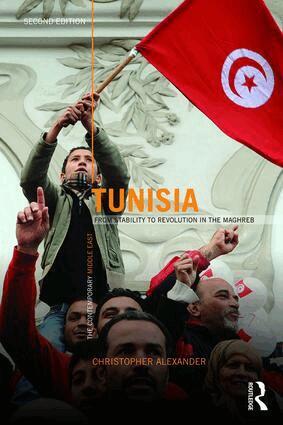
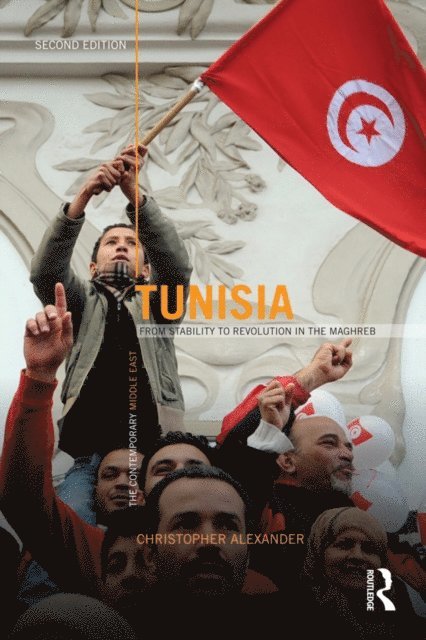
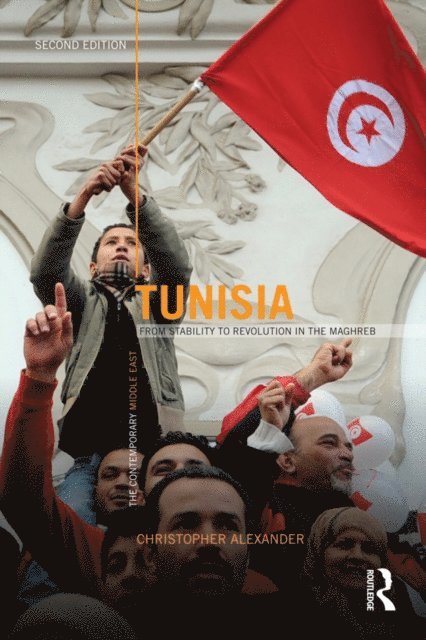
The first edition of Tunisia was released just nine months before the eruption of the Arab Spring. The most substantial period of political unrest felt by the Arab world in a half century originated in Tunisia, a fact that confounded expectations about Tunisian politics. This new edition builds upon the first edition’s overview of Tunisia’s political and economic development to examine how one of the region’s hardiest authoritarian orders was toppled by a loosely organised protest wave.Providing the most up-to-date introduction to Tunisia’s post-independence and post-Arab Spring politics, concisely written chapters cover topics such as: state formation domestic politics economic development foreign relations colonialism the Arab Spring; its factors and repercussionsKey to this new edition is the examination of Tunisian history, politics and society alongside the subsequent upheaval following the outbreak of revolts in December 2010. It looks at how political and economic changes after 2001, including economic deterioration and rising inequality and corruption, had already begun to erode bases of Ben Ali’s government, and explores why Tunisia is the sole Arab Spring country to construct a democracy thus far, and the challenges that this new democracy still faces. An essential inclusion on courses on Middle Eastern politics, African politics, and political science in general, this accessible introduction to Tunisia will also be of interest to anyone wishing to learn more about this significant region.
Häftad, Engelska, 2016
715 kr
Skickas inom 10-15 vardagar
The first edition of Tunisia was released just nine months before the eruption of the Arab Spring. The most substantial period of political unrest felt by the Arab world in a half century originated in Tunisia, a fact that confounded expectations about Tunisian politics. This new edition builds upon the first edition’s overview of Tunisia’s political and economic development to examine how one of the region’s hardiest authoritarian orders was toppled by a loosely organised protest wave.Providing the most up-to-date introduction to Tunisia’s post-independence and post-Arab Spring politics, concisely written chapters cover topics such as: state formation domestic politics economic development foreign relations colonialism the Arab Spring; its factors and repercussionsKey to this new edition is the examination of Tunisian history, politics and society alongside the subsequent upheaval following the outbreak of revolts in December 2010. It looks at how political and economic changes after 2001, including economic deterioration and rising inequality and corruption, had already begun to erode bases of Ben Ali’s government, and explores why Tunisia is the sole Arab Spring country to construct a democracy thus far, and the challenges that this new democracy still faces. An essential inclusion on courses on Middle Eastern politics, African politics, and political science in general, this accessible introduction to Tunisia will also be of interest to anyone wishing to learn more about this significant region.
Häftad, Engelska, 2015
219 kr
Skickas inom 5-8 vardagar
Häftad, Engelska, 2024
130 kr
Skickas
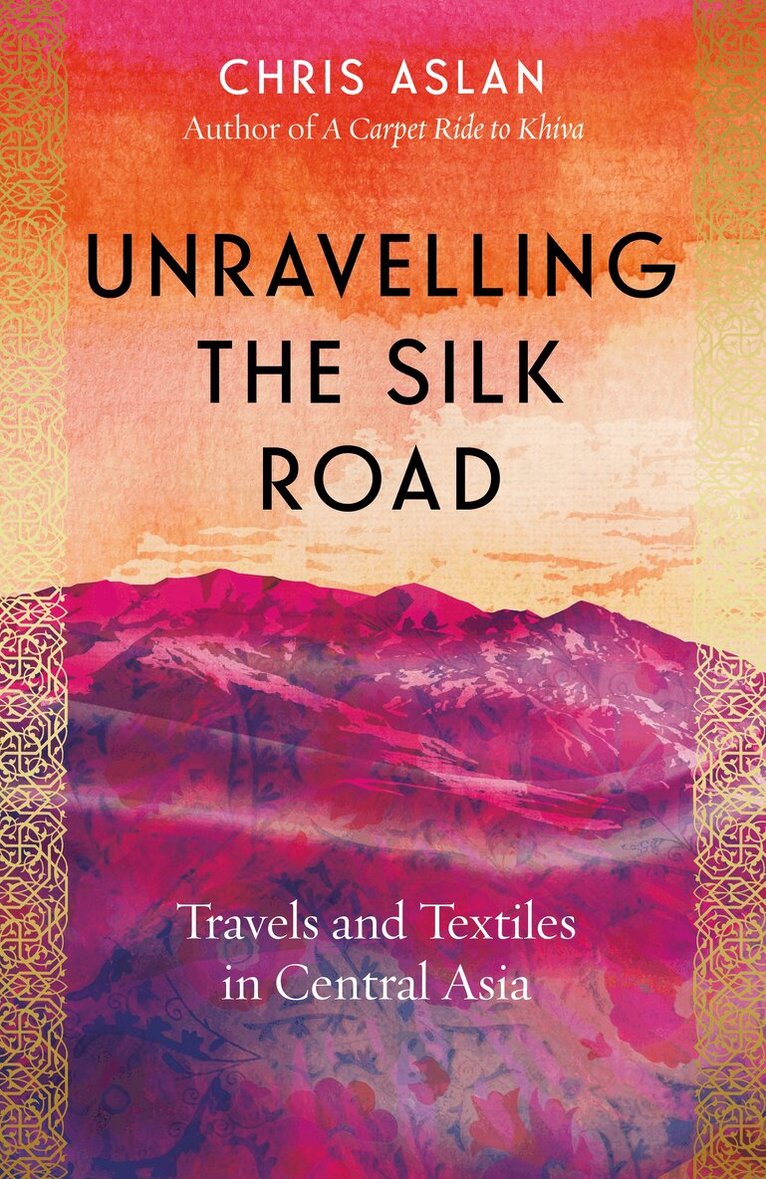
Three textile roads tangle their way through Central Asia. The famous Silk Road united east and west through trade. Older still was the Wool Road, of critical importance when houses made from wool enabled nomads to traverse the inhospitable winter steppes. Then there was the Cotton Road, marked by greed, colonialism and environmental disaster.At this intersection of human history, fortunes were made and lost through shimmering silks, life-giving felts and gossamer cottons. Chris Aslan, who has spent fifteen years living and working in the region, expertly unravels the strands of this tangled history and embroiders them with his own experiences of life in the heart of Asia.
Häftad, Engelska, 2010
138 kr
Skickas
The Silk Road conjures images of the exotic and the unknown. Most travellers simply pass along it. Brit Chris Alexander chose to live there. Ostensibly writing a guidebook, Alexander found life at the heart of the glittering madrassahs, mosques and minarets of the walled city of Khiva - a remote desert oasis in Uzbekistan - immensely alluring, and stayed.Immersing himself in the language and rich cultural traditions Alexander discovers a world torn between Marx and Mohammed - a place where veils and vodka, pork and polygamy freely mingle - against a backdrop of forgotten carpet designs, crumbling but magnificent Islamic architecture and scenes drawn straight from "The Arabian Nights". Accompanied by a large green parrot, a ginger cat and his adoptive Uzbek family, Alexander recounts his efforts to rediscover the lost art of traditional weaving and dyeing, and the process establishing a self-sufficient carpet workshop, employing local women and disabled people to train as apprentices.A Carpet Ride to Khiva sees Alexander being stripped naked at a former Soviet youth camp, crawling through silkworm droppings in an attempt to record their life-cycle, holed up in the British Museum discovering carpet designs dormant for half a millennia, tackling a carpet-thieving mayor, distinguishing natural dyes from sacks of opium in Northern Afghanistan, bluffing his way through an impromptu version of "My Heart Will Go On" for national Uzbek TV and seeking sanctuary as an anti-Western riot consumed the Kabul carpet bazaar. It is an unforgettable true travel story of a journey to the heart of the unknown and the unexpected friendship one man found there.
Häftad, Engelska
1 093 kr
Skickas inom 3-6 vardagar
Häftad, Engelska, 2025
250 kr
Skickas inom 5-8 vardagar
Inbunden, Engelska, 2004
666 kr
Tillfälligt slut
Christopher Alexander's series of ground-breaking books including A Pattern Language and The Timeless Way of Building have pointed to fundamental truths of the way we build, revealing what gives life and beauty and true functionality to our buildings and towns. Now, in The Nature of Order, Alexander explores the properties of life itself, highlighting a set of well-defined structures present in all order and in all life from micro-organisms and mountain ranges to good houses and vibrant communities.The foundations of modern scientific thought are firmly rooted in a conception that the universe is a machinelike entity, a play of baubles, machines, trinkets. To this day, our real daily experience of ourselves has no clear place in science. It is little wonder that a machinelike world-view has supported the deadly architecture of the last century. This mechanistic thinking and the consequent investment-oriented tracts of houses, condominiums and offices have dehumanized our cities and our lives. How are spirit, soul, emotion, feeling to be introduced into a building, or a street, or a development project, in modern times?The Luminous Ground, the fourth book of The Nature of Order, contains what is perhaps the deepest revelation in the four-volume work. Here is a geometrical view of space and matter seamlessly connected to our own private, personal experience as sentient and knowing creatures. This is not merely an emotional appendix to the scientific theory of the other books. It is at the core of the entire work, and is rooted in the fact that our two sides our analytical thinking selves, and our vulnerable emotional personalities as human beings are coterminous. They must be harnessed at one and the same time if we are ever to really make sense of what is around us, and be able to create a living world.Alexander breaks away completely from the one-sided mechanical model of buildings or neighbourhoods as mere assemblages of technically generated interchangeable parts. He shows us conclusively that a spiritual, emotional, and personal basis must underlie every act of building. His buildings and works of art demonstrate in detail what he means. And then, in the middle of the book, comes the linchpin of the work: a one-hundred page chapter on colour, which lavishly illustrates and dramatically conveys the way that consciousness and spirit can make their appearance in the world.Altogether, present throughout this fourth and final book, is a new cosmology uniting matter and consciousness: consciousness inextricably joined to the substrate of matter, present in all matter, and providing all wholeness with its material, cognitive, and spiritual underpinnings. This view, though radical, conforms to our most ordinary daily intuitions. It may provide a path for those contemporary scientists who are beginning to see consciousness as the underpinning of all matter, and thus as a proper object of scientific study.Taken as a whole, the four books create a sweeping new conception of the nature of things which is both objective and structural (hence part of science) and also personal (in that it shows how and why things have the power to touch the human heart). A step has been taken, through which these two domains the domain of geometrical structure and the feeling it creates kept separate during four centuries of scientific though from 1600 to 2000, have finally been united.The Nature of Order constitutes the backbone of Building Beauty: Ecologic Design Construction Process, an initiative aimed at radically reforming architecture education, with the emphasis of making as a way to access a transformative vision of the world. The 15 fundamental properties of life guide our work and have given us much more than a set of solutions. The Nature of Order has given us the framework in which we can search and build up our own solutions.In order to be authentically sustainable, buildings and places have to be cared for and loved over generations. Beautiful buildings and places are more likely to be loved, and they become more beautiful, and loved, through the attention given to them over time. Beauty is therefore, not a luxury, or an option, it includes and transcends technological innovation, and is a necessary requirement for a truly sustainable culture.
Inbunden, Engelska, 2023
290 kr
Tillfälligt slut
Three textile roads tangle their way through Central Asia. The famous Silk Road united east and west through trade. Older still was the Wool Road, of critical importance when houses made from wool enabled nomads to traverse the inhospitable winter steppes. Then there was the Cotton Road, marked by greed, colonialism and environmental disaster.At this intersection of human history, fortunes were made and lost through shimmering silks, life-giving felts and gossamer cottons. Chris Aslan, who has spent fifteen years living and working in the region, expertly unravels the strands of this tangled history and embroiders them with his own experiences of life in the heart of Asia.