Center for European Policy Studies – serie
Visar alla böcker i serien Center for European Policy Studies. Handla med fri frakt och snabb leverans.
6 produkter
6 produkter
Häftad, Engelska, 2014
377 kr
Skickas inom 10-15 vardagar
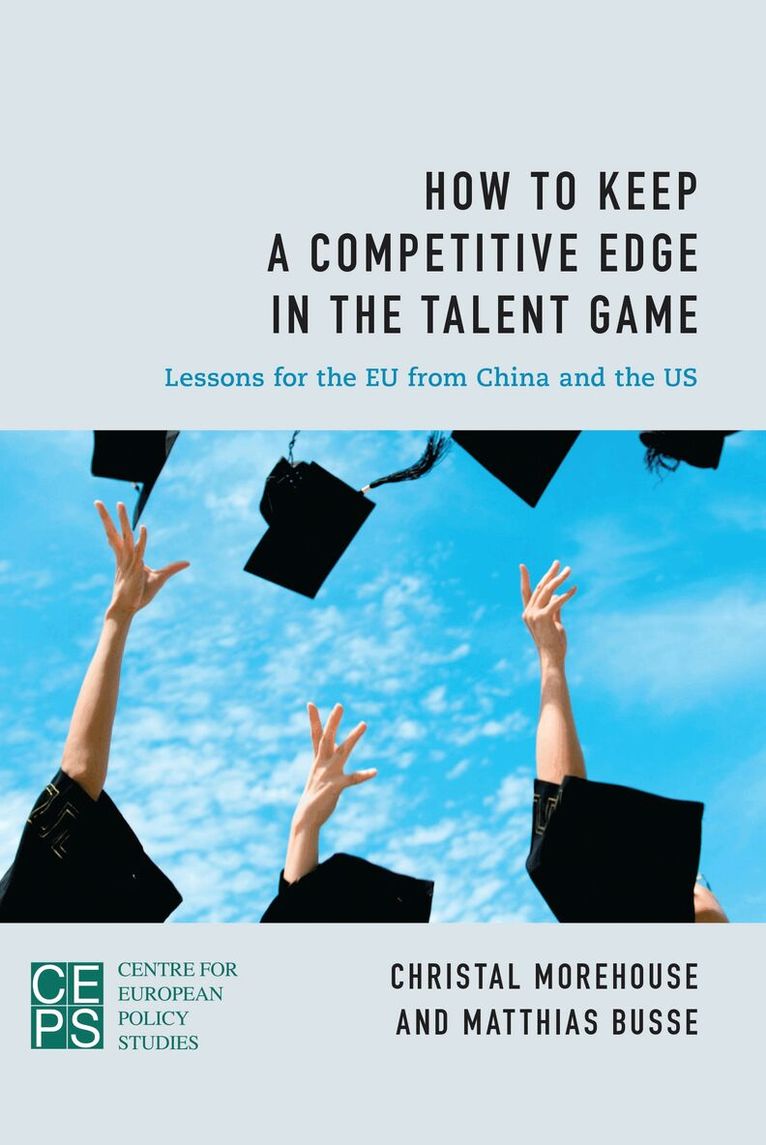
BY 2020, the global map of higher education will be completely redrawn, and by 2030, China is expected to emerge as the world's largest source of brainpower. The European Union should not necessarily view this development as a threat, but rather it can be seen as an opportunity for the EU to become more competitive in attracting foreign human capital. The quality of human capital in the form of university graduates is well-developed in the EU, although there remain stark differences between the member states. EU universities have not managed to penetrate the premium university rankings, with the exception of those in the UK, but their overall performance is comparatively high.This book compares tertiary education in the European Union, the United States and China with the aim of evaluating how the EU as a region fares with respect to the US and China, how to improve higher education in the EU and how to secure its stock of human capital. In the process, we identify a number of game-changing factors that affect higher education. These notably include how digital technology is integrated into education, how education relates to employment and how university institutions are governed. Viewed intra-regionally, Europe is making progress in developing its talent pipeline. But if we take a step back and compare the performance of higher education in the EU with that of the US and China -- and how it is likely to perform in the future -- there are important lessons to be learned that will allow Europe to sustain prosperity and growth and secure its long-term well-being and quality of life.
Häftad, Engelska, 2016
518 kr
Skickas inom 10-15 vardagar
Following the agreement made by Prime Minister David Cameron with the EU on 18-19 February 2016, the day for the referendum for the UK to remain in or leave the EU is set for 23 June 2016. This will be the most important decision taken by the British people in half a century, and whose consequences will live on for another half century.The first edition of this book, published in March 2015, laid the foundations for any objective assessment of the workings of the EU and the UK’s place in it. It was widely acclaimed and rated as “a myth-breaking exercise of the best kind”.This second edition adds a substantial new chapter following Cameron’s agreement with the EU and announcement of the referendum. It reviews both the ‘Plan A’, namely the status quo for the UK in the EU as amended by the new agreement, and three variants of a ‘Plan B’ for secession. The key point is that the ‘leave’ camp have not done their homework or ‘due diligence’ to specify the post-secession scenario, or how the British government would face up to the challenges that this would bring. The authors therefore do the ‘leave’ camp’s homework for them, setting out three Plan Bs more concretely and in more depth than the ‘leave’ camp have been able or wanted to do, or any other source has done. The book is therefore unique and essential reading for anyone concerned with the fateful choice that lies soon ahead.
Häftad, Engelska, 2016
642 kr
Skickas inom 10-15 vardagar
The signing of the Association Agreement and DCFTA between Georgia and the European Union in 2014 was a strategic political act to deepen the realisation of Georgia’s ‘European choice’. Of all the EU’s eastern neighbours, Georgia has distinguished itself by pushing ahead in the years since the Rose Revolution of 2003 with the most radical economic liberalisation and reform agenda. It has notably succeeded in reducing corruption and establishing a highly favourable business climate. The Association Agreement and DCFTA thus build on a most promising base. The purpose of this Handbook is to make the legal content of the Association Agreement clearly comprehensible. It covers all the significant political and economic chapters of the Agreement, and in each case explains the meaning of the commitments made by Georgia and the challenges posed by their implementation. A unique reference source for this historic act, this Handbook is intended for professional readers, namely officials, parliamentarians, diplomats, business leaders, lawyers, consultants, think tanks, civil society organisations, university teachers, trainers, students and journalists.The work has been carried out by two teams of researchers from leading independent think tanks, CEPS in Brussels and the Reformatics policy consulting firm in Tbilisi, with the support of the Swedish International Development Agency (Sida). It is one of a trilogy of Handbooks, with the other two volumes examining similar Association Agreements made by the EU with Ukraine and Moldova.
Häftad, Engelska, 2016
642 kr
Skickas inom 10-15 vardagar
The signing of the Association Agreement and DCFTA between Ukraine and the European Union in 2014 was an act of strategic, geopolitical significance in the history of Ukraine and Europe itself. Emblematic of a struggle to replace a corrupt, oligarch-controlled regime at home and to resist attempts by Russia to deny Ukraine its ‘European choice’, the Association Agreement is a defiant statement of the country’s determination to become a democratic, independent state. The purpose of the Handbook is to make the content of this complex treaty clearly comprehensible. The first edition of this book has become an acknowledged ‘bible’ for all practitioners and scholars engaged in east European affairs.This second edition carries the story forward, with a systematic assessment of the achievements and problems that implementation of the treaty has been witnessing over the subsequent years.
Häftad, Engelska, 2016
642 kr
Skickas inom 10-15 vardagar
The signing of the Association Agreement and DCFTA between Moldova and the European Union in 2014 was a strategic political act to deepen the realisation of Moldova’s ‘European choice’. Of all the EU’s eastern neighbours, Moldova is objectively the most European on several accounts, including sharing a common history, language, culture and border with its direct neighbour and now EU member state Romania. This signifies highly positive foundations for making a success of the Agreement, notwithstanding the major political and economic challenges that contemporary Moldova faces.The purpose of this Handbook is to make the legal content of the Association Agreement clearly comprehensible. It covers all the significant political and economic chapters of the Agreement, and in each case explains the meaning of the commitments made by Moldova and the challenges posed by their implementation. A unique reference source for this historic act, this Handbook is intended for professional readers, namely officials, parliamentarians, diplomats, business leaders, lawyers, consultants, think tanks, civil society organisations, university teachers, trainers, students and journalists.The work has been carried out by two teams of researchers from leading independent think tanks, CEPS in Brussels and the Expert-Grup in Chisinau, with the support of the Swedish International Development Agency (Sida). It is one of a trilogy of Handbooks, with the other two volumes examining similar Association Agreements made by the EU with Ukraine and Georgia.
Häftad, Engelska, 2018
698 kr
Skickas inom 10-15 vardagar
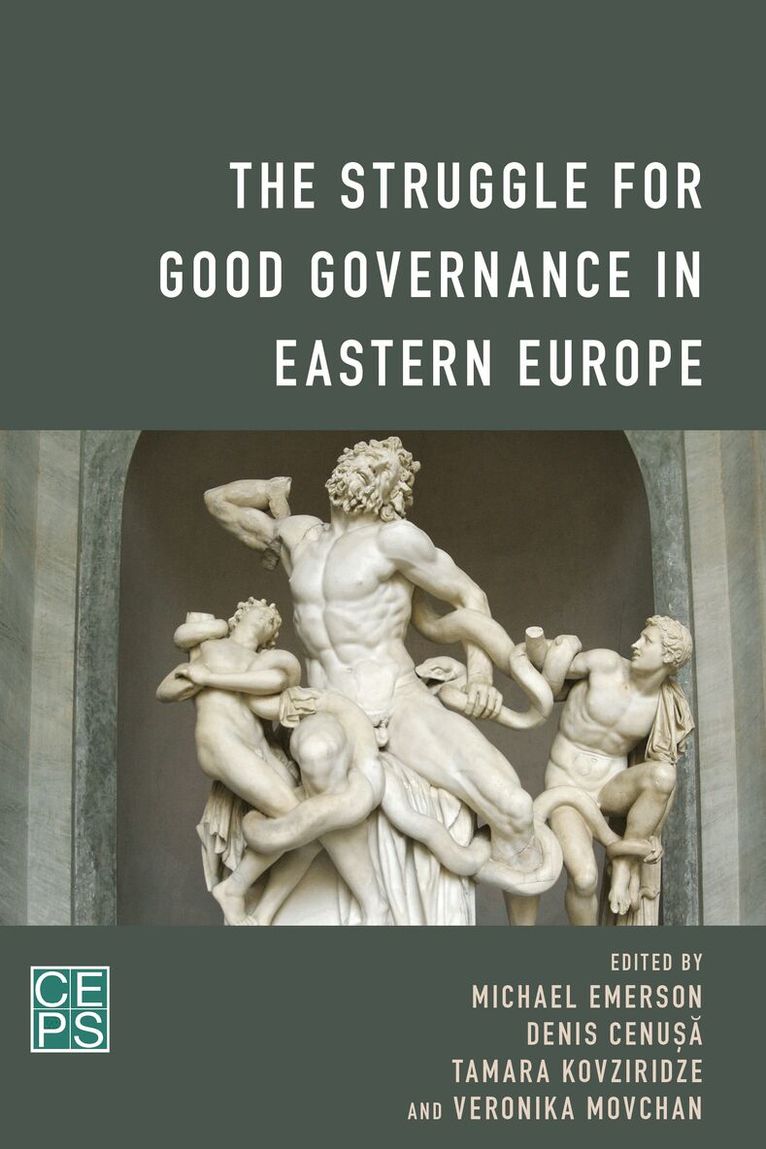
At a time when many regions of the world, including Europe, see a resurgence of authoritarianism, three countries of Eastern Europe – Ukraine, Georgia and Moldova – are struggling to counter this trend with the aim of developing European-style democracies in the framework of their Association Agreements with the European Union.This book offers an in-depth analysis of this challenge, with expert contributions on the workings of these countries’ democratic and judicial institutions, their anti-corruption policies and the hazards they must overcome, including the strong presence of oligarchs. Other themes include how these countries are adapting to their precarious geo-political positioning between the EU and Russia and how the quality of their political and economic governance compares with the Balkan states.The book complements three landmark Handbooks (now in their 2nd edition and also published by Rowman & Littlefield International) explaining the progress achieved in implementing the comprehensive Association Agreements that each of these countries has entered into with the EU.The struggle to advance good democratic governance in these close neighbours of the EU represents a test case of the highest strategic significance for both the EU and the three states themselves. For the most part, the jury is still out over its outcome.