Matthias Busse – författare
Visar alla böcker från författaren Matthias Busse. Handla med fri frakt och snabb leverans.
7 produkter
How to Keep a Competitive Edge in the Talent Game
Lessons for the EU from China and the US
Av Christal Morehouse, Matthias Busse
Häftad, 2014
385 kr
Lägg i varukorg
BY 2020, the global map of higher education will be completely redrawn, and by 2030, China is expected to emerge as the world's largest source of brainpower. The European Union should not necessarily view this development as a threat, but rather it can be seen as an opportunity for the EU to become …
How to Keep a Competitive Edge in the Talent Game
Lessons for the Eu from China and the Us
Av Christal Morehouse, Matthias Busse
E-bok, 2014
394 kr
Lägg i varukorg
BY 2020, the global map of higher education will be completely redrawn, and by 2030, China is expected to emerge as the world''s largest source of brainpower. The European Union should not necessarily view this development as a threat, but rather it can be seen as an opportunity for the EU to …
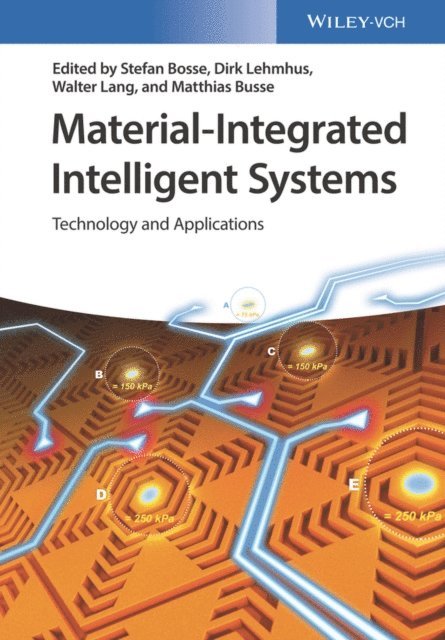
Material-Integrated Intelligent Systems
Technology and Applications
Av Stefan Bosse, Stefan Bosse m. fl.
Inbunden, 2018
3293 kr
Lägg i varukorg
Combining different perspectives from materials science, engineering, and computer science, this reference provides a unified view of the various aspects necessary for the successful realization of intelligent systems.The editors and authors are from academia and research institutions with close …
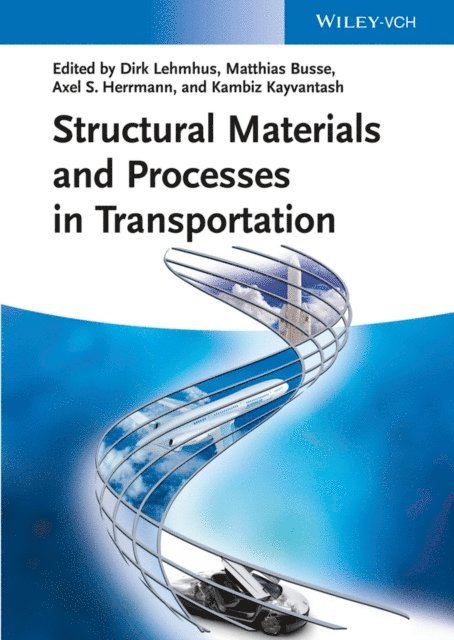
Structural Materials and Processes in Transportation
Av Kambiz Kayvantash, Axel Herrmann m. fl.
E-bok, 2013
2608 kr
Lägg i varukorg
Lightness, efficiency, durability and economic as well as ecological viability are key attributes required from materials today. In the transport industry, the performance needs are felt exceptionally strongly. This handbook and ready reference covers the use of structural materials throughout this …
Structural Materials and Processes in Transportation
Av Kambiz Kayvantash, Axel Herrmann m. fl.
E-bok, 2013
2551 kr
Lägg i varukorg
Lightness, efficiency, durability and economic as well as ecological viability are key attributes required from materials today. In the transport industry, the performance needs are felt exceptionally strongly. This handbook and ready reference covers the use of structural materials throughout this …
Material-Integrated Intelligent Systems
Technology and Applications
Av Matthias Busse, Walter Lang m. fl.
E-bok, 2017
3687 kr
Lägg i varukorg
Combining different perspectives from materials science, engineering, and computer science, this reference provides a unified view of the various aspects necessary for the successful realization of intelligent systems. The editors and authors are from academia and research institutions with close …
Material-Integrated Intelligent Systems
Technology and Applications
Av Matthias Busse, Walter Lang m. fl.
E-bok, 2017
3797 kr
Lägg i varukorg
Combining different perspectives from materials science, engineering, and computer science, this reference provides a unified view of the various aspects necessary for the successful realization of intelligent systems. The editors and authors are from academia and research institutions with close …