civilization of the American Indian – serie
Visar alla böcker i serien civilization of the American Indian. Handla med fri frakt och snabb leverans.
2 produkter
2 produkter
459 kr
Skickas inom 3-6 vardagar
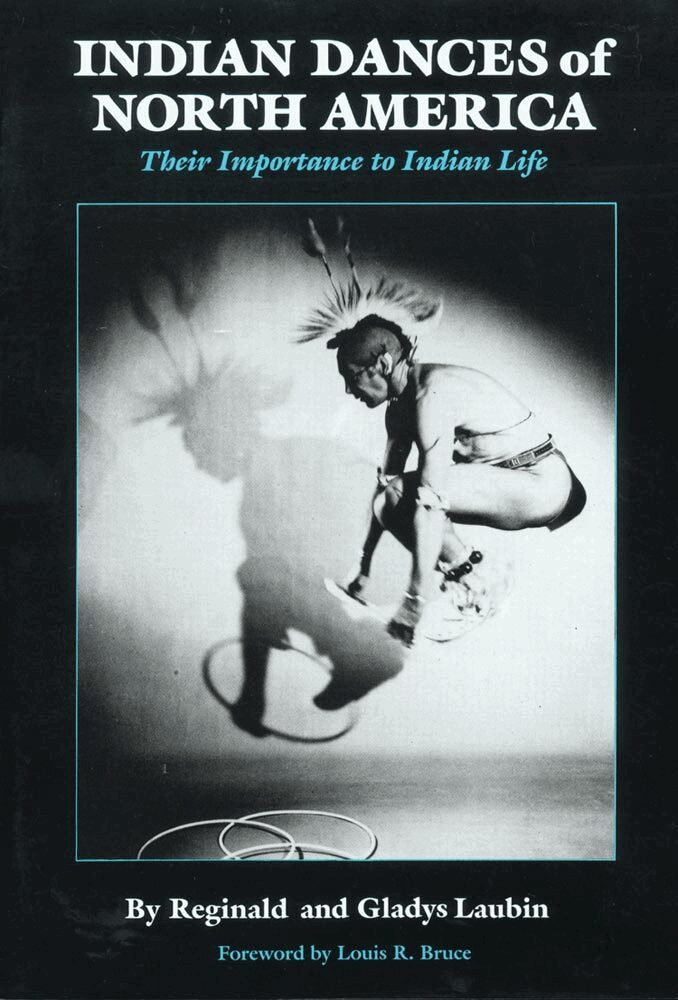
Many thousands of persons here and abroad have been introduced to authentic Indian dancing through the Laubin's dance concerts, lectures, and seminars. Their admirers, as well as other dancers, anthropologists, historians, students of Indian culture, and Indians themselves, will welcome this informative and richly illustrated book.It is based upon a lifetime of study and research, including years the authors spent living with the Indians on or near their reservations (they are adopted Sioux). The authors have been told by the old chiefs, "You know exactly the real Indian ways." These survivors of the Buffalo Days appreciated the Laubins' interest and asked them to learn and preserve the rituals, since their own young people no longer knew all their traditions. This book is the result.In addition to descriptions of the dances, the costumes, the body decorations, and the musical accompaniment, the Laubins give the cultural background of Indian dancing and a wealth of related detail. They enrich their text with many personal experiences and observations. They may have been the first non-Indians to appreciate fully the integral role of dancing in the traditional life patterns of the Indians, a role only recently recognize by scholars in the field.Through their deep understanding of their adopted people the Laubins clear way through misinterpretation and prejudice to a new appreciation of the American Indian.
289 kr
Skickas inom 10-15 vardagar
This book describes the struggle of Indian tribes and their governments to achieve freedom and self-determination despite repeated attempts by foreign governments to dominate, exterminate, or assimilate them. Drawing on the disciplines of political science, history, law, and anthropology and written in a direct, readable style, American Indian Tribal Governments is a comprehensive introduction to traditional tribal governments, to the history of Indian-white relations, to the structure and legal rights of modern tribal governments, and to the changing roles of federal and state governments in relation to modem tribal governments. Publication of this book fills a gap in American Indian studies, providing scholars with a basis from which to begin an integrated study of tribal government, providing teachers with an excellent introductory textbook, and providing general readers with an accessible and complete introduction to American Indian history and government.The book's unique structure allows coverage of a great breadth of information while avoiding the common mistake of generalizing about all tribes and cultures. An introductory section presents the basic themes of the book and describes the traditional governments of five tribes chosen for their geographic and cultural diversity-the Senecas, the Muscogees, the Lakotas, the Isleta Pueblo, and the Yakimas. The next three chapters review the history of Indian-white relations from the time Christopher Columbus "discovered" America to the present. Then the history and modem government of each of the five tribes presented earlier is examined in detail. The final chapters analyze the evolution and current legal powers of tribal governments, the tribal-federal relationship, and the tribal-state relationship.American Indian Tribal Governments illuminates issues of tribal sovereignty and shows how tribes are protecting and expanding their control of tribal membership, legal systems, child welfare, land and resource use, hunting and fishing, business regulation, education, and social services. Other examples show tribes negotiating with state and federal governments to alleviate sources of conflict, including issues of criminal and civil jurisdiction, taxation, hunting and fishing rights, and control of natural resources. Excerpts from historical and modem documents and speeches highlight the text, and more than one hundred photos, maps, and charts show tribal life, government, and interaction with white society as it was and is. Included as well are a glossary and a chronology of important events.