Cognitive Behaviour Therapy: Science and Practice - Böcker
Visar alla böcker i serien Cognitive Behaviour Therapy: Science and Practice. Handla med fri frakt och snabb leverans.
5 produkter
5 produkter
815 kr
Skickas inom 5-8 vardagar
Behavioural experiments are one of the central and most powerful methods of intervention in cognitive therapy. Yet until now, there has been no volume specifically dedicated to guiding physicians who wish to design and implement behavioural experiments across a wide range of clinical problems.The Oxford Guide to Behavioural Experiments in Cognitive Therapy fills this gap. It is written by clinicians for clinicians. It is a practical, easy to read handbook, which is relevant for practising clinicians at every level, from trainees to cognitive therapy supervisors.Following a foreword by David Clark, the first two chapters provide a theoretical and practical background for the understanding and development of behavioural experiments. Thereafter, the remaining chapters of the book focus on particular problem areas. These include problems which have been the traditional focus of cognitive therapy (e.g. depression, anxiety disorders), as well as those which have only more recently become a subject of study (bipolar disorder, psychotic symptoms), and some which are still in their relative infancy (physical health problems, brain injury). The book also includes several chapters on transdiagnostic problems, such as avoidance of affect, low self-esteem, interpersonal issues, and self-injurious behaviour. A final chapter by Christine Padesky provides some signposts for future development.Containing examples of over 200 behavioural experiments, this book will be of enormous practical value for all those involved in cognitive behavioural therapy, as well as stimulating exploration and creativity in both its readers and their patients.
1 020 kr
Skickas inom 5-8 vardagar
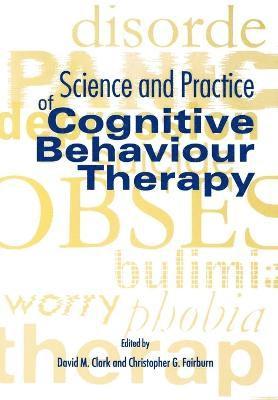
In a relatively short period of time, cognitive behaviour therapy has become the leading psychotherapy in most Western countries. Much of the appeal and success of cognitive behaviour therapy is due to the close links between science and practice which characterise the cognitive behaviour therapy movement and to the demonstrated effectiveness of the treatment approach. This book, which is divided into two parts, illustrates the links between science and practice in modern Cognitive Behaviour Therapy. Part One covers general issues and includes chapters on: The Evolution of Cognitive Behaviour Therapy (Stanley Rachman); The Foundations of Cognitive Behaviour Therapy (Michael Gelder); Information Processing Biases in Emotional Disorders (Andrew Mathews); The Relationship Between Cognition and Emotion (John D Teasdale); Efficacy and Dissemination of Psychological Treatment (David H. Barlow and Stefan G Hofmann). Part Two focuses on specific disorders and includes chapters on: Panic Disorder and Social Phobia (David M Clark); Generalized Anxiety Disorder (Adrian Wells and Gillian Butler); Obsessive-Compulsive Disorder (Paul M Salkovskis and Joan Kirk); Eating Disorders (Christopher G Fairburn); Sexual Problems (John Bancroft); Depression (J Mark G Williams); Attempted Suicide (Keith Hawton) Hypochondriasis (Paul M Salkovskis and Christopher Bass); Cardiovascular Disease (Derek W Johnston) Atypical Chest Pain (Richard Mayou); Chronic Fatigue (Michael Sharpe); Problem-Solving Treatment in Primary Care (Denis Gath and Laurence Mynors-Wallis). Each of the chapters in Part Two outlines the current cognitive behavioural conceptualization of the disorder, reviews relevant research and describes current cognitive behavioural treatment procedures. The book will be of interest to clinicians and researchers from a wide range of backgrounds, as well as students and trainees in clinical psychology, psychiatry and psychotherapy.
1 236 kr
Skickas inom 5-8 vardagar
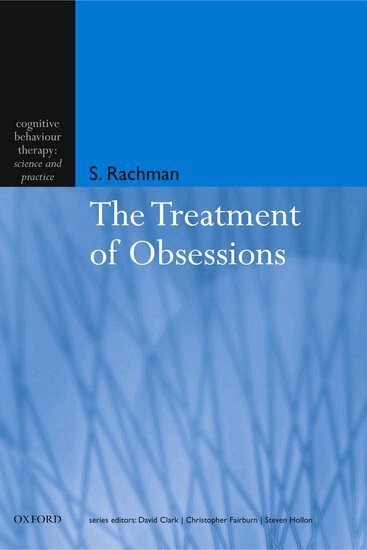
In the past decade, important progress has been made in understanding the spectrum of obsessive-compulsive disorders; however, most advances in treatment have been directed at the compulsive element of the behaviour. It is estimated that for as many as one in three patients presenting with obsessive-compulsive disorder, the primary problem is the obsessions.Obsessions are repetitive, unwanted thoughts, images or impulses. This book describes how to conduct the first, specific cognitive treatment for obsessions, and provides a comprehensive account of the underlying cognitive theory and supporting experimental evidence.The book discusses patient assessment procedures, provides a detailed explanation of the specific technique, anticipates possible patient reactions and suggests tactics for dealing with them, and explores methods for assessing progress. Throughout, there are helpful case studies to illustrate aspects of the technique and the book closes with a 'tool kit' of forms and charts to allow the therapist to plan and record treatment sessions.This will be essential reading for all members of the mental health team involved in applying cognitive therapies, as well as those in patient support organizations and academics interested in abnormal psychologies.
Del 3 - Cognitive Behaviour Therapy: Science and Practice
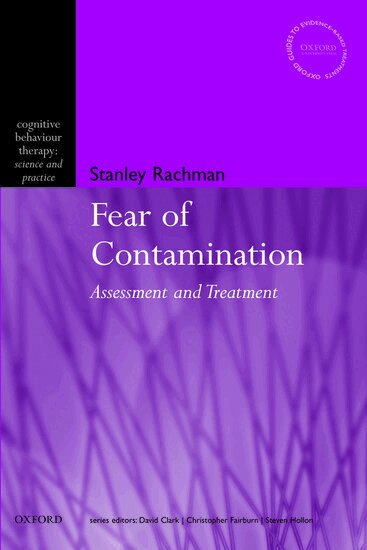
The Fear of Contamination
Assessment and Treatment
Inbunden, Engelska, 2006
2 303 kr
Skickas inom 5-8 vardagar
From a leader in the field of psychotherapy, this new book is the first dedicated to the topic of the fear of contamination. The fear of contamination is the driving force behind compulsive washing, the most common manifestation of obsessive compulsive disorder. This is one of the most extraordinary of all human fears. It is complex, powerful, probably universal, easily provoked, intense, and difficult to control. Usually the fear is caused by physical contact with a contaminant and spreads rapidly and widely. The book starts by defining the disorder, before considering the various manifestations of this fear, examining both mental contamination and contact contamination, and feelings of disgust.Most significantly, it develops a theory for how this problem can be treated, providing clinical guidelines - based around cognitive behavioural techniques.
Del 3 - Cognitive Behaviour Therapy: Science and Practice
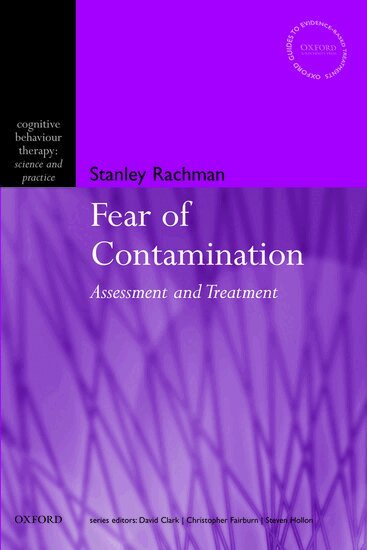
The Fear of Contamination
Assessment and treatment
Häftad, Engelska, 2006
1 020 kr
Skickas inom 5-8 vardagar
From a leading figure in the field of psychotherapy, this new book is the first dedicated to the topic of the fear of contamination. The fear of contamination is the driving force behind compulsive washing, the most common manifestation of obsessive compulsive disorder. It is one of the most extraordinary of all human fears. People who have an abnormally elevated fear of contamination over-estimate the probability and the potential seriousness of becoming contaminated. They believe that they are more susceptible than other people to contamination. People who labour under the illusion that they are particularly vulnerable to contamination are persistently anxious, excessively vigilant and highly avoidant.The fear is complex, powerful, probably universal, easily provoked, intense, and difficult to control. Usually it is caused by physical contact with a contaminant and spreads rapidly and widely. When a person feels contaminated it drives a strong urge to remove the contamination, usually by washing. The fear and subsequent urges over-ride other behaviour. A fear of contamination can also be established mentally and without physical contact. The fear can arise after exposure to violation, physical or non-physical, and from self-contamination. The book starts by defining the disorder, before considering the various manifestations of this fear, examining both mental contamination and contact contamination, and feelings of disgust. Most significantly, it develops a theory for how this problem can be treated, providing clinical guidelines - based around cognitive behavioural techniques.