Cognitive Theory of Language and Culture Series – serie
Visar alla böcker i serien Cognitive Theory of Language and Culture Series. Handla med fri frakt och snabb leverans.
4 produkter
Spaces, Worlds, and Grammar
Av Gilles Fauconnier, Eve Sweetser
Häftad, 1996
389 kr
Lägg i varukorg
In the mental-spaces framework developed by Gilles Fauconnier in the mid-1980s, the mind creates multiple cognitive "spaces" to mediate its understanding of relations and activities in the world, and to engage in creative thought. These 12 original papers extend the mental-spaces framework and …
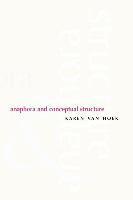
Anaphora and Conceptual Structure
Inbunden, 1997
1091 kr
Lägg i varukorg
This work presents an analysis of the classic problem of constraints on pronominal anaphora within the framework of cognitive grammar. The author proceeds from the position that grammatical structure can be characterized in terms of semantic and phonological representations, without autonomous …
Anaphora and Conceptual Structure
Häftad, 1997
439 kr
Lägg i varukorg
This work presents an analysis of the classic problem of constraints on pronominal anaphora within the framework of cognitive grammar. The author proceeds from the position that grammatical structure can be characterized in terms of semantic and phonological representations, without autonomous …
Spaces, Worlds, and Grammar
Av Gilles Fauconnier, Eve Sweetser
Inbunden, 1996
1063 kr
Tillfälligt slut
In the mental-spaces framework developed by Gilles Fauconnier in the mid-1980s, the mind creates multiple cognitive "spaces" to mediate its understanding of relations and activities in the world, and to engage in creative thought. These 12 original papers extend the mental-spaces framework and …