Columbia Series in Science and Religion – Serie
Visar alla böcker i serien Columbia Series in Science and Religion. Handla med fri frakt och snabb leverans.
14 produkter
14 produkter
339 kr
Skickas inom 7-10 vardagar
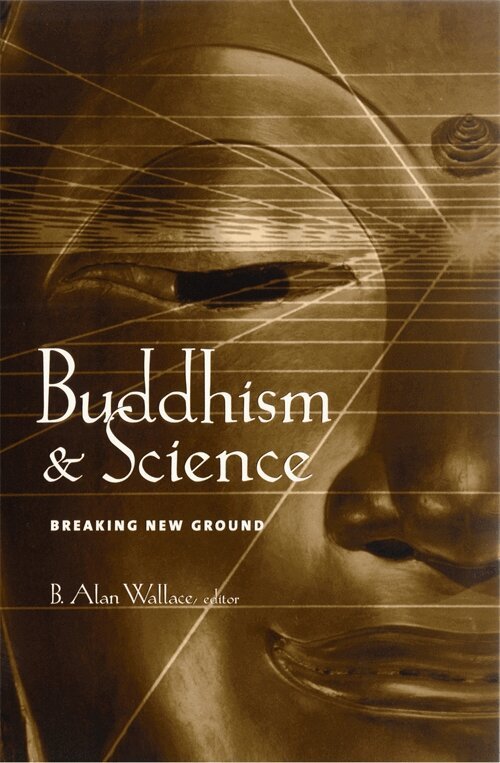
Buddhism and Science brings together distinguished philosophers, Buddhist scholars, physicists, and cognitive scientists to examine the contrasts and connections between the worlds of Western science and Eastern spirituality. This compilation was inspired by a suggestion made by His Holiness the Dalai Lama, himself one of the contributors, after one of a series of cross-cultural scientific dialogues in Dharamsala, India, sponsored by the Mind and Life Institute. Other contributors such as William L. Ames, Matthieu Ricard, and Stephen LaBerge assess not only the fruits of inquiry from East and West but also shed light on the underlying assumptions of these disparate worldviews. Their essays creatively address a broad range of topics: from quantum theory's surprising affinities with the Buddhist concept of emptiness, to the increasing need in the West for a more contemplative science attuned to the first-person investigation of the mind, to the important ways in which the psychological study of "lucid dreaming" maps similar terrain to the cultivation of the Tibetan Buddhist discipline of dream yoga.Reflecting its wide variety of topics, Buddhism and Science is comprised of three sections. The first presents two historical overviews of the engagements between Buddhism and modern science or, rather, how Buddhism and modern science have defined, rivaled, or complemented one another. The second describes the ways Buddhism and the cognitive sciences inform each other; the third addresses points of intersection between Buddhism and the physical sciences. On the broadest level this work illuminates how different ways of exploring the nature of human identity, the mind, and the universe at large can enrich and enlighten one another.
Environmental Ethics, Ecological Theology, and Natural Selection
Suffering and Responsibility
Inbunden, Engelska, 2003
2 274 kr
Skickas inom 3-6 vardagar
In the last few decades, religious and secular thinkers have tackled the world's escalating environmental crisis by attempting to develop an ecological ethic that is both scientifically accurate and free of human-centered preconceptions. This groundbreaking study shows that many of these environmental ethicists continue to model their positions on romantic, pre-Darwinian concepts that disregard the predatory and cruelly competitive realities of the natural world. Examining the work of such influential thinkers as James Gustafson, Sallie McFague, Rosemary Radford Ruether, John Cobb, Peter Singer, and Holmes Rolston, Sideris proposes a more realistic ethic that combines evolutionary theory with theological insight, advocates a minimally interventionist stance toward nature, and values the processes over the products of the natural world.
Environmental Ethics, Ecological Theology, and Natural Selection
Suffering and Responsibility
Häftad, Engelska, 2003
308 kr
Skickas inom 7-10 vardagar
In the last few decades, religious and secular thinkers have tackled the world's escalating environmental crisis by attempting to develop an ecological ethic that is both scientifically accurate and free of human-centered preconceptions. This groundbreaking study shows that many of these environmental ethicists continue to model their positions on romantic, pre-Darwinian concepts that disregard the predatory and cruelly competitive realities of the natural world. Examining the work of such influential thinkers as James Gustafson, Sallie McFague, Rosemary Radford Ruether, John Cobb, Peter Singer, and Holmes Rolston, Sideris proposes a more realistic ethic that combines evolutionary theory with theological insight, advocates a minimally interventionist stance toward nature, and values the processes over the products of the natural world.
William James and a Science of Religions
Reexperiencing The Varieties of Religious Experience
Inbunden, Engelska, 2004
244 kr
Skickas inom 7-10 vardagar
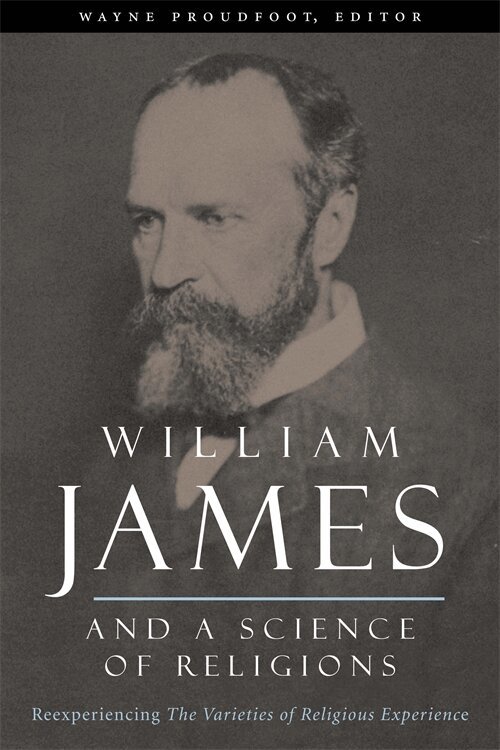
The "science of religion" is an important element in the interpretation of William James's work and in the methodology of the study of religion. An authority on pragmatism and the philosophy of religion, Wayne Proudfoot and a stellar group of contributors from a variety of disciplines including religion, philosophy, psychology, and history, bring innovative perspectives to James's work. Each contributor focuses on a specific theme in The Varieties of Religious Experience and suggests how James's treatment of that theme can fruitfully be brought to bear, sometimes with revisions or extensions, on current debate about religious experience.
521 kr
Skickas inom 7-10 vardagar
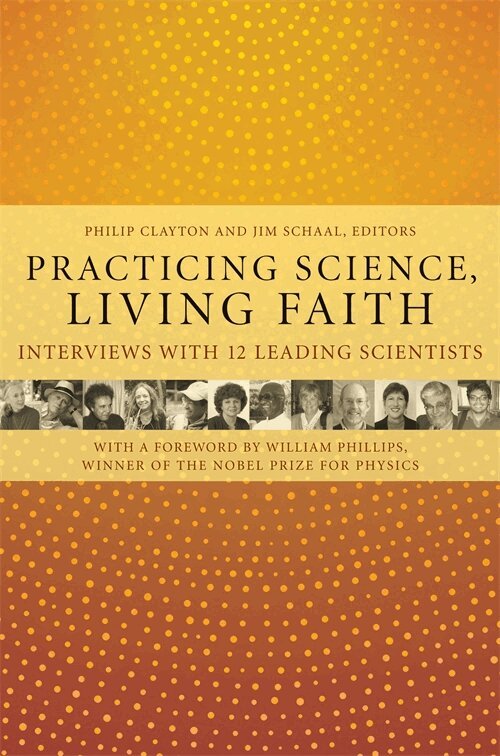
Twelve scientists from diverse backgrounds and disciplines demonstrate that it is indeed possible for profound intellectuals to integrate the life of science with the life of faith. In honest and inspiring interviews, they describe the difficult though rewarding process of reconciling their faith with their science and reveal the ways in which the two spheres can not only coexist but also mutually enhance each other. Jane Goodall begins the conversation by emphasizing the importance of recognizing the "spark of spirit" that runs through all creatures, human and animal. Robert Pollack discusses his motivations for opening a major center for the study of science and religion at Columbia University. Khalil Chamcham, a Moroccan astrophysicist and devout Muslim, moves from the study of galaxy formation to a new dialogue between Islam and the West. Thomas Odhiambo, a Kenyan entomologist, helps to bring sustainable agriculture to sub-Saharan Africa by uniting African animist and Christian traditions, and Henry Thompson, a computer scientist, utilizes his Quaker practice in both his science and his work as a mediator.Thoughtful and compelling, these and other scientists recount a rich integration of science and religion in their practice, their experience, and their approach to their work. Some find a deep harmony between the life of faith and the practice of science, whereas others struggle with the ongoing tensions. These original interviews range across the metaphysical, ethical, and religious implications of cutting-edge research. Taken together, they offer a unique picture of how scientists make peace with their work and their spirituality.
956 kr
Skickas inom 7-10 vardagar
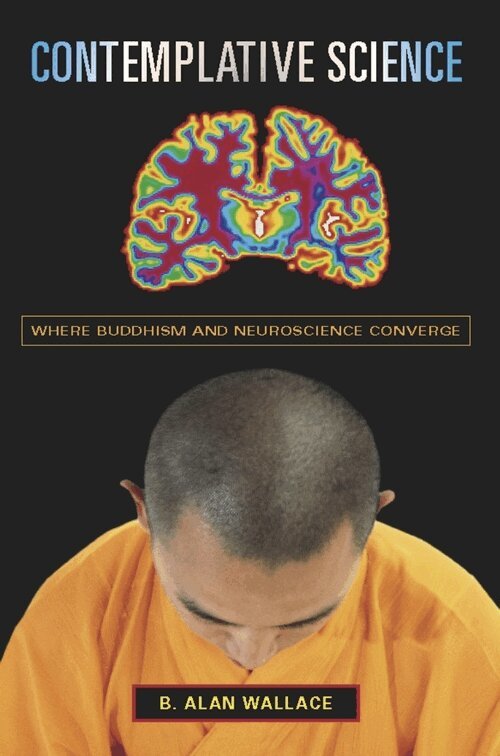
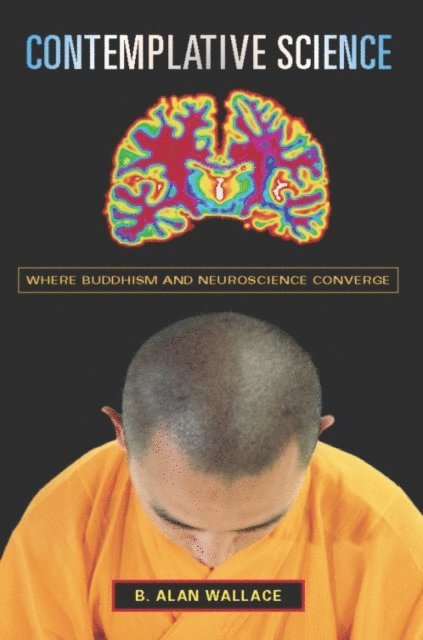
Science has long treated religion as a set of personal beliefs that have little to do with a rational understanding of the mind and the universe. However, B. Alan Wallace, a respected Buddhist scholar, proposes that the contemplative methodologies of Buddhism and of Western science are capable of being integrated into a single discipline: contemplative science. The science of consciousness introduces first-person methods of investigating the mind through Buddhist contemplative techniques, such as samatha, an organized, detailed system of training the attention. Just as scientists make observations and conduct experiments with the aid of technology, contemplatives have long tested their own theories with the help of highly developed meditative skills of observation and experimentation. Contemplative science allows for a deeper knowledge of mental phenomena, including a wide range of states of consciousness, and its emphasis on strict mental discipline counteracts the effects of conative (intention and desire), attentional, cognitive, and affective imbalances.Just as behaviorism, psychology, and neuroscience have all shed light on the cognitive processes that enable us to survive and flourish, contemplative science offers a groundbreaking perspective for expanding our capacity to realize genuine well-being. It also forges a link between the material world and the realm of the subconscious that transcends the traditional science-based understanding of the self.
236 kr
Skickas inom 7-10 vardagar
Science has long treated religion as a set of personal beliefs that have little to do with a rational understanding of the mind and the universe. However, B. Alan Wallace, a respected Buddhist scholar, proposes that the contemplative methodologies of Buddhism and of Western science are capable of being integrated into a single discipline: contemplative science. The science of consciousness introduces first-person methods of investigating the mind through Buddhist contemplative techniques, such as samatha, an organized, detailed system of training the attention. Just as scientists make observations and conduct experiments with the aid of technology, contemplatives have long tested their own theories with the help of highly developed meditative skills of observation and experimentation. Contemplative science allows for a deeper knowledge of mental phenomena, including a wide range of states of consciousness, and its emphasis on strict mental discipline counteracts the effects of conative (intention and desire), attentional, cognitive, and affective imbalances.Just as behaviorism, psychology, and neuroscience have all shed light on the cognitive processes that enable us to survive and flourish, contemplative science offers a groundbreaking perspective for expanding our capacity to realize genuine well-being. It also forges a link between the material world and the realm of the subconscious that transcends the traditional science-based understanding of the self.
Spirit, Mind, and Brain
A Psychoanalytic Examination of Spirituality and Religion
Inbunden, Engelska, 2006
506 kr
Skickas inom 7-10 vardagar
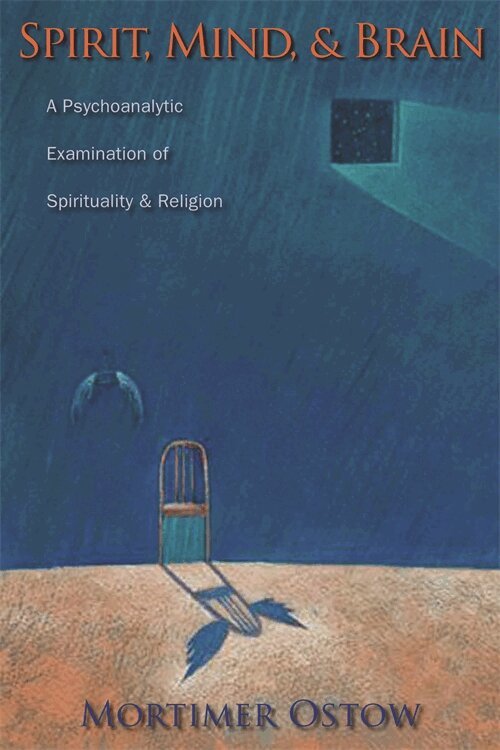
Preeminent psychoanalyst Mortimer Ostow believes that early childhood emotional attachments form the cognitive underpinnings of spiritual experience and religious motivation. His hypothesis, which is verifiable, relies on psychological and neurobiological evidence but is respectful of the human need for spiritual value. Ostow begins by classifying the three parts of the spiritual experience: awe, Spirituality proper, and mysticism. After he pinpoints the psychological origins of these feelings in infancy, he discusses the foundations of religious sentiment and practice and the brain processes associated with spiritual experience. He then focuses on spirituality's relationship to mood regulation, and the role of negative spirituality in fostering religious fundamentalism and demonic possession. Ostow concludes with an analysis of an essay by the psychoanalyst Donald M. Marcus, who recounts his own spiritual experience during a Native American-style "vision quest" in the woods. Marcus's account demonstrates the constructive potential of spirituality and the way in which spirituality retrieves and recapitulates feelings of attachment to the mother.Persuasively and brilliantly argued, Spirit, Mind, and Brain brings the disciplines of religion, behavorial neuroscience, and philosophy to bear on a groundbreaking new method for understanding religious ritual and belief.
861 kr
Skickas inom 11-20 vardagar
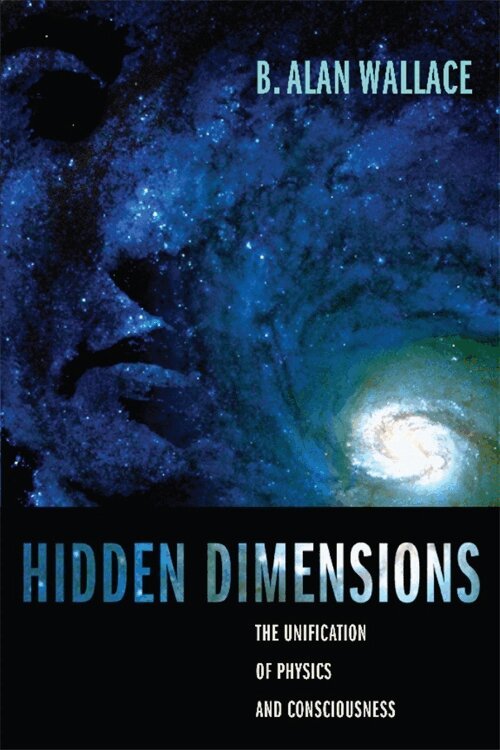
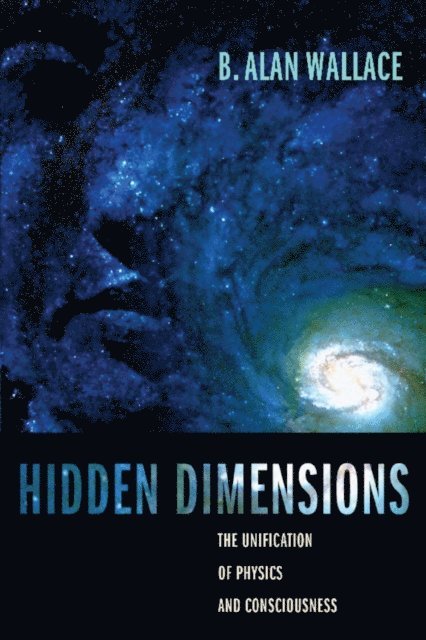
Bridging the gap between the world of science and the realm of the spiritual, B. Alan Wallace introduces a natural theory of human consciousness that has its roots in contemporary physics and Buddhism. Wallace's "special theory of ontological relativity" suggests that mental phenomena are conditioned by the brain, but do not emerge from it. Rather, the entire natural world of mind and matter, subjects and objects, arises from a unitary dimension of reality that is more fundamental than these dualities, as proposed by Wolfgang Pauli and Carl Jung. To test his hypothesis, Wallace employs the Buddhist meditative practice of samatha, refining one's attention and metacognition, to create a kind of telescope to examine the space of the mind. Drawing on the work of the physicist John Wheeler, he then proposes a more general theory in which the participatory nature of reality is envisioned as a self-excited circuit. In comparing these ideas to the Buddhist theory known as the Middle Way philosophy, Wallace explores further aspects of his "general theory of ontological relativity," which can be investigated by means of vipasyana, or insight, meditation.Wallace then focuses on the theme of symmetry in reference to quantum cosmology and the "problem of frozen time," relating these issues to the theory and practices of the Great Perfection school of Tibetan Buddhism. He concludes with a discussion of the general theme of complementarity as it relates to science and religion. The theories of relativity and quantum mechanics were major achievements in the physical sciences, and the theory of evolution has had an equally deep impact on the life sciences. However, rigorous scientific methods do not yet exist to observe mental phenomena, and naturalism has its limits for shedding light on the workings of the mind. A pioneer of modern consciousness research, Wallace offers a practical and revolutionary method for exploring the mind that combines the keenest insights of contemporary physicists and philosophers with the time-honored meditative traditions of Buddhism.
213 kr
Skickas inom 7-10 vardagar
Bridging the gap between the world of science and the realm of the spiritual, B. Alan Wallace introduces a natural theory of human consciousness that has its roots in contemporary physics and Buddhism. Wallace's "special theory of ontological relativity" suggests that mental phenomena are conditioned by the brain, but do not emerge from it. Rather, the entire natural world of mind and matter, subjects and objects, arises from a unitary dimension of reality that is more fundamental than these dualities, as proposed by Wolfgang Pauli and Carl Jung. To test his hypothesis, Wallace employs the Buddhist meditative practice of samatha, refining one's attention and metacognition, to create a kind of telescope to examine the space of the mind. Drawing on the work of the physicist John Wheeler, he then proposes a more general theory in which the participatory nature of reality is envisioned as a self-excited circuit. In comparing these ideas to the Buddhist theory known as the Middle Way philosophy, Wallace explores further aspects of his "general theory of ontological relativity," which can be investigated by means of vipasyana, or insight, meditation.Wallace then focuses on the theme of symmetry in reference to quantum cosmology and the "problem of frozen time," relating these issues to the theory and practices of the Great Perfection school of Tibetan Buddhism. He concludes with a discussion of the general theme of complementarity as it relates to science and religion. The theories of relativity and quantum mechanics were major achievements in the physical sciences, and the theory of evolution has had an equally deep impact on the life sciences. However, rigorous scientific methods do not yet exist to observe mental phenomena, and naturalism has its limits for shedding light on the workings of the mind. A pioneer of modern consciousness research, Wallace offers a practical and revolutionary method for exploring the mind that combines the keenest insights of contemporary physicists and philosophers with the time-honored meditative traditions of Buddhism.
956 kr
Skickas inom 7-10 vardagar
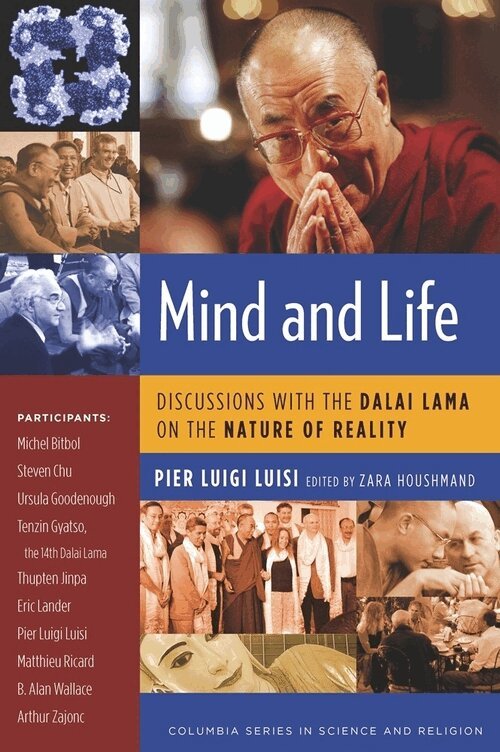
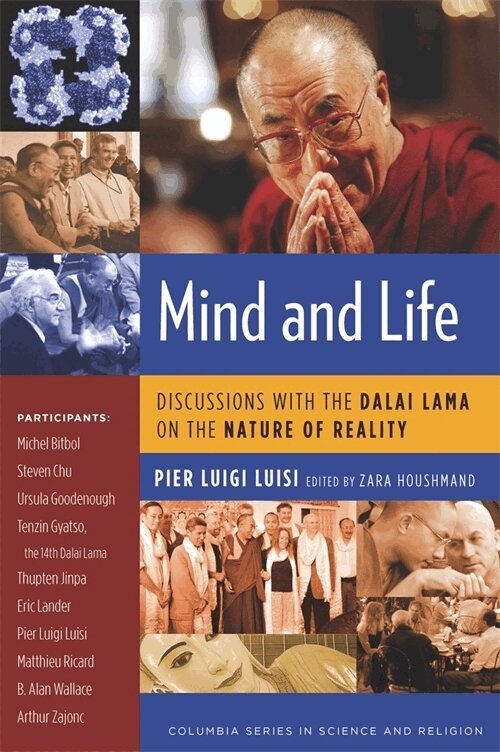
For over a decade, a small group of scientists and philosophers--members of the Mind and Life Institute--have met regularly to explore the intersection between science and the spirit. At one of these meetings, the themes discussed were both fundamental and profound: can physics, chemistry, and biology explain the mystery of life? How do our philosophical assumptions influence science and the ethics we bring to biotechnology? And how does an ancient spiritual tradition throw new light on these questions? Pier Luigi Luisi not only reproduces this dramatic, cross-cultural dialogue, in which world-class scientists, philosophers, and Buddhist scholars develop a holistic approach to the scientific exploration of reality, but also adds scientific background to their presentations, as well as supplementary discussions with prominent participants and attendees.Interviews with His Holiness the Karmapa, the Buddhist monk Matthieu Ricard, and the actor and longtime human rights advocate Richard Gere take the proceedings into new directions, enriching the material with personal viewpoints and lively conversation about such topics as the origin of matter, the properties of cells, the nature of evolution, the ethics of genetic manipulation, and the question of consciousness and ethics. A keen study of character, Luisi incorporates his own amusing observations into this fascinating dialogue, painting a very human portrait of some of our greatest--and most intimidating--thinkers. Deeply textured and cleverly crafted, Mind and Life is an excellent opportunity for any reader to join in the debate surrounding this cutting-edge field of inquiry.
244 kr
Skickas inom 7-10 vardagar
For over a decade, a small group of scientists and philosophers--members of the Mind and Life Institute--have met regularly to explore the intersection between science and the spirit. At one of these meetings, the themes discussed were both fundamental and profound: can physics, chemistry, and biology explain the mystery of life? How do our philosophical assumptions influence science and the ethics we bring to biotechnology? And how does an ancient spiritual tradition throw new light on these questions? Pier Luigi Luisi not only reproduces this dramatic, cross-cultural dialogue, in which world-class scientists, philosophers, and Buddhist scholars develop a holistic approach to the scientific exploration of reality, but also adds scientific background to their presentations, as well as supplementary discussions with prominent participants and attendees.Interviews with His Holiness the Karmapa, the Buddhist monk Matthieu Ricard, and the actor and longtime human rights advocate Richard Gere take the proceedings into new directions, enriching the material with personal viewpoints and lively conversation about such topics as the origin of matter, the properties of cells, the nature of evolution, the ethics of genetic manipulation, and the question of consciousness and ethics. A keen study of character, Luisi incorporates his own amusing observations into this fascinating dialogue, painting a very human portrait of some of our greatest--and most intimidating--thinkers. Deeply textured and cleverly crafted, Mind and Life is an excellent opportunity for any reader to join in the debate surrounding this cutting-edge field of inquiry.
299 kr
Skickas inom 7-10 vardagar
By establishing a dialogue in which the meditative practices of Buddhism and Christianity speak to the theories of modern philosophy and science, B. Alan Wallace reveals the theoretical similarities underlying these disparate disciplines and their unified approach to making sense of the objective world. Wallace begins by exploring the relationship between Christian and Buddhist meditative practices. He outlines a sequence of meditations the reader can undertake, showing that, though Buddhism and Christianity differ in their belief systems, their methods of cognitive inquiry provide similar insight into the nature and origins of consciousness. From this convergence Wallace then connects the approaches of contemporary cognitive science, quantum mechanics, and the philosophy of the mind. He links Buddhist and Christian views to the provocative philosophical theories of Hilary Putnam, Charles Taylor, and Bas van Fraassen, and he seamlessly incorporates the work of such physicists as Anton Zeilinger, John Wheeler, and Stephen Hawking.Combining a concrete analysis of conceptions of consciousness with a guide to cultivating mindfulness and profound contemplative practice, Wallace takes the scientific and intellectual mapping of the mind in exciting new directions.
213 kr
Skickas inom 7-10 vardagar
By establishing a dialogue in which the meditative practices of Buddhism and Christianity speak to the theories of modern philosophy and science, B. Alan Wallace reveals the theoretical similarities underlying these disparate disciplines and their unified approach to making sense of the objective world. Wallace begins by exploring the relationship between Christian and Buddhist meditative practices. He outlines a sequence of meditations the reader can undertake, showing that, though Buddhism and Christianity differ in their belief systems, their methods of cognitive inquiry provide similar insight into the nature and origins of consciousness. From this convergence Wallace then connects the approaches of contemporary cognitive science, quantum mechanics, and the philosophy of the mind. He links Buddhist and Christian views to the provocative philosophical theories of Hilary Putnam, Charles Taylor, and Bas van Fraassen, and he seamlessly incorporates the work of such physicists as Anton Zeilinger, John Wheeler, and Stephen Hawking.Combining a concrete analysis of conceptions of consciousness with a guide to cultivating mindfulness and profound contemplative practice, Wallace takes the scientific and intellectual mapping of the mind in exciting new directions.