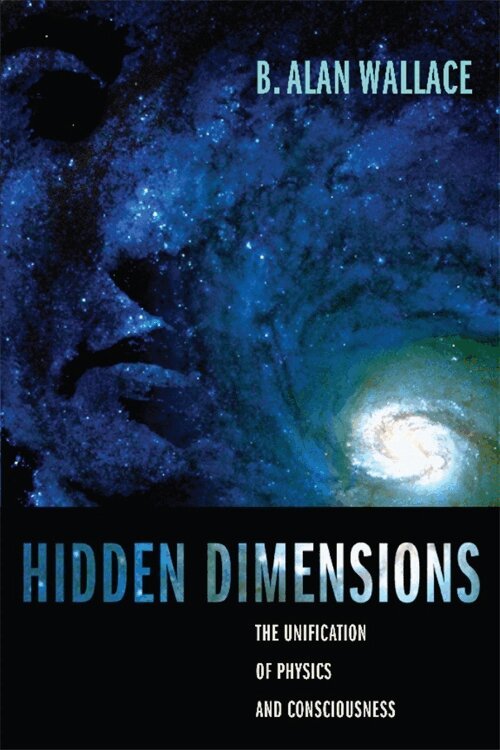
Häftad, Engelska, 2010
Hidden Dimensions
230 kr
Beställningsvara. Skickas inom 5-8 vardagar. Fri frakt över 249 kr.
Beskrivning
Produktinformation
- Utgivningsdatum: 2010-01-21
- Mått: 150 x 232 x 11 mm
- Vikt: 291 g
- Format: Häftad
- Språk: Engelska
- Serie: Columbia Series in Science and Religion
- Antal sidor: 176
- Förlag: Columbia University Press
- ISBN: 9780231141512
Utforska kategorier
Betyg & recensioner
1 recensioner, genomsnitt 2/5
- 2/5 Ingvar
I'm presently studying two thin volumes dealing with very complicated and important matters; the human consciousness - which, in scientific circles is named "the hard problem"; how our consciousness evolved, and what it really is. I am suspicious of thin volumes trying to say something valid for "the common man" about highly advanced matters - but many times the hardcore science lingo is too hard to get into, without being a specialist of the matter yourself, mainly because of very advanced mathematics, or medical or other specialities that you have to be highly educated in yourself to grasp. So I read on - but it is strange in this case how I have had to shift center of gravity as I advance through the books. One of them comes from a Buddhist-tinted world of thought, while the other is a truly hardcore concentrate of naked Western science - and they both clearly dislike the other's approach, in principal, not personally; they never mention each other. It's just that I happen to get both their books simultaneously. Living in a Buddhist world of thought myself (which this matter doesn't affect), I clearly am fascinated to the core by the naked science and brilliant thinking and writing of ZOLTAN TOREY in his little volume THE CONSCIOUS MIND, published as one book in a series from MIT PRESS called ESSENTIAL KNOWLEDGE SERIES (2014). The other book is written by B. ALAN WALLACE, and entitled HIDDEN DIMENSIONS; the unification of physics and consciousness, published by COLUMBIA UNIVERSITY PRESS in a series called COLUMBIA SERIES IN SCIENCE AND RELIGION (2007). Torey's book is a sort of Reader's Digest version of his broader science and another, fatter volume of his, while Wallace's book tends to be mostly a defense for philosophical world views that I do support, but which cannot (because of their nature) be judged scientifically, with the kind of science we accept today. He supports, for example, the view that the one way to understand your consciousness is by introspection, meditation. Torey, on the other hand, explains in extremely clear wordings and syntax his views, which really get to you and sort of light you up. He uses no more words than is necessary, while Wallace keeps repeating himself page after page, until you get tired. Perhaps the publisher should have had a better proof reader, to weed and sanitize the text, but then the volume would perhaps just have ended up a leaflet. Buddhist thinking is extremely clear and guided by diamond logic, so I gather it is the inferior professionalism of Wallace that brings his theories down, even though someone with a thinner and harder pencil and a more rested and not so irritable mind would have had the possibility to raise these views from the Buddhist sphere as high or higher than Torey's magnificent arguments.