Coming of Age of the Education Doctorate – serie
Visar alla böcker i serien Coming of Age of the Education Doctorate. Handla med fri frakt och snabb leverans.
8 produkter
8 produkter
557 kr
Skickas
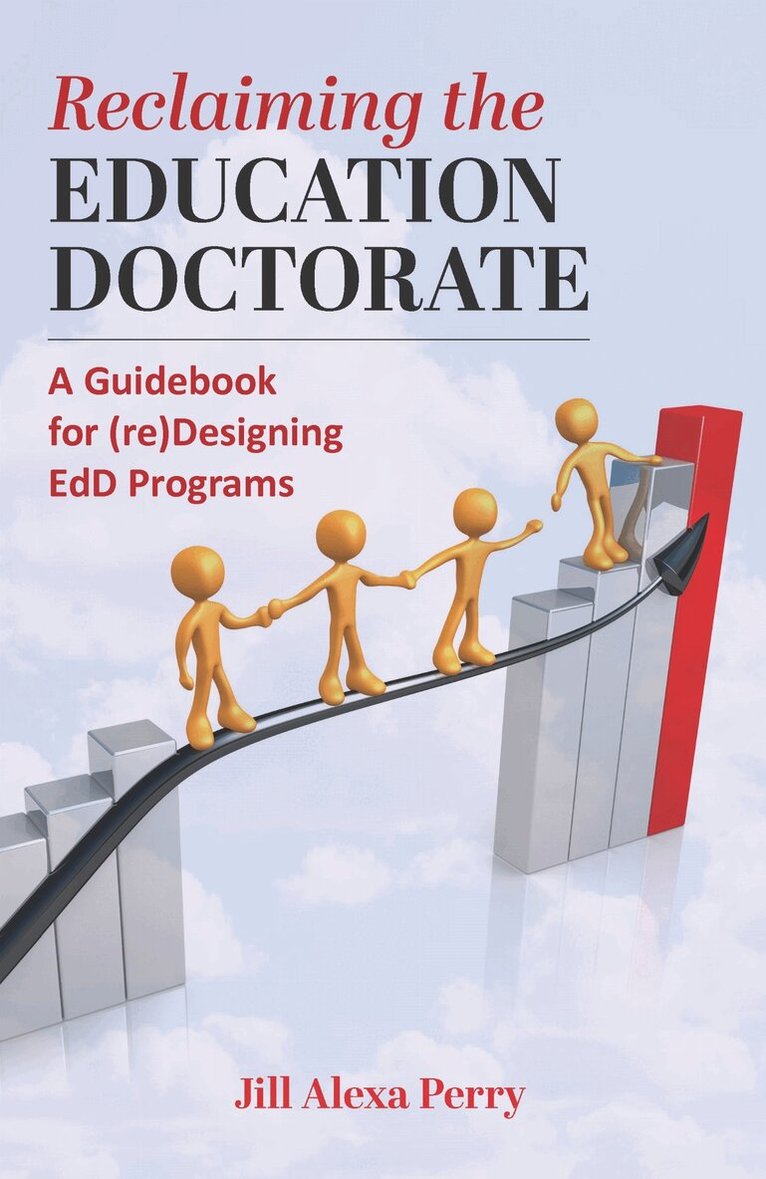
Reclaiming the Education Doctorate: A Guidebook for Preparing Scholarly Practitioners is a practical guide for those seeking to (re)design a professional practice doctorate program in education that prepares Scholarly Practitioners. To tackle the comprehensive change process necessary for (re)designing the EdD, this book will guide the reader with an improvement lens that looks at the roots of the confusion of the EdD, the system that created it, and the framework that helped to reclaim it. Readers will be guided through a backward mapping (re)design process that begins with defining graduate outcomes, maps through the milestones and courses, ends with rethinking the admissions process. Along the way, readers will learn how to design and integrate a dissertation in practice into the curriculum, consider best practices for their program (re)design, and view examples of successful programs. Additionally, to support readers in their (re)design efforts, each chapter will offer exercises, tools, and resources that will guide the process. The book will prove to be an invaluable resource for anyone developing or revising their EdD program.After the opening chapter that explains the mission statement of Reclaiming the Education Doctorate, Jill Perry structures chapters to deal with the full range of issues that impact EdD programs, including:Roots of the EdD ProblemAim: The Professional Practice Doctorate Driving ChangeBackward mapping: beginning with the endThe heart of the program: CurriculumThe beginning: Admitting CandidatesMeasuring ImpactLeading Change
417 kr
Skickas inom 7-10 vardagar
Professional and educational associations, such as the Carnegie Project for the Education Doctorate (CPED), create and offer awards that recognize the accomplishments of individuals, programs, and institutions. In this edited book, W. Kyle Ingle and Harriette Thurber Rasmussen focus on CPED's Program of the Year (POY) Award, examining its history, purpose, submission requirements, its committee structure, activities, and outcomes. Faculty members from CPED's award-winning institutions have been invited to discuss their innovative programs, how these innovations were developed, how they pursue social justice, and how these innovations have been sustained since winning the award. Furthermore, the award's role in facilitating the diffusion of innovative and effective practices among CPED member institutions is examined. The book and its chapters are framed through the lens of innovation diffusion theory. Popularized by communication theorist Everett Rogers (1967, 2003), innovation diffusion theory has spread widely across the social sciences. In his seminal work, Diffusion of Innovations, Rogers defines an innovation as "an idea, practice, or object that is perceived as new by an individual or other unit of adoption" (2003, p. 12). Innovation diffusion is the process by which an innovation spreads among the members of a social system, in this case the internal and external communities of Ed.D.-granting institutions.The book includes dual components: (1) innovative programs that drive social justice and (2) how these institutional innovations were developed and sustained. The latter component will shed light on three self-study processes related to these award willing programs: The process of creating the featured innovative program;The process of applying for the program of the year award; and The process of writing the journey and considering the impact of the program of the year award on their institution, including any reinvention/adaptations. Taken together, readers will examine and understand "process[es] by which alteration occurs in the structure and function of a social system" (Rogers, 1995, p. 6) in pursuit of social justice goals through programmatic innovation.Perfect for courses such as: Program Development & Assessment in Higher Education; Instructional Planning for Student Learning and Achievement; Performance Improvement; Instructional Design and Development; e-Learning Design and Development; College Teaching; Supervised Experience in Higher Education; Special Problems in Educational Leadership; Professional Projects in Higher Education; Organizational Improvement in Higher Education
314 kr
Skickas inom 7-10 vardagar
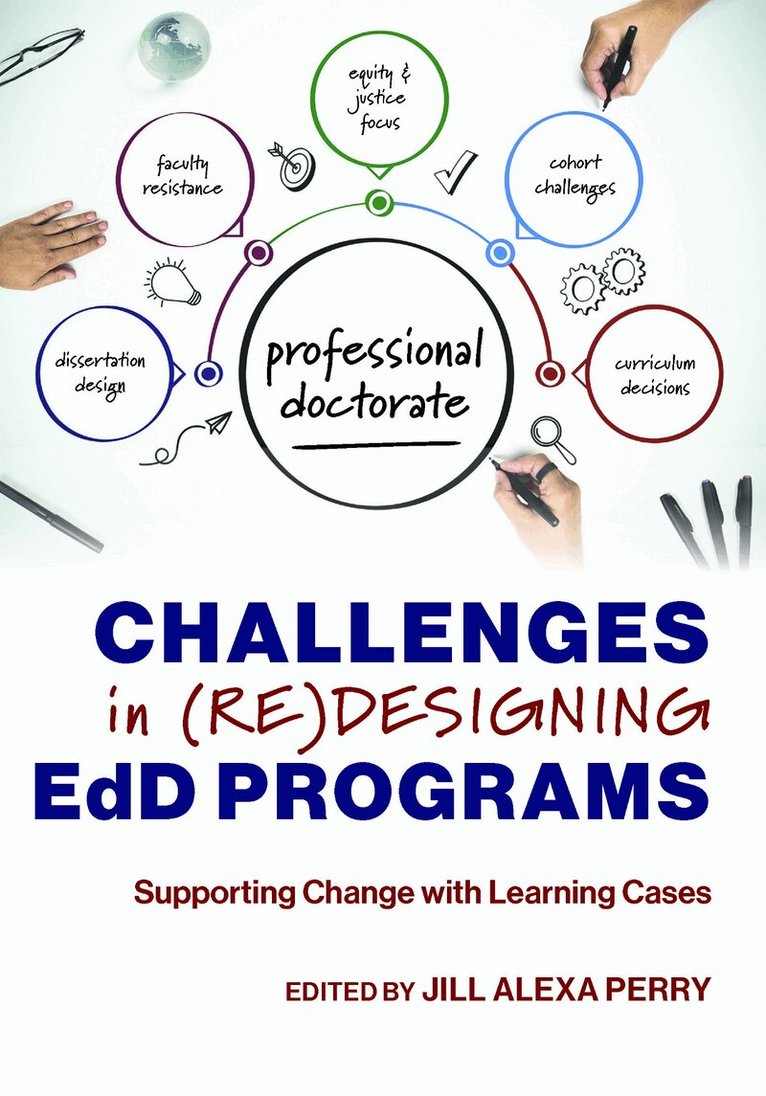
The intent of Challenges in (Re)designing EdD Programs: Supporting Change with Learning Cases is to provide faculty, who are seeking to redesign their EdD programs into professional practice doctorate, with case examples that describe common challenges and pitfalls encountered during the redesign process. Each of the cases portrays real situations generated from case study research conducted by the chapter authors. Each case is comprised of three parts: a) a contextual overview of the challenge or problem, b) case study notes that ground the challenge or problem in literature and provide deeper understanding of the issues at hand, and c) a set of discussion questions that will guide faculty in conversation about similar issues they may face in their own program redesign. This volume is an invaluable resource for program leaders, faculty, and graduate students involved in EdD programs.
IMPACT of the Scholarly Practitioner Doctorate
Developing Socially-Just Leaders to Make Equitable Change
Häftad, Engelska, 2024
365 kr
Skickas inom 7-10 vardagar
The IMPACT of the Scholarly Practitioner Doctorate: Developing Socially Just Leaders to Make Equitable Change is a collection of shared counternarratives between EdD alums and their supervising professor mentors, detailing their dissertation in practice (DiP) journeys as scholarly practitioners and the impact of the scholarly practitioner doctorate on their paths from doctoral students to socially-just leaders in a wide range of educational fields. The IMPACT of the Scholarly Practitioner Doctorate posits these relationships as the catalyst in bringing theory learned in course work to scholarly research that is positioned within practice, focused on contributing to equity-centered work. The book serves as an exemplar learning companion to a wide audience and diverse EdD programs looking to modify, develop, or redesign their programs to align with The Carnegie Project on the Education Doctorate (CPED) concepts including signature pedagogy, laboratories of practice, inquiry as practice and mentoring and advising. The IMPACT of the Scholarly Practitioner Doctorate demonstrates how change in education, community, and organizations have been impacted in efficacious ways. EdD students and their supervising professors, faculty, and administrators will be able to use this book's content as their own catalyst for building socially-just leadership knowledge, skills, and dispositions while preparing their EdD students to exhibit equitable change in the professional practice areas they are in.Perfect for courses such as: Introduction to Educational Research; Social Justice Education Foundations; Leadership for Equity and Social Change; Transformative Leadership; Foundations of Inquiry for Social Justice; Qualitative Inquiry for Social Justice; Critical Perspectives for Equity in Education; Engaging in Critical Social Theories for Designing Research for Equity and Social Justice; Reform and Change for Social Justice; Educational Leadership Development
Importance of the Dissertation in Practice (DiP)
A Resource Guide for EdD Students, Their Committee Members and Advisors, and Departmental and University Leaders Involved with EdD Programs
Häftad, Engelska, 2024
378 kr
Skickas inom 7-10 vardagar
The Importance of the Dissertation in Practice (DiP): A Resource Guide for EdD Students, Their Committee Members and Advisors, and Departmental and University Leaders Involved with EdD Programs is the first book-length study that looks at the elements of high-quality Dissertations in Practice (DiPs). It serves as a resource for EdD students, their committee members, their advisors, and departmental or university leaders involved with EdD programs. The book can be used to improve support from key stakeholders within EdD programs for the implementation of the DiP in the development of practitioner-scholars.The first section of the book discusses the difference between the DiP and traditional dissertations, the history of the DiP, and how the practitioner-scholar is developed through the DiP process. Next, the book describes the elements that are reflective of a high-quality DiP. Finally, it addresses a few of the unique formats that are sometimes used with the DiP, some of the practical issues with implementing the DiP, and issues of the future including the use of artificial intelligence.The ultimate goal of The Importance of the Dissertation in Practice is to serve as a practical guide for all those involved with the DiP, reflecting the editors' and authors' experiences working with students within a variety of higher education institutions.Perfect for courses such as: Introduction to Research Methods (doctoral level); Improvement Science; Applied Research Methods; Advanced Research Methods; Introduction to the Dissertation; Educational Evaluation; Theory of Change in Education; Educational Policy
Transformative Potential-Based Research
A Guide to Successfully Finding One's Place in Research
Häftad, Engelska, 2024
417 kr
Skickas inom 7-10 vardagar
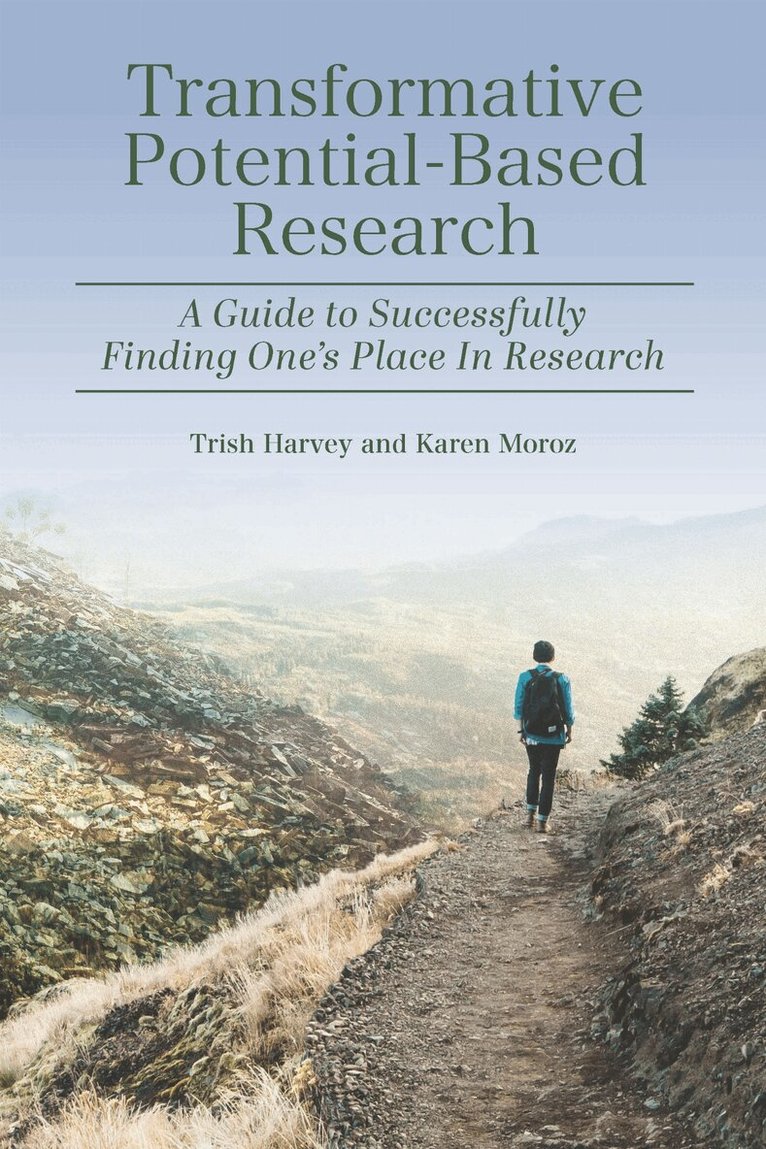
Researchers working to clearly identify a research topic and theme have difficulty deciding how to focus their work. Using a potential-based learning focus, detailed in this text, readers are challenged to consider their role as researcher, scholar, and leader to guide their reflective work. Transformative Potential Based Research: A Guide to Successfully Finding One's Place in Research provides both the theoretical support and the guiding activities to help readers decide on an area of potential-based research. The result will prove to be transformational.To guide this work, Karen Moroz and Trish Harvey have developed a suitable framework. They invite readers to review the mountain metaphor shared within the framework and to keep the visual present at all times as they progress through the book. It is addressed often and readers will be invited to use, extend, and discuss it numerous times throughout their journey. Transformative Potential Based Research supports instructors and students through all stages of research, including:identifying and embracing relevant and essential topics,crafting research questions that accurately and concisely convey the purpose(s),exploring one's own connection to the issue,developing and employing individual processes that lead to success, and determining a potential-based frame that motivates the writer and frames the workPerfect for courses such as: Dissertation; Research Methods; Educational Methods; Intro to Research Design; Academic Writing; Capstone Practicum; Educational Research; Understanding Research
455 kr
Skickas inom 7-10 vardagar
Writing as Artistry: EdD Students Learning to Write as Scholarly Practitioners is a timely guidebook that supports EdD students' scholarly writing development while honoring and amplifying their rich practitioner knowledge and wisdom. EdD students are educational leaders and working professionals transitioning from expert-practitioners to scholarly practitioners who aim to positively transform the lives of students and communities. This resource addresses the significant need for mastering scholarly writing skills required for EdD students' successful degree completion and real-life impact. The book's conceptual approach frames scholarly writing as artistry. This perspective recognizes the work of practitioners as a deeply human and experiential process of solving problems of practice by drawing on prior knowledge and exploring new methods to improve practice. This view champions the idea that practitioners' professional knowledge and rich prior experience are essential assets and that their insider knowledge is a necessary and key condition for rigorous practitioner inquiry. The authors adopt a critical stance that rejects the dominant notion of technical rationality, which historically views researchers as scholars and practitioners as mere "doers," arguing instead that building successful experiences for EdD students requires and respects practitioners' professional knowledge. The guidebook offers a scaffolded, practical approach to scholarly writing, aiming to guide the reader toward a practice-focused lens, provides practical tools for fostering scholarly writing, and builds students' confidence as writers. It is centrally focused on developing practice-centered dissertations and culminating projects that align with professional-practice degrees. To support students throughout the process, the book provides a robust repertoire of writing approaches and strategies. It offers guidance on prewriting techniques for capturing initial ideas and helps students in effectively connecting their ideas with others. Critical to this artistic approach is the development of a unique writer's voice and positionality, often through the use of reflexivity. The book includes comprehensive practical tools for navigating the often-challenging mechanics of scholarly work, detailing writing feedback and revision strategies, and including a range of templates and clear examples of student work. Furthermore, the guide provides essential advice for leveraging support structures, such as engaging with multiple mentors and critical friends. The guide also prepares students for diverse project types, including individual, collaborative, and alternative dissertation projects. Ultimately, mastering these skills is a critical way to support students in their work beyond graduation. The ability to write clear, scholarly reports is essential, as the skills learned must transfer from the Dissertation-in-Practice experience to the student's world of practice, thus ensuring real-world impact by enhancing leaders' capacity to implement evidence-based solutions to complex problems.
455 kr
Skickas inom 7-10 vardagar
From Getting Started to Graduation: A Student Guide to the EdD, a volume in The Coming of Age of the Education Doctorate Series book series, pulls back the curtain on the hidden curriculum of the EdD experience for students, fully supporting their journeys by making what is too often anxious and abstract more clear and concrete. Drawing from years of experience from designing and directing an EdD program, the authors provide an end-to-end playbook for students to draw from as they navigate their own EdD program of choice.Part I focuses on getting started. The book begins with an establishment of the why behind getting an EdD and how this is a distinct and unique experience unlike other graduate degrees. It pushes readers to think beyond the title, encouraging them to drill down into their core motivation for pursuing not just a degree but a transformative experience. Readers will then learn about finding the match quality between their goals and aspirations and the myriad program choices available to them. Once students have winnowed down their choices and found their fit, they will be coached on how to build survival systems that will help them thrive from the onset to the finish line. This includes learning how to pace themselves, how to lean on friends and family, how to create contingency plans, and how to create helpful constraints that make room for work-life balance. The book closes Part I with helpful tips for time and resource management, as well as how to build routines and habits that allow them to be kind of their future selves.Part II explicitly explores how to navigate this years-long quest and stay the course. Readers will learn how to get curious and keep that door open across coursework in order to allow for innovative and creative ideas to flourish and eventually lead to fusion—the key to creative thinking. With the door opened to ideas and exploration, the book sets the stage for how to become a scholar-practitioner through key habits of mind such as the what-if and maybe mindset and tackling the tough task of synthesis. Part II ends with the call to team up and to take this winding road together. The EdD experience can be lonely if students go it alone, and the volume explains how and why teaming up is not just nice but necessary to persevere as the way to reach the finish line.Finally, Part III pivots to helping students survive the intensive thinking, researching, and writing demands of the dissertation. Readers will tap into years of tips and tricks on how to break this mystifying and monstrous project into sizable and achievable small steps that fuel motivation for the long haul so that students avoid burnout during the final push as they near defending their projects and crushing their comps. When finished, EdD students will be able to leverage what is too often hidden from students and draw from the concrete examples, strategies, stories, and templates therein in order to start strong and finish strong.Perfect for courses such as: Introduction to Research; Research Methodology; Introduction to the EdD; The Scholar-Practitioner; Exploring Problems of Practice; Becoming a Change Agent