Comparative Perspectives in Business History – Serie
Visar alla böcker i serien Comparative Perspectives in Business History. Handla med fri frakt och snabb leverans.
8 produkter
8 produkter
577 kr
Skickas inom 7-10 vardagar
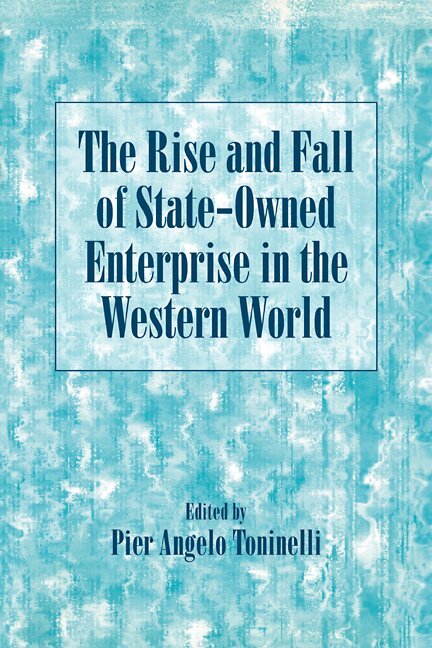
This book examines the rise and fall in the twentieth-century Western world of state-owned enterprises, a chief instrument of state economic intervention. It offers historical perspective on the origins and purpose of state-owned enterprises, their performance, and the reasons for their precipitate decline from their heyday in the 1960s to the waves of privatization in the 1980s and 1990s. Looking to the future as well as the past of state business, this book explores the concept of state-owned enterprise and its context in Western political economy, as well as the permutations and future prospects of the institution in practice. The contributors present studies of the development of state-owned enterprises in seven Western European countries and the United States.
563 kr
Skickas inom 7-10 vardagar
This 2003 book offered the first in-depth international survey of contemporary research and debates in business history. Over the two decades leading to its publication, enormous advances had been made in writing the history of business enterprise and business systems. Historians are documenting and analyzing the evolution of a wide range of important companies and systems, their patterns of innovation, production, and distribution, their financial affairs, their political activities, and their social impact. Each essay is written by a prominent authority who provides an assessment of the state and significance of research in his or her area. This volume is a reference work that will be of immense value to historians, economists, management researchers, and others concerned to access the latest insights on the evolution of business throughout the world.
1 282 kr
Skickas inom 7-10 vardagar
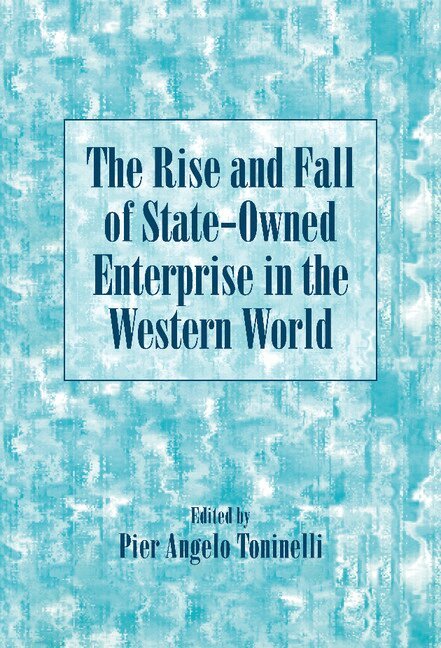
This book examines the rise and fall in the twentieth-century Western world of state-owned enterprises, a chief instrument of state economic intervention. It offers historical perspective on the origins and purpose of state-owned enterprises, their performance, and the reasons for their precipitate decline from their heyday in the 1960s to the waves of privatization in the 1980s and 1990s. Looking to the future as well as the past of state business, this book explores the concept of state-owned enterprise and its context in Western political economy, as well as the permutations and future prospects of the institution in practice. The contributors present studies of the development of state-owned enterprises in seven Western European countries and the United States.
1 485 kr
Skickas inom 7-10 vardagar
This 2003 book offered the first in-depth international survey of contemporary research and debates in business history. Over the two decades leading to its publication, enormous advances had been made in writing the history of business enterprise and business systems. Historians are documenting and analyzing the evolution of a wide range of important companies and systems, their patterns of innovation, production, and distribution, their financial affairs, their political activities, and their social impact. Each essay is written by a prominent authority who provides an assessment of the state and significance of research in his or her area. This volume is a reference work that will be of immense value to historians, economists, management researchers, and others concerned to access the latest insights on the evolution of business throughout the world.
1 553 kr
Skickas inom 7-10 vardagar
The essays in this volume probe the impact the digital revolution has had, or sometimes failed to have, on global business. Has digital technology, the authors ask, led to structural changes and greater efficiency and innovation? While most of the essays support the idea that the information age has increased productivity in global business, the evidence of a 'revolution' in the ways industries are organized is somewhat more blurred, with both significant discontinuities and features which persist from the 'second' industrial revolution.
1 245 kr
Skickas inom 7-10 vardagar
The United Nations declared 2012 the year of cooperatives, emphasizing that there is an alternative to privately owned firms. While greed and mismanagement have caused world financial and economic crises, co-ops offer another type of business for economic activities that is less exposed to aggressive capitalism. This book provides a problem-oriented overview of the development of cooperatives over the last fifty years. The global study addresses the major challenges cooperatives face, such as the organizational innovations introduced to acquire necessary risk-capital and implement growth-related strategies, the wave of demutualization in developed nations and their ability to construct an original consumer politics. The contributors to this volume discuss the successes and failures of the cooperatives and ask whether they are an outdated model of enterprise. They document a wave of foundations of new co-ops, new forms of collaboration between them and a growing trend toward globalization.
1 245 kr
Skickas inom 7-10 vardagar
China's stunning growth rates have corresponded with the rise of 'state capitalism'. Since the mid-2000s, China's political economy has stabilized around a model where most sectors are marketized and increasingly integrated with the global economy; yet strategic industries remain firmly in the grasp of an elite empire of state-owned enterprises. What are the implications of state capitalism for industrial competitiveness, corporate governance, government-business relations, and domestic welfare? How does China's model of state capitalism compare with other examples of state-directed development in late industrializing countries? As China enters a phase of more modest growth, it is especially timely to understand how its institutions have adapted to new challenges and party-state priorities. In this volume, leading scholars of China's economy, politics, history, and society explore these compelling issues.
428 kr
Skickas inom 7-10 vardagar
The United Nations declared 2012 the year of cooperatives, emphasizing that there is an alternative to privately owned firms. While greed and mismanagement have caused world financial and economic crises, co-ops offer another type of business for economic activities that is less exposed to aggressive capitalism. This book provides a problem-oriented overview of the development of cooperatives over the last fifty years. The global study addresses the major challenges cooperatives face, such as the organizational innovations introduced to acquire necessary risk-capital and implement growth-related strategies, the wave of demutualization in developed nations and their ability to construct an original consumer politics. The contributors to this volume discuss the successes and failures of the cooperatives and ask whether they are an outdated model of enterprise. They document a wave of foundations of new co-ops, new forms of collaboration between them and a growing trend toward globalization.