Patrizia Battilani - Böcker
Visar alla böcker från författaren Patrizia Battilani. Handla med fri frakt och snabb leverans.
4 produkter
4 produkter
2 150 kr
Skickas inom 10-15 vardagar
By the end of the 19th century, there were already some countries in southern Europe whose economies benefitted from the arrival of tourists. But it was during the 20th century, and particularly after the Second World War, that the phenomenon of mass tourism arrived and dramatically impacted the economies of southern Europe.This edited volume analyses when, how, and why tourism gained an important role in the economy and social life of Southern Europe. It contributes to a reassessment of mass tourism focusing on two main dimensions: first, the impact on the economic development of the different southern European countries and second, the building of a new sociality focusing on the rituals and values of middle and the working class. This book adopts a comparative approach that opens with a comparison of European countries in terms of international market share and tourist products. The other chapters focus on national case studies that allow the reader to better understand not only the similarities and differences between some countries and others, but also the phenomenon as a whole. Since tourism is a transnational phenomenon, this book makes an important contribution to not only the study of tourism development and its economy but also social, impact in Southern Europe.The book will be of great interest to readers of economic history, business history, tourism history, and European history more broadly.
1 245 kr
Skickas inom 7-10 vardagar
The United Nations declared 2012 the year of cooperatives, emphasizing that there is an alternative to privately owned firms. While greed and mismanagement have caused world financial and economic crises, co-ops offer another type of business for economic activities that is less exposed to aggressive capitalism. This book provides a problem-oriented overview of the development of cooperatives over the last fifty years. The global study addresses the major challenges cooperatives face, such as the organizational innovations introduced to acquire necessary risk-capital and implement growth-related strategies, the wave of demutualization in developed nations and their ability to construct an original consumer politics. The contributors to this volume discuss the successes and failures of the cooperatives and ask whether they are an outdated model of enterprise. They document a wave of foundations of new co-ops, new forms of collaboration between them and a growing trend toward globalization.
428 kr
Skickas inom 7-10 vardagar
The United Nations declared 2012 the year of cooperatives, emphasizing that there is an alternative to privately owned firms. While greed and mismanagement have caused world financial and economic crises, co-ops offer another type of business for economic activities that is less exposed to aggressive capitalism. This book provides a problem-oriented overview of the development of cooperatives over the last fifty years. The global study addresses the major challenges cooperatives face, such as the organizational innovations introduced to acquire necessary risk-capital and implement growth-related strategies, the wave of demutualization in developed nations and their ability to construct an original consumer politics. The contributors to this volume discuss the successes and failures of the cooperatives and ask whether they are an outdated model of enterprise. They document a wave of foundations of new co-ops, new forms of collaboration between them and a growing trend toward globalization.
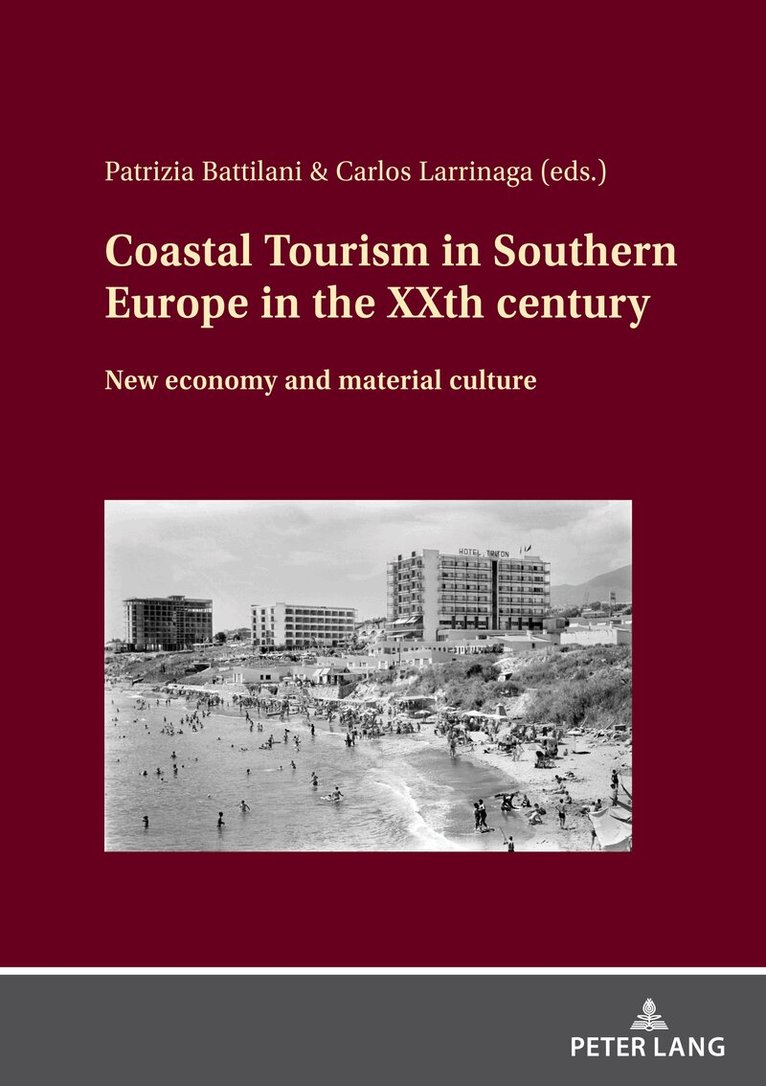
Coastal Tourism in Southern Europe in the XXth century
New economy and material culture
Inbunden, Engelska, 2021
480 kr
Skickas inom 5-8 vardagar
Tourism constitutes one of the most important economic and social activities incontemporary societies. This has not always been the case and, in fact, we must placethe birth of modern tourism and its material culture in the transition from the 19thto the 20th century. This book deals with this tourism in a very specific geographicalspace, the countries of southern Europe, and on a chronology centered on the 20thcentury and focusing on the different pillars of sustainability: economic, social andenvironmental.The aim of this book is to analyze how the maritime and coastal tourism gave birthto a new economy and material culture during the Twentieth century, focusing ondifferent countries and regions in southern Europe. Today this part of Europe is stillthe most important tourist destination in the world.