Constructs Series - Böcker
Visar alla böcker i serien Constructs Series. Handla med fri frakt och snabb leverans.
6 produkter
6 produkter
388 kr
Skickas inom 10-15 vardagar
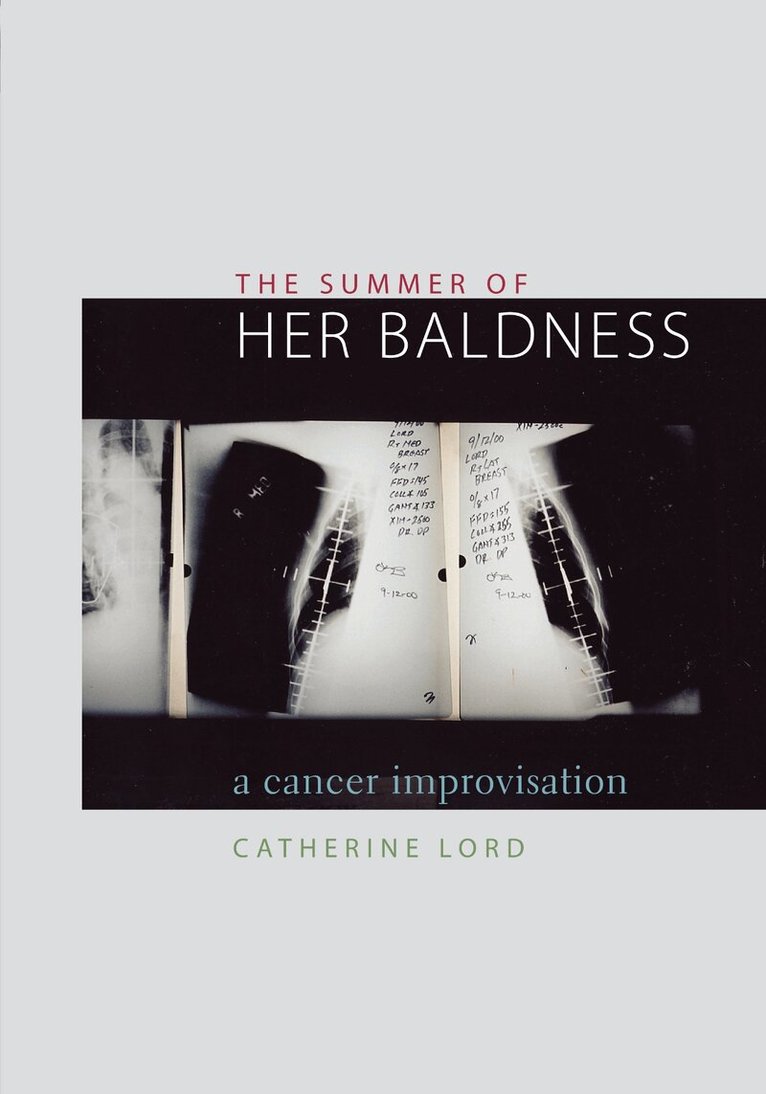
"No eyebrows. No eyelashes. When it rains the water will run straight down into my eyes," Catherine Lord wrote before her hair fell out during chemotherapy. Propelled into an involuntary performance piece occasioned by the diagnosis of breast cancer, Lord adopted the online persona of Her Baldness-an irascible, witty, polemical presence who speaks candidly about shame and fear to her listserv audience. While Lord suffers from unwanted isolation and loss of control as her treatment progresses, Her Baldness talks back to the society that stigmatizes bald women, not to mention middle-aged lesbians with a life-threatening disease. In this irreverent and moving memoir, Lord draws on the e-mail correspondence of Her Baldness to offer an unconventional look at life with breast cancer and the societal space occupied by the seriously ill. She photographs herself and the rooms in which she negotiates her disease. She details the clash of personalities in support groups, her ambivalence about Western medicine, her struggles to maintain her relationship with her partner, and her bemusement when she is mistaken for a "sir." She uses these experiences-common to the one-in-eight women who will be diagnosed at some point with breast cancer-to illuminate larger issues of gender signifiers, sexuality, and the construction of community.
237 kr
Skickas inom 10-15 vardagar
"This is about a society of isolates who all communicate with one another from terminal sites. This is about being disembodied, distanced, distinct, and that sort of boundary-thing. It is not about being present. It is not about being there. It is not about a shared history, or a shared meal, or a shared story, or any kind of mutuality. It is about contact between virtual strangers. . . . It happens when you feel that you are so alone that you need anybody to talk to-anybody at all-because you believe that your connections have failed you. This kind of connection leaves you cold and dead inside, because it lacks history and a language of belonging." In this daring, postmodern autobiography, S. Paige Baty recounts her search for love and community on the Internet. Taking Jack Kerouac's On the Road as a point of departure, Baty describes both an actual road trip to meet the object of an e-mail romance and the cyber-search for connection that draws so many people into the matrix of the Internet. Writing in a bold, experimental style that freely mixes e-mails, poems, fragments of quotations, and puns into expository text, she convincingly links e-mail trouble with "female trouble" in the displacement of embodied love and accountable human relationships to opaque screens and alienated identities. Her book stands as a vivid feminist critique of our culture's love affair with technology and its dehumanizing effect on personal relationships.
299 kr
Skickas inom 10-15 vardagar
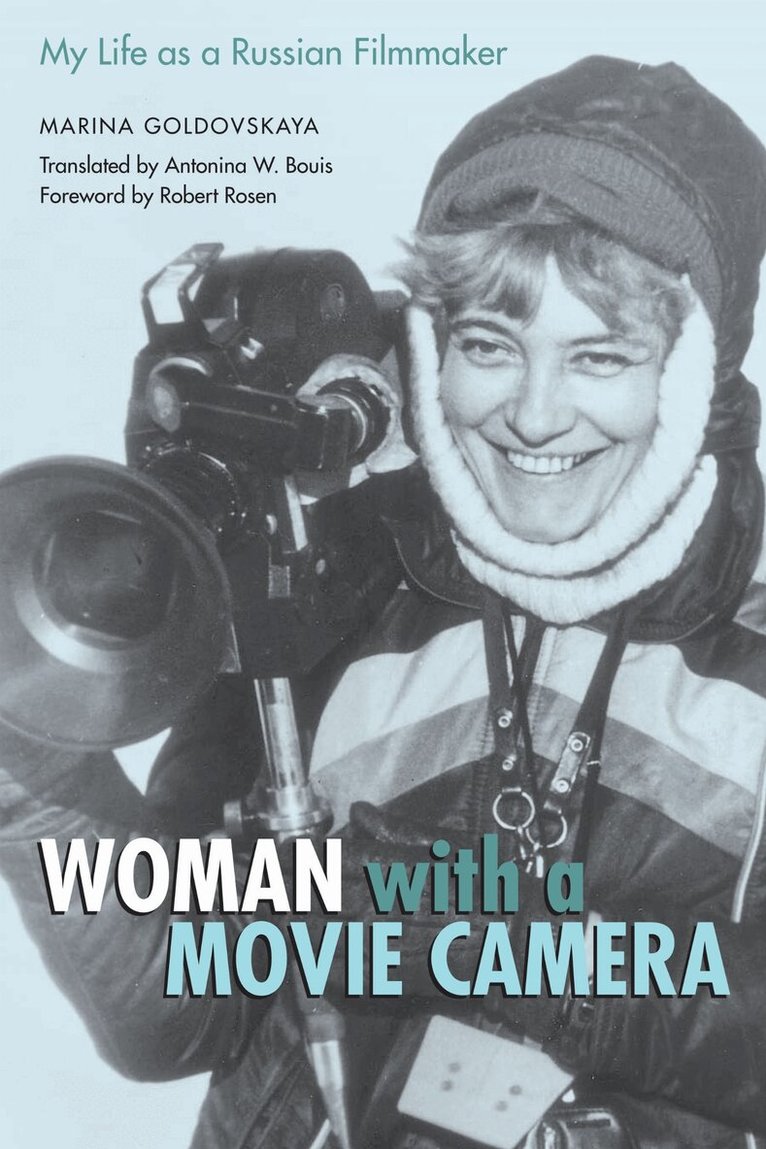
Marina Goldovskaya is one of Russia's best-known documentary filmmakers. The first woman in Russia (and possibly the world) to combine being a director, writer, cinematographer, and producer, Goldovskaya has made over thirty documentary films and more than one hundred programs for Russian, European, Japanese, and American television. Her work, which includes the award-winning films The House on Arbat Street, The Shattered Mirror, and Solovky Power, has garnered international acclaim and won virtually every prize given for documentary filmmaking. In Woman with a Movie Camera, Goldovskaya turns her lens on her own life and work, telling an adventurous, occasionally harrowing story of growing up in the Stalinist era and subsequently documenting Russian society from the 1960s, through the Thaw and Perestroika, to post-Soviet Russia. She recalls her childhood in a Moscow apartment building that housed famous filmmakers, being one of only three women students at the State Film School, and working as an assistant cameraperson on the first film of Andrei Tarkovsky, Russia's most celebrated director. Reviewing her professional filmmaking career, which began in the 1960s, Goldovskaya reveals her passion for creating films that presented a truthful picture of Soviet life, as well as the challenges of working within (and sometimes subverting) the bureaucracies that controlled Russian film and television production and distribution. Along the way, she describes a host of notable figures in Russian film, theater, art, and politics, as well as the technological evolution of filmmaking from film to video to digital media. A compelling portrait of a woman who broke gender and political barriers, as well as the eventful four decades of Russian history she has documented, Woman with a Movie Camera will be fascinating reading for a wide audience.
372 kr
Skickas inom 3-6 vardagar
French philosopher Luce Irigaray has become one of the twentieth century's most influential feminist thinkers. Among her many writings are three books (with a projected fourth) in which she challenges the Western tradition's construals of human beings' relations to the four elements-earth, air, fire, and water-and to nature. In answer to Heidegger's undoing of Western metaphysics as a "forgetting of Being," Irigaray seeks in this work to begin to think out the Being of sexedness and the sexedness of Being.This volume is the first English translation of L'oubli de l'air chez Martin Heidegger (1983). In this complex, lyrical, meditative engagement with the later work of the eminent German philosopher, Irigaray critiques Heidegger's emphasis on the element of earth as the ground of life and speech and his "oblivion" or forgetting of air.With the other volumes (Elemental Passions and Marine Lover of Friedrich Nietzsche, published elsewhere) in Irigaray's "elemental" series, The Forgetting of Air offers a fundamental rereading of basic tenets in Western metaphysics. And with its emphasis on dwelling and human habitation, it will be important reading not only in the humanities but also in architecture and the environmental sciences.
281 kr
Skickas inom 10-15 vardagar
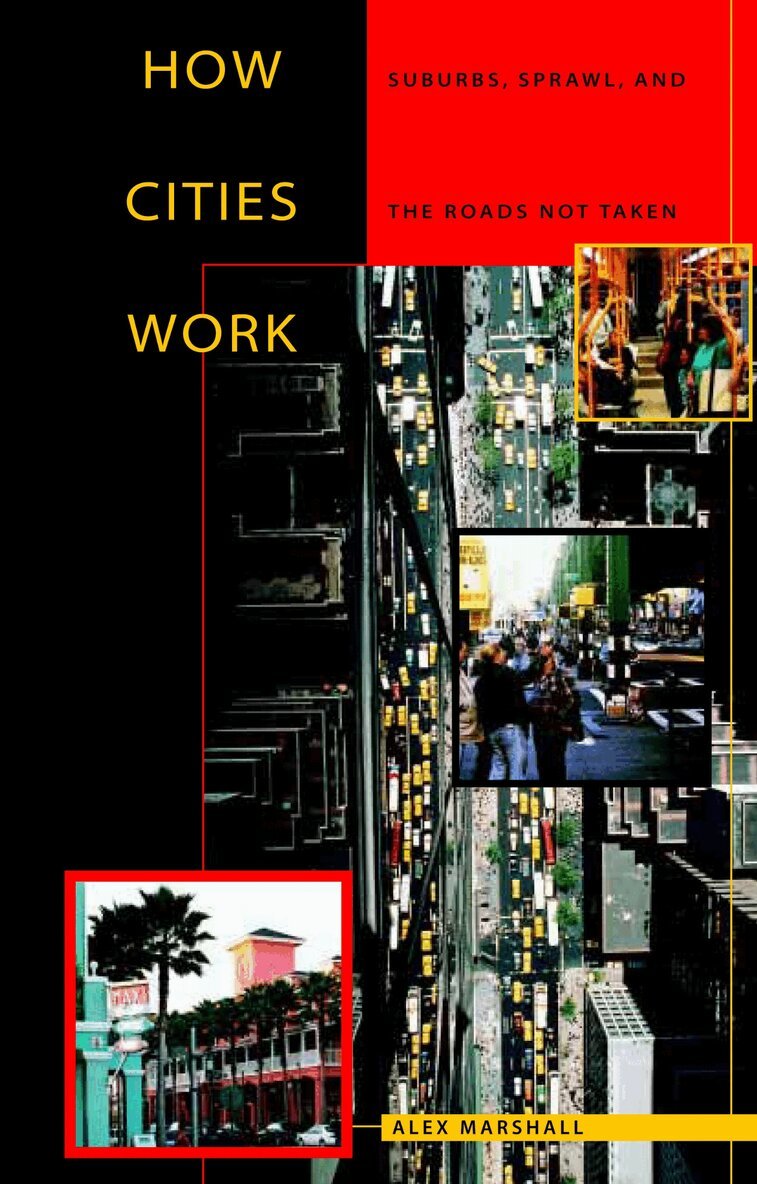
Do cities work anymore? How did they get to be such sprawling conglomerations of lookalike subdivisions, megafreeways, and "big box" superstores surrounded by acres of parking lots? And why, most of all, don't they feel like real communities? These are the questions that Alex Marshall tackles in this hard-hitting, highly readable look at what makes cities work. Marshall argues that urban life has broken down because of our basic ignorance of the real forces that shape cities-transportation systems, industry and business, and political decision making. He explores how these forces have built four very different urban environments-the decentralized sprawl of California's Silicon Valley, the crowded streets of New York City's Jackson Heights neighborhood, the controlled growth of Portland, Oregon, and the stage-set facades of Disney's planned community, Celebration, Florida. To build better cities, Marshall asserts, we must understand and intelligently direct the forces that shape them. Without prescribing any one solution, he defines the key issues facing all concerned citizens who are trying to control urban sprawl and build real communities. His timely book will be important reading for a wide public and professional audience.
196 kr
Skickas inom 7-10 vardagar
The “free market” has been a hot topic of debate for decades. Proponents tout it as a cure-all for just about everything that ails modern society, while opponents blame it for the very same ills. But the heated rhetoric obscures one very important, indeed fundamental, fact-markets don’t just run themselves; we create them.Starting from this surprisingly simple, yet often ignored or misunderstood fact, Alex Marshall takes us on a fascinating tour of the fundamentals that shape markets and, through them, our daily economic lives. He debunks the myth of the “free market,” showing how markets could not exist without governments to create the structures through which we assert ownership of property, real and intellectual, and conduct business of all kinds. Marshall also takes a wide-ranging look at many other structures that make markets possible, including physical infrastructure ranging from roads and railroads to water systems and power lines; mental and cultural structures such as common languages and bodies of knowledge; and the international structures that allow goods, services, cash, bytes, and bits to flow freely around the globe.Sure to stimulate a lively public conversation about the design of markets, this broadly accessible overview of how a market economy is constructed will help us create markets that are fairer, more prosperous, more creative, and more beautiful.