Developments in Veterinary Virology - Böcker
Visar alla böcker i serien Developments in Veterinary Virology. Handla med fri frakt och snabb leverans.
18 produkter
18 produkter
1 637 kr
Skickas inom 10-15 vardagar
'!he present volune Herpesvirus Diseases of cattle, Horses and pigs in the series "Developnents in Veterinal:y Virology" gives a review on herpesvirus infections in (a) cattle by bovine herpesvirus I (lEV-I), lEV-2 and lEV-4, alcelaphine herpesvirus I (malignant catanbal. fever) and Aujeszky"s disease virus, (b) horses by equine herpesvirus I (EHV-1), EHV-2 and EHV-3 and (c) pigs by Aujeszky's disease virus and porcine cytomegalovirus. Some of these viruses also infect small ruminants, therefore sheep and goats are included in this review as far as they are concemed. The different chapters include the latest knowledge on the viruses and the resulting diseases. Bearing in m:irrl the rapid development of oolecular biology and genetechnology in the last years a comprehensive survey on the oolecular aspects of the viruses and genetically engineered vaccines is presented, as far as data have been available. However, the other fields have not been neglected. large space is given to the description of clinical synptams, pathology, pathogenesis, latent infection, physical, chemical and biological characteristics of the viruses, hmnoral and cell-mediated imnunity, vaccines and vaccination, epizootiology, control, eradication, economics considerations and future aspects.
2 180 kr
Skickas inom 10-15 vardagar
G. Petursson and Rikke Hoff-J0rgensen The concept of slow viral infections was first put forward in 1954 by Dr. Bjorn Sigurdsson, an Icelandic physician who had been studying some sheep diseases which were introduced into Iceland with the importation of a foreign breed of sheep in 1933. Sigurdsson's main criteria for defining slow infec tions were a very long initial period without clinical signs lasting months or even years following infection and a rather regular protracted, progres sive course, once clinical symptoms had appeared, usually ending in serious disease or death. Sigurdsson included in this list of slow infections maedi -visna, infectious adenomatosis of sheep, scrapie in sheep, Bittner's mam mary carcinoma and Gross' leukemia in mice. All of these diseases, except scrapie, are caused by retroviruses. The characteristics of slow infections as described above are of prac tical importance for epidemiology, diagnosis and control of these diseases. For many years the slow infections remained primarily a veterinary problem, mainly affecting sheep and goats in certain countries. In recent years, how ever, the human immunodeficiency virus (HIV) causing acquired immunodefici ency syndrome (AIDS), has suddenly appeared in many countries of the world and brought the slow infection concept forcefully to the attention of the medical profession. The disease problems and the economic effects of slow infections of sheep and goats are increasingly recognized in various coun tries. For the reasons stated above we feel that this book should be useful for veterinarians and physicians alike.
2 180 kr
Skickas inom 10-15 vardagar
Rabies is an ancient disease and a fearsome one. Although it may not have the economic or public health importance of some other infectious diseases, few are so well known or carry the same emotional impact. Mainly transmitted by the bite of an enraged animal, and with practically no hope for recovery among those afflicted, it has provided the substance of stories and legends throughout the ages. The pioneering work of many 19th century workers, culminating in the development of the first rabies vaccines by Louis Pasteur, provided the ground work for the modern era in the study of rabies. Since then, and particularly in the last quarter century, considerable advances have been made in our knowledge of the nature of the infectious agent, its mode of transmission and pathogenetic mechanisms. Yet even today, much remains to be learned about the disease. For example, although effective vaccines exist for humans and other animals, there is still no known practical cure once the neurological disease symptoms develop. Markers of virulence have been mapped at the molecular level, but it is yet unclear as to how rabies virus actually exerts its pathological effects.
3 266 kr
Skickas inom 10-15 vardagar
Most of the chapters of this book were written during 1987 which was the Diamond Jubilee year of the publication of the first reports of Newcastle disease in 1927. During the intervening years the nature of the Poultry Industry throughout the World has changed, or is in the process of changing, dramatically from one based on small village or farm flocks, frequently kept as a sideline, to an industry based on large flocks, sometimes consisting of hundreds of thousands of birds, run by multinational companies. To all these flocks, both large and small, Newcastle disease poses a considerable threat to their well-being and profitability and it is not unreasonable to state that hardly a single commercial flock of poultry is raised in the world without Newcastle disease having some effect due to actual disease, prophylactic vaccination or restrictions placed on rearing, movement, processing, sale or export of birds and products. In addition, recent years have produced developments in virology and associated biological technology which would have been unbelievable when Newcastle disease virus was first isolated. The economic importance of Newcastle disease virus and its use as a laboratory model has meant that major advances have been quickly applied to the field situation whenever possible and, as a result, a much fuller understanding, not only of the biochemistry and basic virology of the virus but also the ecology, epizootiology, antigenicity, immunology and other important aspects in the control of the disease has been achieved.
Del 2 - Developments in Veterinary Virology
Enzootic Bovine Leukosis and Bovine Leukemia Virus
Inbunden, Engelska, 1986
2 180 kr
Skickas inom 10-15 vardagar
This volume on enzootic bovine leukosis (EBL) and bovine leukemia virus (BLV) is the second in our series "Developments in Veterinary Virology". Each book in this series is devoted to a major virus disease of agricultural significance. The chapters in each volume are planned to supply information on a range of subjects from pathogenesis of the causative virus to vaccination, eradication, and rules regarding disease control. The present volume on enzootic bovine leukosis and bovine leukemia virus updates the reader on the disease and its causative agent and includes the nucleotide sequence of the BLV genome as well as data on its integration into the DNA of the tumor cell. Insights into diagnosis, veterinary legislation, and the economic aspects of EBL are also provided. Intense research conducted on EBL and BLV during the course of a decade is presented in a most concise and in-depth manner, so as to provide the reader with a comprehensive overview of this economically important disease of cattle. I wish to thank the editors, A. Burny and M. Mammerickx, as well as all the authors, for making this excellent book available at a stage when the knowledge on bovine leukemia virus will also contribute to our understanding of the virus causing human AIDS.
2 180 kr
Skickas inom 10-15 vardagar
The intention of the series Developments in Veterinary Virology is to provide monographs dealing with the major animal viral diseases. Each volume will include the latest achievements in fundamental research and practical applications and should be readable for people from various disciplines and different backgrounds. The multi-author approach provides the best opportunity to keep each chapter at the highest level and makes the composition of the volumes manageable to the editors. This monograph on Avian Leukosis presents comprehensive reviews on the recent history of avian retrovirus research, on epizootiological, virological, pathological aspects, on tumor induction, the immune response to avian retro viruses, virus-cell interactions and on techniques for diagnosis. The volume deals mainly with exogenous avian leukosis virus (ALV) infections, but one chapter is entirely devoted to endogenous avian leukemia virus. Molecular biology aspects are confined to various oncogenes and to lymphoma induction since retroviruses, including those specific for avian species, have recently been described in detail in the Cold Spring Harbor Laboratory series "Molecular Biology of Tumor Viruses". Two chapters are devoted to the practical application of insights obtained from avian leukosis research: influences of AL V infection on production performance and eradication procedures.
1 589 kr
Skickas inom 10-15 vardagar
The history of research on hog cholera (HC)/classical swine fever (CSF) can be roughly divided into three phases which are characterized by the methods available at the time for demonstrati ng the causati ve agent. Phase covered the period before the viral etiology of HC was discovered by de Schweinitz and Dorset (1904)*. Thereafter (Phase II) the detection of HC virus (HCV) was accomplished by laborious, time-consuming and costly pig inoculation experiments. This explains the extensive search for methods not only for detection but also for accurate infectivity titration as well as for applicable serological techniques to solve urgent problems concerning the pathogenesis, diagnosis, epidemiology and prophylaxis of HC. It was not before the late fifties that HC research entered Phase III when fluorescent antibody techniques offered not only the means for detection and titration of HCV in porcine cell cultures but also for more intensive research on hog cholera and its virus. And yet, there are a number of questions to be answered, e. g. on the genetic and antigenic relation of HCV to bovine viral diarrhea (BVD) virus. There are indications that Phase IV of HC research will bear the stamp of biotechnology. In view of this development it appears appropriate to give an up-dating and summarizing account of HC/CSF including comparative aspects of infections caused by structurally related viruses. The editIon of the present volume would have been impossible without the cooperation of several known scientists who instantly agreed when asked for contribution.
3 266 kr
Skickas inom 10-15 vardagar
The influence of basic science, particularly molecular biology, in human and veterinary medicine revolutionized thinking in many aspects and changed fundamentally and creatively the classical strategy for research and prevention of infectious diseases. Genetic engineering and related disciplines have progressed to a remarkable degree over the last decade and now form the keystone supporting medicine. These are strong and efficient instruments for health and disease oriented research and their application gives the opportunity to receive more answers and not only more questions. The prime objective of this book is to create new knowledge within the medical disciplines and inspire colleagues working in this field with the unity and unambiguous importance of this science and its technologies for identifying, clarifying and planning new strategies for curing and preventing disease. This book contains original studies on the molecular biology of animal viruses. Some of the viruses discussed in this book are also hazardous to man. In this light it can be considered as a contribution to modern education on the human infectious diseases. From this point of view the book contains a chapter on Hantaan virus that causes no detectable disease in animals but hemorrhagic fever with renal syndrome has been attributed to infection of humans by this virus.
1 637 kr
Skickas inom 10-15 vardagar
'!he present volune Herpesvirus Diseases of cattle, Horses and pigs in the series "Developnents in Veterinal:y Virology" gives a review on herpesvirus infections in (a) cattle by bovine herpesvirus I (lEV-I), lEV-2 and lEV-4, alcelaphine herpesvirus I (malignant catanbal. fever) and Aujeszky"s disease virus, (b) horses by equine herpesvirus I (EHV-1), EHV-2 and EHV-3 and (c) pigs by Aujeszky's disease virus and porcine cytomegalovirus. Some of these viruses also infect small ruminants, therefore sheep and goats are included in this review as far as they are concemed. The different chapters include the latest knowledge on the viruses and the resulting diseases. Bearing in m:irrl the rapid development of oolecular biology and genetechnology in the last years a comprehensive survey on the oolecular aspects of the viruses and genetically engineered vaccines is presented, as far as data have been available. However, the other fields have not been neglected. large space is given to the description of clinical synptams, pathology, pathogenesis, latent infection, physical, chemical and biological characteristics of the viruses, hmnoral and cell-mediated imnunity, vaccines and vaccination, epizootiology, control, eradication, economics considerations and future aspects.
2 180 kr
Skickas inom 10-15 vardagar
G. Petursson and Rikke Hoff-J0rgensen The concept of slow viral infections was first put forward in 1954 by Dr. Bjorn Sigurdsson, an Icelandic physician who had been studying some sheep diseases which were introduced into Iceland with the importation of a foreign breed of sheep in 1933. Sigurdsson's main criteria for defining slow infec tions were a very long initial period without clinical signs lasting months or even years following infection and a rather regular protracted, progres sive course, once clinical symptoms had appeared, usually ending in serious disease or death. Sigurdsson included in this list of slow infections maedi -visna, infectious adenomatosis of sheep, scrapie in sheep, Bittner's mam mary carcinoma and Gross' leukemia in mice. All of these diseases, except scrapie, are caused by retroviruses. The characteristics of slow infections as described above are of prac tical importance for epidemiology, diagnosis and control of these diseases. For many years the slow infections remained primarily a veterinary problem, mainly affecting sheep and goats in certain countries. In recent years, how ever, the human immunodeficiency virus (HIV) causing acquired immunodefici ency syndrome (AIDS), has suddenly appeared in many countries of the world and brought the slow infection concept forcefully to the attention of the medical profession. The disease problems and the economic effects of slow infections of sheep and goats are increasingly recognized in various coun tries. For the reasons stated above we feel that this book should be useful for veterinarians and physicians alike.
2 180 kr
Skickas inom 10-15 vardagar
Rabies is an ancient disease and a fearsome one. Although it may not have the economic or public health importance of some other infectious diseases, few are so well known or carry the same emotional impact. Mainly transmitted by the bite of an enraged animal, and with practically no hope for recovery among those afflicted, it has provided the substance of stories and legends throughout the ages. The pioneering work of many 19th century workers, culminating in the development of the first rabies vaccines by Louis Pasteur, provided the ground work for the modern era in the study of rabies. Since then, and particularly in the last quarter century, considerable advances have been made in our knowledge of the nature of the infectious agent, its mode of transmission and pathogenetic mechanisms. Yet even today, much remains to be learned about the disease. For example, although effective vaccines exist for humans and other animals, there is still no known practical cure once the neurological disease symptoms develop. Markers of virulence have been mapped at the molecular level, but it is yet unclear as to how rabies virus actually exerts its pathological effects.
3 266 kr
Skickas inom 10-15 vardagar
Most of the chapters of this book were written during 1987 which was the Diamond Jubilee year of the publication of the first reports of Newcastle disease in 1927. During the intervening years the nature of the Poultry Industry throughout the World has changed, or is in the process of changing, dramatically from one based on small village or farm flocks, frequently kept as a sideline, to an industry based on large flocks, sometimes consisting of hundreds of thousands of birds, run by multinational companies. To all these flocks, both large and small, Newcastle disease poses a considerable threat to their well-being and profitability and it is not unreasonable to state that hardly a single commercial flock of poultry is raised in the world without Newcastle disease having some effect due to actual disease, prophylactic vaccination or restrictions placed on rearing, movement, processing, sale or export of birds and products. In addition, recent years have produced developments in virology and associated biological technology which would have been unbelievable when Newcastle disease virus was first isolated. The economic importance of Newcastle disease virus and its use as a laboratory model has meant that major advances have been quickly applied to the field situation whenever possible and, as a result, a much fuller understanding, not only of the biochemistry and basic virology of the virus but also the ecology, epizootiology, antigenicity, immunology and other important aspects in the control of the disease has been achieved.
2 180 kr
Skickas inom 10-15 vardagar
The intention of the series Developments in Veterinary Virology is to provide monographs dealing with the major animal viral diseases. Each volume will include the latest achievements in fundamental research and practical applications and should be readable for people from various disciplines and different backgrounds. The multi-author approach provides the best opportunity to keep each chapter at the highest level and makes the composition of the volumes manageable to the editors. This monograph on Avian Leukosis presents comprehensive reviews on the recent history of avian retrovirus research, on epizootiological, virological, pathological aspects, on tumor induction, the immune response to avian retro viruses, virus-cell interactions and on techniques for diagnosis. The volume deals mainly with exogenous avian leukosis virus (ALV) infections, but one chapter is entirely devoted to endogenous avian leukemia virus. Molecular biology aspects are confined to various oncogenes and to lymphoma induction since retroviruses, including those specific for avian species, have recently been described in detail in the Cold Spring Harbor Laboratory series "Molecular Biology of Tumor Viruses". Two chapters are devoted to the practical application of insights obtained from avian leukosis research: influences of AL V infection on production performance and eradication procedures.
1 637 kr
Skickas inom 10-15 vardagar
The history of research on hog cholera (HC)/classical swine fever (CSF) can be roughly divided into three phases which are characterized by the methods available at the time for demonstrati ng the causati ve agent. Phase covered the period before the viral etiology of HC was discovered by de Schweinitz and Dorset (1904)*. Thereafter (Phase II) the detection of HC virus (HCV) was accomplished by laborious, time-consuming and costly pig inoculation experiments. This explains the extensive search for methods not only for detection but also for accurate infectivity titration as well as for applicable serological techniques to solve urgent problems concerning the pathogenesis, diagnosis, epidemiology and prophylaxis of HC. It was not before the late fifties that HC research entered Phase III when fluorescent antibody techniques offered not only the means for detection and titration of HCV in porcine cell cultures but also for more intensive research on hog cholera and its virus. And yet, there are a number of questions to be answered, e. g. on the genetic and antigenic relation of HCV to bovine viral diarrhea (BVD) virus. There are indications that Phase IV of HC research will bear the stamp of biotechnology. In view of this development it appears appropriate to give an up-dating and summarizing account of HC/CSF including comparative aspects of infections caused by structurally related viruses. The editIon of the present volume would have been impossible without the cooperation of several known scientists who instantly agreed when asked for contribution.
3 266 kr
Skickas inom 10-15 vardagar
The influence of basic science, particularly molecular biology, in human and veterinary medicine revolutionized thinking in many aspects and changed fundamentally and creatively the classical strategy for research and prevention of infectious diseases. Genetic engineering and related disciplines have progressed to a remarkable degree over the last decade and now form the keystone supporting medicine. These are strong and efficient instruments for health and disease oriented research and their application gives the opportunity to receive more answers and not only more questions. The prime objective of this book is to create new knowledge within the medical disciplines and inspire colleagues working in this field with the unity and unambiguous importance of this science and its technologies for identifying, clarifying and planning new strategies for curing and preventing disease. This book contains original studies on the molecular biology of animal viruses. Some of the viruses discussed in this book are also hazardous to man. In this light it can be considered as a contribution to modern education on the human infectious diseases. From this point of view the book contains a chapter on Hantaan virus that causes no detectable disease in animals but hemorrhagic fever with renal syndrome has been attributed to infection of humans by this virus.
2 180 kr
Skickas inom 10-15 vardagar
This volume on enzootic bovine leukosis (EBL) and bovine leukemia virus (BLV) is the second in our series "Developments in Veterinary Virology". Each book in this series is devoted to a major virus disease of agricultural significance. The chapters in each volume are planned to supply information on a range of subjects from pathogenesis of the causative virus to vaccination, eradication, and rules regarding disease control. The present volume on enzootic bovine leukosis and bovine leukemia virus updates the reader on the disease and its causative agent and includes the nucleotide sequence of the BLV genome as well as data on its integration into the DNA of the tumor cell. Insights into diagnosis, veterinary legislation, and the economic aspects of EBL are also provided. Intense research conducted on EBL and BLV during the course of a decade is presented in a most concise and in-depth manner, so as to provide the reader with a comprehensive overview of this economically important disease of cattle. I wish to thank the editors, A. Burny and M. Mammerickx, as well as all the authors, for making this excellent book available at a stage when the knowledge on bovine leukemia virus will also contribute to our understanding of the virus causing human AIDS.
550 kr
Skickas inom 10-15 vardagar
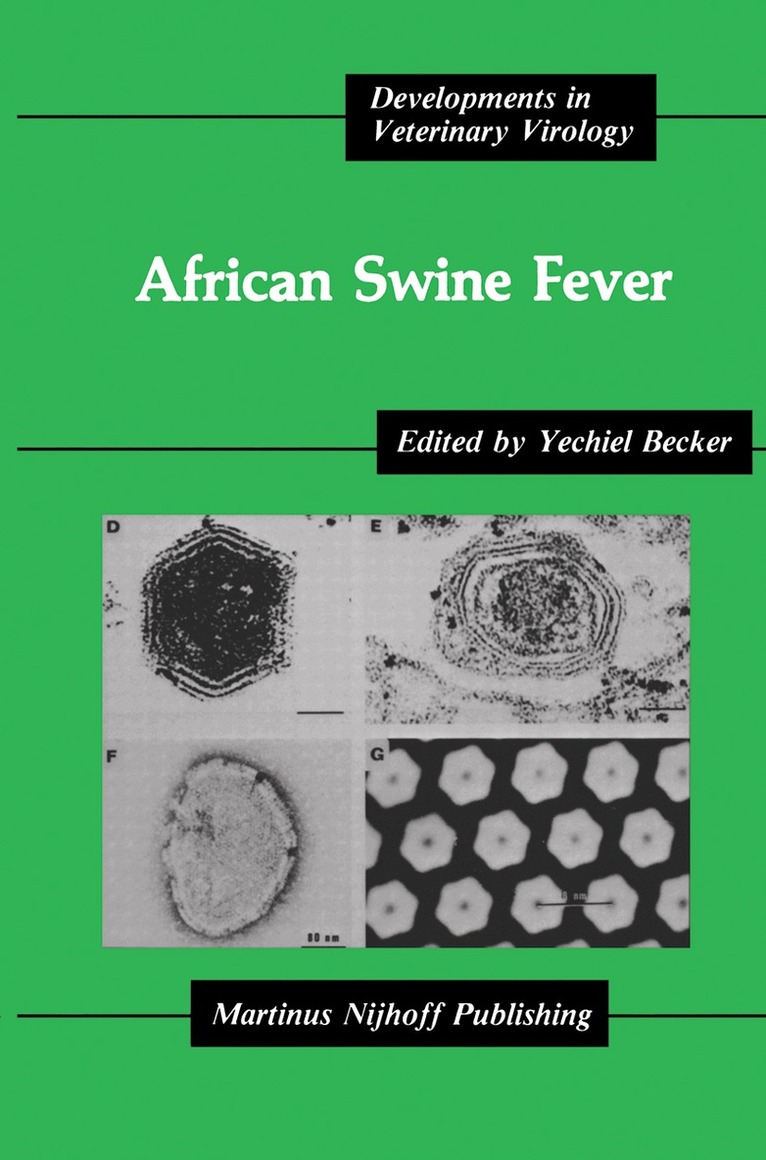
African swine fever (ASF) is caused by a virus that is classified as a member of the Iridovirinae family. The disease in the warthog, the natural host, in Africa was described in 1921 by R. E. Montgomery. The reservoir of the vi rus is inti cks. The i ntroduct i on of domestic pi gs into territory occupied by warthogs i nf ected wi th ASF in the 1960's has endangered the pig industry around the world. The domestic pig is highly sensitive to ASF and develops a devastating disease that kills the pig without giving the immune system a chance to defend the animal against the virus infection. The ability of ASF virus to infect and destroy cells of the reticuloendothelial system leaves a defenseless host that succumbs to an infection which may be described as an acquired immune deficiency di sease of domestic pi gs. Introduction of the virus into Iberia in the 1960's led to a series of ASF epidemics in Spain and Portugal . . and later in France, that caused heavy economic losses. Between 1976 and 1960, ASF virus made its appearance in Malta and Sardinia . . as well as in Brazil, The Dominican Republic . . Haiti, and later in Cuba. In 1985-6 . . ASF appeared in Belgium and The Netherlands.
Del 1 - Developments in Veterinary Virology
Marek’s Disease
Scientific Basis and Methods of Control
Häftad, Engelska, 2011
952 kr
Skickas inom 10-15 vardagar
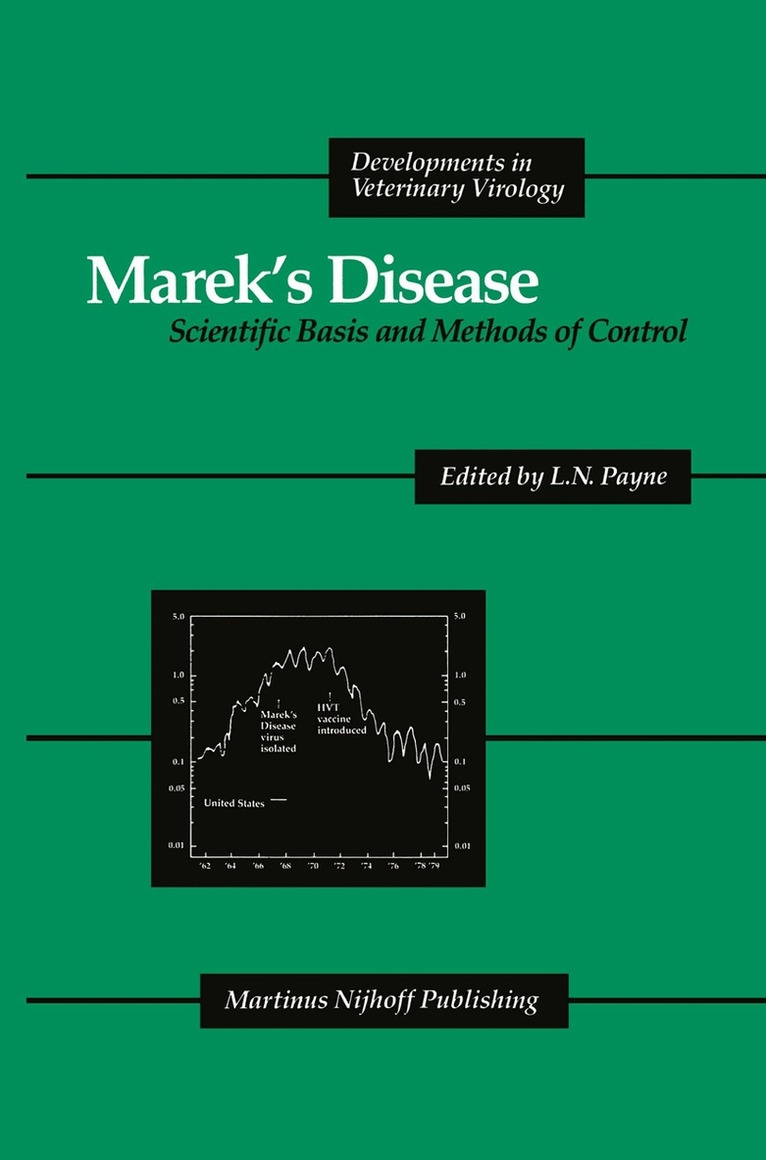
Take a disease of complex pathology with inflammatory and neoplastic features, which affects lymphoid and neural tissues, belonging to a disease group which killed one chicken in five, and which defied efforts to understand and control it for !lOre than 50 years, and one can begin to appreciate the interest Marek's disease has received. Canpound these characteristics with the finding of the causal herpesvirus, its recog nition as the neoplasm first discovered to be so caused, and its pre vention by vaccination, and the special place of Marek's disease in veterinary medicine and comparative oncology becomes clear. This book sets out to provide an authoritative and corrprehensive account of knowledge of Marek's disease and its control. I hope that it will be of value to veterinary research workers, teachers and students who need information about the disease, to veterinarians, poultrymen and vaccine manufacturers who have to diagnose and control it, and to oncologists in other fields interested in comparative aspects. other reviews of the disease exist, of course, but this is the first multi authored book devoted to the subject.